
How to Compare Stroller OEM Quotes
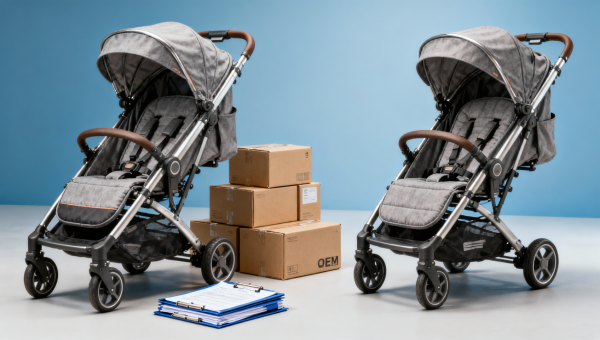
Comparing stroller OEM quotes goes far beyond unit price. For buyers evaluating playpen manufacturers, toy compliance, and CPC toys requirements, the right quote reveals true costs, safety readiness, lead times, and customization value. This guide helps procurement teams, technical reviewers, and decision-makers assess supplier offers with confidence, reduce sourcing risk, and secure stronger margins in competitive global retail markets.
In travel retail, destination stores, airport concessions, family resort shops, and cross-border e-commerce all face the same challenge: a stroller quote may look competitive on paper while hiding tooling fees, compliance gaps, packaging inefficiencies, or delivery risks that erode margin after launch. A quote comparison process must therefore connect sourcing detail with the realities of travel-service sales cycles, seasonal peaks, and safety-sensitive end users.
For distributors, operators, quality teams, project managers, and finance approvers, the goal is not simply to find the lowest offer. It is to identify the OEM partner that can support stable supply, market-ready certification, practical customization, and a repeatable cost structure across 6- to 12-month procurement windows. The sections below break down how to compare stroller OEM quotes in a way that supports both commercial and operational decisions.
Understand What a Stroller OEM Quote Should Really Include
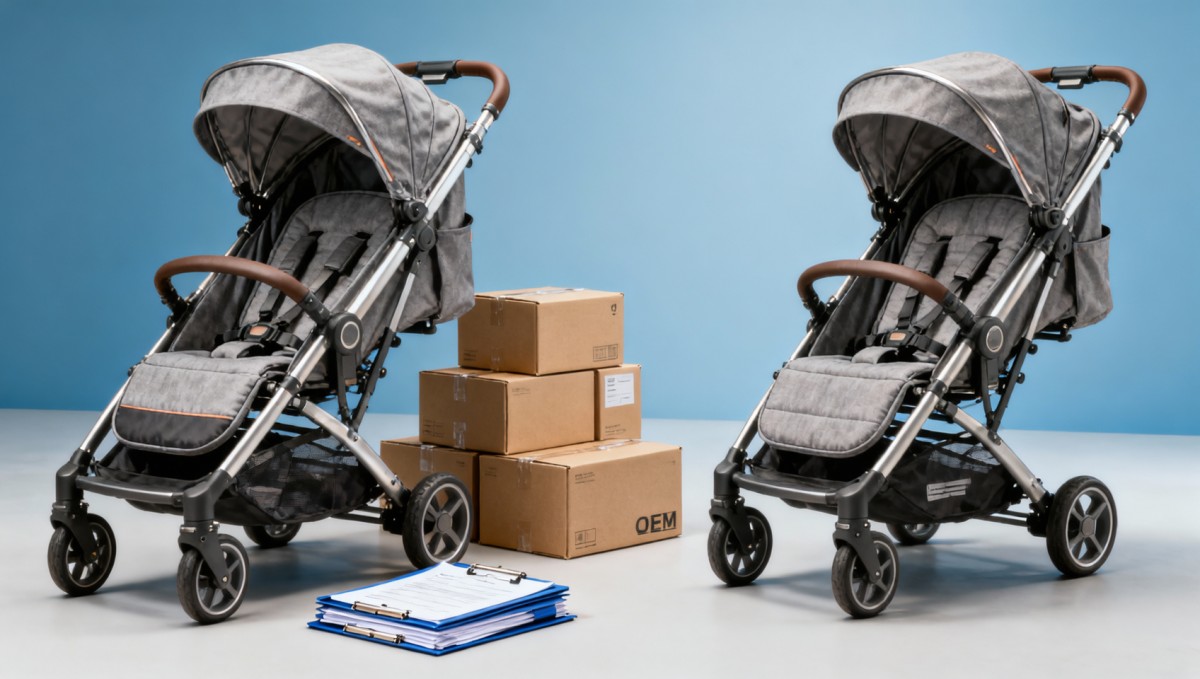
A serious stroller OEM quote should be treated as a technical-commercial document, not a simple price list. In travel-service channels, where products may be sold to tourists, rented by hospitality operators, or listed by regional distributors, missing quote details can create downstream costs in warehousing, claims handling, and delayed launches. A useful quote normally covers unit price, MOQ, sample cost, tooling, compliance scope, packaging, lead time, payment terms, and after-sales support.
Buyers should first verify whether the quote is based on FOB, EXW, or another trade term. A difference of 3% to 8% in apparent price can simply come from excluded inland transport, export documentation, or carton labeling. For travel retail programs with multi-country delivery, those omissions matter because they influence landed cost, local handling, and replenishment timing.
Another key issue is product definition. Two suppliers may both quote a “compact stroller,” yet one is pricing a 6.8 kg frame with basic polyester fabric while another includes a 7.6 kg frame, upgraded wheels, reinforced canopy stitching, and a larger storage basket. Unless the bill of materials is aligned line by line, unit-price comparison is misleading.
Technical reviewers should also check whether the quote references target-market compliance. For baby and maternity products sold through tourism-linked retail channels, destination gift stores, or online travel commerce, requests often involve EN 1888, CPSIA-related considerations, labeling, and packaging warnings. If testing is listed only as “can support,” the buyer should ask whether the quoted price includes pre-test preparation, lab coordination, and corrective action support.
The table below shows the minimum fields that should appear before procurement moves a stroller OEM quote into final comparison.
When these fields are complete, quote comparison becomes more accurate. In practice, many sourcing teams discover that a supplier with a 4% higher unit price delivers a 10% to 15% lower total cost after better carton density, fewer retests, and more reliable delivery planning are taken into account.
Core checks before you compare numbers
- Match frame material, wheel specification, fabric grade, harness type, and folding mechanism across all suppliers.
- Confirm whether samples are refundable after bulk order and whether tooling amortization is spread over the first 1,000 to 3,000 units.
- Request packaging dimensions in centimeters and loading quantity per 20GP and 40HQ container.
- Ask whether the quoted lead time is counted from deposit date, artwork approval date, or final sample sign-off date.
Compare Total Landed Cost Instead of Factory Price Alone
In tourism and travel-service distribution, profit is often influenced by freight, storage, and replenishment efficiency as much as by factory price. A stroller quote that is $2 lower per unit may still be less profitable if it uses oversized cartons, requires higher safety stock, or has a 15-day longer production cycle. Buyers should therefore evaluate total landed cost over at least one full selling season, not just first-order cost.
A practical landed-cost model usually includes 7 cost blocks: ex-factory price, tooling or setup, testing and documentation, packaging, freight, duty or import handling where applicable, and post-arrival quality reserve. For family-oriented travel retailers, one extra carton per pallet layer can materially affect warehouse throughput and local transfer costs.
Finance approvers should also review payment structure. For example, a 30% deposit and 70% balance before shipment has a different working-capital effect than a 20% deposit with balance against copy documents. Over a 90-day cycle, that can influence cash planning, especially for distributors managing multiple SKUs across baby gear and related travel merchandise.
It is also wise to calculate the cost of delay. Missing a spring travel season or summer resort peak by 3 to 4 weeks may cost more than any upfront unit-price saving. This is especially relevant when strollers are part of bundled family travel offerings, concierge retail programs, or rental-support merchandise for hotels and serviced apartments.
A simple landed-cost comparison model
The following framework helps procurement and finance teams compare 3 supplier offers on the same commercial basis.
Once these items are normalized, decision-makers can compare effective cost per sellable unit. This approach is more reliable than using a headline number, particularly when different suppliers have different carton efficiencies, sample policies, or compliance support levels.
Common hidden costs buyers miss
- Retesting and corrective action after failed pre-compliance checks, which can add 7 to 21 days.
- Manual rework due to unstable branding application, such as sewn labels or printed logos.
- Low container utilization caused by bulky retail packaging designed without shipping optimization.
- Higher defect reserve when in-line inspection standards are vague or only applied at final packing stage.
Assess Compliance, Safety Readiness, and Documentation Depth
For baby products entering travel-related channels, safety readiness is not an optional add-on. Whether the stroller is sold in a family resort boutique, supplied to a travel distributor, or featured in a destination-led e-commerce campaign, the quote must show how the supplier handles testing, documentation, and production consistency. A supplier that understands compliance early typically reduces launch friction and lowers the risk of costly post-production changes.
Quality and safety teams should ask for a document matrix during quote review. This includes material declarations, test history for similar constructions, warning label capability, user manual support, traceability methods, and packaging compliance awareness. A quote that references “test can be arranged” without clarifying responsibility often signals that the buyer will need to manage more of the process internally.
Documentation depth also affects speed. If a supplier already has structured records for frame material, fabric composition, wheel compound, and critical dimensions, pre-shipment review is usually faster. In many projects, document readiness can save 5 to 10 working days during approval. That difference matters when travel retail windows are linked to holiday demand or destination promotions.
From a sourcing-risk perspective, consistency is as important as certification. A supplier may pass one test sample but still struggle to maintain welding, folding-lock tolerances, or labeling accuracy over a 2,000-unit run. Buyers should therefore connect quote review with process controls, inspection plans, and defect escalation procedures.
Safety and compliance review points
- Check whether compliance support covers prototype review, pre-test adjustment, formal test submission, and labeling alignment.
- Confirm traceability format for production date, batch code, and carton identification.
- Ask how many inspection gates are used: incoming materials, in-line checks, and final random inspection are the common 3 stages.
- Review tolerance control for folding mechanism, wheel installation, and locking function, especially for compact travel stroller designs.
Questions that separate a prepared OEM from a risky one
A prepared OEM can usually answer 4 questions clearly: what standards are targeted, what documents are available before testing, what process controls protect repeatability, and how non-conformities are corrected. If answers remain vague after two rounds of inquiry, the buyer should treat the quote as incomplete regardless of price attractiveness.
For travel-service buyers, that discipline is valuable because end-customer trust is fragile. A stroller linked to family travel, hospitality convenience, or destination shopping must not create safety concerns that damage broader service reputation.
Measure Lead Time, Capacity Stability, and Customization Practicality
Lead time should be evaluated as a full project timeline, not a single factory promise. In stroller OEM sourcing, the path often includes 7 to 14 days for sample updates, 3 to 7 days for artwork confirmation, 25 to 45 days for mass production, and additional time for inspection and booking. If your travel-service sales channel depends on timed campaigns or high-season visitor traffic, every stage needs visibility.
Customization also needs commercial discipline. Buyers commonly request branded hangtags, color-exclusive canopies, upgraded wheel sets, or packaging tailored for tourism-oriented retail presentation. These changes can increase tooling cost, extend approvals by 1 to 2 weeks, or raise MOQ from 500 units to 1,000 units per variant. A good quote should specify which elements are standard, semi-custom, or fully custom.
Capacity stability matters most when the program involves multiple destinations or distributor territories. A supplier that can produce 3,000 units in one month but cannot maintain the same output for three consecutive months may not suit rolling replenishment. Project managers should ask for realistic monthly capacity bands and peak-season constraints rather than headline capacity claims.
Operational users should also consider assembly quality and field practicality. For resort retail, hotel family services, or destination mobility support, compact folding, intuitive brake access, and easy-clean fabric surfaces can matter more than cosmetic upgrades. A quote that prices attractive styling but ignores operational use may not deliver the best channel fit.
Typical timeline checkpoints for a private-label stroller project
This timeline helps buyers compare quote realism. If one supplier promises shipment in 20 days while another estimates 35 days for the same customized build, the faster offer should be tested carefully for omitted steps or unrealistic assumptions.
How to test customization practicality
- List every requested customization and classify it as cosmetic, structural, or packaging-related.
- Ask which changes affect MOQ, sample time, compliance scope, or carton size.
- Request one revised quote with all features and one value-engineered quote with the top 2 optional features removed.
- Compare margin impact and channel fit before approving the final specification.
Build a Quote Evaluation Framework for Procurement, Quality, and Finance Teams
The best stroller OEM decisions are usually cross-functional. Procurement focuses on price and supplier responsiveness, quality teams focus on safety and process stability, finance looks at cash exposure and margin, while sales or channel managers care about launch timing and sell-through fit. A structured evaluation framework helps all stakeholders score the same quote against the same criteria.
A practical model uses 5 weighted areas: commercial terms, technical fit, compliance readiness, logistics efficiency, and supplier reliability. Many teams assign 20% to 30% weight to commercial terms, 20% to technical fit, 20% to compliance, 15% to logistics, and 15% to supplier communication and execution. The exact ratio can vary depending on whether the project prioritizes fast market entry or long-term private-label expansion.
For travel-service applications, logistics efficiency deserves more attention than it often gets. Compact packaging, predictable replenishment, and stable documentation can support faster deployment to airports, cruise-linked retail, hotel groups, or regional tourist hubs. An apparently cheaper OEM may become harder to manage if documentation revisions and shipment delays consume team resources every cycle.
Buyers should also record soft signals during quote comparison. Did the supplier answer technical questions within 24 to 72 hours? Did they revise drawings accurately? Did they identify risk points before being asked? Those indicators often predict execution quality better than a polished quotation sheet alone.
Suggested internal quote scorecard
- Commercial: unit price competitiveness, MOQ flexibility, payment terms, tooling clarity.
- Technical: material match, feature completeness, folding performance, packaging practicality.
- Quality and safety: document readiness, inspection controls, test support, labeling discipline.
- Operations: lead time credibility, peak-season capacity, communication speed, shipment readiness.
- Financial risk: hidden cost exposure, rework likelihood, claim reserve, cash-flow burden.
FAQ: what buyers ask most often
How many quotes should a buyer compare?
In most projects, 3 qualified quotes are enough to identify the realistic cost range and spot abnormal assumptions. Fewer than 2 makes benchmarking weak, while more than 5 often creates noise unless the specifications are tightly standardized.
What MOQ is typical for stroller OEM orders?
MOQ varies by construction and customization, but 300 to 1,000 units per model is a common entry range. If you request custom frame color, printed fabric, and retail packaging at the same time, the practical MOQ may move higher.
When should finance join the quote review?
Finance should review from the first comparison round, especially when tooling, deposits, or seasonal inventory risk are involved. Early involvement helps avoid approving a low unit-price offer that strains cash flow over a 60- to 120-day cycle.
Comparing stroller OEM quotes effectively means connecting product specification, compliance readiness, landed cost, and delivery reliability into one decision process. For travel-service buyers and global retail sourcing teams, the strongest quote is rarely the cheapest headline offer; it is the one that protects launch timing, product safety, operational efficiency, and long-term margin.
If you are evaluating stroller suppliers, expanding baby and maternity assortments, or building a more resilient sourcing strategy for travel-linked retail channels, Global Consumer Sourcing can help you assess quote quality, supplier fit, and market-ready procurement priorities. Contact us today to discuss your sourcing objectives, request tailored guidance, and explore smarter OEM comparison strategies.
Related Intelligence
 Skincare OEMAug 16, 2026Amazon Enforces AI Human Metadata Rule for Beauty and Personal Care SellersAmazon now enforces AI human metadata rules for beauty sellers. Learn how to protect listings, traffic, and compliance in skincare, cosmetics, and beauty devices.
 Beauty DevicesAug 15, 2026China to Roll Out Nationwide Cross-Border Cash Pooling for MultinationalsChina to roll out nationwide cross-border cash pooling for multinationals from Sept. 14. Discover how this policy could improve treasury efficiency, liquidity management, and China-linked supply chains.
 Beauty DevicesAug 14, 2026China Imposes Temporary Export Ban on Helium, Affecting Cooling Supply ChainsChina's temporary helium export ban may disrupt cooling supply chains for beauty RF devices and laser systems. Learn what ODMs, buyers, and procurement teams should check now.
![]() Cosmetics & PkgAug 13, 2026PPWR becomes mandatory: Beauty and personal care packaging materials usher in new EPR and PFAS compliance requirementsPPWR takes effect for cosmetics packaging in the EU, bringing EPR registration and PFAS limits. Learn what brands, importers, and suppliers must do now.
Cosmetics & PkgAug 13, 2026PPWR becomes mandatory: Beauty and personal care packaging materials usher in new EPR and PFAS compliance requirementsPPWR takes effect for cosmetics packaging in the EU, bringing EPR registration and PFAS limits. Learn what brands, importers, and suppliers must do now. Cosmetics & PkgAug 12, 2026EU PPWR Now Enforced for Beauty Packaging ComplianceEU PPWR now enforced for beauty packaging compliance: learn how EPR, ERN, heavy metals and PFAS rules affect EU exports, customs clearance and platform sales.
 Cosmetics & PkgAug 11, 2026EU PPWR Rules Take Effect on Aug. 12 for Beauty PackagingEU PPWR rules for beauty packaging take effect on Aug. 12, 2026. Learn key compliance steps, EPR, labeling, PFAS limits, and how to avoid customs delays and fines.
 Smart Pet DevicesAug 10, 2026EU EPR Rules to Cover Smart Pet Devices on Aug. 15EU EPR Rules will cover smart pet devices from Aug. 15, 2026. Learn how smart collars, feeders, and monitoring devices can avoid delisting, customs delays, and compliance risks in the EU.
 Infant Feeding & CareAug 09, 2026CPSC Recalls Baby Sleep Sacks Over Undeclared TDCPPCPSC Recalls Baby Sleep Sacks Over Undeclared TDCPP: learn how this 2026 recall impacts CPC documents, third-party testing, and U.S. baby product compliance for exporters.
 Infant Feeding & CareAug 08, 2026ECHA Adds 5 SVHCs, Importer Notices Due From Oct 2026ECHA adds 5 SVHCs to the Candidate List, with importer notices due from October 2026. Learn how REACH affects exporters, supply chains, and documentation readiness.
 Baby Gear & StrollersAug 07, 2026CPSC Revises Crib Rail Standard for November 2026CPSC revises crib rail standard for November 2026, adding dynamic impact tests and mandatory third-party lab testing. Learn how the new rule affects U.S. market access, compliance, and shipments.
 Electronic & RC ToysAug 06, 2026EU to Require EN IEC 62115:2025 for Electronic ToysEU to Require EN IEC 62115:2025 for Electronic Toys from Oct 1, 2026. Learn scope, battery and AI safety updates, CE compliance risks, and how exporters can avoid customs delays.
 Baby Gear & StrollersAug 05, 2026US Stroller Stability Rule Takes Effect Aug. 15US Stroller Stability Rule Takes Effect Aug. 15: learn how new U.S. stroller compliance, ASTM F833-26a, and CPSC testing rules may affect imports, certification, and shipment readiness.
 Infant Feeding & CareAug 04, 2026ECHA Adds 5 SVHCs, Triggering Baby Care Export ReviewECHA adds 5 SVHCs, prompting an urgent baby care export review for EU-bound products. Learn the 0.1% threshold risks, compliance steps, and how to avoid customs delays and fines.












