Pakistan Mandates Forced-Labor-Free Proof for Imports
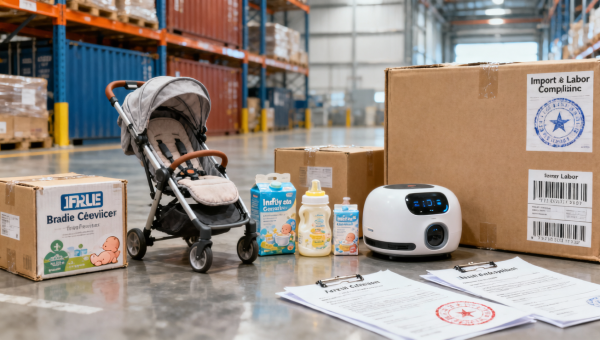
Pakistan’s import compliance rules are set to tighten from June 1, 2026, after the Ministry of Commerce revised its Import Policy Order on April 28 to require proof that imported goods were not made with forced labor. For companies tied to baby strollers, infant feeding products, smart pet devices, and related trade flows, this deserves close attention because customs clearance may be suspended indefinitely if the required supply-chain and labor-compliance documents are not submitted.
What the revised import rule now requires
According to the information provided, Pakistan’s Ministry of Commerce amended the Import Policy Order on April 28, and from June 2026 all imported goods must be supported by evidence showing that forced labor was not used. The disclosed compliance options include a supply chain due diligence report, a factory labor audit certificate, or a third-party SA8000 or SMETA declaration.
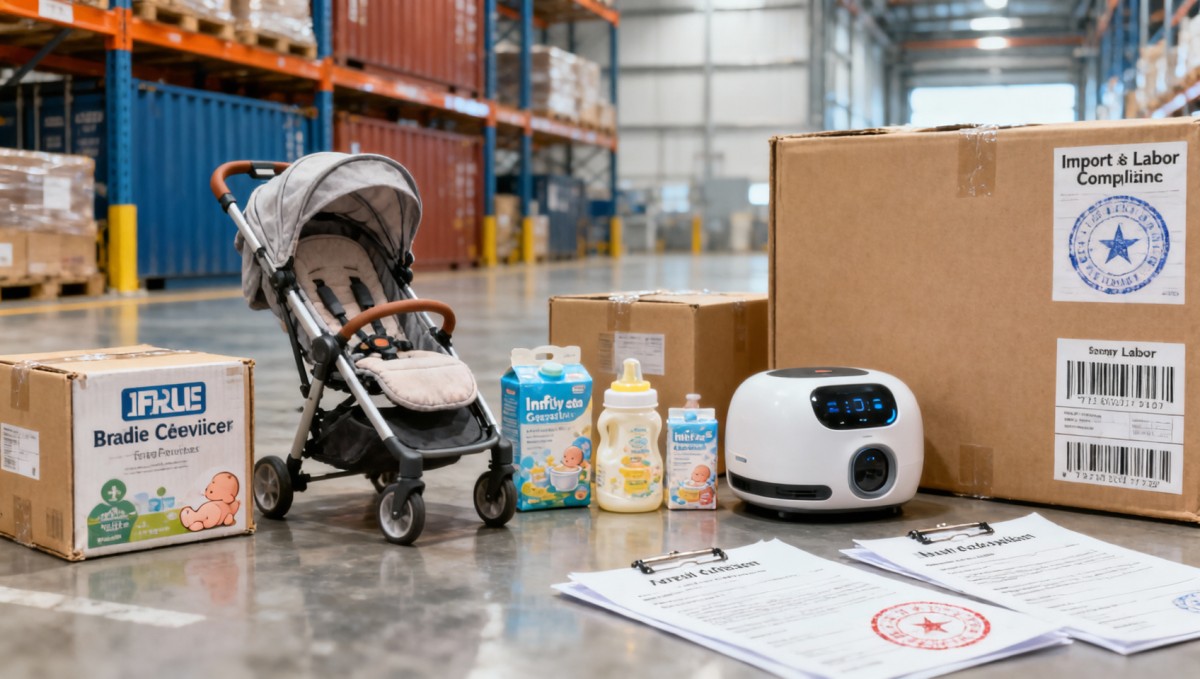
The same information states that baby strollers, infant feeding utensils, and smart pet devices are among the China-made core product categories identified by the ILO as high-risk review targets. If importers fail to provide the required documentation, customs clearance may be suspended without a defined end date.
Where pressure may emerge across the supply chain
Importers face a documentation threshold at customs
From an industry perspective, importers are the first point of impact because the rule directly links shipment release to documentary proof. The immediate business risk is not only whether goods can enter the market, but whether document preparation matches customs expectations in timing, format, and scope.
Manufacturers may be pushed to provide audit-ready records
Analysis shows that manufacturers in baby and pet product categories may face increased requests from overseas buyers for labor-related records and factory audit materials. The pressure is likely to concentrate on proving traceability and labor-compliance status in a form that importers can use for clearance submissions.
Trading companies and sourcing teams may need to recheck supplier readiness
For trading firms and procurement functions, the issue is less about a single certificate and more about whether supplier files can support due diligence claims. What deserves closer attention is whether current supplier qualification documents, audit evidence, and order-related records are sufficient for transactions bound for Pakistan.
Logistics and delivery planning may become more sensitive to paperwork gaps
Supply-chain service providers and shipment coordinators may also feel the impact if cargo is held because documents are incomplete or not accepted. In practice, the risk shifts from pure transportation execution to document coordination, pre-shipment review, and communication between exporter, importer, and factory.
What companies should watch now
Separate policy language from clearance execution
Analysis shows that businesses should pay attention not only to the rule itself, but also to how it is applied in actual clearance. A stated documentation requirement and the practical standard used at customs are not always identical, so companies will need to monitor whether certain product groups receive closer scrutiny.
Prioritize higher-risk product lines
For companies handling baby strollers, infant feeding items, and smart pet devices, current attention should focus on whether these categories trigger earlier or stricter document review. This matters because the summary identifies them as high-risk review objects, which may affect order preparation and client communication.
Check whether supplier files are submission-ready
Businesses should review whether they can readily assemble a due diligence report, labor audit certificate, or SA8000 or SMETA declaration when requested. The key practical issue is not only possessing compliance materials, but having them organized in a way that supports importer submission without delaying shipment timelines.
Prepare customer and delivery contingencies
Observably, the possibility of indefinite customs suspension makes lead-time communication more important for exporters, importers, and distributors. Companies tied to Pakistan-bound orders may need to clarify document responsibilities in advance and build contingency plans around shipment release risk.
Why this looks bigger than a one-off filing issue
This section is an editorial observation. It is more appropriate to understand this development as a compliance signal with immediate operational consequences rather than as a routine paperwork update. The rule covers all imported goods, but the mention of specific baby and pet product categories suggests that some sectors may encounter scrutiny sooner or more visibly than others.
At the same time, it would be premature to treat the measure as a fully settled market outcome beyond the facts provided. Observably, the most important near-term question is how documentation expectations are interpreted and enforced in real transactions after the June 2026 start point.
How the market may best read this development
For the industry, the significance of this update lies in the fact that labor-compliance documentation is moving closer to the center of import execution, not staying at the level of general supplier ethics language. Analysis shows that companies connected to Pakistan-bound trade, especially in baby and pet product categories named in the summary, should treat this as a practical compliance issue with potential shipping consequences.
It is more appropriate to understand the news as both an actionable short-term requirement and a longer-term signal that supply-chain proof may matter more in market access. The clearest conclusion for now is not that outcomes are fully defined, but that documentation readiness and rule interpretation deserve continued attention.
Basis of this report and points for follow-up
This article is generated based on the user-provided news title, event date, and event summary. The specific official source link was not provided in the input, so further verification remains necessary.
For this type of development, commonly relevant source categories include official government notices, company disclosures, industry association updates, authoritative media reporting, and standard or audit-related documentation from recognized organizations. Follow-up attention should remain on any later official clarification, document interpretation, and product-level enforcement practice related to Pakistan’s revised import requirements.
Related Intelligence
 Cosmetics & PkgOct 21, 2026BASF Plans Beauty Innovation Showcase at in-cosmetics Asia 2026Explore BASF’s planned beauty innovations at in-cosmetics Asia 2026 in Bangkok, with a focus on skin protection, repair and sustainable solutions for personal care formulators.
 Cosmetics & PkgOct 20, 2026Beauty Tops Amazon’s 2026 Prime Big Deal Days Shopping CategoriesBeauty tops Amazon’s 2026 Prime Big Deal Days at 32% of shoppers, according to Market Defense. Explore what the findings could mean for product selection, inventory and promotional planning.
 Infant Feeding & CareOct 14, 2026How Can Retailers Prevent Baby Clothing Color Bleeding Claims?How can retailers avoid color bleeding claims on baby clothing? Discover testing, supplier controls, and care-label strategies to reduce returns and protect customer trust.
 Infant Feeding & CareOct 14, 2026Which Baby Clothing Materials Are Easier to Source Compliantly?What materials make baby clothing easier to source compliantly? Compare cotton, blends, and certified options, with practical supplier checks to reduce risk and make smarter sourcing decisions.
 Baby Gear & StrollersOct 14, 2026Are Baby Carrier Buckle Failures a Common Reason for Returns?Are baby carrier buckle failures a common return issue? Explore defects, usability complaints, and safety checks to make informed sourcing decisions before your next order.
 Baby Gear & StrollersOct 14, 2026How Do You Compare Baby Carrier Suppliers on Safety and Cost?How do I compare baby carrier suppliers on safety and cost? Learn to verify safety evidence, assess factory controls, and compare total landed costs to make a confident sourcing decision.
 STEM & Educational ToysSep 20, 2026How Do I Verify Age Grading for Educational Toys?How do I verify educational toy age grading? Learn how to assess safety risks, test reports, packaging, and market compliance before buying or selling.
 Corporate & Seasonal GiftsSep 20, 2026Are Promotional Items Worth Ordering for Short Campaigns?Are promotional items worth ordering for short campaigns? Learn how pet brands can choose useful, compliant giveaways that drive measurable engagement, sales, and loyalty.
 STEM & Educational ToysSep 20, 2026What Safety Checks Should Wooden Toy Suppliers Pass?What safety checks should wooden toy suppliers pass? Explore essential compliance, material traceability, chemical testing, and quality controls to source safer toys with confidence.
 Infant Feeding & CareSep 20, 2026Which Teething Toy Materials Are Easiest to Clean?Which teething toy materials are easiest to clean? Discover why silicone and natural rubber lead for hygienic, easy-care pet chew toys.
 Infant Feeding & CareSep 20, 2026How Can Retailers Prevent Mold Complaints About Bath Toys?How can retailers prevent mold complaints about bath toys? Explore drainable designs, supplier controls, testing, and care guidance to reduce moisture risks.
 Camping & WaterSep 20, 2026Which Folding Chair Fabrics Last Longest Outdoors?Which folding chair fabrics last longest outdoors? Compare acrylic, PVC-coated polyester, UV-stabilized polyester, and mesh for durable, pet-friendly outdoor seating.
 Camping & WaterSep 20, 2026Are Folding Camping Chairs Tested for Weight Capacity?Are folding camping chairs tested for weight capacity? Learn what credible load testing, safety margins, and supplier documentation mean for confident outdoor product sourcing.