
Safety Points to Review Before Choosing a Baby Bouncers Manufacturer
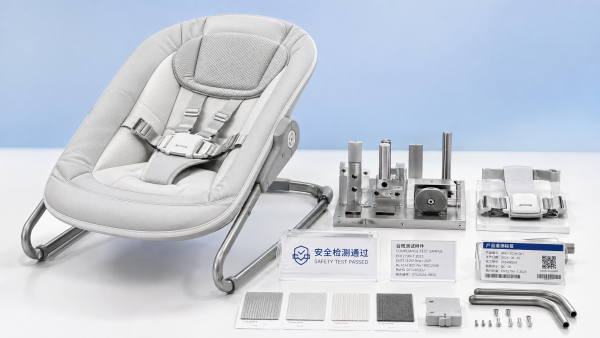
Before partnering with a baby bouncers manufacturer, quality control and safety teams must verify far more than pricing or production speed. From material traceability and structural stability to CPC, CE, and other compliance requirements, each checkpoint directly affects product safety, brand risk, and market access. This guide highlights the critical safety points that should be reviewed before supplier selection.
For QC and safety managers, the core question is not simply whether a supplier can make a baby bouncer. It is whether that supplier can repeatedly manufacture a product that remains safe under real-world use, passes regulatory review, and does not expose your company to recalls, claims, or retailer rejection. In practice, the best sourcing decision often comes from eliminating hidden risk before samples ever move into pilot production.
That means reviewing the manufacturer’s safety system as carefully as the product itself. A good-looking sample can still hide weak welding, poor lot traceability, unstable recline geometry, or inconsistent incoming material control. The right evaluation process must therefore connect design safety, factory capability, compliance documentation, and ongoing quality assurance into one practical approval framework.
Start with the risks that matter most in a baby bouncer category
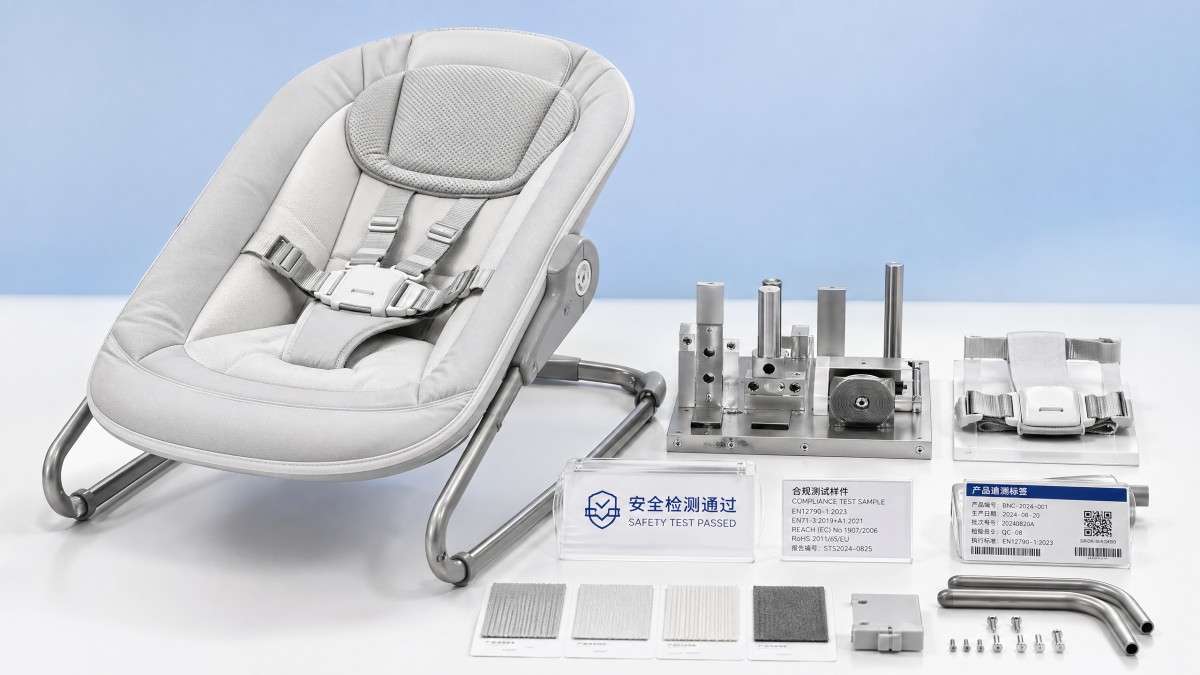
Baby bouncers are used by a highly vulnerable user group, so product risk is naturally higher than in many other consumer categories. A failure in seat integrity, restraint performance, stability, or chemical compliance can create immediate harm. For that reason, the first step when assessing any baby bouncers manufacturer is to map the product’s highest-risk failure modes before discussing commercial terms.
From a safety management perspective, the most critical hazards typically include tip-over risk, collapse under repeated motion, restraint failure, entrapment, sharp edges, pinch points, and material contamination. If the manufacturer cannot clearly explain how its design and quality systems control these points, that is already a warning sign. A supplier that only talks about cost, packaging, or lead times is not showing category-level safety maturity.
QC teams should also consider foreseeable misuse, because infant products are rarely used in perfect conditions. Caregivers may place a bouncer on soft surfaces, exceed recommended time of use, or continue using the product as the child grows. A reliable supplier should be able to show how safety instructions, warning labels, age grading, and structural margins were developed with real usage behavior in mind.
Check whether the manufacturer understands applicable regulations and market access rules
Compliance is one of the first filters in supplier selection, but many teams make the mistake of treating a test report as the entire answer. In reality, a compliant baby bouncer program depends on regulatory understanding, accurate product classification, valid testing scope, and document consistency across packaging, labeling, and shipment records. A manufacturer must demonstrate system-level compliance, not just isolated paperwork.
For the US market, QC and safety teams often need to review Children’s Product Certificate requirements, CPSIA-related material restrictions, tracking label obligations, and applicable ASTM standards depending on product type and use claims. For European markets, CE-related requirements may intersect with chemical, labeling, and general product safety expectations. The exact framework may vary, so a supplier should be able to explain which standards apply and why.
A strong manufacturer will not hesitate when asked for recent third-party reports, bill of materials alignment with tested samples, and ongoing compliance maintenance procedures. Ask whether the factory tests every production-relevant material change, how it manages re-certification after design updates, and who owns regulatory sign-off internally. If answers are vague or overly sales-driven, the compliance process may be superficial.
Review material safety and traceability beyond the surface claim of “non-toxic”
Material declarations such as “eco-friendly,” “baby-safe,” or “non-toxic” are not enough for a responsible approval process. Safety managers need evidence that every critical component in the baby bouncer has defined specifications, approved suppliers, and lot-level traceability. This includes textiles, plastics, coatings, buckles, metal tubes, stitching thread, labels, foam parts, and packaging components that may contact the product during use.
Ask the manufacturer how incoming materials are verified against approved standards. Do they test for restricted substances? Do they maintain signed material compliance declarations? Can they trace a finished unit back to fabric roll, plastic resin batch, or metal tubing lot? If a problem appears in the market, traceability will determine whether you can isolate affected inventory quickly or face a broad and expensive recall.
Particular attention should be given to coatings, printed textiles, detachable accessories, and any flexible material placed near the infant. These are common areas where unauthorized substitutions occur if supply chain controls are weak. A dependable baby bouncers manufacturer should have a formal engineering change process that prevents material swaps without customer approval, risk review, and, where needed, additional testing.
Evaluate structural integrity, stability, and restraint performance with real-world testing logic
In infant seating products, structural safety is never just a design issue. It is a manufacturing control issue as well. A good supplier should be able to explain how frame geometry, weld strength, rivet retention, fastener torque, and seat attachment points are validated during both product development and mass production. If structural reliability depends too heavily on manual craftsmanship without process controls, consistency becomes difficult to maintain.
Request information on static load testing, dynamic cycle testing, drop or impact simulation where relevant, and fatigue testing for repetitive bouncing motion. The key is not only whether the sample passed once, but whether the production process can deliver that same performance repeatedly across shifts and batches. Look for documented control plans defining critical dimensions, allowable tolerances, and in-process verification frequency.
The restraint system deserves separate scrutiny. Buckles should resist accidental release while remaining usable for caregivers. Harness anchorage points must withstand force without tearing fabrics or deforming hardware. Webbing should be durable, skin-safe, and resistant to fraying. Ask for failure history, corrective actions, and design validation records. A supplier that has already solved restraint-related problems transparently is often more trustworthy than one claiming zero issues without evidence.
Inspect the factory’s process controls, not just its showroom samples
Many supplier evaluations fail because buyers are impressed by prototypes, clean meeting rooms, or polished presentations. For QC professionals, the more meaningful question is what happens on the line when volume increases and deadlines tighten. A true safety review should examine how the factory controls production variation, operator training, equipment calibration, and defect escalation in daily operations.
Start with incoming quality control, in-process inspection, and final random inspection procedures. Review work instructions at each key station, especially tube forming, welding, coating, sewing, assembly, restraint installation, and packaging. If instructions are visual, current, and clearly linked to critical quality points, that is a positive sign. If operators rely mainly on memory or informal supervision, your consistency risk rises sharply.
Also check whether jigs, fixtures, torque tools, and testing devices are maintained and calibrated. Structural parts in baby bouncers can drift out of tolerance if fixtures wear or setup is inconsistent. Ask how defects are logged, who approves rework, and whether root cause analysis is required for repeat issues. Mature factories do not hide quality problems; they show a disciplined system for identifying and preventing recurrence.
Assess product design for misuse prevention, warning communication, and human factors
Even when a baby bouncer meets mechanical and chemical requirements, poor human-centered design can still create safety incidents. Instructions that are hard to understand, warning labels placed in low-visibility areas, or assembly steps that invite mistakes all increase user risk. Quality and safety teams should therefore review usability and misuse prevention as part of supplier approval, not as a separate marketing concern.
Examine whether the product can be assembled incorrectly, whether locking features provide obvious confirmation, and whether the recline or support positions can be misused. Review all labels for permanence, readability, and language accuracy for target markets. Warnings must align with the real hazard profile of the product, including age or weight limits, surface placement instructions, and any prohibited use scenarios.
It is also useful to ask whether the manufacturer conducts user-oriented validation, such as packaging drop review, instruction testing, or assembly simulation by non-technical users. A factory that thinks beyond technical pass/fail criteria and considers caregiver behavior is better prepared to support safe retail launch in international markets.
Verify supplier quality culture through audits, CAPA discipline, and transparency
Safety performance is strongly influenced by factory culture. Two manufacturers may offer similar prices and similar test reports, but one may have a far stronger internal discipline when nonconformities appear. This difference becomes visible during on-site audits and management interviews. QC teams should look for evidence that the supplier treats product safety as a management priority rather than a customer-specific requirement.
Review internal audit records, CAPA procedures, management review routines, and escalation paths for critical defects. If a major issue is found in production, who stops the line? How quickly are customers notified? Are corrective actions verified for effectiveness, or simply documented and closed? A robust quality culture is usually reflected in organized records, clear accountability, and a willingness to discuss past incidents honestly.
Transparency matters as much as certification. A supplier may hold recognized quality system certificates, but that does not automatically mean infant product controls are strong. Ask for examples of previous corrective actions involving structural defects, failed tests, or material nonconformance. The goal is not to find perfection, but to confirm that the manufacturer can identify risk early and manage it responsibly.
Use a practical supplier approval checklist before nomination
To make evaluation more actionable, QC and safety managers should use a weighted approval checklist rather than relying on general impressions. Critical categories typically include regulatory competence, test documentation validity, bill of materials control, incoming material traceability, structural validation, restraint system testing, in-line quality controls, packaging safety, CAPA effectiveness, and management transparency.
It is helpful to classify findings into three levels: approval blockers, conditional issues, and improvement opportunities. Approval blockers may include missing compliance evidence, inability to trace raw materials, unstable product structure, or weak control of design changes. Conditional issues may include incomplete operator training records or label format inconsistencies that can be corrected before production start. This structure keeps the decision objective and commercially practical.
Before nomination, align all stakeholders on what evidence is required: latest reports from accredited labs, golden sample sign-off, approved specification sheets, critical dimension list, production inspection plan, and clear change control procedures. When these documents are completed before order placement, later disputes become easier to manage and product launch risk decreases significantly.
Why the safest sourcing decision is usually the most commercially efficient one
Some organizations still treat safety review as a compliance burden that slows down sourcing. In reality, weak supplier vetting is usually far more expensive. Recalls, customer complaints, retailer chargebacks, shipment holds, retesting, rework, and legal exposure can erase any short-term savings achieved through a lower unit price. In infant categories, brand damage can be particularly severe and long-lasting.
Choosing the right baby bouncers manufacturer therefore supports both safety and business performance. A capable supplier reduces validation delays, supports smoother retailer onboarding, improves pass rates in surveillance testing, and gives procurement teams more confidence when scaling volume. This is especially important for private-label programs and cross-border distribution, where documentation accuracy and repeatable quality are central to growth.
For quality leaders, the goal is not to reject suppliers aggressively but to approve them intelligently. The best manufacturing partner is one that can prove control, explain risk, and maintain compliance as designs evolve and volumes increase. That level of discipline is what protects both the infant end user and the brand standing behind the product.
In summary, the most important safety points to review before choosing a baby bouncer supplier are regulatory understanding, material traceability, structural stability, restraint reliability, production process control, misuse prevention, and corrective action discipline. If a manufacturer can demonstrate strength across all of these areas with evidence rather than claims, it is far more likely to be a dependable long-term partner.
For QC and safety teams, a strong supplier decision starts with one principle: do not evaluate a baby bouncer only as a product sample. Evaluate it as a controlled safety system backed by a capable factory. That is the standard that reduces risk, protects market access, and supports sustainable sourcing performance.
Related Intelligence
 Skincare OEMAug 16, 2026Amazon Enforces AI Human Metadata Rule for Beauty and Personal Care SellersAmazon now enforces AI human metadata rules for beauty sellers. Learn how to protect listings, traffic, and compliance in skincare, cosmetics, and beauty devices.
 Beauty DevicesAug 15, 2026China to Roll Out Nationwide Cross-Border Cash Pooling for MultinationalsChina to roll out nationwide cross-border cash pooling for multinationals from Sept. 14. Discover how this policy could improve treasury efficiency, liquidity management, and China-linked supply chains.
 Beauty DevicesAug 14, 2026China Imposes Temporary Export Ban on Helium, Affecting Cooling Supply ChainsChina's temporary helium export ban may disrupt cooling supply chains for beauty RF devices and laser systems. Learn what ODMs, buyers, and procurement teams should check now.
![]() Cosmetics & PkgAug 13, 2026PPWR becomes mandatory: Beauty and personal care packaging materials usher in new EPR and PFAS compliance requirementsPPWR takes effect for cosmetics packaging in the EU, bringing EPR registration and PFAS limits. Learn what brands, importers, and suppliers must do now.
Cosmetics & PkgAug 13, 2026PPWR becomes mandatory: Beauty and personal care packaging materials usher in new EPR and PFAS compliance requirementsPPWR takes effect for cosmetics packaging in the EU, bringing EPR registration and PFAS limits. Learn what brands, importers, and suppliers must do now. Cosmetics & PkgAug 12, 2026EU PPWR Now Enforced for Beauty Packaging ComplianceEU PPWR now enforced for beauty packaging compliance: learn how EPR, ERN, heavy metals and PFAS rules affect EU exports, customs clearance and platform sales.
 Cosmetics & PkgAug 11, 2026EU PPWR Rules Take Effect on Aug. 12 for Beauty PackagingEU PPWR rules for beauty packaging take effect on Aug. 12, 2026. Learn key compliance steps, EPR, labeling, PFAS limits, and how to avoid customs delays and fines.
 Smart Pet DevicesAug 10, 2026EU EPR Rules to Cover Smart Pet Devices on Aug. 15EU EPR Rules will cover smart pet devices from Aug. 15, 2026. Learn how smart collars, feeders, and monitoring devices can avoid delisting, customs delays, and compliance risks in the EU.
 Infant Feeding & CareAug 09, 2026CPSC Recalls Baby Sleep Sacks Over Undeclared TDCPPCPSC Recalls Baby Sleep Sacks Over Undeclared TDCPP: learn how this 2026 recall impacts CPC documents, third-party testing, and U.S. baby product compliance for exporters.
 Infant Feeding & CareAug 08, 2026ECHA Adds 5 SVHCs, Importer Notices Due From Oct 2026ECHA adds 5 SVHCs to the Candidate List, with importer notices due from October 2026. Learn how REACH affects exporters, supply chains, and documentation readiness.
 Baby Gear & StrollersAug 07, 2026CPSC Revises Crib Rail Standard for November 2026CPSC revises crib rail standard for November 2026, adding dynamic impact tests and mandatory third-party lab testing. Learn how the new rule affects U.S. market access, compliance, and shipments.
 Electronic & RC ToysAug 06, 2026EU to Require EN IEC 62115:2025 for Electronic ToysEU to Require EN IEC 62115:2025 for Electronic Toys from Oct 1, 2026. Learn scope, battery and AI safety updates, CE compliance risks, and how exporters can avoid customs delays.
 Baby Gear & StrollersAug 05, 2026US Stroller Stability Rule Takes Effect Aug. 15US Stroller Stability Rule Takes Effect Aug. 15: learn how new U.S. stroller compliance, ASTM F833-26a, and CPSC testing rules may affect imports, certification, and shipment readiness.
 Infant Feeding & CareAug 04, 2026ECHA Adds 5 SVHCs, Triggering Baby Care Export ReviewECHA adds 5 SVHCs, prompting an urgent baby care export review for EU-bound products. Learn the 0.1% threshold risks, compliance steps, and how to avoid customs delays and fines.












