
Stroller OEM or ODM: Which Fits Better?
Choosing between stroller OEM and ODM can shape your product cost, speed to market, compliance strategy, and brand differentiation. For buyers comparing playpen manufacturers, evaluating toy compliance and CPC toys requirements, or expanding into adjacent categories like pet private label, this guide explains which model better fits sourcing goals, quality control needs, and long-term retail growth.
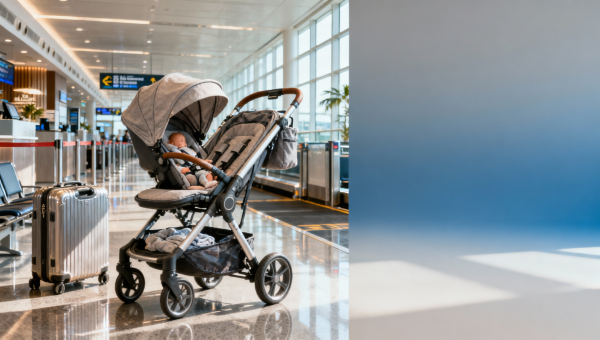
In travel services, stroller sourcing is no longer a narrow product decision. Hotels, resorts, airports, cruise operators, family tour brands, and travel retail distributors increasingly use branded or private-label strollers to improve guest convenience, create ancillary revenue, and strengthen family-friendly positioning. The choice between OEM and ODM affects not only unit economics, but also service consistency, spare-parts planning, safety management, and rollout speed across multiple destinations.
For procurement managers, technical evaluators, finance approvers, safety teams, and project leaders, the right model depends on usage intensity, compliance requirements, branding goals, and launch deadlines. A property group opening 12 family-focused sites in 6 months will evaluate risk differently from a premium tour operator planning a custom stroller fleet for long-haul travel packages.
This article breaks down the practical differences between stroller OEM and ODM in a tourism and travel-service context, with a focus on sourcing efficiency, quality control, safety review, deployment planning, and long-term commercial value.
What OEM and ODM Mean for Travel-Service Stroller Programs
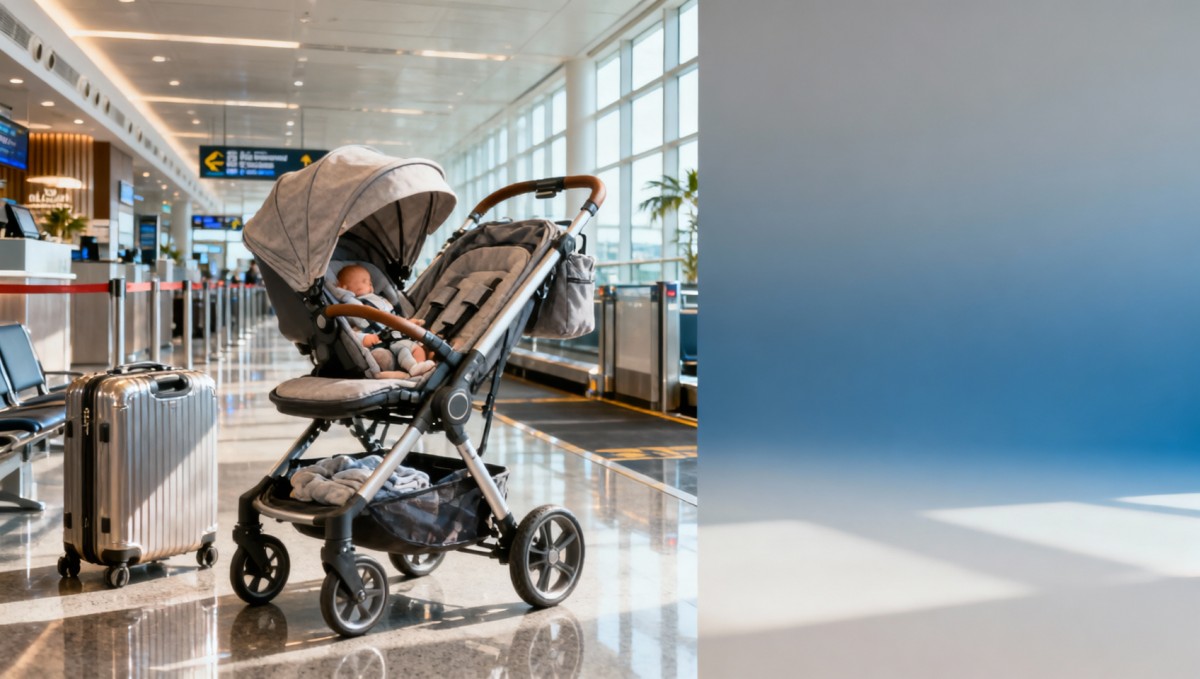
In simple terms, OEM usually means the buyer brings its own product concept, design direction, or specification framework, and the manufacturer produces accordingly. ODM typically means the manufacturer already has a developed platform or ready-to-customize stroller model that the buyer can adapt with branding, color, packaging, or selected feature changes.
For travel services, that distinction matters because the operating environment is different from ordinary retail. A stroller used in a resort may complete 3 to 8 usage cycles per day, face high humidity, repeated folding, uneven pathways, and frequent sanitation. A stroller sold through a travel retailer, on the other hand, must balance visual appeal, compact dimensions, and compliance documentation for cross-border channels.
OEM is often better when a travel brand needs a highly specific product brief: compact cabin-fit dimensions, reinforced wheels for mixed indoor-outdoor routes, easy-clean textiles, QR-based asset tracking, or compatibility with rental and maintenance workflows. ODM is often more suitable when speed is critical and the buyer can accept an existing engineering platform with limited modification.
The choice also affects internal workload. An OEM project may require 10 to 16 weeks for sampling and validation before production, depending on tooling or frame revisions. An ODM project may compress launch preparation to 4 to 8 weeks if the base design is mature and testing files are already organized.
Core operational differences
Travel operators should not evaluate OEM and ODM as abstract manufacturing labels. They should map them to real operational needs: how many strollers are required per site, how often they will be sanitized, how quickly replacement units must arrive, and whether the product is a guest amenity, rental asset, or retail item.
- OEM fits programs with custom durability, feature, or service-process requirements.
- ODM fits buyers that want a tested base product with lower development burden.
- OEM usually needs more technical review, sample rounds, and decision time.
- ODM usually reduces design risk, especially for first-time category entry.
Typical use cases in tourism
A luxury resort group may favor OEM if it wants a stroller that matches brand aesthetics, includes premium fabrics, and survives at least 18 to 24 months of high-frequency guest use. A city-break travel retailer may favor ODM because it needs a foldable stroller line with private labeling ready for sale before the next seasonal traffic peak in 60 to 90 days.
OEM vs ODM: Cost, Lead Time, and Commercial Control
The most common sourcing mistake is to compare only quoted unit price. In travel-service procurement, total program cost includes sampling, testing, packaging adaptation, spare parts, replacement rates, warehouse handling, and staff training. A lower ex-factory quote can become a more expensive operating decision if field failure rates are high or replenishment cycles are unstable.
OEM tends to involve higher upfront cost because engineering hours, prototype revisions, and possibly tooling adjustments must be absorbed before stable mass production. However, it may lower lifecycle cost when the stroller is used intensively. If frame joints, wheel materials, and harness components are customized for daily hospitality use, replacement frequency can drop over a 12-month operating period.
ODM usually lowers development expense and accelerates rollout. That can be a commercial advantage when travel demand shifts quickly or when a distributor wants to test 2 or 3 destination markets before committing to a larger annual volume. The trade-off is reduced exclusivity and less control over engineering changes.
Finance teams should also examine MOQ and reorder flexibility. OEM projects may require larger commitments, such as 800 to 2,000 units depending on frame complexity and materials. ODM suppliers may support lower pilot volumes, sometimes in the 300 to 800 unit range, especially when the core product is already in serial production.
Decision comparison table
The table below summarizes how OEM and ODM usually compare when the buyer is a travel-service operator, family tourism brand, or distributor supplying hospitality and mobility programs.
For most travel-service buyers, ODM is the lower-risk route for market entry, while OEM is the stronger route for scalable differentiation. The best option depends on whether your first priority is launch speed, service fit, or long-term margin control.
A practical budgeting lens
Procurement and finance teams should model cost across at least 4 layers: unit price, compliance and testing cost, field-maintenance cost, and replacement-rate impact. A stroller that costs 8% more upfront but lasts 30% longer in rental use may be commercially superior over a 2-season horizon.
- Estimate average daily usage per stroller at each site.
- Define target service life, such as 12, 18, or 24 months.
- Calculate expected replacement and spare-part demand.
- Compare gross program cost rather than invoice price alone.
Compliance, Safety, and Quality Control in Family Travel Environments
In tourism, stroller sourcing sits at the intersection of guest safety, liability control, and brand trust. Operators serving babies and young children must review product safety with the same discipline applied to adjacent categories such as playpens, infant accessories, and regulated toy assortments. This is especially relevant for buyers already screening playpen manufacturers or checking CPC toys documentation in mixed-category sourcing programs.
ODM can simplify compliance if the factory already has organized test reports, material declarations, and a stable quality history for the stroller platform. Even so, buyers should verify whether the documents cover the exact configuration being ordered. Changes in fabric, wheel compound, brake design, or accessory set may require additional review or re-testing.
OEM offers greater control over materials and structure, but also increases the validation workload. A custom stroller intended for hospitality fleets may need stronger frame endurance, more durable brake components, and cleaning-resistant textile performance. Each modification should be captured in a documented specification sheet and linked to incoming, in-process, and final inspection criteria.
Quality teams should also account for operational abuse patterns. In travel settings, strollers may be folded 20 to 40 times per week, loaded into shuttles, exposed to salt air, or used by different guests every day. These factors justify a stricter pilot test than what is common for ordinary consumer retail launch.
Key control points before approval
Before mass production, travel-service buyers should confirm a documented control plan covering performance, labeling, traceability, and serviceability. The following matrix helps align procurement, quality, and safety teams.
The central takeaway is that compliance is not only about having documents. In travel-service operations, it must connect directly to field durability, guest-use clarity, replacement planning, and incident prevention.
Minimum review checklist
- Approve a golden sample with exact materials and accessories.
- Define at least 3 inspection stages before shipment release.
- Check whether revised components trigger additional testing needs.
- Request spare-part supply visibility for the next 12 months.
How to Match the Right Model to Your Travel Business Scenario
There is no universal answer to the OEM versus ODM question because travel-service business models vary widely. A resort operating stroller rental stations has different needs from an airport concession retailer, and both differ from a distributor supplying family-focused tour operators across several countries.
If your primary goal is speed to market, ODM usually performs better. This is common when travel demand rebounds quickly, when new routes open, or when a retailer wants to align with a 90-day seasonal campaign. In these cases, a proven base stroller with custom branding and packaging may be enough to support commercial launch without prolonged development risk.
If your primary goal is service adaptation, OEM becomes more attractive. Travel operators may need larger storage baskets for excursion use, reinforced wheels for cobblestone or resort pathways, wipe-clean surfaces for hygiene routines, or folded dimensions compatible with shuttle compartments and cruise-cabin storage constraints.
A third scenario involves category expansion. Some buyers entering baby mobility through travel channels are also evaluating adjacent product lines such as playpens, soft goods, or pet private label products for destination retail. In that case, choosing ODM for the first stroller launch can reduce complexity while internal teams build category knowledge before later moving selected SKUs into OEM development.
Scenario-based selection guide
The table below shows which sourcing model often aligns best with common travel-service use cases.
This comparison shows a clear pattern: ODM is ideal when uncertainty is high and time is short, while OEM is stronger when operating complexity is high and long-term control matters more than launch speed.
Questions to ask before selecting a model
- Will the stroller be sold, rented, or provided as a guest amenity?
- What is the expected monthly usage frequency per unit: under 30, 30–100, or over 100 cycles?
- Do you need exclusive functional features or mainly branded appearance?
- Can your team support a 2- to 4-round sampling process if OEM is chosen?
- What is the acceptable replenishment lead time for peak travel periods?
Implementation Steps, Common Mistakes, and Sourcing Best Practices
A strong stroller sourcing decision does not end with selecting OEM or ODM. Execution determines whether the product performs as expected in real travel-service operations. Many sourcing failures occur because technical approval, quality planning, and service deployment are handled in isolation instead of through one coordinated workflow.
A practical rollout typically follows 5 stages: requirement definition, supplier screening, sample validation, pilot deployment, and scaled replenishment planning. For travel businesses, the pilot stage is especially important. Testing 20 to 50 units across 1 to 3 sites can reveal folding issues, cleaning inefficiencies, or wheel wear patterns before a larger order is released.
One frequent mistake is underestimating maintenance and parts management. If a stroller program spans airports, resorts, or regional distributors, downtime matters. Buyers should define service parts in advance, including wheel assemblies, brake elements, harness replacements, and seat fabrics. A 30-day spare-part response target is far more practical than waiting for the next full production cycle.
Another mistake is treating compliance files as a one-time document package. Any revision in labeling, fabric, accessories, or packaging can affect import readiness or quality acceptance. Cross-functional signoff from procurement, QA, operations, and finance helps reduce avoidable delays.
Recommended implementation workflow
- Stage 1: Define use case, target volume, storage limits, cleaning routine, and guest experience goals.
- Stage 2: Shortlist suppliers based on category experience, document readiness, and response speed within 24–72 hours.
- Stage 3: Review samples against functional criteria, not visual appearance alone.
- Stage 4: Run a field pilot and log defect, maintenance, and user-feedback data for at least 2 to 4 weeks.
- Stage 5: Finalize reorder plan, spare-part stock, and inspection checkpoints before scale-up.
FAQ: high-intent buyer questions
How long does stroller OEM usually take compared with ODM?
A typical ODM project can move from confirmation to production readiness in about 4 to 8 weeks if the product platform is mature. OEM often needs 10 to 16 weeks because of design review, prototype rounds, and validation. If tooling or structural revisions are involved, the timeline can extend further.
Which model is better for first-time travel-category buyers?
For first-time buyers, ODM is often the safer entry point because it reduces technical complexity and lowers upfront commitment. OEM becomes more suitable after the buyer has verified actual demand, operating conditions, and the feature gaps of standard market models.
What should procurement teams prioritize besides price?
Prioritize 4 areas: compliance-file completeness, durability under expected usage frequency, spare-part availability, and realistic lead time during peak demand periods. In travel services, these factors often have more commercial impact than a small unit-price difference.
Can OEM and ODM be combined in one sourcing strategy?
Yes. Many travel businesses use ODM for fast launch or market testing, then move high-performing SKUs into OEM development for stronger differentiation and lifecycle control. This staged approach reduces risk while preserving long-term brand upside.
For travel-service businesses, the better choice between stroller OEM and ODM depends on what matters most: speed, customization, operating durability, compliance confidence, or long-term margin structure. ODM is typically the faster and lower-risk path for testing or rapid rollout, while OEM is the stronger option for differentiated service programs and higher-use environments.
Buyers that evaluate sourcing through a full program lens, including compliance review, quality checkpoints, maintenance planning, and site-level usage patterns, are more likely to achieve stable deployment and stronger commercial returns. That is especially important for hospitality groups, travel retailers, distributors, and family-focused service operators expanding into baby and maternity categories.
If you need support comparing OEM and ODM options, screening stroller suppliers, or aligning product sourcing with broader retail and travel-service category strategy, now is the right time to get a tailored plan. Contact GCS to discuss your sourcing goals, request a customized evaluation framework, and explore more solutions for compliant, scalable product programs.
Related Intelligence
 Skincare OEMAug 16, 2026Amazon Enforces AI Human Metadata Rule for Beauty and Personal Care SellersAmazon now enforces AI human metadata rules for beauty sellers. Learn how to protect listings, traffic, and compliance in skincare, cosmetics, and beauty devices.
 Beauty DevicesAug 15, 2026China to Roll Out Nationwide Cross-Border Cash Pooling for MultinationalsChina to roll out nationwide cross-border cash pooling for multinationals from Sept. 14. Discover how this policy could improve treasury efficiency, liquidity management, and China-linked supply chains.
 Beauty DevicesAug 14, 2026China Imposes Temporary Export Ban on Helium, Affecting Cooling Supply ChainsChina's temporary helium export ban may disrupt cooling supply chains for beauty RF devices and laser systems. Learn what ODMs, buyers, and procurement teams should check now.
![]() Cosmetics & PkgAug 13, 2026PPWR becomes mandatory: Beauty and personal care packaging materials usher in new EPR and PFAS compliance requirementsPPWR takes effect for cosmetics packaging in the EU, bringing EPR registration and PFAS limits. Learn what brands, importers, and suppliers must do now.
Cosmetics & PkgAug 13, 2026PPWR becomes mandatory: Beauty and personal care packaging materials usher in new EPR and PFAS compliance requirementsPPWR takes effect for cosmetics packaging in the EU, bringing EPR registration and PFAS limits. Learn what brands, importers, and suppliers must do now. Cosmetics & PkgAug 12, 2026EU PPWR Now Enforced for Beauty Packaging ComplianceEU PPWR now enforced for beauty packaging compliance: learn how EPR, ERN, heavy metals and PFAS rules affect EU exports, customs clearance and platform sales.
 Cosmetics & PkgAug 11, 2026EU PPWR Rules Take Effect on Aug. 12 for Beauty PackagingEU PPWR rules for beauty packaging take effect on Aug. 12, 2026. Learn key compliance steps, EPR, labeling, PFAS limits, and how to avoid customs delays and fines.
 Smart Pet DevicesAug 10, 2026EU EPR Rules to Cover Smart Pet Devices on Aug. 15EU EPR Rules will cover smart pet devices from Aug. 15, 2026. Learn how smart collars, feeders, and monitoring devices can avoid delisting, customs delays, and compliance risks in the EU.
 Infant Feeding & CareAug 09, 2026CPSC Recalls Baby Sleep Sacks Over Undeclared TDCPPCPSC Recalls Baby Sleep Sacks Over Undeclared TDCPP: learn how this 2026 recall impacts CPC documents, third-party testing, and U.S. baby product compliance for exporters.
 Infant Feeding & CareAug 08, 2026ECHA Adds 5 SVHCs, Importer Notices Due From Oct 2026ECHA adds 5 SVHCs to the Candidate List, with importer notices due from October 2026. Learn how REACH affects exporters, supply chains, and documentation readiness.
 Baby Gear & StrollersAug 07, 2026CPSC Revises Crib Rail Standard for November 2026CPSC revises crib rail standard for November 2026, adding dynamic impact tests and mandatory third-party lab testing. Learn how the new rule affects U.S. market access, compliance, and shipments.
 Electronic & RC ToysAug 06, 2026EU to Require EN IEC 62115:2025 for Electronic ToysEU to Require EN IEC 62115:2025 for Electronic Toys from Oct 1, 2026. Learn scope, battery and AI safety updates, CE compliance risks, and how exporters can avoid customs delays.
 Baby Gear & StrollersAug 05, 2026US Stroller Stability Rule Takes Effect Aug. 15US Stroller Stability Rule Takes Effect Aug. 15: learn how new U.S. stroller compliance, ASTM F833-26a, and CPSC testing rules may affect imports, certification, and shipment readiness.
 Infant Feeding & CareAug 04, 2026ECHA Adds 5 SVHCs, Triggering Baby Care Export ReviewECHA adds 5 SVHCs, prompting an urgent baby care export review for EU-bound products. Learn the 0.1% threshold risks, compliance steps, and how to avoid customs delays and fines.












