
US CPSC Recalls 123,000 Chinese Baby Walkers Over Stability Risks
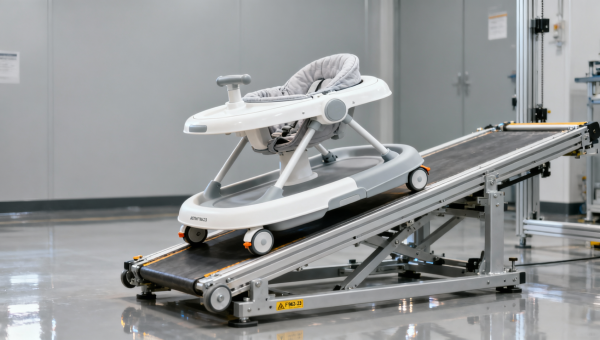
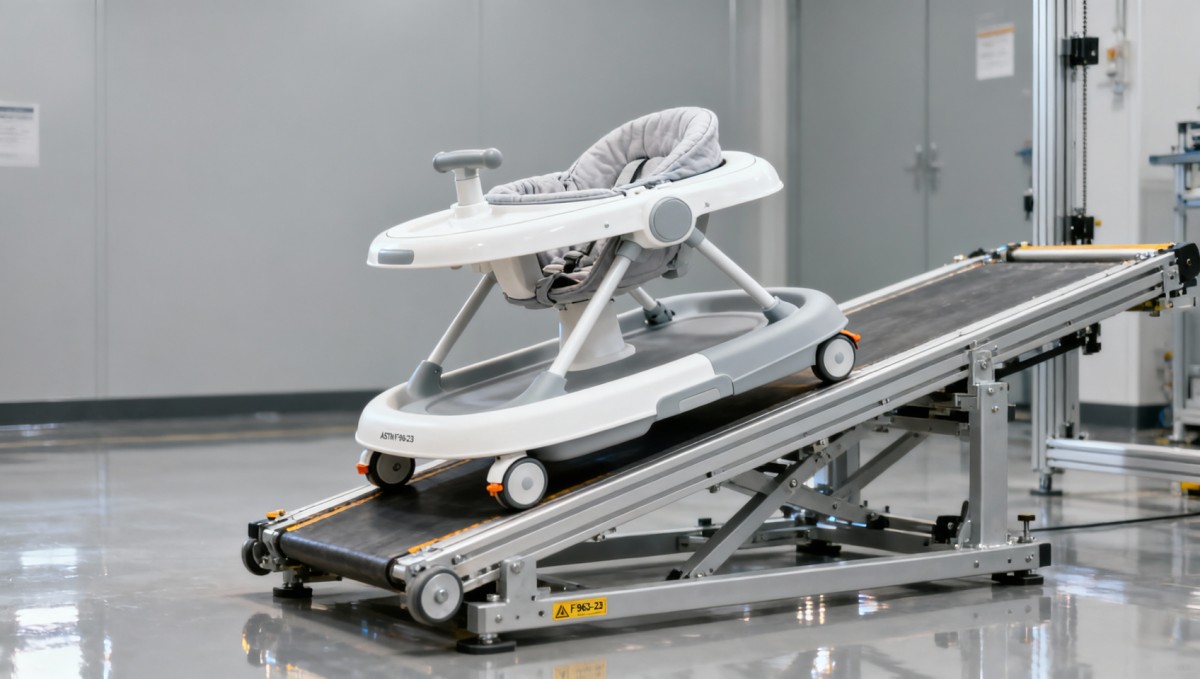
The U.S. Consumer Product Safety Commission (CPSC) issued an urgent recall on May 23, 2026 — Recall Notice #26-112 — affecting 123,000 units of baby walkers manufactured in China. The action follows three documented incidents of tip-over injuries involving infants, linked to structural instability and brake failure. This recall directly impacts global infant product supply chains, particularly exporters, component suppliers, and third-party testing service providers serving the North American market.
Event Overview
On May 23, 2026, the U.S. CPSC announced Recall Notice #26-112, mandating the immediate withdrawal of 123,000 units of baby walkers classified under the "Baby Gear & Strollers" category and produced in China. The recalled units failed ASTM F963-23 Section 4.17 dynamic stability testing due to excessively high center-of-gravity design and unreliable braking mechanisms. Three verified tip-over incidents resulting in non-fatal injuries to infants have been reported to CPSC. No fatalities have been confirmed. All affected models were imported into the U.S. prior to May 2026 and are no longer permitted for sale or distribution.
Impact on Industry Subsegments
Direct Trading Enterprises: Export-oriented trading companies acting as U.S.-based importers or brand holders face direct liability under CPSC’s enforcement framework. Affected firms may incur mandatory refund programs, logistics reversal costs, and reputational damage. More critically, CPSC now requires importers to submit pre-shipment test reports verifying compliance with ASTM F963-23 Section 4.17 — a procedural shift that increases documentation burden and delays time-to-market.
Raw Material Procurement Enterprises: Suppliers of structural components — notably molded plastic chassis, castor assemblies, and brake actuators — may experience revised specification demands. While no material-level defect has been cited, procurement teams are likely to receive updated engineering requirements emphasizing weight distribution parameters and dynamic load validation, potentially triggering reformulation or sourcing reassessment.
Contract Manufacturing Enterprises: OEM/ODM factories producing walkways for international brands must now integrate dynamic stability verification into their internal QA checkpoints — not just static balance checks. This implies investment in tilt-table test rigs or certified third-party lab coordination. Non-compliance risks contractual penalties and loss of CPSC-recognized importer partnerships.
Supply Chain Service Providers: Third-party testing laboratories and certification consultants specializing in ASTM F963 are observing increased demand for dynamic stability validation services. However, capacity constraints exist: only labs accredited under ISO/IEC 17025 for ASTM F963-23 Section 4.17 testing are accepted by CPSC. This accreditation gap is emerging as a bottleneck for mid-tier manufacturers seeking rapid turnaround.
Key Focus Areas and Recommended Actions
Verify ASTM F963-23 Section 4.17 test coverage in current certifications
Many existing test reports cite earlier versions of ASTM F963 (e.g., F963-17 or F963-16). Firms must confirm whether their current certificates explicitly cover the 2023 revision’s enhanced dynamic stability protocol — including ramped acceleration/deceleration cycles and multi-directional tipping thresholds.
Implement pre-shipment dynamic stability audits for high-risk categories
For baby walkers, ride-on toys, and other wheeled infant mobility aids, manufacturers should conduct randomized dynamic stability sampling before container loading — using CPSC-accepted test methods — rather than relying solely on initial type testing.
Update technical documentation to reflect real-world usage scenarios
ASTM F963-23 Section 4.17 now requires test conditions simulating uneven floor surfaces and asymmetric weight loading (e.g., one handrail gripped while standing). Product manuals and packaging warnings must align with these validated use cases to mitigate post-sale liability.
Editorial Perspective / Industry Observation
Analysis shows this recall marks a strategic tightening of CPSC’s enforcement posture toward *dynamic performance* — not just chemical safety or static mechanical integrity. Observably, the agency is shifting from reactive incident response to proactive design-stage scrutiny. From an industry perspective, this signals growing regulatory divergence between ASTM-aligned markets (U.S., Canada, Australia) and EN 71–focused regions (EU, UK), increasing complexity for global product development roadmaps. Current more critical concern lies not in isolated noncompliance, but in the absence of standardized dynamic test infrastructure across Chinese manufacturing clusters — a gap unlikely to close without coordinated investment in regional lab capacity.
Conclusion
This recall underscores that compliance is no longer defined by checklist adherence, but by demonstrable, repeatable performance under realistic usage stress. For infant product stakeholders, the takeaway is not merely procedural adjustment — it is a recalibration of risk ownership across the value chain: from raw material selection through final dynamic validation. A rational interpretation is that regulatory pressure will continue escalating where injury patterns reveal systemic design gaps, making anticipatory testing investment less optional and more foundational.
Source Attribution
Primary source: U.S. CPSC Recall Notice #26-112, published May 23, 2026 (www.cpsc.gov/Recalls/2026/Baby-Walkers-Recall).
Supporting standard: ASTM F963-23, Standard Consumer Safety Specification for Toy Safety, Section 4.17 "Dynamic Stability of Ride-On Toys".
Note: CPSC has indicated plans to publish updated guidance on pre-market dynamic testing verification protocols by Q3 2026 — content under active monitoring.
Related Intelligence
 Skincare OEMAug 16, 2026Amazon Enforces AI Human Metadata Rule for Beauty and Personal Care SellersAmazon now enforces AI human metadata rules for beauty sellers. Learn how to protect listings, traffic, and compliance in skincare, cosmetics, and beauty devices.
 Beauty DevicesAug 15, 2026China to Roll Out Nationwide Cross-Border Cash Pooling for MultinationalsChina to roll out nationwide cross-border cash pooling for multinationals from Sept. 14. Discover how this policy could improve treasury efficiency, liquidity management, and China-linked supply chains.
 Beauty DevicesAug 14, 2026China Imposes Temporary Export Ban on Helium, Affecting Cooling Supply ChainsChina's temporary helium export ban may disrupt cooling supply chains for beauty RF devices and laser systems. Learn what ODMs, buyers, and procurement teams should check now.
![]() Cosmetics & PkgAug 13, 2026PPWR becomes mandatory: Beauty and personal care packaging materials usher in new EPR and PFAS compliance requirementsPPWR takes effect for cosmetics packaging in the EU, bringing EPR registration and PFAS limits. Learn what brands, importers, and suppliers must do now.
Cosmetics & PkgAug 13, 2026PPWR becomes mandatory: Beauty and personal care packaging materials usher in new EPR and PFAS compliance requirementsPPWR takes effect for cosmetics packaging in the EU, bringing EPR registration and PFAS limits. Learn what brands, importers, and suppliers must do now. Cosmetics & PkgAug 12, 2026EU PPWR Now Enforced for Beauty Packaging ComplianceEU PPWR now enforced for beauty packaging compliance: learn how EPR, ERN, heavy metals and PFAS rules affect EU exports, customs clearance and platform sales.
 Cosmetics & PkgAug 11, 2026EU PPWR Rules Take Effect on Aug. 12 for Beauty PackagingEU PPWR rules for beauty packaging take effect on Aug. 12, 2026. Learn key compliance steps, EPR, labeling, PFAS limits, and how to avoid customs delays and fines.
 Smart Pet DevicesAug 10, 2026EU EPR Rules to Cover Smart Pet Devices on Aug. 15EU EPR Rules will cover smart pet devices from Aug. 15, 2026. Learn how smart collars, feeders, and monitoring devices can avoid delisting, customs delays, and compliance risks in the EU.
 Infant Feeding & CareAug 09, 2026CPSC Recalls Baby Sleep Sacks Over Undeclared TDCPPCPSC Recalls Baby Sleep Sacks Over Undeclared TDCPP: learn how this 2026 recall impacts CPC documents, third-party testing, and U.S. baby product compliance for exporters.
 Infant Feeding & CareAug 08, 2026ECHA Adds 5 SVHCs, Importer Notices Due From Oct 2026ECHA adds 5 SVHCs to the Candidate List, with importer notices due from October 2026. Learn how REACH affects exporters, supply chains, and documentation readiness.
 Baby Gear & StrollersAug 07, 2026CPSC Revises Crib Rail Standard for November 2026CPSC revises crib rail standard for November 2026, adding dynamic impact tests and mandatory third-party lab testing. Learn how the new rule affects U.S. market access, compliance, and shipments.
 Electronic & RC ToysAug 06, 2026EU to Require EN IEC 62115:2025 for Electronic ToysEU to Require EN IEC 62115:2025 for Electronic Toys from Oct 1, 2026. Learn scope, battery and AI safety updates, CE compliance risks, and how exporters can avoid customs delays.
 Baby Gear & StrollersAug 05, 2026US Stroller Stability Rule Takes Effect Aug. 15US Stroller Stability Rule Takes Effect Aug. 15: learn how new U.S. stroller compliance, ASTM F833-26a, and CPSC testing rules may affect imports, certification, and shipment readiness.
 Infant Feeding & CareAug 04, 2026ECHA Adds 5 SVHCs, Triggering Baby Care Export ReviewECHA adds 5 SVHCs, prompting an urgent baby care export review for EU-bound products. Learn the 0.1% threshold risks, compliance steps, and how to avoid customs delays and fines.












