
Wholesale Baby Swings: Key Specs That Influence Return Rates
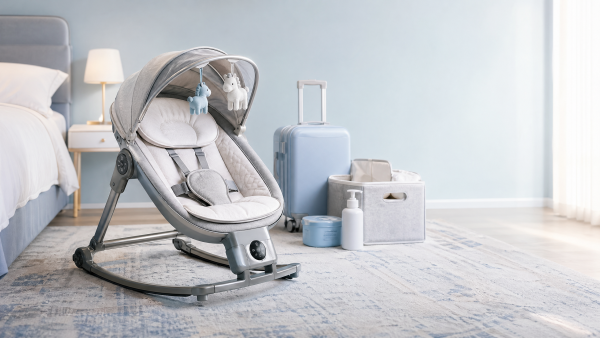
For after-sales teams handling wholesale baby swings, return rates rarely come down to one issue alone. Small differences in load capacity, motor stability, fabric durability, noise control, and certification quality can quickly turn into repeat complaints and costly service cases. Understanding which specs influence customer satisfaction most helps maintenance staff diagnose problems faster and support more reliable product decisions.
Why Return Patterns Are Changing in Wholesale Baby Swings
In the past, many after-sales cases for wholesale baby swings were handled as isolated defects: a failed motor, a torn seat pad, a remote that stopped pairing, or a frame that developed noise after several weeks. The current pattern is different. Returns are increasingly tied to a mismatch between real-use conditions and the original specification set. For maintenance teams in travel service supply environments, this matters because portable baby gear often moves through hotels, resorts, family tour rentals, airport nursery lounges, and serviced apartments, where usage frequency can be 2 to 5 times higher than in a typical home setting.
This shift has created a more demanding service landscape. A baby swing that performs adequately in a low-frequency household may face accelerated wear when folded, transported, cleaned repeatedly, and used by multiple guests in a 30-day period. In travel-facing environments, after-sales personnel now need to look beyond visible defects and assess whether the original wholesale baby swings were specified for intermittent domestic use or for semi-commercial, high-turnover use.
Another clear signal is that return reasons are becoming more interconnected. For example, excessive motor noise is not only a comfort complaint; it can also suggest mounting instability, poor gearbox tolerance, or uneven frame stress after repeated handling. Likewise, fabric tearing may reflect not just material weakness, but also cleaning chemical exposure, stitching density, or overload patterns. This is why spec review has become a frontline after-sales function rather than a task limited to procurement.
Trend Signals Maintenance Teams Should Notice
Three changes are showing up more often in service records. First, complaint cycles are shortening. Instead of issues appearing after 6 to 12 months, some recurring faults emerge within the first 30 to 90 days of installation in high-use locations. Second, complaints are more experience-driven, especially around vibration smoothness, operating sound, and ease of sanitization. Third, support requests increasingly involve compatibility questions such as adaptor stability, spare part interchangeability, and whether replacement textiles can withstand repeated washing.
- Higher-use travel environments expose spec weaknesses faster than home use.
- Noise, wobble, and cleaning damage are now common early warning signs.
- Return reduction depends on choosing specs for operating conditions, not only for catalog appearance.
For teams supporting wholesale baby swings across hospitality or travel service channels, the practical conclusion is clear: maintenance data should feed back into sourcing decisions. If the same fault category appears in 3 or more units within one service cycle, it is often a specification issue rather than random damage.
The Specs That Most Often Drive Returns
Not every specification carries the same return risk. In wholesale baby swings, some parameters have a direct effect on service frequency, while others mainly affect user perception. After-sales teams benefit from separating cosmetic complaints from structural risk indicators. The table below highlights the specs that most often influence return rates when baby swings are used in travel-oriented guest service settings.
For maintenance teams, the most useful insight is that return-prone wholesale baby swings often fail across linked systems. A unit that is rated for a broad weight range but uses a weak drive assembly may technically pass a basic check while still producing unstable operation over time. In practice, products used in shared travel facilities need a stronger tolerance margin than their minimum retail specification suggests.
Where Small Spec Differences Create Big Service Costs
Load capacity is one of the most misunderstood variables. A listed capacity may indicate the upper safe load under controlled conditions, not ideal long-term comfort performance. In after-sales review, swings with narrower structural reserve often show more frame noise and speed irregularity after repeated guest turnover. Even a difference of 2 to 3 kilograms in practical tolerance can affect motor lifespan and stability under frequent use.
Motor quality matters beyond power output. Lower-end systems may operate acceptably during showroom testing but become problematic when units run several sessions per day. For travel service applications, a swing may be activated 8 to 15 times in a day, especially in family-friendly hotel rooms or nursery corners. Under that pattern, poor thermal management or inconsistent gearing translates directly into service tickets.
Fabric specification has also become more important because sanitation routines are stricter. Removable seat pads washed once per week face a different stress level than fabrics cleaned after every guest departure. If textiles are not selected for repeated cleaning cycles, surface breakdown can appear in as little as 10 to 20 wash cycles, creating both appearance issues and hygiene concerns.
Fast Checklist for Fault Screening
- Check whether the reported issue began after transport, folding, or room turnover rather than during initial installation.
- Compare actual use frequency per week with the product’s intended use category.
- Inspect motor housing, frame joints, and textile seams together instead of evaluating one part in isolation.
- Confirm whether cleaning agents, humidity exposure, or adaptor variation may have contributed to failure.
Why Travel Service Usage Changes the Return Equation
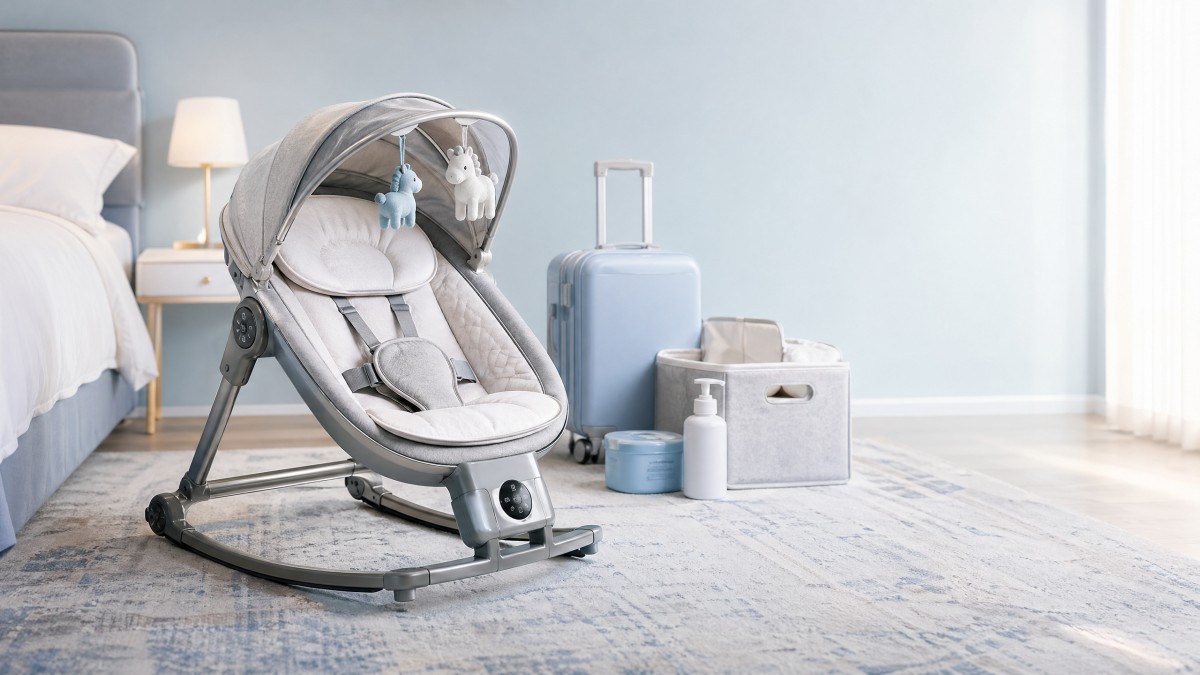
The travel service context changes how wholesale baby swings should be evaluated. In hospitality and tourism-linked operations, product reliability is measured not just by child comfort, but by turnover speed, cleaning resilience, portability, and room-level guest expectations. A quiet swing in a private home may still generate complaints in a hotel suite if the motor hum is noticeable at night or if setup instructions are too complex for rotating staff.
Usage density is one factor, but handling diversity is another. Unlike household owners who learn one product over time, hotel attendants, rental coordinators, and guest service teams may have only 5 to 10 minutes to inspect, clean, fold, and redeploy a unit. This creates more accidental stress on locking points, power adapters, harness buckles, and detachable toy bars. In these environments, maintenance-friendly design can reduce returns almost as much as core mechanical strength.
There is also a guest expectation shift. Parents traveling with infants are often more sensitive to cleanliness, sound level, and visible wear. A minor stain, faded textile, or jerky swing motion can result in immediate dissatisfaction even if the product remains technically functional. That is why after-sales teams should classify defects in two groups: safety-and-function failures, and experience failures that still trigger removal from service.
Impact by Travel-Facing Use Scenario
Different travel service scenarios place pressure on different specifications. The following comparison helps after-sales teams understand why the same wholesale baby swings may perform differently across operating settings.
This comparison shows why after-sales data should never be read without the use setting. A return trend in one travel service scenario may not mean the entire product line is weak; it may indicate the wrong spec profile for that deployment channel. The more precisely teams match field failures to operating conditions, the easier it becomes to lower replacement cost and improve sourcing accuracy.
What This Means for Maintenance Workflow
Maintenance teams should record at least four operational details with each case: days in service, estimated uses per day, cleaning frequency, and whether the unit was transported between rooms or properties. These four data points often reveal whether a problem came from material limits, handling stress, or electrical inconsistency. Without them, support teams may mislabel recurring spec issues as random misuse.
A practical benchmark is to review any model of wholesale baby swings that produces the same complaint category in more than 5% of units within the first 90 days of travel-related use. That threshold does not prove a design fault on its own, but it is strong enough to trigger a sourcing and maintenance review.
Where possible, after-sales teams should also separate field-repairable faults from replacement-only failures. If a problem can be solved within 15 to 20 minutes using approved spare parts, it belongs to a different cost category than a unit that must be withdrawn, shipped back, and replaced. This distinction is especially useful for large-scale travel operators managing distributed inventory.
How Specs, Compliance, and Serviceability Are Converging
One of the most important market changes is that product specification, compliance readiness, and after-sales practicality can no longer be reviewed separately. For wholesale baby swings, the conversation is moving beyond whether a unit simply looks modern or offers extra features. Buyers and support teams now pay closer attention to harness integrity, labeling clarity, spare-part traceability, and the consistency of test documentation supplied with each batch.
For travel service operators, certification-related details matter because they shape internal approval and liability review. After-sales personnel may not issue purchasing decisions, but they often become the first people asked whether a returned unit raises a safety concern or only a maintenance issue. That makes it essential to understand the difference between cosmetic wear, mechanical degradation, and compliance-sensitive failure such as buckle weakness, instability, or electrical irregularity.
Serviceability is becoming a major differentiator. Products with replaceable textiles, accessible fasteners, clear part coding, and stable adapter specification are easier to keep in circulation. In contrast, baby swings that require full-unit replacement for minor seat or harness problems create higher downtime and larger reverse logistics costs. For distributed travel operations, that cost can exceed the original unit price over a 12-month support window.
Signals of a More Service-Friendly Product Line
- Replacement seat covers, harness components, or adapters can be identified quickly by batch or part code.
- Operating labels remain readable after repeated wiping and do not peel after normal cleaning cycles.
- Assembly and troubleshooting steps are simple enough for staff training sessions lasting 20 to 30 minutes.
- Core documents for safety and product testing are organized consistently across production lots.
Where Compliance Concerns Overlap with Return Risk
A noisy unit is not automatically unsafe, and a stained textile is not automatically defective. However, some complaint categories deserve escalation. Sudden speed changes, harness slippage, visible cracking at load-bearing joints, unstable base contact, or overheating during normal operation should be treated as high-priority review points. In travel service environments, these issues can escalate quickly because more than one family may use the same unit within a short period.
This is why maintenance teams handling wholesale baby swings should have a clear triage structure. Level 1 can include cosmetic and accessory issues, Level 2 can cover repairable functional issues, and Level 3 should include safety-sensitive symptoms that trigger quarantine and sourcing feedback. A simple 3-level framework improves response speed and prevents minor cases from obscuring more serious patterns.
As global sourcing becomes more compliance-aware, after-sales records are also gaining strategic value. Well-documented fault trends help buyers ask better factory questions about materials, component stability, and production consistency before the next order cycle begins.
What After-Sales Teams Should Track Over the Next Buying Cycle
The next stage in reducing return rates is not only better repair execution, but better trend tracking. For teams supporting wholesale baby swings, the most useful records are those that connect fault type to product spec, service condition, and deployment channel. A simple log reviewed every 30 or 60 days can reveal which complaints are random and which are rooted in repeatable product limitations.
Trend-focused tracking should include product age, estimated use intensity, cleaning frequency, transport exposure, and replacement-part availability. These variables often explain why two similar-looking units perform differently. They also help procurement teams decide whether to upgrade motor grade, textile quality, structural reinforcement, or packaging design in the next sourcing round.
The strongest maintenance contribution is early warning. When after-sales teams can show that a complaint trend is linked to a narrow group of specs, they help the organization move from reactive replacement to preventive selection. In a market where guest expectations are rising and product turnover is faster, that shift can protect both cost control and service reputation.
Recommended Review Points Before Reordering
- Compare actual field use with the intended use scenario stated by the supplier.
- Review whether motor performance remains stable after 60 to 90 days in higher-frequency settings.
- Assess textile condition after repeated sanitation, not only at first delivery inspection.
- Confirm spare-part lead time, especially for adapters, seat pads, and harness components.
- Check whether packaging design reduces transit stress for rental, relocation, or multi-property operations.
For travel service operators, reordering decisions should also consider operational simplicity. A model with slightly higher unit cost may still generate lower total support cost if it cuts setup errors, reduces guest complaints, and allows faster room turnover. In many cases, the difference becomes visible within one quarter of active use.
Why Work With a Market Intelligence Partner That Understands Product Risk
When return rates rise, the problem is rarely solved by replacing units one by one. The better approach is to connect field symptoms with sourcing decisions, compliance expectations, and channel-specific use patterns. That is where a specialist intelligence partner adds value. For teams evaluating wholesale baby swings, it helps to work with a platform that understands both product-level detail and the wider shifts affecting baby and maternity sourcing in travel-linked retail and service channels.
Global Consumer Sourcing supports buyers, brand owners, and operations teams that need clearer judgment on product specifications, supplier fit, certification expectations, and trend direction. If your after-sales team is seeing repeated issues around motor noise, textile wear, frame stability, adaptor mismatch, or recurring complaint categories within the first 90 days, those signals can be turned into practical sourcing guidance rather than isolated service reports.
Contact us if you need support reviewing wholesale baby swings for parameter confirmation, model selection, delivery cycle planning, custom specification evaluation, certification requirements, sample coordination, or quotation discussion. We can help you compare use scenarios, identify which specs are most likely to influence returns, and improve product decisions before the next procurement cycle creates another wave of preventable after-sales cases.
Related Intelligence
 Skincare OEMAug 16, 2026Amazon Enforces AI Human Metadata Rule for Beauty and Personal Care SellersAmazon now enforces AI human metadata rules for beauty sellers. Learn how to protect listings, traffic, and compliance in skincare, cosmetics, and beauty devices.
 Beauty DevicesAug 15, 2026China to Roll Out Nationwide Cross-Border Cash Pooling for MultinationalsChina to roll out nationwide cross-border cash pooling for multinationals from Sept. 14. Discover how this policy could improve treasury efficiency, liquidity management, and China-linked supply chains.
 Beauty DevicesAug 14, 2026China Imposes Temporary Export Ban on Helium, Affecting Cooling Supply ChainsChina's temporary helium export ban may disrupt cooling supply chains for beauty RF devices and laser systems. Learn what ODMs, buyers, and procurement teams should check now.
![]() Cosmetics & PkgAug 13, 2026PPWR becomes mandatory: Beauty and personal care packaging materials usher in new EPR and PFAS compliance requirementsPPWR takes effect for cosmetics packaging in the EU, bringing EPR registration and PFAS limits. Learn what brands, importers, and suppliers must do now.
Cosmetics & PkgAug 13, 2026PPWR becomes mandatory: Beauty and personal care packaging materials usher in new EPR and PFAS compliance requirementsPPWR takes effect for cosmetics packaging in the EU, bringing EPR registration and PFAS limits. Learn what brands, importers, and suppliers must do now. Cosmetics & PkgAug 12, 2026EU PPWR Now Enforced for Beauty Packaging ComplianceEU PPWR now enforced for beauty packaging compliance: learn how EPR, ERN, heavy metals and PFAS rules affect EU exports, customs clearance and platform sales.
 Cosmetics & PkgAug 11, 2026EU PPWR Rules Take Effect on Aug. 12 for Beauty PackagingEU PPWR rules for beauty packaging take effect on Aug. 12, 2026. Learn key compliance steps, EPR, labeling, PFAS limits, and how to avoid customs delays and fines.
 Smart Pet DevicesAug 10, 2026EU EPR Rules to Cover Smart Pet Devices on Aug. 15EU EPR Rules will cover smart pet devices from Aug. 15, 2026. Learn how smart collars, feeders, and monitoring devices can avoid delisting, customs delays, and compliance risks in the EU.
 Infant Feeding & CareAug 09, 2026CPSC Recalls Baby Sleep Sacks Over Undeclared TDCPPCPSC Recalls Baby Sleep Sacks Over Undeclared TDCPP: learn how this 2026 recall impacts CPC documents, third-party testing, and U.S. baby product compliance for exporters.
 Infant Feeding & CareAug 08, 2026ECHA Adds 5 SVHCs, Importer Notices Due From Oct 2026ECHA adds 5 SVHCs to the Candidate List, with importer notices due from October 2026. Learn how REACH affects exporters, supply chains, and documentation readiness.
 Baby Gear & StrollersAug 07, 2026CPSC Revises Crib Rail Standard for November 2026CPSC revises crib rail standard for November 2026, adding dynamic impact tests and mandatory third-party lab testing. Learn how the new rule affects U.S. market access, compliance, and shipments.
 Electronic & RC ToysAug 06, 2026EU to Require EN IEC 62115:2025 for Electronic ToysEU to Require EN IEC 62115:2025 for Electronic Toys from Oct 1, 2026. Learn scope, battery and AI safety updates, CE compliance risks, and how exporters can avoid customs delays.
 Baby Gear & StrollersAug 05, 2026US Stroller Stability Rule Takes Effect Aug. 15US Stroller Stability Rule Takes Effect Aug. 15: learn how new U.S. stroller compliance, ASTM F833-26a, and CPSC testing rules may affect imports, certification, and shipment readiness.
 Infant Feeding & CareAug 04, 2026ECHA Adds 5 SVHCs, Triggering Baby Care Export ReviewECHA adds 5 SVHCs, prompting an urgent baby care export review for EU-bound products. Learn the 0.1% threshold risks, compliance steps, and how to avoid customs delays and fines.












