
Dog Chew Toys OEM Materials Compared: Rubber, Nylon, and TPR
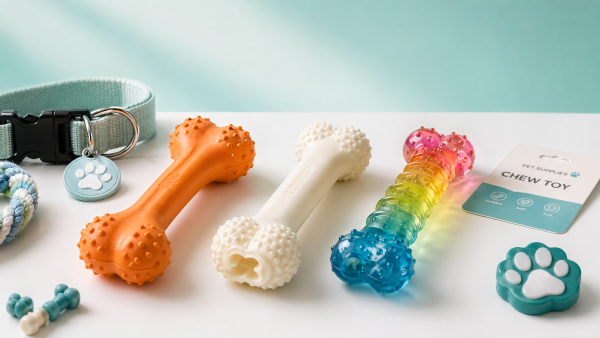
For technical evaluators comparing dog chew toys OEM options, material selection is where product safety, durability, and manufacturing efficiency intersect. Rubber, nylon, and TPR each offer distinct advantages in bite resistance, moldability, compliance potential, and cost control. This guide breaks down their differences to help sourcing teams make smarter OEM decisions for performance-driven pet product lines.
Why a checklist approach works best for dog chew toys OEM evaluation
In dog chew toys OEM sourcing, technical teams rarely fail because they do not know the names of the materials. They fail when a material that looks suitable in a sample round creates issues later in production, testing, shipping, or end-use. A checklist-based review prevents that by forcing evaluators to compare rubber, nylon, and TPR across the same decision points: bite performance, processing route, odor control, dimensional consistency, compliance pathway, and landed cost.
This matters even more for cross-border consumer sourcing, where a product line may need to pass 3 to 5 approval gates before launch: internal engineering review, packaging fit, chemical review, third-party testing, and retail buyer acceptance. In practical terms, the wrong material can add 2 to 6 weeks to development, especially when hardness, color migration, or mold design must be reworked after pilot production.
For technical evaluators in pet product programs, the goal is not to identify a universally “best” resin. The goal is to match the material to breed size, chew intensity, product geometry, and OEM factory capability. That is why the most efficient dog chew toys OEM process starts with a short list of non-negotiables and then moves into scenario-based trade-offs.
Start with these priority checks before comparing samples
- Define the intended dog segment clearly: puppy, small breed, medium breed, or heavy chewer. A toy for a 5 kg dog and one for a 30 kg dog should not share the same performance target.
- Set a hardness window early. Many OEM discussions become inefficient because buyers ask for “soft but durable” without a Shore range or comparative benchmark sample.
- Confirm whether the product requires one-piece molding, multi-material overmolding, or insert components. This can narrow the material choice within the first 48 hours of engineering review.
- Check the target compliance markets before tooling approval, since material additives and colorants may affect test planning and documentation requirements.
For GCS readers working with private-label pet programs, this structured process reduces redesign cycles and improves supplier communication. Instead of reviewing dog chew toys OEM options in general terms, buyers can evaluate them against measurable production and use-case criteria.
Material comparison checklist: rubber, nylon, and TPR at a glance
The first comparison should focus on the technical properties that affect both product function and OEM execution. Rubber, nylon, and TPR each serve a valid place in dog chew toys OEM development, but they behave very differently under chewing stress, tooling conditions, and finishing requirements. The table below gives evaluators a fast screening framework before moving into prototype review.
From a technical sourcing perspective, rubber tends to perform well when resilience and dog-friendly grip are priorities. Nylon often leads when shape retention and wear life are more important than softness. TPR usually becomes attractive when the project targets broad styling options, lower unit cost, and faster line extension across multiple SKUs.
What to measure during sample review
A useful dog chew toys OEM sample review should last beyond visual approval. At minimum, evaluate 7 to 10 factors in the first round: hardness consistency, gate marks, flash, odor, color stability, edge integrity, sink marks, rebound feel, surface slip, and packaging fit. This gives technical teams a realistic filter before lab testing or retail presentation.
Quick screening checklist
- Does the toy maintain structure after repeated compression and twist handling?
- Are there any sharp edges, brittle corners, or overly thin sections below the intended safety margin?
- Does the material show strong odor after 24 to 72 hours in sealed packaging conditions?
- Can the supplier repeat the same feel and color across at least 2 pilot batches?
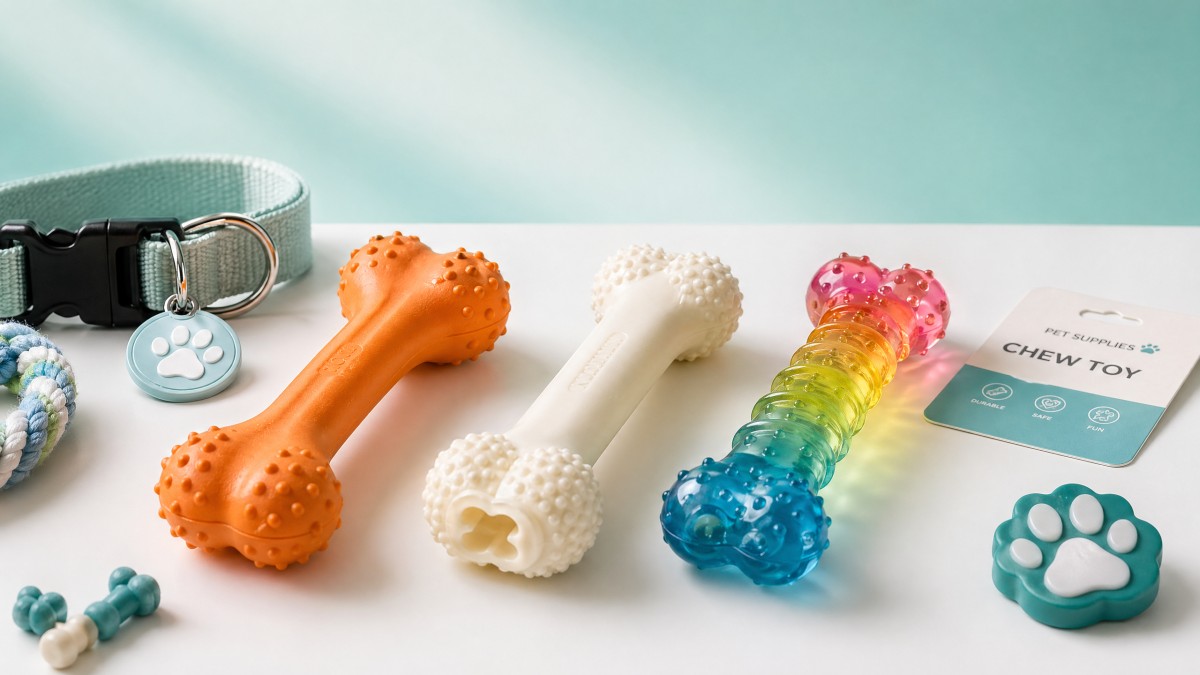
Selection checklist by performance target and dog segment
Material choice becomes clearer when evaluators stop asking “Which material is best?” and instead ask “Best for which use case?” In dog chew toys OEM programs, the same material can be ideal for one segment and a poor fit for another. Product geometry, wall thickness, and dog bite behavior all influence the correct choice.
As a practical rule, products for puppies and light chewers often prioritize softer tactile response and lower jaw strain, while products for strong adult chewers prioritize wear life and structural stability. If a brand is launching 4 to 8 SKUs in one season, splitting materials by use case may reduce complaint risk more effectively than trying to standardize the entire range on one resin family.
The table below can help technical evaluators align dog chew toys OEM material selection with performance goals and end-user expectations.
This matrix is especially helpful when technical evaluators need to brief sourcing, design, and compliance teams at the same time. Instead of debating material names in isolation, the team can connect resin choice to use intensity, complaint prevention, and retail positioning.
Use-case decision checklist
- If chew resistance is the main selling point, test nylon first, then compare rubber as a comfort alternative.
- If bounce, grip, and treat interaction matter most, prioritize rubber compounds with stable molding behavior.
- If the range needs rapid color expansion and accessible pricing, review TPR but define realistic use limitations on packaging and claims.
- If the shape contains thin ribs, internal cavities, or overmold features, ask the OEM to confirm process stability before design freeze.
In many dog chew toys OEM projects, this decision flow saves one full sample cycle because the first prototype already reflects the intended performance hierarchy rather than a generic material trial.
OEM production and compliance checks that should not be skipped
Technical evaluators should not separate material selection from factory execution. A theoretically strong material still creates commercial risk if the OEM cannot run it consistently. In dog chew toys OEM manufacturing, common variables include molding temperature control, cure timing, drying conditions for engineering resins, color dispersion, and trimming quality. These factors directly affect product safety, appearance, and return rates.
Lead time should also be reviewed by material type. Depending on tooling complexity, first article samples may take around 2 to 4 weeks after mold readiness, while pilot production may require another 1 to 3 weeks. If the chosen compound needs reformulation for odor, hardness, or color matching, the schedule can extend further. For sourcing teams working on seasonal launches, these timeline differences matter as much as resin cost.
Compliance planning is another major checkpoint. Dog chew toys OEM products often require chemical safety review, migration risk assessment, labeling checks, and document readiness from raw material suppliers. Even when a buyer has not finalized the destination market, it is wise to request the OEM’s standard documentation package at the RFQ stage rather than after bulk order confirmation.
Factory capability checklist
- Ask whether the factory has recent production experience with the same material family, not just pet toys in general.
- Confirm if the OEM controls compounding internally or relies fully on outside resin suppliers, since that affects repeatability and troubleshooting speed.
- Review how the supplier manages hardness tolerance, color matching, and odor reduction during pilot runs.
- Request a realistic defect review covering flash, bubbles, short shots, weld lines, and dimensional variation.
Documentation and test-planning reminders
For dog chew toys OEM projects entering regulated retail channels, technical teams should prepare a document checklist before finalizing PO terms. At minimum, that usually includes material declarations, colorant information, product specifications, packaging information, and agreed test scope. If the toy includes scent, flavor, or composite construction, the review depth may increase by 1 or 2 additional approval steps.
A disciplined approach here reduces friction later with brand protection, marketplace onboarding, and importer review. It also gives procurement a stronger basis for comparing supplier quotations that may look similar on price but differ significantly in process control and documentation quality.
Common decision errors in dog chew toys OEM programs
Most preventable mistakes happen when technical teams rely too heavily on first impressions. A sample may feel premium in hand but still be wrong for the target chew profile or retail channel. In dog chew toys OEM sourcing, the most expensive errors usually appear after tooling approval, when changing the material means revising cavity balance, wall thickness, packaging claims, or test planning.
Another common mistake is evaluating material without considering complaint scenarios. For example, a lower-cost TPR design may work well in the small-dog segment but create avoidable wear complaints if marketed too broadly. Likewise, a very hard nylon shape may look durable but generate user concerns if the geometry includes sharp transitions or aggressive edges after wear.
Teams should also avoid comparing quotations without normalizing the underlying assumptions. A dog chew toys OEM offer based on virgin resin, tighter tolerances, and controlled finishing is not equivalent to one based on looser process parameters. Price differences of 8% to 15% can reflect substantial quality or compliance gaps rather than simple supplier margin variation.
Risk reminder list
- Do not approve material solely by hardness; chew behavior depends on structure, geometry, and wall section as well.
- Do not assume “odor acceptable” in an open office equals odor acceptable after packed storage and long-distance transit.
- Do not let marketing claims outrun material reality; heavy-chewer positioning requires evidence from fit-for-purpose evaluation.
- Do not skip pilot-batch review if the product uses bright pigments, scents, or mixed-material construction.
Action plan: how to move from shortlist to approved OEM program
Once rubber, nylon, or TPR has been narrowed to 1 or 2 candidates, the next step is to convert technical judgment into an execution plan. For most dog chew toys OEM projects, that means defining the target dog segment, confirming hardness and structure, locking preliminary artwork, and aligning testing expectations before tooling investment. This sequence usually produces cleaner supplier communication than requesting final pricing too early.
A practical approval path can be completed in 4 stages: concept alignment, sample validation, pilot confirmation, and bulk-release review. For brands managing multiple SKUs, it is often useful to create a one-page material decision sheet for each item. This sheet should summarize resin type, intended dog size, expected chew level, color constraints, and compliance notes so cross-functional teams can review the same facts.
For technical evaluators using GCS as a sourcing intelligence resource, the real advantage comes from connecting material comparison with OEM readiness. In other words, dog chew toys OEM selection should not end at “rubber vs nylon vs TPR.” It should end with a supplier-backed plan for consistency, documentation, lead time, and product-market fit.
What to prepare before contacting an OEM or sourcing partner
- Target breed size and chew intensity for each SKU or concept.
- Reference samples or benchmark products showing the desired bite feel and finish level.
- Preferred material direction, or at least a ranked shortlist of rubber, nylon, and TPR.
- Expected compliance markets, packaging format, and launch timeline.
- Questions on tooling, sample lead time, color matching, testing support, and MOQ.
Why choose us
Global Consumer Sourcing supports technical evaluators, sourcing managers, and brand teams that need clearer decisions in dog chew toys OEM development. We help buyers compare material routes, screen supplier readiness, and translate product concepts into sourcing requirements that factories can execute. That includes support for parameter confirmation, material selection logic, sample planning, lead-time review, and certification-related preparation.
If you are comparing rubber, nylon, and TPR for a new pet line, contact us to discuss your target chew level, design structure, private-label needs, expected delivery window, and documentation requirements. We can help you organize the right questions before RFQ, evaluate sample differences more efficiently, and build a sourcing path that is commercially realistic as well as technically sound.
Related Intelligence
 Skincare OEMAug 16, 2026Amazon Enforces AI Human Metadata Rule for Beauty and Personal Care SellersAmazon now enforces AI human metadata rules for beauty sellers. Learn how to protect listings, traffic, and compliance in skincare, cosmetics, and beauty devices.
 Beauty DevicesAug 15, 2026China to Roll Out Nationwide Cross-Border Cash Pooling for MultinationalsChina to roll out nationwide cross-border cash pooling for multinationals from Sept. 14. Discover how this policy could improve treasury efficiency, liquidity management, and China-linked supply chains.
 Beauty DevicesAug 14, 2026China Imposes Temporary Export Ban on Helium, Affecting Cooling Supply ChainsChina's temporary helium export ban may disrupt cooling supply chains for beauty RF devices and laser systems. Learn what ODMs, buyers, and procurement teams should check now.
![]() Cosmetics & PkgAug 13, 2026PPWR becomes mandatory: Beauty and personal care packaging materials usher in new EPR and PFAS compliance requirementsPPWR takes effect for cosmetics packaging in the EU, bringing EPR registration and PFAS limits. Learn what brands, importers, and suppliers must do now.
Cosmetics & PkgAug 13, 2026PPWR becomes mandatory: Beauty and personal care packaging materials usher in new EPR and PFAS compliance requirementsPPWR takes effect for cosmetics packaging in the EU, bringing EPR registration and PFAS limits. Learn what brands, importers, and suppliers must do now. Cosmetics & PkgAug 12, 2026EU PPWR Now Enforced for Beauty Packaging ComplianceEU PPWR now enforced for beauty packaging compliance: learn how EPR, ERN, heavy metals and PFAS rules affect EU exports, customs clearance and platform sales.
 Cosmetics & PkgAug 11, 2026EU PPWR Rules Take Effect on Aug. 12 for Beauty PackagingEU PPWR rules for beauty packaging take effect on Aug. 12, 2026. Learn key compliance steps, EPR, labeling, PFAS limits, and how to avoid customs delays and fines.
 Smart Pet DevicesAug 10, 2026EU EPR Rules to Cover Smart Pet Devices on Aug. 15EU EPR Rules will cover smart pet devices from Aug. 15, 2026. Learn how smart collars, feeders, and monitoring devices can avoid delisting, customs delays, and compliance risks in the EU.
 Infant Feeding & CareAug 09, 2026CPSC Recalls Baby Sleep Sacks Over Undeclared TDCPPCPSC Recalls Baby Sleep Sacks Over Undeclared TDCPP: learn how this 2026 recall impacts CPC documents, third-party testing, and U.S. baby product compliance for exporters.
 Infant Feeding & CareAug 08, 2026ECHA Adds 5 SVHCs, Importer Notices Due From Oct 2026ECHA adds 5 SVHCs to the Candidate List, with importer notices due from October 2026. Learn how REACH affects exporters, supply chains, and documentation readiness.
 Baby Gear & StrollersAug 07, 2026CPSC Revises Crib Rail Standard for November 2026CPSC revises crib rail standard for November 2026, adding dynamic impact tests and mandatory third-party lab testing. Learn how the new rule affects U.S. market access, compliance, and shipments.
 Electronic & RC ToysAug 06, 2026EU to Require EN IEC 62115:2025 for Electronic ToysEU to Require EN IEC 62115:2025 for Electronic Toys from Oct 1, 2026. Learn scope, battery and AI safety updates, CE compliance risks, and how exporters can avoid customs delays.
 Baby Gear & StrollersAug 05, 2026US Stroller Stability Rule Takes Effect Aug. 15US Stroller Stability Rule Takes Effect Aug. 15: learn how new U.S. stroller compliance, ASTM F833-26a, and CPSC testing rules may affect imports, certification, and shipment readiness.
 Infant Feeding & CareAug 04, 2026ECHA Adds 5 SVHCs, Triggering Baby Care Export ReviewECHA adds 5 SVHCs, prompting an urgent baby care export review for EU-bound products. Learn the 0.1% threshold risks, compliance steps, and how to avoid customs delays and fines.












