
Pet Retail Research: Best-Selling Enrichment Furniture by Region
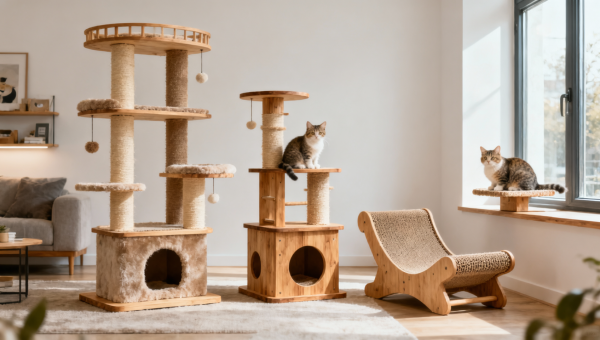
Pet retail research reveals that enrichment furniture demand varies sharply by region, shaped by housing size, pet humanization trends, and price sensitivity. For buyers, sourcing teams, and private-label brands, understanding these regional best-sellers is essential for building competitive assortments, reducing inventory risk, and aligning product development with fast-moving consumer expectations in the global pet market.
Why regional pet retail research matters for enrichment furniture planning
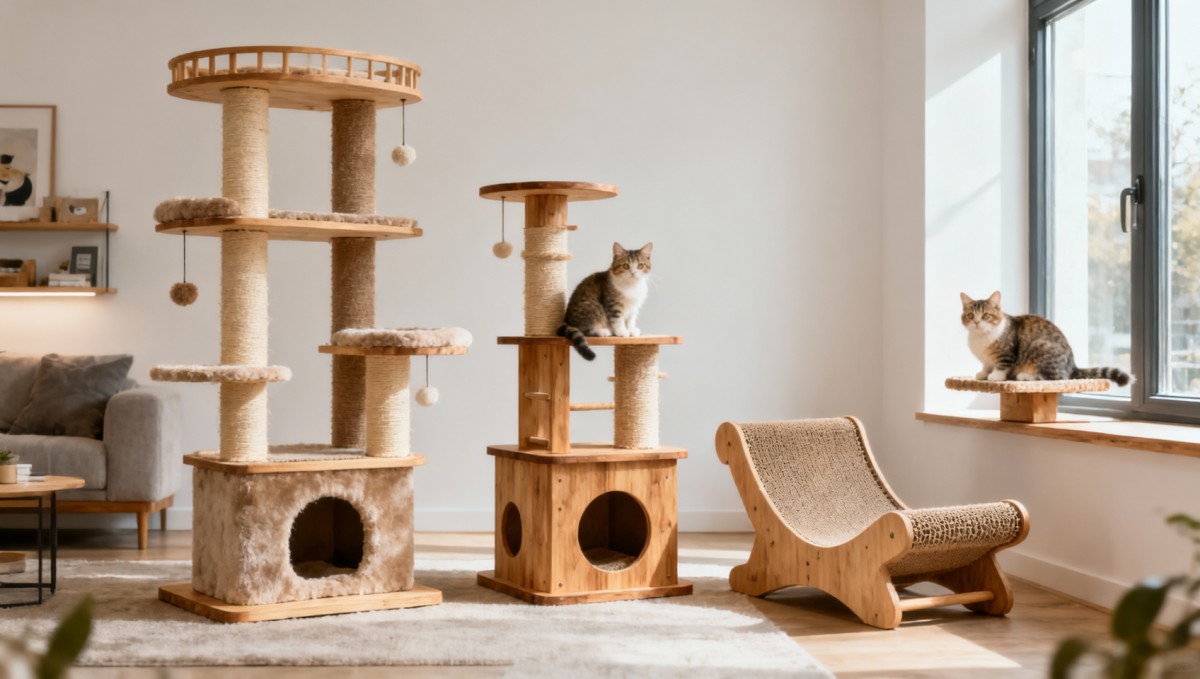
In the pet supplies sector, enrichment furniture includes cat trees, scratching lounges, window perches, modular climbing systems, pet steps, hideouts, and multi-use resting units designed to support exercise, comfort, and behavioral stimulation. For information researchers, the challenge is rarely defining the category. The real issue is deciding which product types travel well across markets and which should remain region-specific.
Strong pet retail research helps buyers move beyond generic trend claims. A product that performs well in a compact urban apartment market may fail in suburban regions where consumers prefer larger, furniture-style pet structures. Likewise, a low-cost corrugated scratcher may rotate quickly in one market but be seen as disposable and low-value in another where durability and interior aesthetics drive purchase decisions.
For sourcing teams, regional insight affects more than assortment. It shapes carton size strategy, material selection, compliance planning, replenishment speed, and private-label positioning. Global Consumer Sourcing supports this process by connecting market intelligence with manufacturing reality, so procurement teams can compare not just what is selling, but what can be produced consistently, certified appropriately, and shipped profitably.
- It reduces the risk of importing oversized, slow-turn models into small-home, price-sensitive markets.
- It helps private-label brands align finishes, color palettes, and packaging with local buying behavior.
- It improves forecast accuracy by separating demand driven by lifestyle trends from demand driven by necessity.
- It supports more disciplined supplier conversations around cost, lead time, testing, and material substitutions.
Which enrichment furniture sells best by region?
The following pet retail research summary highlights how regional conditions influence best-selling enrichment furniture. It is not a ranking of absolute sales volume. Instead, it shows the product formats most likely to match local housing, consumer expectations, and retail price architecture.
The main takeaway from this pet retail research table is that “best-selling” does not mean one universal hero SKU. Regional winners often differ in size, finish, assembly complexity, and acceptable price band. Buyers who ignore these variables usually over-invest in broad catalogs and under-invest in localized product architecture.
North America: size and multi-function still convert
In North America, enrichment furniture often performs best when it combines resting, scratching, climbing, and visual appeal in a single unit. Consumers are willing to pay more for larger formats if the product looks stable, easy to assemble, and suitable for multiple cats. For retailers, this means high review sensitivity. Weak hardware, wobbling platforms, or thin sisal can quickly erode repeat orders.
Western Europe: compact, durable, and design-led
Western European demand favors cleaner silhouettes and more restrained colorways. Pet furniture is often expected to fit within modern interiors rather than stand apart from them. This makes material finish, FSC-related sourcing discussions, and plastic reduction more important during supplier assessment. A slightly higher unit cost can still work if packaging efficiency and perceived design value are strong.
Asia urban markets: space efficiency wins
In Japan, South Korea, Singapore, and similar dense urban environments, enrichment furniture that uses vertical space without creating visual clutter is more attractive. Slim towers, corner-fit units, and modular shelves can outperform bulky cat condos. Here, pet retail research must include dimensional analysis, not just style mapping, because footprint sensitivity is often decisive.
How should buyers compare product formats before sourcing?
When reviewing category opportunities, buyers need a comparison framework that connects consumer appeal with procurement practicality. The table below translates pet retail research into product selection logic for private-label and retail assortment planning.
This comparison shows why pet retail research should include both market demand and operational fit. A popular format may still be a weak sourcing choice if return rates, assembly complaints, or shipping inefficiency eliminate margin. Strong assortment planning balances what shoppers want with what the supply chain can support.
What technical and commercial factors influence regional best-sellers?
Enrichment furniture purchasing decisions are rarely based on appearance alone. Retailers and sourcing managers should review a consistent set of technical and commercial factors before confirming line expansion or private-label development.
Material choices shape both perception and performance
- Engineered wood creates a furniture-like look but increases weight and freight exposure.
- Corrugated board supports value retail and easy replacement cycles, but it needs careful moisture protection in humid markets.
- Sisal rope remains a core scratching material, yet buyers should examine winding density and adhesive use to limit early wear.
- Plush fabric and felt finishes add comfort, but they also raise questions about shedding, cleanability, and odor retention.
Carton size and assembly design can decide commercial success
Pet retail research often underestimates the role of packaging. In e-commerce channels, oversized cartons raise fulfillment fees and increase damage claims. In store-based retail, complex assembly lowers customer satisfaction and creates more service inquiries. As a result, KD design, hardware organization, instruction clarity, and drop-test readiness should be reviewed early, not after sampling.
Price positioning must reflect regional value logic
Value does not always mean low price. In some markets, shoppers accept a higher ticket if the unit looks like home furniture and lasts longer. In others, first-time buyers prefer smaller trial purchases. GCS helps procurement teams translate these market signals into more realistic target cost ranges and SKU ladders, reducing the gap between concept boards and purchase orders.
Procurement guide: how to build a lower-risk regional assortment
For information researchers moving toward sourcing decisions, a practical process is more useful than broad trend commentary. The following steps can help structure pet retail research into an actionable buying plan.
- Segment the target market by housing type, pet type, and channel. Apartment-heavy e-commerce markets should not be treated like suburban specialty retail.
- Define the opening price point, mid-tier offer, and premium statement SKU before supplier outreach. This prevents random sample requests and saves development time.
- Request dimensional drawings, carton specs, and assembly structure together with visual mockups. Lifestyle images alone are not enough for commercial evaluation.
- Check whether materials and finishes align with local compliance expectations, especially for coatings, adhesives, and labeling requirements.
- Run small-batch sampling across at least two product formats to compare consumer feedback, damage risk, and review quality before scaling.
This method works especially well for private-label programs that need regional differentiation without creating an unmanageable SKU count. One core frame can often support multiple covers, colors, or accessory variations, allowing targeted localization with lower tooling disruption.
Compliance, safety, and quality checks buyers should not overlook
Pet enrichment furniture may appear simple, but buyers still need to manage product safety and material due diligence carefully. Requirements differ by market and sales channel, so the right approach is to confirm applicable standards before finalizing packaging, labels, and production specifications.
The practical lesson is simple: pet retail research should include quality control checkpoints from the start. A regionally attractive SKU can still underperform if it arrives damaged, sheds heavily, or creates assembly frustration. Experienced sourcing teams treat compliance and durability review as sales protection, not administrative overhead.
Common mistakes in pet retail research and category planning
Many category teams make avoidable mistakes when entering or expanding enrichment furniture lines. These errors are especially common when internal teams rely on trend images without connecting them to market fit and supply chain execution.
- Assuming one bestselling cat tree can serve every export market, despite major differences in apartment size and preferred aesthetics.
- Prioritizing visual bulk over usable functionality, which can create poor reviews from pet owners whose cats ignore the product.
- Ignoring carton dimensions until late-stage costing, then discovering freight makes the SKU uncompetitive.
- Overbuilding the assortment with too many sizes and finishes before testing core demand in a specific region.
- Treating compliance as a post-order task rather than part of vendor qualification and sample review.
Good pet retail research is disciplined enough to reject attractive but inefficient ideas. The goal is not a larger catalog. It is a sharper one.
FAQ: practical questions buyers ask during pet retail research
How do I choose between large cat trees and compact vertical units?
Start with housing patterns and retail channel. Large cat trees suit markets with more floor space and stronger premium demand. Compact vertical units are more suitable for dense urban markets and online retail where carton size matters. Review both consumer fit and landed cost before making the decision.
Which enrichment furniture formats are easiest for private-label development?
Mid-sized scratch towers, corrugated lounges, and modular compact climbers are often easier starting points. They usually require fewer components than large furniture systems and allow changes in color, fabric, logo placement, or packaging without fully redesigning the structure.
What should buyers ask suppliers during sample evaluation?
Ask for material breakdown, hardware details, assembly instructions, load-bearing explanation, carton specs, and any available test references relevant to the destination market. Also ask what substitutions are possible if target cost needs adjustment, because material changes can alter both durability and perceived value.
How long does regional assortment validation usually take?
That depends on the complexity of the product line and the number of markets involved. In practice, teams should allow time for concept screening, supplier comparison, sampling, packaging review, and at least one round of refinement. Rushed decisions often create problems that appear later in returns, complaints, or weak sell-through.
Why work with us for pet retail research and sourcing intelligence?
Global Consumer Sourcing helps buyers, brand owners, and procurement teams turn pet retail research into category decisions that are commercially realistic. We connect regional demand signals with supplier capabilities, product development logic, and compliance-focused sourcing discussions across the pet economy.
If you are evaluating enrichment furniture by region, we can support specific needs such as parameter confirmation, product format comparison, private-label assortment planning, carton and freight review, sample coordination, certification-related questions, and quote alignment with target market positioning.
- Need help comparing compact versus premium enrichment furniture for different regions? We can help define the right SKU ladder.
- Unsure how to balance target cost with durability and presentation? We can guide supplier-side tradeoff analysis.
- Working on a private-label launch? We can support product selection, sample priorities, and compliance-oriented review points.
- Need clearer visibility on lead time, packaging efficiency, or quotation structure? We can help frame the right procurement questions before commitment.
For teams that want sharper pet retail research, faster sourcing decisions, and more region-appropriate enrichment furniture assortments, this is the right point to start a focused discussion around specifications, timelines, customization options, and sample strategy.
Related Intelligence
 Skincare OEMAug 16, 2026Amazon Enforces AI Human Metadata Rule for Beauty and Personal Care SellersAmazon now enforces AI human metadata rules for beauty sellers. Learn how to protect listings, traffic, and compliance in skincare, cosmetics, and beauty devices.
 Beauty DevicesAug 15, 2026China to Roll Out Nationwide Cross-Border Cash Pooling for MultinationalsChina to roll out nationwide cross-border cash pooling for multinationals from Sept. 14. Discover how this policy could improve treasury efficiency, liquidity management, and China-linked supply chains.
 Beauty DevicesAug 14, 2026China Imposes Temporary Export Ban on Helium, Affecting Cooling Supply ChainsChina's temporary helium export ban may disrupt cooling supply chains for beauty RF devices and laser systems. Learn what ODMs, buyers, and procurement teams should check now.
![]() Cosmetics & PkgAug 13, 2026PPWR becomes mandatory: Beauty and personal care packaging materials usher in new EPR and PFAS compliance requirementsPPWR takes effect for cosmetics packaging in the EU, bringing EPR registration and PFAS limits. Learn what brands, importers, and suppliers must do now.
Cosmetics & PkgAug 13, 2026PPWR becomes mandatory: Beauty and personal care packaging materials usher in new EPR and PFAS compliance requirementsPPWR takes effect for cosmetics packaging in the EU, bringing EPR registration and PFAS limits. Learn what brands, importers, and suppliers must do now. Cosmetics & PkgAug 12, 2026EU PPWR Now Enforced for Beauty Packaging ComplianceEU PPWR now enforced for beauty packaging compliance: learn how EPR, ERN, heavy metals and PFAS rules affect EU exports, customs clearance and platform sales.
 Cosmetics & PkgAug 11, 2026EU PPWR Rules Take Effect on Aug. 12 for Beauty PackagingEU PPWR rules for beauty packaging take effect on Aug. 12, 2026. Learn key compliance steps, EPR, labeling, PFAS limits, and how to avoid customs delays and fines.
 Smart Pet DevicesAug 10, 2026EU EPR Rules to Cover Smart Pet Devices on Aug. 15EU EPR Rules will cover smart pet devices from Aug. 15, 2026. Learn how smart collars, feeders, and monitoring devices can avoid delisting, customs delays, and compliance risks in the EU.
 Infant Feeding & CareAug 09, 2026CPSC Recalls Baby Sleep Sacks Over Undeclared TDCPPCPSC Recalls Baby Sleep Sacks Over Undeclared TDCPP: learn how this 2026 recall impacts CPC documents, third-party testing, and U.S. baby product compliance for exporters.
 Infant Feeding & CareAug 08, 2026ECHA Adds 5 SVHCs, Importer Notices Due From Oct 2026ECHA adds 5 SVHCs to the Candidate List, with importer notices due from October 2026. Learn how REACH affects exporters, supply chains, and documentation readiness.
 Baby Gear & StrollersAug 07, 2026CPSC Revises Crib Rail Standard for November 2026CPSC revises crib rail standard for November 2026, adding dynamic impact tests and mandatory third-party lab testing. Learn how the new rule affects U.S. market access, compliance, and shipments.
 Electronic & RC ToysAug 06, 2026EU to Require EN IEC 62115:2025 for Electronic ToysEU to Require EN IEC 62115:2025 for Electronic Toys from Oct 1, 2026. Learn scope, battery and AI safety updates, CE compliance risks, and how exporters can avoid customs delays.
 Baby Gear & StrollersAug 05, 2026US Stroller Stability Rule Takes Effect Aug. 15US Stroller Stability Rule Takes Effect Aug. 15: learn how new U.S. stroller compliance, ASTM F833-26a, and CPSC testing rules may affect imports, certification, and shipment readiness.
 Infant Feeding & CareAug 04, 2026ECHA Adds 5 SVHCs, Triggering Baby Care Export ReviewECHA adds 5 SVHCs, prompting an urgent baby care export review for EU-bound products. Learn the 0.1% threshold risks, compliance steps, and how to avoid customs delays and fines.












