
Pet Brand Procurement Guide for Lower-Risk Grooming Suppliers
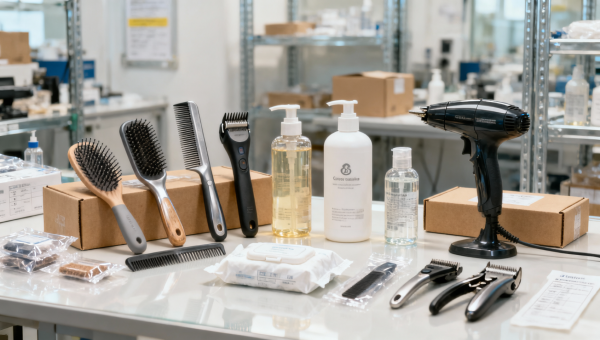
For procurement teams navigating the pet economy, effective pet brand procurement starts with choosing grooming suppliers that reduce compliance, quality, and delivery risks. This guide explains how to assess OEM/ODM readiness, product safety controls, private-label flexibility, and operational resilience when sourcing pet grooming lines such as brushes, combs, nail grinders, shampoos, wipes, clippers, and accessories. With a structured evaluation process, pet brand procurement becomes less reactive and more strategic, helping businesses protect brand reputation, improve margin control, and launch reliable pet products with greater confidence.
What makes pet brand procurement for grooming products higher risk than it first appears?
Pet grooming is often viewed as a straightforward category, but the risks are broader than simple product sourcing. In pet brand procurement, grooming items touch an animal’s skin, coat, eyes, ears, paws, and nails, which means material safety, ergonomic design, and usage durability all matter. A brush with sharp finishing edges, a clipper that overheats, or a wipe formula with unstable ingredients can quickly lead to complaints, returns, or marketplace penalties.
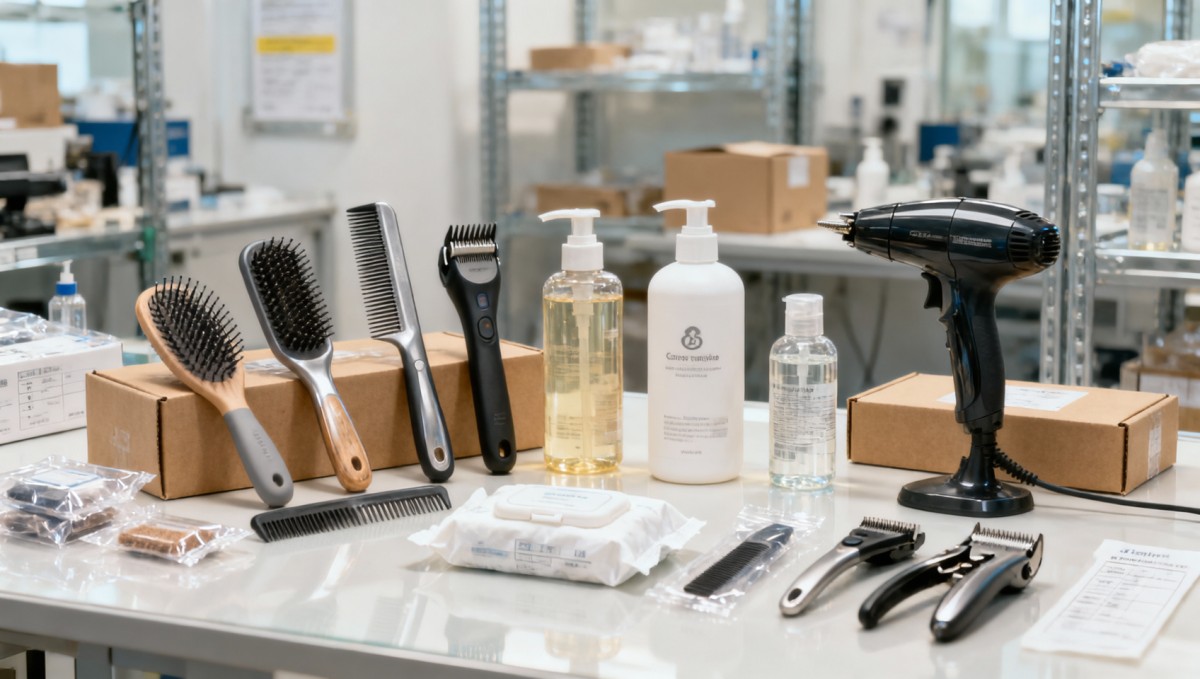
Another layer of complexity comes from the mix of product types. Hardgoods such as slicker brushes or de-shedding tools require checks on material composition, coating adhesion, rust resistance, and mechanical stability. Liquid or semi-liquid grooming products add formula verification, microbiological control, packaging compatibility, and shelf-life concerns. In practical pet brand procurement, one supplier may be strong in injection molding but weak in filling and cosmetic-grade quality systems, so category fit should never be assumed.
Regulatory expectations also vary by market. Claims like hypoallergenic, natural, tear-free, or antibacterial can trigger stricter documentation review. Electrical tools may need additional testing, while packaging for consumer retail channels must meet labeling, barcode, warning, and traceability requirements. Lower-risk sourcing begins by recognizing that grooming products sit at the intersection of pet care, consumer goods, and in some cases cosmetic-style compliance.
How should pet brand procurement teams evaluate a grooming supplier’s real OEM/ODM capability?
A lower-risk supplier should be able to do more than quote a price. In pet brand procurement, strong OEM/ODM capability means the supplier can translate a concept into a consistent, market-ready product with clear development steps and controlled execution. That includes design input, prototyping, material recommendations, packaging coordination, testing support, and production scalability.
A practical evaluation usually starts with these questions:
- Can the supplier show existing grooming category experience rather than unrelated household items?
- Do they own development processes or mostly trade through third-party factories?
- Can they adapt materials, colorways, packaging, and logo application for private-label programs?
- Do they provide test reports, bill of materials details, and revision control during sampling?
- Can they support low MOQs for trial runs and then scale for repeat orders?
In many pet brand procurement projects, sample quality reveals more than the sales presentation. Review trim quality, edge finishing, uniformity, assembly strength, printing adhesion, scent profile if applicable, and consumer-facing packaging details. Ask for samples from different production dates to see whether consistency holds. A supplier that only produces one excellent hand-picked sample but struggles to maintain repeatability is not truly lower risk.
It is also useful to understand where value-added work happens. If packaging, formula filling, metal component processing, and final assembly are spread across multiple subcontractors, lead times and accountability can weaken. Pet brand procurement works better when the supplier has visible control over its upstream network and can explain who manages each critical stage.
Which safety, quality, and compliance checks matter most before placing an order?
The most effective pet brand procurement process uses a layered review rather than a single certificate check. Certificates are important, but they do not replace product-specific validation. For grooming products, the first priority is matching the test scope to the item itself. A pet shampoo, stainless steel comb, and electric nail grinder each require different review criteria.
Key checks often include raw material declarations, restricted substance screening, microbiological testing for wet products, packaging compatibility tests, drop or transit testing, battery or plug compliance for electrical items, and labeling accuracy. If claims are being made on pack or in online listings, supporting substantiation should be requested early, not after packaging has been printed.
Factory process controls are equally important. In pet brand procurement, ask how incoming materials are inspected, how non-conforming goods are isolated, how lot numbers are assigned, and what final inspection standards are used. A supplier should be able to describe defect classification, acceptable quality levels, and corrective action records. If the response stays vague, risk usually sits behind the quote.
How can buyers compare suppliers beyond price during pet brand procurement?
The lowest quote rarely equals the lowest total cost. In pet brand procurement, a better comparison framework includes unit economics, lead-time reliability, defect risk, packaging efficiency, claim support, and communication quality. A supplier offering a lower FOB price may use weaker bristles, thinner plastics, unstable fragrance systems, or less protective packaging that drives up return rates after launch.
A useful comparison method is to score each supplier across weighted dimensions. Typical dimensions include category expertise, documentation quality, sample consistency, MOQ flexibility, speed of revisions, production capacity, social and environmental standards, and responsiveness during issue resolution. This is especially helpful in pet brand procurement because grooming products often need repeated refinements before they are retail ready.
Private-label readiness should also be compared carefully. Some suppliers accept logo placement but cannot support differentiated mold features, custom formulas, premium giftable packaging, or multilingual labeling. Others may offer stronger development support but longer mold lead times. The right choice depends on whether the goal is rapid market entry, premium positioning, seasonal launches, or long-term line expansion.
Quick supplier comparison checklist
- Quoted lead time versus proven on-time shipment history
- Sampling speed versus sample-to-bulk consistency
- MOQ flexibility versus margin stability
- Claim support versus marketing risk
- Customization depth versus tooling and revision cost
What common mistakes increase risk in pet brand procurement for grooming lines?
One common mistake is treating all grooming products as generic commodities. A de-matting comb for long-haired dogs, a soft brush for cats, and a puppy-safe shampoo have different user expectations and risk profiles. When specifications are copied from a marketplace listing instead of built from actual category requirements, quality drift becomes much more likely.
Another mistake is overreliance on catalog claims. In pet brand procurement, “export quality” or “compliant materials” should never replace actual documentation, sample testing, and production transparency. A strong-looking factory audit means little if the exact product being ordered has not been validated for the intended market.
Underestimating packaging is another expensive error. Grooming liquids can leak, electrical tools can be damaged in transit, and brush heads can deform if packed poorly. Protective inserts, sealing quality, carton strength, and shipping configuration affect not only damage rates but also unboxing perception and review quality.
Finally, many sourcing problems begin with incomplete specification sheets. Lower-risk pet brand procurement requires precise details on dimensions, materials, color standards, claim wording, accessories, barcode placement, carton marks, and inspection tolerances. Ambiguity tends to reappear later as rework, disputes, or rushed air freight.
How do lead time, MOQ, and supply chain resilience affect long-term sourcing success?
A supplier may pass sample and compliance checks but still create operational risk if lead times are unstable or MOQ structures are too rigid. In pet brand procurement, grooming lines often include seasonal gifting sets, promotional bundles, and new-SKU testing. That makes planning flexibility extremely valuable.
Lead time should be broken into stages: development, approvals, raw material booking, production, packaging, final inspection, and shipping handoff. Delays often happen between these steps rather than on the production line itself. Ask which components have long replenishment cycles, whether safety stock exists for popular materials, and how forecast changes are handled.
MOQ should also be evaluated in context. A low MOQ can help test demand, but if it comes with unstable unit pricing, weak packaging options, or limited quality controls, the benefit may be short-lived. In pet brand procurement, the best arrangement is often a phased structure: smaller initial runs for validation, followed by larger repeat orders tied to clearer demand data.
Resilience depends on visibility. A lower-risk supplier can explain alternative material sources, backup production planning, quality escalation steps, and how they respond to disruptions such as power limits, port congestion, or formula ingredient shortages. This kind of operational clarity is often a stronger predictor of long-term performance than the first quotation.
What should the final pet brand procurement decision include before launch?
Before confirming mass production, the final pet brand procurement decision should combine commercial, technical, and operational sign-off. That means approved golden samples, locked specifications, verified labeling, agreed inspection criteria, confirmed packaging configuration, and documented corrective actions from any sample-stage issues. If liquid or electrical grooming items are involved, batch controls and post-market complaint handling should also be clarified.
A practical next step is to build a simple supplier approval file for each grooming SKU family. Include product risk level, required tests, key claims, artwork version history, lead-time map, and contingency notes. This makes future reorders faster and reduces the chance that important details get lost when line extensions or packaging updates are introduced.
Effective pet brand procurement is not just about finding a supplier that can make a brush or bottle. It is about choosing a partner that can consistently deliver safe, compliant, private-label-ready grooming products with stable quality and realistic timelines. When sourcing decisions are built on verification rather than assumptions, grooming programs become easier to scale, easier to defend, and better positioned for profitable growth. For organizations seeking deeper intelligence on supplier evaluation, compliance trends, and category-specific sourcing strategy, GCS offers a stronger foundation for smarter pet product decisions.
Related Intelligence
 Skincare OEMAug 16, 2026Amazon Enforces AI Human Metadata Rule for Beauty and Personal Care SellersAmazon now enforces AI human metadata rules for beauty sellers. Learn how to protect listings, traffic, and compliance in skincare, cosmetics, and beauty devices.
 Beauty DevicesAug 15, 2026China to Roll Out Nationwide Cross-Border Cash Pooling for MultinationalsChina to roll out nationwide cross-border cash pooling for multinationals from Sept. 14. Discover how this policy could improve treasury efficiency, liquidity management, and China-linked supply chains.
 Beauty DevicesAug 14, 2026China Imposes Temporary Export Ban on Helium, Affecting Cooling Supply ChainsChina's temporary helium export ban may disrupt cooling supply chains for beauty RF devices and laser systems. Learn what ODMs, buyers, and procurement teams should check now.
![]() Cosmetics & PkgAug 13, 2026PPWR becomes mandatory: Beauty and personal care packaging materials usher in new EPR and PFAS compliance requirementsPPWR takes effect for cosmetics packaging in the EU, bringing EPR registration and PFAS limits. Learn what brands, importers, and suppliers must do now.
Cosmetics & PkgAug 13, 2026PPWR becomes mandatory: Beauty and personal care packaging materials usher in new EPR and PFAS compliance requirementsPPWR takes effect for cosmetics packaging in the EU, bringing EPR registration and PFAS limits. Learn what brands, importers, and suppliers must do now. Cosmetics & PkgAug 12, 2026EU PPWR Now Enforced for Beauty Packaging ComplianceEU PPWR now enforced for beauty packaging compliance: learn how EPR, ERN, heavy metals and PFAS rules affect EU exports, customs clearance and platform sales.
 Cosmetics & PkgAug 11, 2026EU PPWR Rules Take Effect on Aug. 12 for Beauty PackagingEU PPWR rules for beauty packaging take effect on Aug. 12, 2026. Learn key compliance steps, EPR, labeling, PFAS limits, and how to avoid customs delays and fines.
 Smart Pet DevicesAug 10, 2026EU EPR Rules to Cover Smart Pet Devices on Aug. 15EU EPR Rules will cover smart pet devices from Aug. 15, 2026. Learn how smart collars, feeders, and monitoring devices can avoid delisting, customs delays, and compliance risks in the EU.
 Infant Feeding & CareAug 09, 2026CPSC Recalls Baby Sleep Sacks Over Undeclared TDCPPCPSC Recalls Baby Sleep Sacks Over Undeclared TDCPP: learn how this 2026 recall impacts CPC documents, third-party testing, and U.S. baby product compliance for exporters.
 Infant Feeding & CareAug 08, 2026ECHA Adds 5 SVHCs, Importer Notices Due From Oct 2026ECHA adds 5 SVHCs to the Candidate List, with importer notices due from October 2026. Learn how REACH affects exporters, supply chains, and documentation readiness.
 Baby Gear & StrollersAug 07, 2026CPSC Revises Crib Rail Standard for November 2026CPSC revises crib rail standard for November 2026, adding dynamic impact tests and mandatory third-party lab testing. Learn how the new rule affects U.S. market access, compliance, and shipments.
 Electronic & RC ToysAug 06, 2026EU to Require EN IEC 62115:2025 for Electronic ToysEU to Require EN IEC 62115:2025 for Electronic Toys from Oct 1, 2026. Learn scope, battery and AI safety updates, CE compliance risks, and how exporters can avoid customs delays.
 Baby Gear & StrollersAug 05, 2026US Stroller Stability Rule Takes Effect Aug. 15US Stroller Stability Rule Takes Effect Aug. 15: learn how new U.S. stroller compliance, ASTM F833-26a, and CPSC testing rules may affect imports, certification, and shipment readiness.
 Infant Feeding & CareAug 04, 2026ECHA Adds 5 SVHCs, Triggering Baby Care Export ReviewECHA adds 5 SVHCs, prompting an urgent baby care export review for EU-bound products. Learn the 0.1% threshold risks, compliance steps, and how to avoid customs delays and fines.












