
Pet Product Standards That Matter for Auto Feeders and Fountains
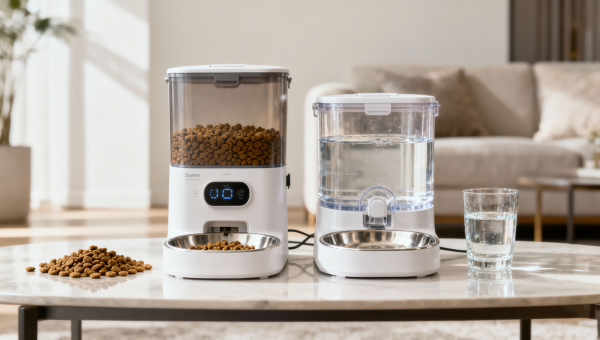
For technical evaluators sourcing smart pet essentials, understanding pet product standards is critical when assessing auto feeders and water fountains. Beyond basic functionality, these products must meet safety, material, electrical, and compliance requirements that directly affect product reliability, market access, and brand risk. This article highlights the standards that matter most for informed supplier screening and specification review.
In the pet supplies sector, automatic feeders and pet fountains sit at the intersection of food contact safety, low-voltage electronics, pump durability, and daily-use hygiene. For sourcing teams, one weak point—such as non-compliant plastics, poor sealing, unstable dosing accuracy, or incomplete test reports—can create returns, regulatory delays, and reputational damage across 2 to 3 sales regions at once.
For buyers working with OEM or ODM suppliers, pet product standards should be reviewed as a full specification system rather than a single certificate. A sound evaluation typically covers 6 areas: materials, electrical safety, EMC, mechanical integrity, hygiene design, and documentation control. That framework is especially useful when benchmarking suppliers for private-label programs or multi-market retail launches.
Why Pet Product Standards Matter in Smart Feeding and Hydration Devices
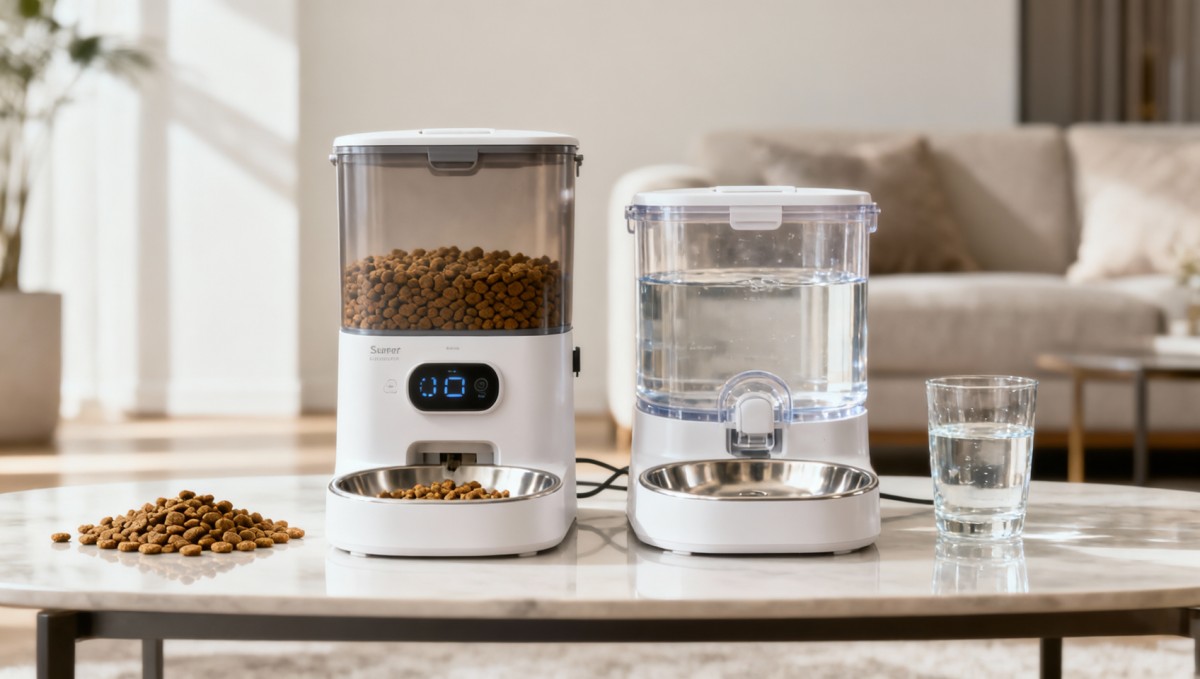
Auto feeders and fountains are not passive accessories. They store kibble for 7 to 30 days, dispense food in repeated cycles, or circulate water for 12 to 24 hours per day. That usage profile increases the importance of pet product standards because the device touches consumables, runs on electricity, and is exposed to moisture, pet saliva, and repeated cleaning.
From a technical review perspective, the risk profile is broader than many first-time buyers expect. A feeder may fail through motor jamming, portion drift of 5% to 15%, or pest ingress due to poor lid sealing. A fountain may present overheating risk, biofilm retention in dead corners, or pump noise above acceptable indoor thresholds. Standards help convert these risks into measurable acceptance criteria.
Key procurement risks behind non-compliant designs
- Food-contact components without documented compliance for plastics, silicone, or coatings
- Adapters, batteries, or USB power modules lacking regional electrical conformity
- Ingress protection that is insufficient for kitchens, laundry areas, or pet wash zones
- Pumps and motors failing endurance checks before 3 to 6 months of regular use
- Weak traceability across tooling changes, sub-supplier swaps, or resin batch variation
What technical evaluators should verify first
The first filter should focus on whether the supplier can provide a consistent compliance file, not just a sales sheet. In practice, this means checking bill of materials alignment, declaration coverage for food-contact parts, electrical test records, and product drawings with revision control. A factory that can assemble a complete technical file within 3 to 5 working days is usually more mature than one relying on fragmented third-party paperwork.
The table below summarizes the main standard areas and the reason each one affects feeder and fountain qualification.
The most important conclusion is that pet product standards should be mapped to the actual use case. A gravity-fed bowl and a smart Wi-Fi feeder do not carry the same compliance burden. Likewise, a 2-liter fountain with a low-voltage pump needs different test emphasis than a dry-food dispenser with a desiccant lid, anti-jam auger, and backup battery.
Material and Food-Contact Standards for Feeders and Fountains
Material review is one of the highest-priority stages because both product categories interact directly with food or water. For technical teams, pet product standards in this area should cover resin type, additive disclosure, stainless steel grade where used, silicone gasket composition, and the likelihood of migration, odor retention, or stress cracking after 50 to 100 wash cycles.
Common material choices and what to look for
In feeders, food bins and dispensing paths often use PP, ABS, or transparent PC-like materials, while fountains may combine PP housings with 304 stainless steel water trays and silicone seals. The issue is not only the base material, but also whether colorants, recycled content, UV additives, and mold-release practices are controlled. A supplier should be able to identify which components are food-contact and which are structural only.
Four material checkpoints
- Verify food-contact declarations for every wetted or food-touch component, not only the main tank.
- Check whether stainless steel is used in bowls or trays where scratching and odor build-up matter most.
- Confirm resistance to common cleaning conditions, including warm water, mild detergent, and weekly disassembly.
- Review sealing materials for compression fatigue if the product opens daily or runs continuously.
For private-label sourcing, many failures arise from unnoticed substitutions during cost-down projects. A gasket changed from food-grade silicone to lower-grade elastomer, or a clear hopper swapped to a more brittle resin, may not affect appearance during initial inspection but can change safety and service life within 60 to 180 days of use.
Hygiene-oriented design requirements
Good pet product standards also include hygienic design principles. Sharp internal corners, narrow channels below 5 mm, inaccessible pump cavities, or textured surfaces in wet zones can trap residue and biofilm. In practical review, ask whether the fountain can be fully disassembled without tools in under 3 minutes, and whether all food-path parts in a feeder can be hand-washed without exposing electronics.
The table below can help technical evaluators compare material-related acceptance points when screening suppliers.
When suppliers can explain material selection at component level, technical confidence rises quickly. That level of detail is often a better indicator than marketing claims such as “premium plastic” or “safe for pets,” which are too vague for formal sourcing approval.
Electrical, EMC, and Moisture Protection Standards
Powered feeders and fountains require a second layer of scrutiny: electrical integrity under real household conditions. Water fountains combine low-voltage circuits with continuous moisture exposure, while feeders may use motors, control boards, IR sensors, Wi-Fi modules, and battery backup. In both cases, pet product standards should address shock prevention, overheating control, cable safety, and electromagnetic compatibility.
Low-voltage does not mean low risk
Many products use 5V, 12V, or USB-powered architectures, which can reduce hazard but do not eliminate it. The adapter, connector quality, strain relief, and enclosure sealing remain critical. Technical evaluators should review whether the device uses a certified external power supply, whether heat rise stays within acceptable limits during 8 to 24 hours of operation, and whether moisture can migrate toward the PCB during cleaning or splash events.
Core electrical checks
- External power adapter conformity for destination market requirements
- Insulation and spacing on the control board for humid-use conditions
- Short-circuit and overcurrent protection for motors and pumps
- Cable bend resistance and connector retention after repeated handling
- Functional stability after simulated power interruption and restart
For fountains, ingress and water-management design deserve special attention. Even if a product is not marketed with a formal IP rating, the construction should show clear splash protection strategy, cable routing separation, and pump compartment isolation. For feeders, the concern shifts toward dust from kibble fines, motor debris, and accidental exposure if users wipe the housing with a wet cloth.
EMC and connected product considerations
If the feeder includes app control, scheduling, or voice assistant integration, EMC and wireless conformity become part of the qualification package. Interference problems can appear as delayed feeding commands, unstable pairing, or false status reporting. A technically acceptable design should maintain stable operation across normal home network conditions and recover gracefully after router interruption or power cycling within 1 to 2 minutes.
Documentation is equally important. Test reports should match the final production configuration, including radio module version, adapter model, enclosure material, and firmware revision. When these elements differ, the paperwork may not support the commercial unit actually being shipped.
Performance, Durability, and Verification Testing Before Supplier Approval
Certification alone does not prove field performance. Auto feeders and fountains must also pass product-specific validation tied to actual pet use. For technical evaluators, pet product standards should therefore be combined with verification plans covering endurance, dose accuracy, cleaning resilience, and spare-part consistency. This is where many sourcing decisions are won or lost.
Recommended pre-approval test matrix
A practical test matrix usually includes 4 to 6 sample units per model, evaluated across at least 3 categories: functional performance, environmental exposure, and user maintenance. For feeders, test portion variance across small, medium, and large kibble. For fountains, measure pump flow consistency, noise, restart behavior, and leak resistance after repeated assembly cycles.
Typical tests for auto feeders
- Dispense accuracy over 50 to 100 cycles with 2 or 3 kibble sizes
- Jam detection and recovery using irregular pellet shapes
- Lid seal performance after repeated opening, typically 500 to 1,000 cycles
- Backup power behavior during outage simulation of 30 to 120 minutes
Typical tests for fountains
- Continuous pump run test over 72 to 168 hours
- Noise screening at normal room distance, especially in night-use settings
- Leak and splash review at max fill line and near-empty conditions
- Disassembly and cleaning review for weekly maintenance usability
Another important step is change-control verification. A factory may pass initial testing but later change the motor vendor, PCB coating, or filter media specification. Technical teams should require a notification rule for any component that affects food contact, electrical function, or durability. Even a low-cost part swap can shift performance beyond acceptable tolerance within one production quarter.
Supplier screening questions that improve sourcing outcomes
During qualification, ask the supplier how they control incoming materials, lot traceability, and final inspection. Strong answers usually include component coding, aging tests, pump or motor incoming QC, and documented pass/fail limits. Weak answers often rely on visual checks alone, which are rarely enough for products expected to run daily in consumer homes.
For B2B buyers managing multiple retail channels, the goal is not only to buy a compliant product once. It is to build a repeatable sourcing system where pet product standards are embedded into RFQs, golden samples, pre-shipment inspection points, and post-launch corrective action flow.
How to Build a Better Sourcing Specification for Smart Pet Products
A robust specification sheet reduces ambiguity between buyer and supplier. Instead of simply requesting “safe material” or “reliable pump,” define target values, acceptable ranges, and evidence requirements. This approach makes pet product standards actionable and lowers the chance of disputes during tooling approval, mass production, or claim handling.
What a stronger specification should include
- Food-contact component map with material declaration requirements
- Power architecture details, including adapter type and backup mode
- Target performance values such as feed accuracy or minimum pump runtime
- Cleaning and maintenance expectations for end users
- Packaging and labeling requirements for region-specific compliance
- Change-notification obligations for all critical components
For example, a buyer may require that a feeder maintain portion deviation within a defined tolerance band across 3 kibble sizes, or that a fountain allow full non-electrical disassembly in under 180 seconds. These are operational standards that directly affect consumer satisfaction and support cost, even though they may not appear in formal regulatory test reports.
Global Consumer Sourcing supports this kind of technical decision-making by helping buyers translate market requirements into practical sourcing filters. For procurement teams comparing multiple factories, the most effective approach is to align compliance evidence, engineering transparency, and production consistency before price becomes the final lever.
When auto feeders and water fountains are evaluated through a complete standards lens, sourcing risk becomes easier to manage. Materials, electrical safety, moisture control, endurance testing, and change management all influence whether a product can scale successfully across retail channels. If you are refining supplier benchmarks, validating a new pet product program, or building a more resilient compliance checklist, now is the right time to review your specifications in depth. Contact us to discuss product details, request a tailored sourcing framework, or explore more solutions for compliant smart pet essentials.
Related Intelligence
 Skincare OEMAug 16, 2026Amazon Enforces AI Human Metadata Rule for Beauty and Personal Care SellersAmazon now enforces AI human metadata rules for beauty sellers. Learn how to protect listings, traffic, and compliance in skincare, cosmetics, and beauty devices.
 Beauty DevicesAug 15, 2026China to Roll Out Nationwide Cross-Border Cash Pooling for MultinationalsChina to roll out nationwide cross-border cash pooling for multinationals from Sept. 14. Discover how this policy could improve treasury efficiency, liquidity management, and China-linked supply chains.
 Beauty DevicesAug 14, 2026China Imposes Temporary Export Ban on Helium, Affecting Cooling Supply ChainsChina's temporary helium export ban may disrupt cooling supply chains for beauty RF devices and laser systems. Learn what ODMs, buyers, and procurement teams should check now.
![]() Cosmetics & PkgAug 13, 2026PPWR becomes mandatory: Beauty and personal care packaging materials usher in new EPR and PFAS compliance requirementsPPWR takes effect for cosmetics packaging in the EU, bringing EPR registration and PFAS limits. Learn what brands, importers, and suppliers must do now.
Cosmetics & PkgAug 13, 2026PPWR becomes mandatory: Beauty and personal care packaging materials usher in new EPR and PFAS compliance requirementsPPWR takes effect for cosmetics packaging in the EU, bringing EPR registration and PFAS limits. Learn what brands, importers, and suppliers must do now. Cosmetics & PkgAug 12, 2026EU PPWR Now Enforced for Beauty Packaging ComplianceEU PPWR now enforced for beauty packaging compliance: learn how EPR, ERN, heavy metals and PFAS rules affect EU exports, customs clearance and platform sales.
 Cosmetics & PkgAug 11, 2026EU PPWR Rules Take Effect on Aug. 12 for Beauty PackagingEU PPWR rules for beauty packaging take effect on Aug. 12, 2026. Learn key compliance steps, EPR, labeling, PFAS limits, and how to avoid customs delays and fines.
 Smart Pet DevicesAug 10, 2026EU EPR Rules to Cover Smart Pet Devices on Aug. 15EU EPR Rules will cover smart pet devices from Aug. 15, 2026. Learn how smart collars, feeders, and monitoring devices can avoid delisting, customs delays, and compliance risks in the EU.
 Infant Feeding & CareAug 09, 2026CPSC Recalls Baby Sleep Sacks Over Undeclared TDCPPCPSC Recalls Baby Sleep Sacks Over Undeclared TDCPP: learn how this 2026 recall impacts CPC documents, third-party testing, and U.S. baby product compliance for exporters.
 Infant Feeding & CareAug 08, 2026ECHA Adds 5 SVHCs, Importer Notices Due From Oct 2026ECHA adds 5 SVHCs to the Candidate List, with importer notices due from October 2026. Learn how REACH affects exporters, supply chains, and documentation readiness.
 Baby Gear & StrollersAug 07, 2026CPSC Revises Crib Rail Standard for November 2026CPSC revises crib rail standard for November 2026, adding dynamic impact tests and mandatory third-party lab testing. Learn how the new rule affects U.S. market access, compliance, and shipments.
 Electronic & RC ToysAug 06, 2026EU to Require EN IEC 62115:2025 for Electronic ToysEU to Require EN IEC 62115:2025 for Electronic Toys from Oct 1, 2026. Learn scope, battery and AI safety updates, CE compliance risks, and how exporters can avoid customs delays.
 Baby Gear & StrollersAug 05, 2026US Stroller Stability Rule Takes Effect Aug. 15US Stroller Stability Rule Takes Effect Aug. 15: learn how new U.S. stroller compliance, ASTM F833-26a, and CPSC testing rules may affect imports, certification, and shipment readiness.
 Infant Feeding & CareAug 04, 2026ECHA Adds 5 SVHCs, Triggering Baby Care Export ReviewECHA adds 5 SVHCs, prompting an urgent baby care export review for EU-bound products. Learn the 0.1% threshold risks, compliance steps, and how to avoid customs delays and fines.












