
Pet Supply Chain Analysis: Lead Time Risks in Smart Feeders
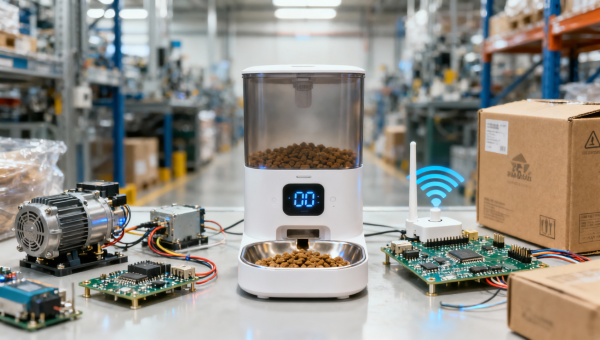
Pet supply chain analysis is becoming essential for smart feeder programs because these products sit at the intersection of traditional pet accessories and connected consumer electronics. A feeder may look simple on the shelf, but behind the housing are motors, sensors, PCBs, Wi-Fi modules, app integrations, packaging compliance, and battery or power safety checks. Each layer adds a possible delay point. In a market where pet owners expect convenience, reliability, and fast replenishment, even a short disruption in component flow or certification timing can push back launch windows, raise landed cost, and reduce competitiveness. Stronger pet supply chain analysis helps teams identify lead time risk early, prioritize critical-path materials, and design sourcing strategies that are more resilient under changing global conditions.
Lead time pressure is rising as smart feeders become more electronics-dependent
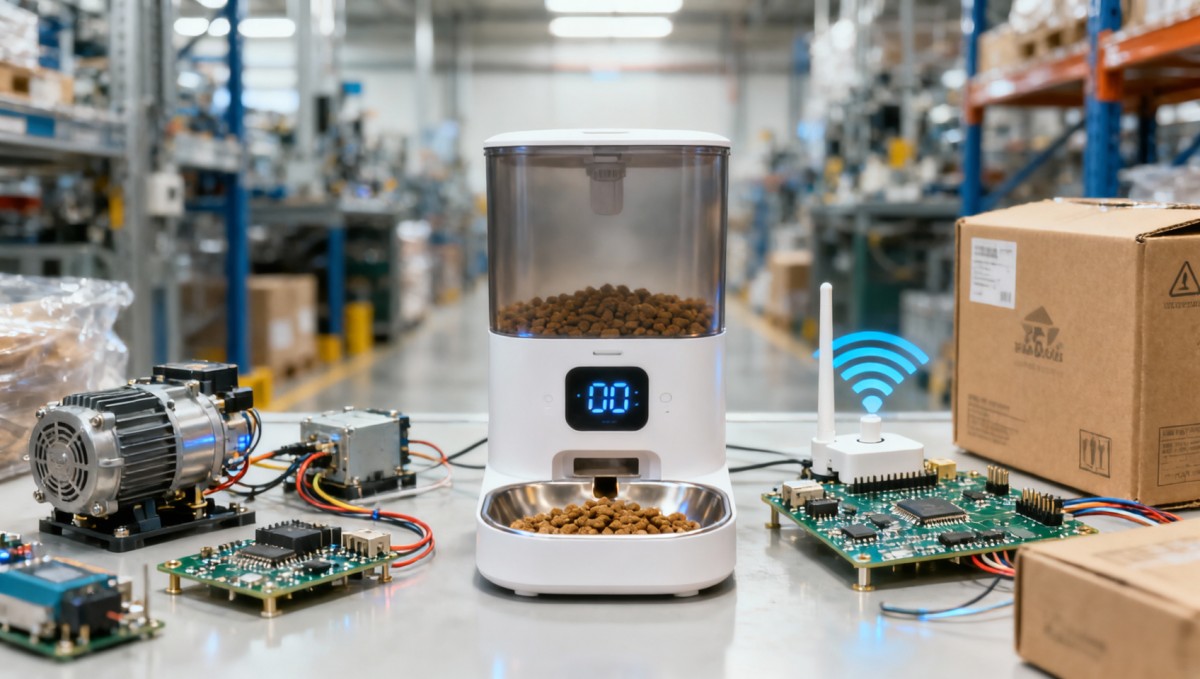
The pet products sector has changed quickly. Feeding accessories once relied mainly on molded plastic, stainless steel bowls, and basic packaging. Today, automatic and app-enabled feeders require a more complex bill of materials, often combining food-contact materials with electronic assemblies and software-related validation. This shift means lead times are no longer driven only by mold readiness or final assembly capacity. They are increasingly shaped by semiconductor availability, firmware stability, third-party testing queues, and the ability of suppliers to coordinate multiple sub-tier vendors.
That is why pet supply chain analysis now matters far beyond purchasing cost. It reveals whether the true bottleneck sits in the injection molding schedule, in the motor supplier’s copper allocation, in Wi-Fi module sourcing, or in retesting caused by firmware changes late in development. For smart feeders, long lead time risk often hides in the gap between “parts ordered” and “ship-ready product.” Without clear visibility into that gap, launch planning can become too optimistic.
Several market signals explain why pet supply chain analysis is moving up the priority list
Recent market behavior points to a more volatile sourcing environment for connected pet devices. Retail demand is less predictable because promotions, online reviews, and seasonal pet spending can shift order patterns quickly. At the same time, connected feeders are expected to deliver a higher level of reliability than traditional pet bowls or storage bins. A delayed shipment is costly, but a field failure can be far worse because it creates returns, app complaints, and brand trust issues. As a result, timing and quality are now tightly linked.
Another clear signal is the convergence of compliance requirements. Smart feeders may need food-contact material review, electrical safety assessment, wireless certification, labeling validation, packaging checks, and market-specific testing. If engineering revisions continue during the validation stage, the lead time expands again. Effective pet supply chain analysis therefore needs to include both physical sourcing and approval sequencing, not just factory output capacity.
Main forces extending lead times in smart feeder programs
The biggest lead time risks often start before mass production begins
A common mistake in pet supply chain analysis is focusing only on the production phase. For smart feeders, the highest schedule exposure often appears earlier, during design freeze, pilot builds, and validation. If a feeder’s dispensing accuracy changes after pet food particle testing, the motor specification may need revision. If the app connection proves unstable, the module or firmware stack may need replacement. If food-contact plastic resins are substituted for cost reasons, compliance review may need to restart. These upstream changes create a cascading effect on tooling, testing, packaging claims, and final booking dates.
This is especially important in pet products because real usage conditions are variable. Kibble size, humidity, feeding frequency, cleaning behavior, and pet interaction can all affect product performance. A smart feeder that works in a clean lab setting may still fail under real household conditions, leading to additional engineering rounds. In practice, pet supply chain analysis must therefore connect consumer use-case testing with sourcing timing, rather than treating them as separate workstreams.
Early-stage checkpoints that reduce delay risk
- Lock high-risk electronic components before cosmetic features are finalized.
- Run feeder performance tests with multiple kibble sizes and moisture conditions.
- Confirm food-contact, electrical, and wireless certification paths at the concept stage.
- Map alternative sources for motors, adapters, and communication modules.
- Set a hard firmware freeze date before formal compliance testing begins.
Lead time disruptions affect margin, launch timing, and brand credibility at the same time
The impact of delayed smart feeder supply is rarely limited to one metric. When key components are late, factories may switch to expedited procurement or split shipments, increasing unit cost. If launch dates slip, digital campaigns, seasonal promotions, and retail resets lose momentum. If testing is rushed to recover time, quality risk can rise. In pet products, where trust and routine are central to purchase behavior, performance inconsistency can quickly influence reviews and repeat sales.
A good pet supply chain analysis highlights these layered effects. It shows that a two-week delay in a Wi-Fi module can create a much larger commercial problem if it pushes final inspection into a peak freight period, or if it forces packaging to be relabeled due to a firmware-related feature change. This broader view is what turns lead time management into a strategic advantage rather than a reactive logistics exercise.
Where the business impact usually appears first
- Promotional launch windows become harder to hit.
- Air freight or emergency buys compress product margin.
- Retail and marketplace inventory planning becomes unstable.
- Customer satisfaction falls if connected features are delayed or unreliable.
- Future line extensions face more scrutiny from internal and channel stakeholders.
The most effective pet supply chain analysis focuses on a few high-value control points
Not every input deserves the same level of monitoring. Smart feeder programs are easier to stabilize when analysis concentrates on the parts and decisions most likely to change the critical path. That means identifying single-source electronics, long-approval packaging claims, firmware-linked functions, and any materials that influence food safety or electrical compliance. It also means reviewing supplier readiness in terms of engineering response time, not just quoted capacity.
- Component criticality: rank items by replacement difficulty, not only by cost.
- Sub-tier transparency: require visibility into PCB, motor, and module sourcing status.
- Compliance integration: align lab schedules with engineering milestones and packaging finalization.
- Scenario planning: prepare fallback BOM options before shortages occur.
- Transit buffering: build freight variability into launch commitments for peak seasons.
A practical response plan should combine visibility, flexibility, and timing discipline
The strongest pet supply chain analysis is not static reporting. It is a live operating discipline that tracks what is changing, which risks are spreading upstream, and where mitigation can still preserve launch timing. Smart feeders will continue to grow as connected pet care becomes more mainstream, but that opportunity rewards programs that can manage complexity with precision. The next practical step is to build a feeder-specific lead time map covering electronics, firmware, compliance, final assembly, and freight, then review it against every product milestone. That single action creates clearer risk ownership, faster escalation, and a more dependable path from development to shelf.
For brands and supply chain teams navigating connected pet products, this is where data-backed market intelligence becomes most valuable. Global Consumer Sourcing (GCS) supports smarter decisions with focused insight across the pet economy, helping businesses evaluate sourcing trends, compliance pressures, and supply resilience with greater confidence. When pet supply chain analysis becomes part of early planning rather than post-delay diagnosis, smart feeder launches stand a far better chance of arriving on time, at the right cost, and with stronger long-term market performance.
Related Intelligence
 Skincare OEMAug 16, 2026Amazon Enforces AI Human Metadata Rule for Beauty and Personal Care SellersAmazon now enforces AI human metadata rules for beauty sellers. Learn how to protect listings, traffic, and compliance in skincare, cosmetics, and beauty devices.
 Beauty DevicesAug 15, 2026China to Roll Out Nationwide Cross-Border Cash Pooling for MultinationalsChina to roll out nationwide cross-border cash pooling for multinationals from Sept. 14. Discover how this policy could improve treasury efficiency, liquidity management, and China-linked supply chains.
 Beauty DevicesAug 14, 2026China Imposes Temporary Export Ban on Helium, Affecting Cooling Supply ChainsChina's temporary helium export ban may disrupt cooling supply chains for beauty RF devices and laser systems. Learn what ODMs, buyers, and procurement teams should check now.
![]() Cosmetics & PkgAug 13, 2026PPWR becomes mandatory: Beauty and personal care packaging materials usher in new EPR and PFAS compliance requirementsPPWR takes effect for cosmetics packaging in the EU, bringing EPR registration and PFAS limits. Learn what brands, importers, and suppliers must do now.
Cosmetics & PkgAug 13, 2026PPWR becomes mandatory: Beauty and personal care packaging materials usher in new EPR and PFAS compliance requirementsPPWR takes effect for cosmetics packaging in the EU, bringing EPR registration and PFAS limits. Learn what brands, importers, and suppliers must do now. Cosmetics & PkgAug 12, 2026EU PPWR Now Enforced for Beauty Packaging ComplianceEU PPWR now enforced for beauty packaging compliance: learn how EPR, ERN, heavy metals and PFAS rules affect EU exports, customs clearance and platform sales.
 Cosmetics & PkgAug 11, 2026EU PPWR Rules Take Effect on Aug. 12 for Beauty PackagingEU PPWR rules for beauty packaging take effect on Aug. 12, 2026. Learn key compliance steps, EPR, labeling, PFAS limits, and how to avoid customs delays and fines.
 Smart Pet DevicesAug 10, 2026EU EPR Rules to Cover Smart Pet Devices on Aug. 15EU EPR Rules will cover smart pet devices from Aug. 15, 2026. Learn how smart collars, feeders, and monitoring devices can avoid delisting, customs delays, and compliance risks in the EU.
 Infant Feeding & CareAug 09, 2026CPSC Recalls Baby Sleep Sacks Over Undeclared TDCPPCPSC Recalls Baby Sleep Sacks Over Undeclared TDCPP: learn how this 2026 recall impacts CPC documents, third-party testing, and U.S. baby product compliance for exporters.
 Infant Feeding & CareAug 08, 2026ECHA Adds 5 SVHCs, Importer Notices Due From Oct 2026ECHA adds 5 SVHCs to the Candidate List, with importer notices due from October 2026. Learn how REACH affects exporters, supply chains, and documentation readiness.
 Baby Gear & StrollersAug 07, 2026CPSC Revises Crib Rail Standard for November 2026CPSC revises crib rail standard for November 2026, adding dynamic impact tests and mandatory third-party lab testing. Learn how the new rule affects U.S. market access, compliance, and shipments.
 Electronic & RC ToysAug 06, 2026EU to Require EN IEC 62115:2025 for Electronic ToysEU to Require EN IEC 62115:2025 for Electronic Toys from Oct 1, 2026. Learn scope, battery and AI safety updates, CE compliance risks, and how exporters can avoid customs delays.
 Baby Gear & StrollersAug 05, 2026US Stroller Stability Rule Takes Effect Aug. 15US Stroller Stability Rule Takes Effect Aug. 15: learn how new U.S. stroller compliance, ASTM F833-26a, and CPSC testing rules may affect imports, certification, and shipment readiness.
 Infant Feeding & CareAug 04, 2026ECHA Adds 5 SVHCs, Triggering Baby Care Export ReviewECHA adds 5 SVHCs, prompting an urgent baby care export review for EU-bound products. Learn the 0.1% threshold risks, compliance steps, and how to avoid customs delays and fines.












