Is Smart Pet Hardware a Good Category Expansion for Retailers?
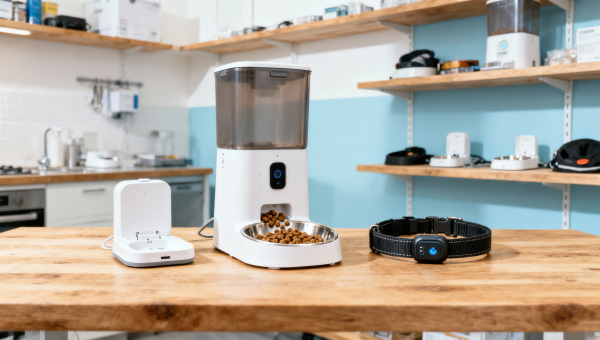
Smart pet hardware is a good category expansion when it solves a recognizable customer problem, performs reliably after setup, and leaves a healthy margin after support and returns. A higher selling price alone is a weak reason to add it. Connected products introduce costs that ordinary pet accessories rarely carry: app maintenance, account troubleshooting, connectivity failures, and dependence on services outside the physical device.
The strongest starting point is a narrow assortment built around an existing shopping mission, such as maintaining a feeding routine or locating a roaming dog. Expansion becomes harder to justify when demand rests mainly on novelty, subscriptions are poorly explained, or the supplier cannot demonstrate how the product behaves during outages. Treat the first launch as a controlled commercial trial with defined technical and financial acceptance criteria.
Start with the problem customers already pay to solve
Existing sales and service conversations offer a better starting point than broad enthusiasm for connected technology. Frequent questions about feeding schedules suggest a different opportunity from demand for escape prevention. Review product searches, unanswered store questions, accessory purchases, and return comments to identify a recurring need that the current assortment leaves unresolved.
Separate interest in a feature from willingness to accept its conditions. Remote monitoring requires a suitable home network. Location tracking can involve a recurring service charge and regular charging. Automated feeding requires cleaning, food compatibility, and a safe fallback when the mechanism stops. A product earns its place when these requirements fit the intended household routine.
Test demand with an accurately described offer. Show the full purchase price, any ongoing charges, supported phone requirements, and the main setup restrictions together. A landing page or limited launch that hides subscription costs measures an incomplete proposition; its apparent popularity can disappear at activation.
Choose the first category where the evidence and operating conditions align. Launching several connected categories together makes it harder to identify whether weak results come from demand, setup difficulty, or a particular supplier.
Test the failure conditions, not just the demonstration
A successful demonstration establishes that a device works under favorable conditions. Retail suitability requires evidence about ordinary disruptions: a router restart, a disconnected phone, a depleted battery, a dirty sensor, or a software update. Request a written account of which functions operate locally, which require the cloud, and what happens when each connection fails.
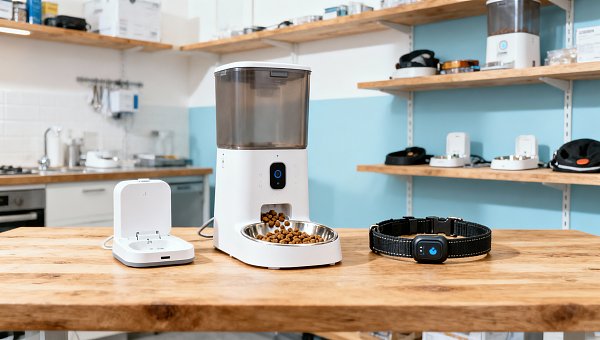
For a dispensing mechanism, test the supported food shapes and sizes with repeated cycles. Measure delivered food by weight; a portion count does not establish consistent output across different kibble densities. Observe bridging in the hopper, incomplete releases, and whether a blockage produces a useful alert. A motor activation message is insufficient evidence that food reached the bowl.
Power recovery deserves its own test. Disconnect power, restore it, and observe whether the clock, saved schedule, and account connection recover correctly. Establish whether backup power runs the dispensing mechanism or merely preserves settings. Product descriptions must reflect that difference because it changes the household’s fallback plan.
Location devices require tests matched to their underlying technology. Satellite positioning, cellular transmission, and short-range proximity detection perform different jobs. A map interface does not establish continuous remote coverage. Examine update delays, indoor limitations, attachment security, and battery performance under the tracking mode that will actually be advertised.
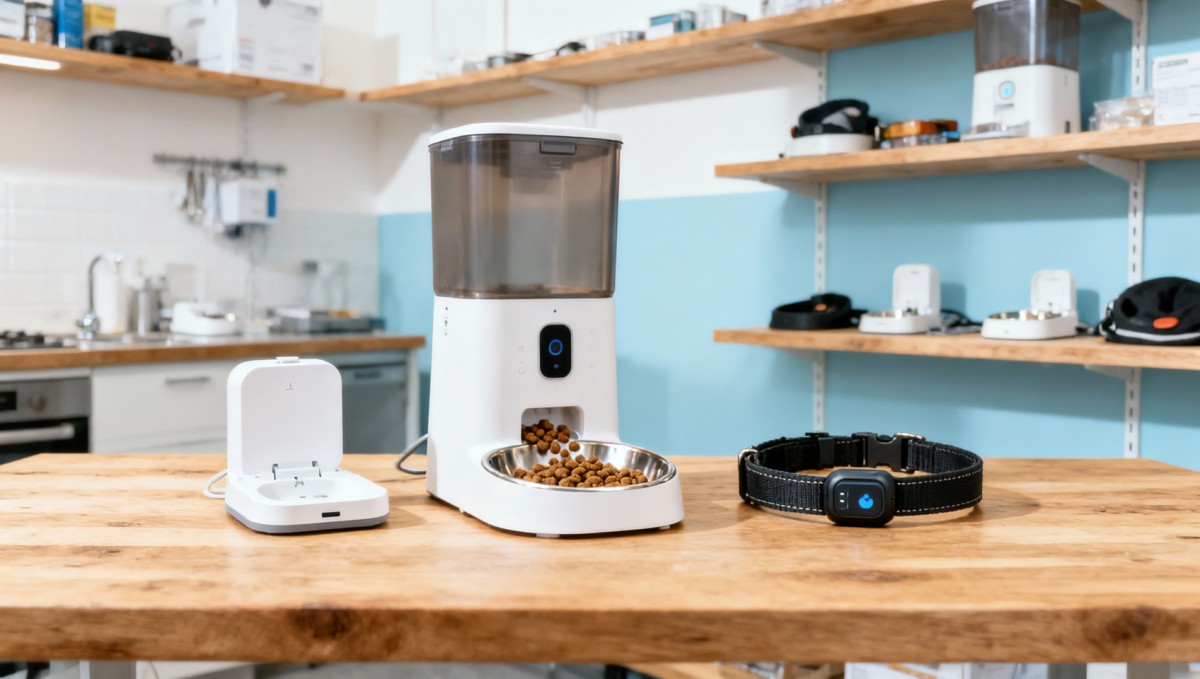
Remote viewing equipment should be evaluated in the intended room layout, including low light and placement beyond the router’s immediate vicinity. Confirm whether live viewing, recordings, and alerts remain available under the included service tier. Features involving moving parts or treat delivery need separate assessment for cleaning access and pet interference.
Use production samples selected from the proposed shipment, with the intended firmware and app version. Record results against those versions. A carefully prepared development sample cannot establish the consistency of finished stock.
The app is part of the product being purchased
Software quality directly affects whether working hardware becomes a return. Walk through account creation, pairing, household sharing, password recovery, and reconnection after a network change. Instructions should identify supported Wi-Fi bands, permissions, and phone operating systems before setup begins.
Count the points where assistance is needed. A pairing process that succeeds only after repeated resets creates a service burden even if the device eventually works. Error messages should distinguish an incorrect network password from an unavailable server or unsupported network. Otherwise, several unrelated problems arrive as the same complaint: “It will not connect.”
Establish who controls the app, cloud account, firmware releases, and customer data. An OEM/ODM arrangement can involve separate businesses maintaining each layer. The supply agreement should identify responsibility for faults across those boundaries, including escalation routes and the availability of diagnostic records that respect privacy.
Request a defined support period and a procedure for security updates. Clarify what happens if cloud service ends: whether essential functions continue, how customers receive notice, and whether accounts and stored data can be deleted. A promised warranty does not answer these questions.
For private-label stock, app branding alone adds little protection. Access to maintenance support, an agreed update process, and continuity arrangements matter more when the original software provider changes its commercial terms or stops supporting the device.
Calculate margin after ownership-related costs
Compare contribution per retained sale with existing products that compete for the same inventory budget. Start with net selling revenue, excluding taxes collected for remittance where applicable, then deduct landed cost, channel fees, fulfillment, expected support, warranty costs, and losses from returns. Include discounts needed to clear stock if compatibility or software support changes.
Expected contribution per sale = net revenue − landed product cost − selling and fulfillment costs − expected support, return, and warranty costs.
Use observed pilot costs where available. Before launch, build scenarios from explicit assumptions rather than treating the supplier’s advertised margin as the result. Include a scenario in which setup contacts rise, more opened units cannot be resold, and subscription income is lower than expected.
Returned connected hardware needs more processing than a simple accessory. It may contain account links, recordings, saved network details, missing cables, or food residue. Confirm a reset procedure that removes personal data and releases account binding. Establish which units qualify for resale, which require refurbishment, and which must be written off.
Subscription revenue belongs in the model only when the commercial agreement assigns a verifiable share to the retailer. Define whether payments follow activation, renewal, or another event, and who bears cancellations and service costs. Without those terms, recurring fees represent part of the customer’s ownership cost, with no established retail income.
Accessory sales can improve the economics, but count them cautiously. Replacement bowls, charging cables, or mounting parts contribute only when they fit the installed base and remain available. Avoid using hypothetical attachment sales to rescue an otherwise weak hardware margin.
Turn supplier claims into purchasing terms
Supplier selection should connect the tested sample to the goods that will arrive. Specify the critical components, firmware version, supported functions, packaging instructions, and approved app behavior in the purchase documentation. Require notice and approval for changes that affect connectivity, charging, food contact, or compatibility.
A similar enclosure can conceal different electronics or a different motor. If substitution is allowed without a defined review, successful sample testing provides limited assurance about later orders. Retain an approved reference unit and agree on shipment inspection criteria that address performance as well as appearance.
Separate manufacturing defects from software incidents in the service agreement. Replacement stock will not resolve a server outage affecting every unit. Specify responsibility for investigation, customer communication, corrective updates, and costs when a fault spans the hardware and software suppliers.
Market-specific compliance also belongs before the purchase commitment. Wireless electronics, rechargeable batteries, power supplies, and food-contact parts create different documentation needs. Confirm the applicable requirements for the destination market and exact configuration through competent assessment; a generic certificate bearing a similar product name is insufficient.
Match reports and declarations to the model, component configuration, and intended claims. Where batteries are included, obtain the documentation needed for the planned transport route and storage arrangements. Claims about water resistance or health monitoring require particular care because wording can create expectations beyond the evidence supplied.
Make the product page do some of the support work
Many avoidable returns begin with a mismatch between the sales message and the ownership experience. Place connection requirements, recurring charges, dimensions, cleaning instructions, and included accessories where they affect the purchase decision. Show the device at a realistic scale, including how it attaches to a collar or fits beside an existing feeding area.
Describe useful boundaries plainly. A scheduled meal does not confirm that a pet ate it. A location update reflects the device’s reported position and timing, with limitations imposed by reception and transmission. Remote observation does not establish medical monitoring. These distinctions keep convenience claims aligned with demonstrated functions.
Setup guidance should mirror the actual app sequence and remain current after updates. Short troubleshooting paths are more useful than a long list of generic resets. Include a clear route for account and subscription problems, especially when a separate service provider handles them.
Use a pilot to decide whether to reorder
Set the pilot’s decision criteria before stock arrives. Measure retained sales, setup contacts, failure reports, contribution after service costs, and the time required to resolve incidents. Track activation where lawful and technically available, but interpret it alongside returns: a purchase that never reaches usable operation does not demonstrate lasting demand.
Tag returns by cause. “Defective” can conceal a failed component, incompatible network, misunderstood subscription, unsuitable food, or an account that remains bound to a previous owner. Each cause implies a different response, from engineering correction to revised listing content or a change in the selected product.
Allow the trial to include ordinary ownership events such as cleaning, charging, reconnection, and a support request. Launch-day sales reveal initial appeal; they reveal little about service costs after several weeks of use. Keep batch and software-version records so a concentrated fault can be isolated before replenishment.
Reorder when retained demand, tested reliability, and contribution justify further inventory, with unresolved issues assigned a specific remedy. If attractive sales require continual troubleshooting or repeated concessions, pause expansion until the cause is corrected. Smart pet hardware earns a permanent place when its ongoing ownership demands fit the retail operation as comfortably as its initial selling proposition.
Related Intelligence
 Cosmetics & PkgOct 28, 2026China’s September Cosmetics Exports to Russia Hit Record, Doubling Year on YearChina’s cosmetics exports to Russia reportedly doubled to a record $33.6 million in September 2026. Explore the implications for sourcing, compliance checks and delivery planning.
 Cosmetics & PkgOct 27, 2026China’s Cosmetics Exports to Russia Hit Record High in September 2026China’s cosmetics exports to Russia reportedly hit $33.6 million in September 2026. Explore category trends and key checks for order planning, documentation and delivery readiness.
 Corporate & Seasonal GiftsOct 26, 2026140th Canton Fair Phase Two in Full Swing as Green, Smart Home Products Secure OrdersExplore 140th Canton Fair Phase Two green and smart home products, reported buyer demand, and key procurement checks to turn orders into reliable export deliveries.
 STEM & Educational ToysOct 25, 2026Malaysia’s KPDN Seizes 5,801 Non-Compliant Squishy Toys in Nationwide ActionMalaysia’s KPDN reportedly seized 5,801 squishy toys lacking safety compliance marks. Discover key checks to help toy suppliers assess stock and verify compliance before distribution.
 Infant Feeding & CareOct 24, 2026FDA Issues Draft Guidance on Cadmium Action Levels in Baby FoodsFDA draft guidance on cadmium action levels in baby foods proposes category-specific targets. Explore potential impacts on sourcing, testing and compliance planning—and how to prepare.
 STEM & Educational ToysOct 23, 20262026 China Toy Expo Gives AI Toys a Dedicated Hall as Practical Features Take Priority2026 China Toy Expo spotlights AI toys with a dedicated hall. Explore how practical features and everyday play experiences are reshaping manufacturers’ product priorities.
 STEM & Educational ToysOct 22, 2026Blokees Showcases Over 900 Products at the 2026 China International Toy FairBlokees showcases over 900 products at the 2026 China International Toy Fair. Explore Model Kits, BLOKEES WHEELS and key sourcing checks to guide your next purchase.
 Cosmetics & PkgOct 21, 2026BASF Plans Beauty Innovation Showcase at in-cosmetics Asia 2026Explore BASF’s planned beauty innovations at in-cosmetics Asia 2026 in Bangkok, with a focus on skin protection, repair and sustainable solutions for personal care formulators.
 Cosmetics & PkgOct 20, 2026Beauty Tops Amazon’s 2026 Prime Big Deal Days Shopping CategoriesBeauty tops Amazon’s 2026 Prime Big Deal Days at 32% of shoppers, according to Market Defense. Explore what the findings could mean for product selection, inventory and promotional planning.
 Pet Grooming & TravelOct 14, 2026What Documents Should Pet Product Suppliers Provide to Buyers?What documents should pet product suppliers provide? Explore essential safety reports, product specs, batch records, and shipping paperwork to verify suppliers and buy with confidence.
 Smart Pet DevicesOct 14, 2026Is Smart Pet Hardware a Good Category Expansion for Retailers?Is smart pet hardware a good category expansion for retailers? Discover how to assess demand, reliability, supplier support, and real margins before committing to new inventory.
 Pet Grooming & TravelOct 14, 2026Which Pet Care Product Categories Are Growing Fastest in 2026?Which pet care categories are growing fastest in 2026? Explore functional nutrition, preventive wellness, and smart devices to uncover opportunities and build a profitable retail assortment.
 Pet Furniture & EnrichmentOct 14, 2026How Can Retailers Reduce Pet Bed Damage Claims?How can retailers reduce pet bed damage claims? Discover practical quality controls, packaging tests, and care tips to cut returns, protect margins, and build customer trust.