Retailers can reduce pet bed damage claims by connecting return data with measurable product specifications, production controls, packaging tests, and clear customer care instructions.
For retail buyers and private-label brands, prevention starts before products reach customers. Weak seams, inconsistent filling, and vulnerable packaging can turn attractive ranges into costly returns.
The priority is identifying which failures drive the greatest financial loss, then verifying that corrective actions reduce those failures without compromising comfort or commercial appeal.
This requires coordinated sourcing, quality assurance, logistics, and customer service decisions. The following framework helps procurement teams turn recurring complaints into practical improvements and measurable results.
Identify What Is Actually Driving Your Damage Claims
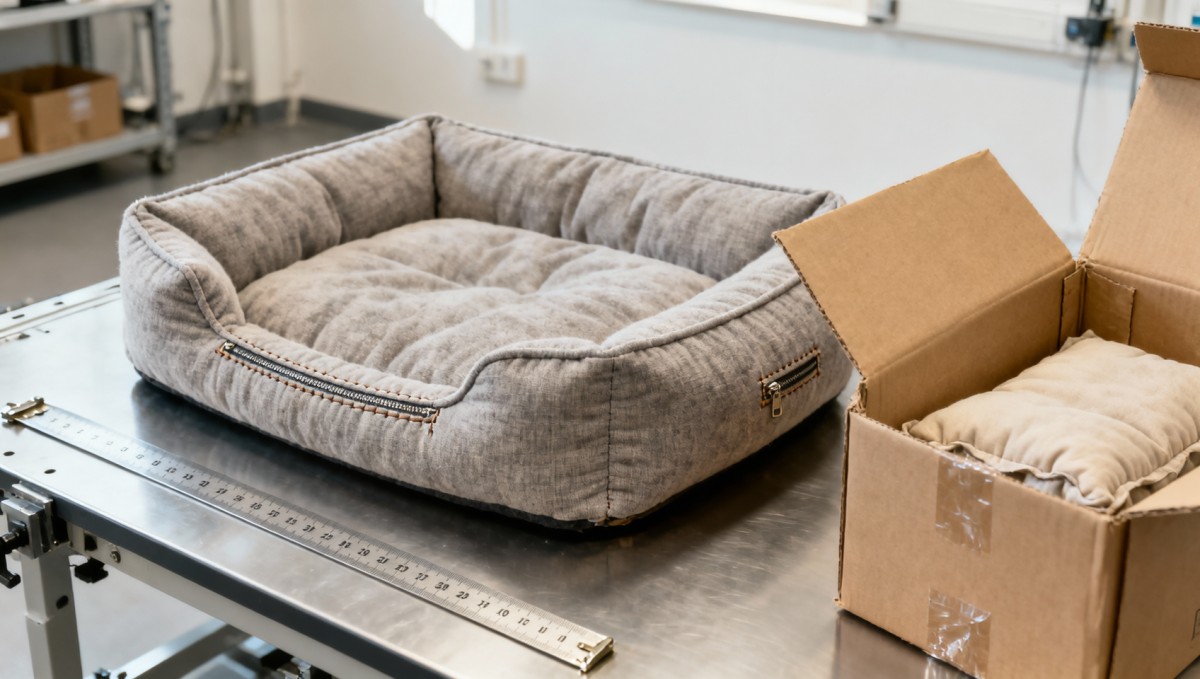
Start by separating manufacturing defects, transit damage, use-related damage, and care-related deterioration. Each category requires different evidence, corrective actions, and decisions about responsibility and reimbursement.
A split seam on first use suggests a different problem from a torn carton at delivery. Neither should automatically share the same claim code.
Ask customers for photographs showing the complete bed, the affected area, and packaging when relevant. Keep evidence requests proportionate so legitimate claims remain easy to resolve.
Link every case to its SKU, supplier, production lot where available, delivery date, and fulfillment route. Without traceability, isolated complaints can conceal a recurring manufacturing problem.
Record both the reported symptom and the assessed cause. “Flat bed” might reflect insufficient filling, incomplete recovery after compression, or an expectation the product description created.
Track claims against units delivered within comparable periods. Allow time for delayed failures, especially washing damage, rather than comparing mature products with newly launched ranges.
Prioritize causes using frequency, total cost, and severity. Loose filling accessible through damaged seams may deserve immediate containment even when its claim volume remains relatively low.
Turn Supplier Promises Into Verifiable Product Requirements
Terms such as “durable,” “premium,” and “heavy-duty” do not define acceptable performance. Purchasing teams need specifications that factories can reproduce and inspectors can evaluate consistently.
Specify fabric composition, construction, weight where relevant, filling type, fill weight, dimensions, and allowable tolerances. Identify which requirements affect comfort, durability, appearance, or packaging performance.
For seams, document stitch construction, seam allowance, reinforcement locations, and workmanship expectations. Establish zipper requirements covering operation, attachment, and protection from direct pet contact where appropriate.
Approve a reference sample alongside the written specification. Retain matching samples with the supplier and retailer, while making clear that written requirements govern measurable characteristics.
Confirm whether the manufacturer controls cutting, sewing, filling, and packing internally. Subcontracted operations require equivalent traceability and quality controls, especially when production capacity changes suddenly.
Require written approval before substitutions affecting fabric, foam, filling, zippers, or packaging. A seemingly minor material change can alter washing performance, abrasion resistance, or compression recovery.
Agree on defect definitions, corrective-action responsibilities, and claim documentation before ordering. Clear commercial terms make recovery more predictable, but they cannot replace prevention or consumer obligations.
Strengthen the Components Most Likely to Fail
Use actual claim patterns to guide construction changes. Reinforcing every component adds cost, while targeted improvements can address recurring failures with less impact on retail pricing.
Inspect transitions between the base, sidewalls, and bolsters, where movement can concentrate stress. Evaluate seam design together with fabric strength rather than considering stitching alone.
When seams repeatedly open, investigate stitch formation, thread suitability, seam allowance, and assembly tension. Adding stitches without diagnosing the cause can leave the underlying weakness unresolved.
For removable covers, assess zipper placement and access during washing. Customers should remove inserts without pulling excessively on seams, corners, or the zipper attachment area.
Specify filling distribution as well as quantity. Uneven stuffing can create unsupported areas, distort bolsters, and produce complaints that customers describe as collapse or poor quality.
Match construction to the intended animal size and use environment. Larger pets, frequent laundering, outdoor exposure, and scratching can require different materials and performance expectations.
Avoid presenting ordinary textile beds as chew-proof. If chewing resistance is advertised, support the specific claim with suitable evidence and clearly explain limitations to buyers.
Test Finished Beds Against Realistic Use and Care
Material reports help screen components, but finished-product testing reveals interactions between fabric, stitching, filling, and fasteners. Approval should reflect the assembled bed customers actually receive.
Build a test plan around the leading failure modes. Include seam strength, fabric abrasion, zipper operation, dimensional stability, and filling retention where each addresses an identified risk.
Wash the cover according to its proposed care label, then repeat for a justified number of cycles. Check shrinkage, seam opening, backing deterioration, and zipper operation.
If the entire bed is marketed as washable, test the complete assembly. A washable cover does not establish that foam, filling, or internal structures tolerate laundering.
For compressed products, measure recovery after the intended packing method and a representative storage period. Assess dimensions, shape, and functional support against agreed acceptance criteria.
Define test methods, conditioning, sample quantities, and pass criteria before testing begins. Use recognized methods where appropriate, with specialist laboratory advice for selecting relevant procedures.
Repeat relevant checks after material or construction changes, and verify production samples periodically. A successful development sample provides limited assurance when factory output later drifts.
Validate Packaging for the Actual Delivery Route
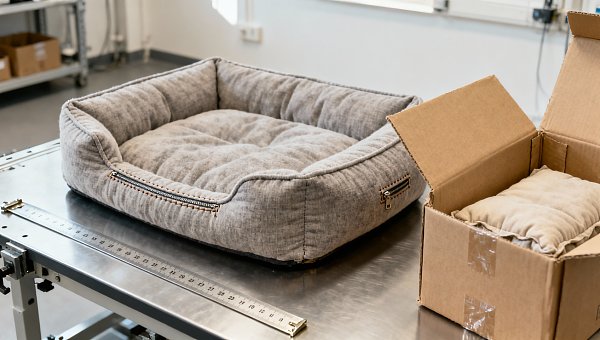
Packaging should protect the bed through its expected distribution environment. Pallet shipments to stores and individual parcel deliveries expose products to different handling and compression risks.
Review returned packaging alongside the damaged bed. Punctures, moisture exposure, crushed cartons, and cuts during opening can reveal whether protection failed before the product reached use.
Check that carton dimensions, protective layers, and closure methods suit the packed product. Excessive compression may save freight while increasing deformation, zipper stress, or recovery complaints.
Use a distribution test protocol appropriate to the shipment route, product weight, and package format. Include relevant drop, vibration, and compression exposures through qualified testing support.
Inspect the product after testing, not just the carton. Packaging can appear intact while internal movement damages seams, distorts inserts, or concentrates pressure on vulnerable components.
Provide safe opening guidance when tightly packed beds sit close to cutting surfaces. Design packing arrangements that reduce accidental blade contact rather than relying exclusively on warnings.
Compare packaging options using total delivered cost, including freight, materials, damage claims, and replacement shipments. A smaller package offers little value when it creates avoidable losses.
Prevent Avoidable Complaints With Clear Product Information
Customers need realistic expectations before purchase. Show bed dimensions, suitable pet sizes, cover construction, and whether washing instructions apply to the cover or the complete product.
Explain compression recovery using a timeframe supported by testing. Include simple unpacking steps and a clear route for assistance if the bed remains misshapen afterward.
Make care instructions specific and consistent across labels, packaging, listings, and support replies. Conflicting directions can create damage and make subsequent claim decisions difficult to defend.
State relevant washing temperature, drying method, and insert-removal steps based on validated care procedures. Avoid generic instructions that have not been checked against the actual materials.
Use photographs or simple diagrams to explain cover removal and reassembly when necessary. Clear guidance is particularly useful when bolster inserts occupy separate internal compartments.
Train customer service teams to distinguish defects from recovery questions and care issues. Provide consistent remedies while respecting applicable consumer rights and retailer policy requirements.
Treat repeated confusion as a product improvement signal. If many customers make the same mistake, revise instructions, listing information, or design instead of assuming individual misuse.
Measure Savings Against the Full Cost of Claims
The financial case should include more than refunded product value. Replacement shipping, customer service handling, return processing, disposal, and unrecovered supplier costs can materially increase losses.
Calculate damage claim rate as qualifying claims divided by delivered units for a defined cohort. Keep definitions stable so improvements remain comparable across suppliers and periods.
Also track claim cost per delivered unit, repeat failures, and the share of claims with confirmed causes. These measures show whether lower reported volume reflects meaningful improvement.
For illustration, assume a retailer delivers 10,000 beds and reduces damage claims from 4% to 2%. That represents 200 fewer claims within a comparable observation period.
If each avoided claim saves an average of $25, gross savings equal $5,000. Actual savings depend on the retailer’s refund, replacement, logistics, and handling costs.
A $0.30 improvement across those 10,000 beds costs $3,000, leaving $2,000 before testing and implementation expenses. These illustrative figures show how to evaluate a proposal.
Check whether savings persist across production lots and fulfillment routes. A promising pilot may not justify rollout if benefits disappear under different shipping or customer conditions.
Use Production Controls to Keep Improvements Consistent
Development changes only reduce claims when production consistently reproduces them. Place inspections where defects arise, including sewing, filling, final assembly, and packing, rather than checking only dispatch.
During production, verify critical materials against approved specifications and inspect recurring problem areas. Early detection gives factories time to correct processes before the entire order is completed.
Use a documented sampling plan for finished goods, with defect classifications and acceptance rules appropriate to risk. Sampling reduces uncertainty but cannot guarantee every unit is defect-free.
Define separate escalation procedures for hazards such as exposed sharp components or readily accessible filling. Depending on risk, responses may include containment, investigation, and specialist safety review.
Ask suppliers to document root causes and corrective actions with supporting evidence. “Workers retrained” is insufficient when the actual failure involves unstable materials or unsuitable seam construction.
Verify effectiveness through follow-up inspection and subsequent claim data. Close corrective actions only after evidence shows the failure is controlled across representative production and delivery conditions.
Review performance jointly with sourcing, quality, logistics, and customer service teams. Shared ownership prevents product defects, packaging problems, and misleading listings from falling between departments.
Where Retailers Should Start
Begin with the highest-cost recurring failure on a significant SKU. Confirm its cause, introduce a targeted correction, and compare results against a clearly defined baseline.
Expand successful changes into supplier specifications, inspection criteria, packaging requirements, and customer guidance. This turns an isolated fix into a repeatable purchasing and quality-control practice.
Reducing pet bed damage claims depends on evidence connecting customer complaints to controllable causes. Stronger specifications and realistic validation help retailers protect margins while improving product reliability.
The best sourcing decision balances purchase price with expected claim costs and consistent performance. Choose improvements that demonstrate fewer failures, clearer customer expectations, and commercially sustainable results.