Are Removable Covers Worth the Extra Cost for Pet Beds?
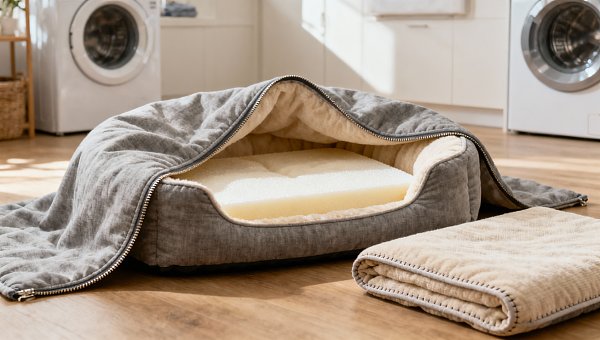
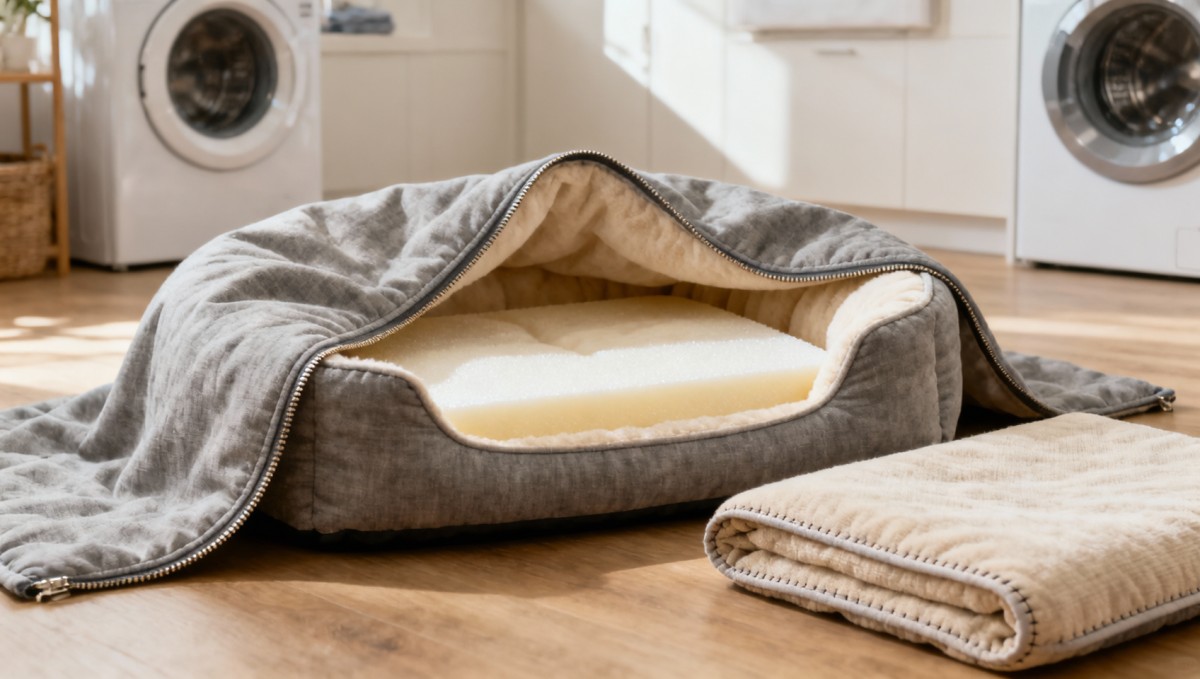
Removable covers are usually worth the extra cost when a pet bed needs frequent cleaning and its cushion is durable enough to outlast the outer fabric. The strongest case is a large bed with a supportive foam insert: washing the cover can be much easier than cleaning and drying the entire bed. The premium becomes harder to justify for a small, fully washable bed, an occasional-use bed, or a pet likely to chew through both the cover and the filling.
For retail buyers and private-label brands, the decision goes beyond adding a zipper. A removable cover delivers value only if customers can take it off, wash it, dry it, and put it back without damaging the fabric or struggling with the fit. Replacement availability matters too. A cover that cannot be replaced offers cleaning convenience, but less protection against having to discard an otherwise usable bed.
Start with what makes the bed expensive to maintain
The useful comparison is the cost and effort of keeping two otherwise comparable beds usable. A removable cover may reduce laundry bulk, drying time, and the chance that surface wear ends the life of the whole product. Those benefits depend on how the pet uses the bed and what happens beneath the cover.
Consider a dog that returns from walks with dirty paws. Most of the cleaning burden may sit on the sleeping surface, so removing that layer is practical. For a dog with recurring urinary accidents, the same design offers only partial relief if liquid passes through into foam that cannot be machine washed. Both households need easy maintenance, but they need different constructions.
These distinctions also help buyers build a sensible assortment. A premium removable-cover design has a clearer purpose in a range of substantial everyday beds than in a compact travel bed that can already go through the wash as one piece.
Check whether “removable” actually makes cleaning easier
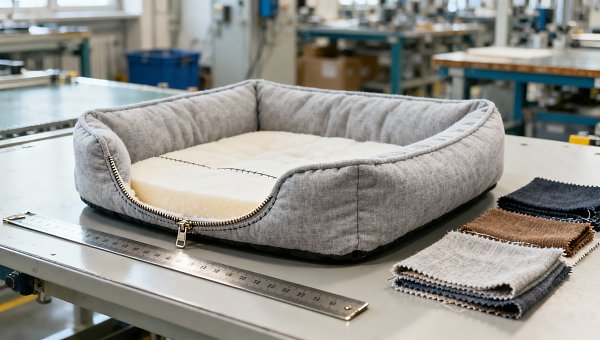
A zipper proves that the cover opens. It does not prove that maintenance is convenient. A narrow opening can force customers to compress and pull a large cushion through it, placing stress on seams and making reassembly frustrating. Bolstered beds can be especially awkward if several filling sections must be removed and returned in a particular order.
Inspect the opening with the complete bed assembled. Can the main cushion come out without excessive force? Are bolster inserts accessible? Is it obvious which way each piece goes back? A flat cushion with a generous opening may be easier to maintain than a more elaborate design, even when both carry the same “removable and washable” description.
The care instructions deserve equal attention. A machine-washable cover that requires air drying may still be useful, but the bed could remain unavailable while the cover dries. A spare cover can solve that problem if it is affordable and available. For a household without suitable drying space, however, the care requirement may outweigh the convenience of removal.
Fabric choice also changes the experience. A textured surface can hold loose hair that needs brushing or vacuuming before washing. Dense or layered materials may take longer to dry. A soft sleeping surface can be appealing while demanding more maintenance than customers expect. Product descriptions should make the care routine clear enough for buyers to judge it against their own laundry habits.
Removable, washable, and easy to maintain are three separate claims. Retail buyers should verify each one instead of treating them as interchangeable.
Inspect the fit after laundering
A cover can look excellent on a new sample and become difficult to use after washing. Shrinkage, distortion, or changes in a backing layer can leave the cushion compressed, the corners poorly aligned, or the zipper under tension. An excessively loose fit creates a different problem: fabric can bunch beneath the pet or give it an edge to pull at.
A useful sample review follows the proposed care label through several wash-and-dry cycles, then checks the cover on the original insert. Examine fit, seams, zipper operation, surface changes, and any damage to coatings or backing. The purpose is to assess whether the promised maintenance routine leaves the bed usable. A sample that survives washing but becomes difficult to reassemble has not delivered the intended convenience.
A clean cover does not guarantee a clean cushion
The largest limitation of a removable cover is the material underneath it. Hair and dry dirt may remain mostly at the surface, while urine or other liquid can reach the cushion through fabric, seams, and zipper openings. Washing the outer layer will not resolve contamination inside an absorbent insert.
For beds intended for puppies, older pets, or animals with recurring accidents, inspect the protection around the cushion. An inner liner may reduce liquid reaching the foam, but its usefulness depends on coverage, construction, and care requirements. A barrier across the top panel alone leaves other possible entry points. Its condition after laundering matters as much as its appearance when new.
A liquid barrier can also affect the feel of the bed. Depending on its construction, it may add noise, change flexibility, or influence how warm the sleeping surface feels. Buyers should evaluate the complete assembly rather than approve the cover and liner independently. Protection that makes the bed uncomfortable is an incomplete solution.
The insert needs a clear cleaning instruction of its own. Some can be washed under specified conditions; others require limited surface cleaning. Customers should be able to find that distinction before an accident occurs. Reassembling a bed while its interior remains damp can leave moisture trapped, so the drying requirement should be practical and explicit.
Removable covers offer their strongest maintenance benefit when the cushion stays clean and structurally sound. Once the insert retains odors, loses support, or becomes difficult to dry, a fresh outer cover does little to restore the bed’s usefulness.
Judge the premium against the part you can save
The economic argument becomes stronger as the cushion represents more of the bed’s value. If a substantial insert remains comfortable and supportive while its cover wears out, replacing the fabric can preserve a useful product. If an inexpensive filling flattens before the cover fails, paying extra for cover replacement offers less benefit.
Compare like-for-like products wherever possible. Differences in bed size, foam construction, fabric, and bolster design can overwhelm the cost of removability. A cheaper bed with a different cushion is a poor basis for deciding whether the cover feature itself is worth paying for.
For a household purchase, use a simple decision sequence:
- Estimate how often the sleeping surface will need more than spot cleaning.
- Check whether the whole alternative bed fits the washer and can dry fully.
- Find the price and availability of a replacement cover before buying.
- Decide whether the cushion is likely to remain useful after the first cover wears out.
Replacement covers create value only when they are accessible at a sensible total cost, including delivery. A cover listed without stock, offered only in a discontinued size, or priced close to a complete new bed weakens the argument. Buyers should also distinguish between a spare cover for laundry rotation and a replacement intended to extend product life. The first provides immediate convenience; the second depends on future compatibility and availability.
There is an environmental benefit when replacing a worn cover prevents disposal of a serviceable cushion. That outcome should remain conditional. A removable design does not automatically reduce waste if the insert fails early, replacement covers are unavailable, or customers cannot maintain the product as instructed.
What retail buyers should ask a supplier to demonstrate
For a retail range, the purchase decision should connect the feature to a defined customer need. “Easy to clean” is too broad if the cover requires a demanding care routine or leaves the cushion vulnerable to accidents. Specify the intended use first, then evaluate the construction and instructions against it.
A focused supplier review can cover four areas:
- Removal and reassembly: Ask for the complete sample, remove every washable component, and refit it. Check opening size, insert identification, and whether routine handling strains seams or zippers.
- Laundering performance: Review evidence relevant to the stated care method, including dimensional stability, seam condition, color transfer, and the integrity of any backing. Assess the assembled fit after washing.
- Hardware and access: Inspect zipper placement, pull protection, and stitching around the opening. Consider whether a pet can easily reach and chew the closure or expose the filling.
- Replacement continuity: Establish how covers will match bed sizes and versions, how replacements will be ordered, and what happens when fabrics or dimensions change.
Compatibility deserves particular attention in private-label programs. A cover sold under the same nominal size may fail to fit an earlier insert if dimensions or bolster shapes change. Product references and version information should allow customers and support teams to identify the correct replacement without guessing.
Replacement covers can support repeat purchases, but stocking them creates its own commitment. Sizes, fabrics, and colors multiply inventory choices. A narrower, compatible replacement range may serve customers better than a broad range that is difficult to keep available. The commercial value depends on making the replacement purchase straightforward, not merely listing it as a possibility.
When the simpler bed is the better purchase
A removable cover is a lower priority when the complete bed is easy to wash, cleaning is infrequent, or the cushion is unlikely to outlast its exterior. It can also be poor value when the cover shrinks, the zipper is difficult to use, or replacement stock is uncertain. In those situations, a simpler construction may deliver a more dependable maintenance routine.
For frequent surface cleaning and a durable, valuable insert, the extra cost is easier to defend. Before paying it, carry the decision through one complete maintenance cycle: remove the cover, follow its care instructions, dry it, and refit it. Then check how a replacement would be obtained. If those steps are practical and the cushion remains protected, the premium buys a benefit customers can use throughout the bed’s life.
Related Intelligence
 Corporate & Seasonal GiftsOct 26, 2026140th Canton Fair Phase Two in Full Swing as Green, Smart Home Products Secure OrdersExplore 140th Canton Fair Phase Two green and smart home products, reported buyer demand, and key procurement checks to turn orders into reliable export deliveries.
 STEM & Educational ToysOct 25, 2026Malaysia’s KPDN Seizes 5,801 Non-Compliant Squishy Toys in Nationwide ActionMalaysia’s KPDN reportedly seized 5,801 squishy toys lacking safety compliance marks. Discover key checks to help toy suppliers assess stock and verify compliance before distribution.
 Infant Feeding & CareOct 24, 2026FDA Issues Draft Guidance on Cadmium Action Levels in Baby FoodsFDA draft guidance on cadmium action levels in baby foods proposes category-specific targets. Explore potential impacts on sourcing, testing and compliance planning—and how to prepare.
 STEM & Educational ToysOct 23, 20262026 China Toy Expo Gives AI Toys a Dedicated Hall as Practical Features Take Priority2026 China Toy Expo spotlights AI toys with a dedicated hall. Explore how practical features and everyday play experiences are reshaping manufacturers’ product priorities.
 STEM & Educational ToysOct 22, 2026Blokees Showcases Over 900 Products at the 2026 China International Toy FairBlokees showcases over 900 products at the 2026 China International Toy Fair. Explore Model Kits, BLOKEES WHEELS and key sourcing checks to guide your next purchase.
 Cosmetics & PkgOct 21, 2026BASF Plans Beauty Innovation Showcase at in-cosmetics Asia 2026Explore BASF’s planned beauty innovations at in-cosmetics Asia 2026 in Bangkok, with a focus on skin protection, repair and sustainable solutions for personal care formulators.
 Cosmetics & PkgOct 20, 2026Beauty Tops Amazon’s 2026 Prime Big Deal Days Shopping CategoriesBeauty tops Amazon’s 2026 Prime Big Deal Days at 32% of shoppers, according to Market Defense. Explore what the findings could mean for product selection, inventory and promotional planning.
 Pet Furniture & EnrichmentOct 14, 2026Are Removable Covers Worth the Extra Cost for Pet Beds?Are removable covers worth the extra cost for pet beds? Compare cleaning ease, durability, and replacement costs to discover when the upgrade pays off—and when to save.
 Pet Furniture & EnrichmentOct 14, 2026What Should a Pet Bed Factory Quality Inspection Include?What should a pet bed factory quality inspection include? Discover essential checks for materials, durability, washability, and safety to reduce returns and approve shipments with confidence.
 Pet Grooming & TravelOct 14, 2026Which Pet Grooming Tools Have the Lowest Return Risk?Which pet grooming tools have the lowest return risk? Explore manual combs, rubber brushes, and sourcing tips to reduce avoidable returns and build a smarter, customer-friendly assortment.
 Pet Grooming & TravelOct 14, 2026How Should Buyers Assess a Pet Grooming Supplier Before Ordering?How do I assess a pet grooming supplier before ordering? Discover practical checks for quality, compliance, capacity, and contracts to reduce sourcing risks and buy with confidence.
 Corporate & Seasonal GiftsOct 14, 2026How Can Retailers Check Plush Toy Stuffing Quality?How do retailers check plush toy stuffing quality? Discover practical inspections, supplier checks, and testing tips to reduce defects and make smarter pet toy sourcing decisions.
 Corporate & Seasonal GiftsOct 14, 2026Are Embroidered Eyes Safer Than Plastic Eyes on Plush Toys?Are plush toys with embroidered eyes safer than plastic eyes? Discover key pet-toy risks, quality checks, and sourcing tips to make smarter buying decisions.