How Should Buyers Assess a Pet Grooming Supplier Before Ordering?
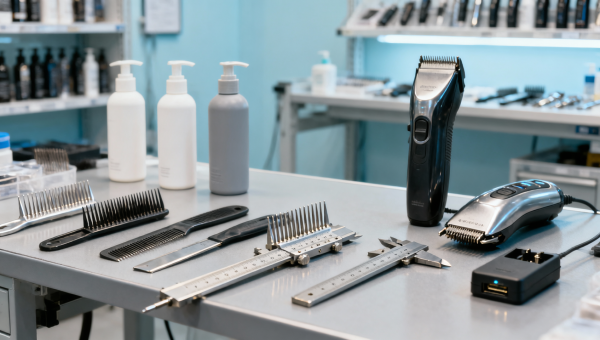
A pet grooming supplier should be approved on evidence of repeatable quality, product-specific compliance, and deliverable production capacity—not on a polished catalog or a competitive quotation. Before placing an order, establish whether the supplier can make the agreed product consistently, document its suitability for the destination market, and accept clear responsibility when specifications are not met.
The assessment must also match the product. A grooming brush presents different risks from a rechargeable clipper or a shampoo. Treating them as one category can lead to the wrong questions: a factory audit does not prove electrical safety, and a shampoo ingredient list does not establish formulation stability or substantiate therapeutic claims.
Define the product before judging the supplier
A supplier cannot be meaningfully assessed against an incomplete brief. “Premium slicker brush,” “quiet clipper,” and “gentle pet shampoo” describe positioning, not acceptance criteria. Convert those descriptions into specifications that can be checked during sampling and production.
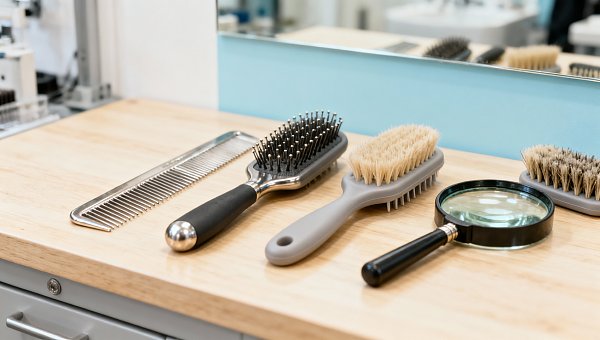
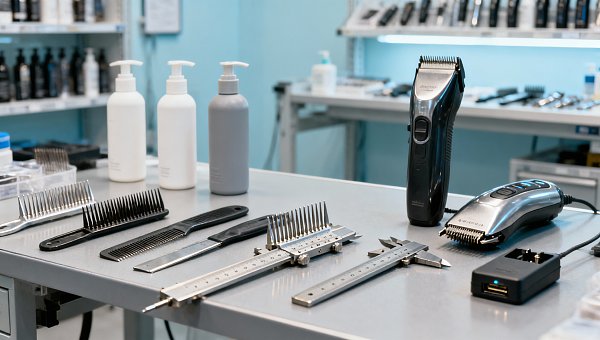
For a brush, specify dimensions, pin material and geometry, tip finish, handle construction, intended coat type, and packaging. For a clipper, define the blade system, power supply, operating conditions, charging arrangement, accessories, and performance requirements. For shampoo, establish the intended species, use instructions, formulation restrictions, fragrance requirements, pack size, shelf-life target, and permitted claims.
Destination markets and sales channels should be part of this brief. A plug configuration, label language, chemical restriction, or marketplace documentation requirement can change the product and its cost. Resolve these requirements before comparing quotations; otherwise, the lowest price may simply exclude necessary work.
Separate requirements into non-negotiable safety and compliance conditions, measurable performance targets, and negotiable commercial preferences. This prevents an attractive discount or packaging option from compensating for an unresolved safety issue.
Establish who actually controls production
Confirm the supplier’s legal entity, manufacturing address, and relationship to the site making the goods. Check business registration information through an appropriate official registry where available, and reconcile the entity named on the quotation, contract, invoice, and payment instructions. A different beneficiary requires a documented explanation and independent verification before funds are transferred.
A trading company is not automatically unsuitable. It may coordinate several specialist factories effectively. The important question is whether it discloses production arrangements and can enforce specifications, trace batches, arrange inspections, and resolve failures. An undisclosed production chain leaves uncertainty over who controls the product.
Ask which operations are performed internally and which are subcontracted. For grooming tools, these might include molding, metal finishing, blade manufacture, assembly, and packing. For shampoos, distinguish formulation development, bulk manufacture, filling, and packaging supply. A supplier that outsources a critical process should explain how it approves and monitors that subcontractor.
A live factory walkthrough or independent audit can help verify equipment, material storage, production flow, and quality records. However, an audit is a snapshot. It does not prove that a particular order will use the same facility, materials, or controls. Record the approved production site and require notification before any change.
Use samples to test the specification, not just appearance
A showroom sample demonstrates what the supplier can present. It does not establish what it will consistently ship. Ask whether samples were made with the proposed production materials, tooling, components, and formulation. Where practical, evaluate several units rather than one carefully selected item.
Testing conditions matter. A clipper’s unloaded runtime says little about performance on a dense coat. A brush that feels smooth by hand may still have inconsistent pin tips. A shampoo that looks acceptable when freshly filled may later separate, leak, or interact with its container. Agree on methods and acceptance limits before interpreting results.
Do not use animals as an informal substitute for safety testing. Any evaluation involving animals should follow appropriate welfare safeguards and professional oversight. Laboratory testing, material examination, and controlled performance checks should address relevant risks before use evaluations.
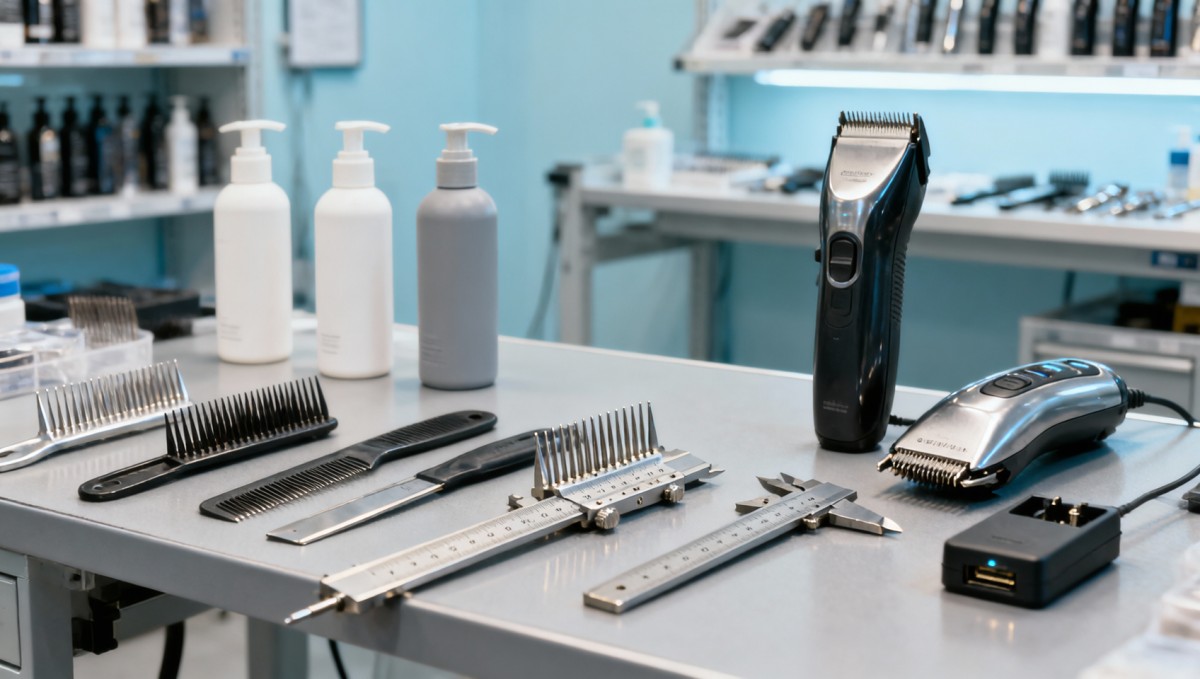
Once the sample is approved, create a controlled reference: dated photographs, specification revision, component details, packaging artwork, and retained samples where suitable. Both parties should hold matching references. Approval should be conditional on bulk production meeting the documented specification, not simply resembling the sample.
Verify compliance documents against the exact product
There is no universal “pet grooming certification.” Applicable requirements depend on the product, destination, construction, and claims. Ask the supplier for a product-specific compliance file rather than accepting a collection of certificates for unrelated products.
For electrical grooming equipment, assess the relevant electrical safety, electromagnetic compatibility, chemical restriction, and battery requirements. In the EU, applicable legislation determines whether CE marking is required. CE is not a general quality award, and a logo alone is not evidence of conformity. Review the declaration of conformity, its identified legislation, and the supporting technical documentation relevant to the model.
For rechargeable products, confirm the battery and charger configurations covered by the evidence. Lithium battery transport documentation, including the applicable UN 38.3 test summary, serves a transport purpose; it does not replace finished-product safety assessment. A change in cell, charging circuit, or power adapter may affect the validity of existing evidence.
Shampoos require a different review. In the United States, intended use and label claims can affect regulatory classification. Claims to treat disease or affect body structure or function can bring animal drug requirements into consideration; flea- or tick-control claims can raise pesticide requirements, depending on the product. A generic “FDA certificate” does not establish that an ordinary grooming shampoo is approved for all proposed uses.
For other markets, confirm the rules governing ingredients, classification, labeling, and any antimicrobial or pest-control claims before finalizing artwork. Do not assume human cosmetic requirements apply unchanged to products intended for animals.
Check each report’s model number, sample description, manufacturer, laboratory, test methods, date, and result. Verify the laboratory’s accreditation scope where relevant and seek independent confirmation if authenticity is uncertain. A genuine report for a similar model is still inadequate if the ordered product has materially different components or construction.
Look for a quality system that can catch production failures
A quality management certificate can support supplier assessment, but it does not prove product compliance or guarantee acceptable shipments. More useful evidence shows how the supplier controls incoming materials, checks production, releases finished goods, and handles nonconforming batches.
Request examples of inspection records and corrective-action reports, with confidential information removed if necessary. Records should identify what was checked, the acceptance criteria, the result, and the disposition of failures. A checklist containing only ticks, with no measurable limits or traceable batch details, provides limited assurance.
Focus on the controls behind the product’s main failure modes. Brushes need control over pin attachment and finishing. Clippers need component consistency, blade assembly checks, and appropriate electrical and functional testing. Water-based grooming formulations need suitable microbiological controls, stability support, and batch-release specifications. Finished-product inspection cannot compensate for a poorly controlled manufacturing process.
Agree on pre-shipment inspection arrangements before ordering. Define critical, major, and minor defects with product-specific examples. If an acceptance sampling plan is used, specify the standard, inspection level, and acceptance criteria. An AQL-based inspection is a statistical acceptance tool—not a promise that every unit is defect-free. Safety-critical characteristics may require additional testing or process controls.
Traceability should connect finished goods to manufacturing batches and relevant materials or components. For shampoos, retain-sample arrangements and batch coding support complaint investigations. For clippers, component and production records help determine whether a failure affects an isolated unit or a wider shipment.
Challenge the delivery promise and the true unit cost
Ask the supplier to break the lead time into material procurement, production, testing, packing, inspection, and dispatch. Clarify when the clock starts: deposit receipt, artwork approval, tooling completion, or component availability. A headline lead time without these conditions is difficult to enforce.
Capacity should be assessed against the actual product and process. General factory output figures may not reflect a bottleneck in blade finishing, battery supply, shampoo filling, or printed packaging. Ask what limits your order, whether key materials are available, and how production will be scheduled alongside existing commitments.
Quotation comparisons should include tooling, testing, artwork changes, packaging, inspection, freight assumptions, and replacement arrangements. Specify the Incoterms® rule, named place, and version. Incoterms allocate defined delivery responsibilities, costs, and risks; they do not settle product quality, payment, or warranty obligations.
Evaluate after-sales practicality as well. A low-cost clipper can become expensive if replacement blades or chargers are unavailable. A leaking shampoo bottle can create losses beyond the product cost by damaging adjacent stock. Compare likely failure costs and service requirements rather than treating the quoted unit price as the complete sourcing cost.
Make approval conditional on enforceable order terms
The purchase order or supply agreement should incorporate the approved specification, reference sample, packaging artwork, production site, inspection rights, and required documentation. Include a change-control clause covering materials, formulation, components, subcontractors, and manufacturing location. Substitutions should require written approval before production.
Define what happens if inspection fails, delivery is late, or defects appear after receipt. Remedies may include rework, replacement, credit, or refund, but they need agreed procedures, deadlines, and cost allocation. Distinguish visible shipping defects from latent failures that emerge during use. Cross-border enforceability deserves legal review when the order value or risk justifies it.
Payment terms should preserve meaningful verification points where commercially feasible. If the balance becomes payable before an agreed inspection is completed, inspection rights may offer little practical leverage. Bank-detail changes should always be verified through a previously established contact channel.
A pilot order can test production consistency, packing, documentation, and delivery coordination before a larger commitment. It should use the intended production process, not a special hand-built route. Evaluate the pilot against the same specifications and controls planned for subsequent orders.
Approve the supplier when critical evidence is complete, samples meet defined requirements, production controls are credible, and commercial responsibilities are documented. Conditional approval is reasonable for a clearly bounded, non-safety issue with an agreed corrective action. Missing safety evidence, unexplained payment arrangements, undisclosed manufacturing, or refusal to control substitutions should stop the order rather than become risks accepted in exchange for a lower price.
Related Intelligence
 Infant Feeding & CareOct 24, 2026FDA Issues Draft Guidance on Cadmium Action Levels in Baby FoodsFDA draft guidance on cadmium action levels in baby foods proposes category-specific targets. Explore potential impacts on sourcing, testing and compliance planning—and how to prepare.
 STEM & Educational ToysOct 23, 20262026 China Toy Expo Gives AI Toys a Dedicated Hall as Practical Features Take Priority2026 China Toy Expo spotlights AI toys with a dedicated hall. Explore how practical features and everyday play experiences are reshaping manufacturers’ product priorities.
 STEM & Educational ToysOct 22, 2026Blokees Showcases Over 900 Products at the 2026 China International Toy FairBlokees showcases over 900 products at the 2026 China International Toy Fair. Explore Model Kits, BLOKEES WHEELS and key sourcing checks to guide your next purchase.
 Cosmetics & PkgOct 21, 2026BASF Plans Beauty Innovation Showcase at in-cosmetics Asia 2026Explore BASF’s planned beauty innovations at in-cosmetics Asia 2026 in Bangkok, with a focus on skin protection, repair and sustainable solutions for personal care formulators.
 Cosmetics & PkgOct 20, 2026Beauty Tops Amazon’s 2026 Prime Big Deal Days Shopping CategoriesBeauty tops Amazon’s 2026 Prime Big Deal Days at 32% of shoppers, according to Market Defense. Explore what the findings could mean for product selection, inventory and promotional planning.
 Pet Grooming & TravelOct 14, 2026Which Pet Grooming Tools Have the Lowest Return Risk?Which pet grooming tools have the lowest return risk? Explore manual combs, rubber brushes, and sourcing tips to reduce avoidable returns and build a smarter, customer-friendly assortment.
 Pet Grooming & TravelOct 14, 2026How Should Buyers Assess a Pet Grooming Supplier Before Ordering?How do I assess a pet grooming supplier before ordering? Discover practical checks for quality, compliance, capacity, and contracts to reduce sourcing risks and buy with confidence.
 Corporate & Seasonal GiftsOct 14, 2026How Can Retailers Check Plush Toy Stuffing Quality?How do retailers check plush toy stuffing quality? Discover practical inspections, supplier checks, and testing tips to reduce defects and make smarter pet toy sourcing decisions.
 Corporate & Seasonal GiftsOct 14, 2026Are Embroidered Eyes Safer Than Plastic Eyes on Plush Toys?Are plush toys with embroidered eyes safer than plastic eyes? Discover key pet-toy risks, quality checks, and sourcing tips to make smarter buying decisions.
 Infant Feeding & CareOct 14, 2026What Documents Are Required to Import Baby Formula?What import documents are needed for baby formula? Explore shipment paperwork, health certificates, and market-specific requirements to avoid costly delays and prepare for compliant imports.
 Infant Feeding & CareOct 14, 2026Which Baby Formula Packaging Formats Reduce Shipping Damage?Which baby formula packaging formats reduce shipping damage? Compare metal cans, rigid tubs, and supported pouches to choose better protection and reduce costly transit losses.
 Baby Gear & StrollersOct 14, 2026How Long Does Custom Diaper Bag Production Usually Take?How long does custom diaper bag production usually take? Plan for 30–60 days after sample approval. Discover key lead-time factors and practical tips to avoid delays and launch on schedule.
 Baby Gear & StrollersOct 14, 2026Which Diaper Bag Features Justify a Higher Wholesale Price?What diaper bag features justify a higher wholesale price? Discover durability, comfort, and easy-clean upgrades worth paying for—and source smarter with practical buyer tips.