Which Diaper Bag Features Justify a Higher Wholesale Price?
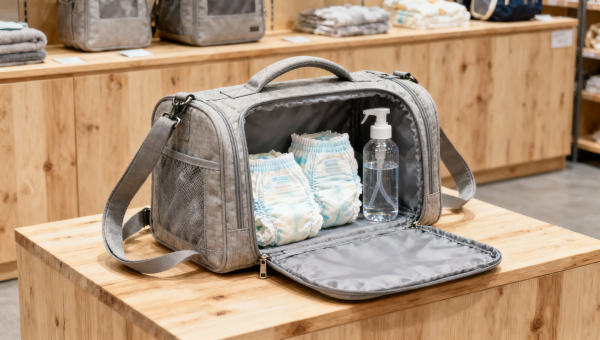
A diaper bag can look impressive on a showroom table and become frustrating within a week of real use. A zipper catches when the main compartment is full. A shoulder strap digs in during a long walk. A bottle leaks into a lining that cannot be cleaned properly. For retail buyers, these small failures can turn an attractive wholesale quote into a costly product decision.
What diaper bag features justify a higher wholesale price? The strongest reasons are measurable improvements in durability, carrying comfort, access, and cleanability. Extra pockets, fashionable hardware, and bundled accessories deserve a premium only when they improve the customer experience enough to offset their added cost.
The sourcing challenge is not choosing between “basic” and “premium.” It is deciding which upgrades matter to your customers—and whether the supplier can reproduce them consistently.
Compare performance, not the length of the feature list
Two diaper bags with similar dimensions can have very different production costs. Fabric construction, reinforcement, zipper specifications, lining quality, and assembly complexity all affect the quote. Yet a higher manufacturing cost does not automatically create higher retail value.
A useful comparison separates features into three groups: upgrades that prevent failure, upgrades that improve daily use, and upgrades that mainly support positioning. The first two usually provide the strongest foundation for a wholesale premium.
This approach prevents a common sourcing mistake: paying more for a bag that photographs better but performs no better when packed.
Durability: the premium customers notice after purchase
Fabric specifications matter more than fabric names
“Oxford,” “nylon,” and “polyester” are not complete quality specifications. Neither is denier alone. Yarn, weave, weight, coating, and finishing affect how a fabric behaves. A heavier material may improve abrasion resistance, but it can also increase empty weight without delivering a meaningful benefit.
Ask suppliers to identify the actual shell construction and explain why it suits the intended use. Examine the base, corners, and areas around handles: these face different stresses from the front panel. Selective reinforcement can offer better value than upgrading every surface.
Water resistance also needs precise language. A treated shell may tolerate splashes while allowing water through seams and zippers. A water-resistant fabric does not make the finished diaper bag waterproof. Pay for the performance you can substantiate, not an ambiguous claim.
Strong construction is often a better investment than decoration
Diaper bags carry awkward loads: bottles, wipes, spare clothing, snacks, and personal items. The strain concentrates at handle attachments, strap anchors, zipper ends, and pocket openings. Reinforced stitching, appropriate seam allowances, and backing at load-bearing points can justify a premium because they address predictable failure locations.
Zipper quality is equally important. A branded component may help establish traceability, but its name alone is not proof of suitability. Slider design, chain size, installation, and operation under load all matter. Test the zipper on a packed bag, not just an empty sample.
For wholesale procurement, agree on test loads, repetition counts, and acceptance criteria before approving production. Otherwise, “heavy-duty construction” remains a sales description rather than a purchasing specification.
Comfort and access justify more than additional pockets
A parent rarely opens a diaper bag under ideal conditions. One hand may be holding a child; the other is searching for wipes. Features that reduce that friction often have stronger retail relevance than elaborate compartment counts.
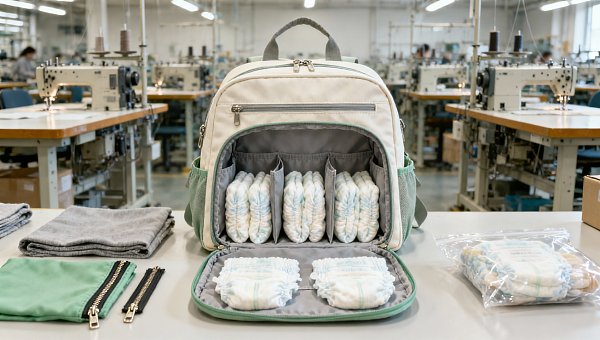
A wide opening, visible interior, and reachable essentials pocket can make a modestly equipped bag feel better designed than one with twenty poorly placed compartments. Bottle pockets should fit the bottle formats used by the target market without consuming excessive main-compartment space.
Carrying comfort deserves a loaded comparison. Broad, contoured straps can distribute pressure, while stable adjustment hardware helps prevent the bag from sagging. Back-panel padding may help, but thick padding alone does not establish comfort or breathability. Evaluate different body sizes, clothing layers, and realistic loads.
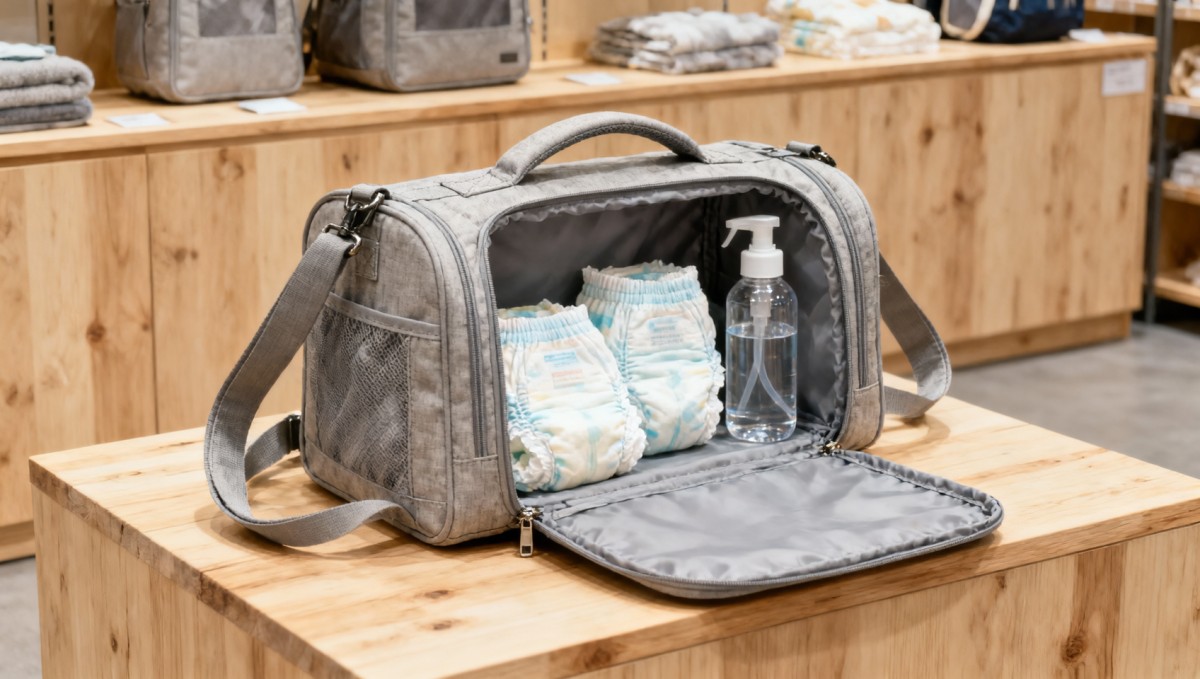
The most revealing sample review is a side-by-side packing exercise. Load competing bags with the same agreed set of essentials. Check whether the opening stays accessible, the bag remains balanced, and frequently used items can be retrieved without unpacking everything.
Also compare empty weight. Heavy hardware, excessive padding, and numerous compartments can undermine the benefit of a premium carrying system. A comfortable bag is not necessarily the bag with the most material.
Easy-clean interiors and insulation: useful, but easy to oversell
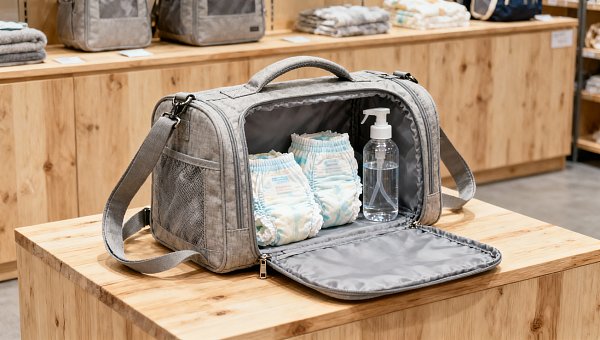
A leaking bottle or damp change of clothes turns cleanability from a minor detail into a purchasing priority. Smooth, wipe-clean linings and removable wet-item pouches can support a higher wholesale price when they simplify cleanup.
Check the whole compartment, not just the lining swatch. Bound edges, exposed foam, stitching channels, and tight corners can retain moisture or residue. A removable pouch may be more practical than a permanently attached compartment that is difficult to dry.
Cleaning claims should match tested care instructions. “Machine washable” needs validation on the assembled product, including coatings, padding, hardware, and dimensional stability. A shell that survives washing is not enough if the lining delaminates or the straps deform.
Insulated bottle pockets require similar discipline. Insulation may slow temperature change, but results depend on construction, starting temperature, ambient conditions, and whether suitable cooling is used. Do not position an insulated pocket as a guarantee of safe milk storage.
If insulation supports the proposed retail premium, request a defined performance test and review pocket fit, lining integrity, and usable capacity. Otherwise, the feature may be little more than a reflective lining added to the bill of materials.
Where a wholesale premium becomes harder to defend
Some features are commercially useful without improving basic performance. The question is whether they match a specific customer segment and retail proposition.
- Fashion hardware: Metal trims and custom pulls can strengthen brand identity, but add weight and introduce finish-wear concerns. Check corrosion and surface durability where relevant.
- Large accessory bundles: A changing mat, pouch, and bottle holder can improve perceived value. Each also needs its own material, construction, and care specification. More pieces are not automatically better.
- Charging pass-throughs: A simple cable opening may offer limited differentiation. Integrated electrical components add reliability and compliance questions that need separate evaluation.
- Stroller attachments: These may appeal to shoppers, but bag compatibility does not establish stroller stability. Avoid universal-safety claims; instructions should defer to the stroller manufacturer’s guidance.
- Convertible formats: Backpack-to-tote designs can serve different occasions, but extra straps and attachments may complicate use. Test each carrying mode rather than accepting versatility as a benefit on paper.
Branding upgrades can still justify expenditure. A distinctive silhouette or custom color may help a private-label range stand out. Treat that investment as merchandising value, however, rather than presenting it as evidence of superior durability.
Compliance is a purchasing requirement, not a decorative badge
Retail buyers should distinguish between applicable legal requirements, voluntary testing, and unsupported certification language. A diaper bag is not automatically subject to every standard associated with baby products simply because parents use it.
Classification depends on the destination market, intended user, construction, and included components. In the United States, requirements associated with children’s products depend on the product’s classification; a Children’s Product Certificate is not a universal requirement for all parent-used bags. CE marking is likewise not a general quality certification for ordinary bags.
Ask for a market-specific compliance assessment rather than accepting a list of logos. Chemical restrictions, labeling, and other obligations may apply depending on the materials and jurisdiction. Accessories can require separate review.
Where reports are needed, verify that they identify the relevant materials or product configuration. A report for a different coating, lining, or hardware finish may not support the version you plan to purchase. Supplier traceability and change control help preserve that connection through production.
Turn the premium into a sourcing decision
Within Global Consumer Sourcing’s cross-category retail intelligence approach, the useful question is not whether a supplier offers a “premium” bag. It is whether the specification supports a defensible product proposition and repeatable supply.
Start with the customer and channel. A compact urban diaper backpack may deserve investment in low weight and fast access. A travel-oriented model may need stronger load-bearing construction and more comfortable straps. A value-led assortment may benefit most from dependable zippers and a cleanable lining—not expensive trims.
Then request a costed comparison against a shared baseline. Ask the supplier to separate the effects of material upgrades, additional operations, accessories, packaging, and customization. This helps reveal whether the price difference buys performance or production complexity.
Evaluate total landed economics, not just unit price. Bulkier padding or accessories can increase packed dimensions. Extra colors can fragment order quantities. Custom hardware may affect lead times and replacement availability. These costs belong alongside freight, duties, inspection, and expected after-sales exposure in the commercial review.
Where a change adds cost, identify the benefit it must deliver: fewer failures, clearer differentiation, stronger conversion, or support for a higher retail price. Those outcomes are hypotheses to validate, not promises to assume.
Before approving the higher-priced sample
- Fix the specification. Record materials, component details, dimensions, reinforcement, care instructions, and permitted tolerances.
- Compare under realistic conditions. Use identical contents, loads, cleaning procedures, and usability tasks.
- Check reproducibility. Confirm how production materials, workmanship, and substitutions will be controlled.
- Connect features to merchandising. Ensure the retail team can explain the upgrades clearly and substantiate any claims.
- Remove weak-value additions. Simplify features that add weight, inspection work, or cost without serving the intended buyer.
The best premium is easy to explain
A higher wholesale price is most defensible when the reason fits a simple sentence: the bag withstands repeated loading, carries more comfortably, opens more easily, or cleans up with less effort. Those benefits remain relevant after the novelty of the design has faded.
Buyers do not need every available upgrade. They need the right combination for their assortment, supported by specifications and checks that survive the move from sample to production. Pay for improvements customers will feel during everyday use—and question costs that exist mainly to make the feature list longer.
Related Intelligence
 Cosmetics & PkgOct 21, 2026BASF Plans Beauty Innovation Showcase at in-cosmetics Asia 2026Explore BASF’s planned beauty innovations at in-cosmetics Asia 2026 in Bangkok, with a focus on skin protection, repair and sustainable solutions for personal care formulators.
 Cosmetics & PkgOct 20, 2026Beauty Tops Amazon’s 2026 Prime Big Deal Days Shopping CategoriesBeauty tops Amazon’s 2026 Prime Big Deal Days at 32% of shoppers, according to Market Defense. Explore what the findings could mean for product selection, inventory and promotional planning.
 Baby Gear & StrollersOct 14, 2026How Long Does Custom Diaper Bag Production Usually Take?How long does custom diaper bag production usually take? Plan for 30–60 days after sample approval. Discover key lead-time factors and practical tips to avoid delays and launch on schedule.
 Baby Gear & StrollersOct 14, 2026Which Diaper Bag Features Justify a Higher Wholesale Price?What diaper bag features justify a higher wholesale price? Discover durability, comfort, and easy-clean upgrades worth paying for—and source smarter with practical buyer tips.
 Infant Feeding & CareOct 14, 2026How Can Retailers Prevent Baby Clothing Color Bleeding Claims?How can retailers avoid color bleeding claims on baby clothing? Discover testing, supplier controls, and care-label strategies to reduce returns and protect customer trust.
 Infant Feeding & CareOct 14, 2026Which Baby Clothing Materials Are Easier to Source Compliantly?What materials make baby clothing easier to source compliantly? Compare cotton, blends, and certified options, with practical supplier checks to reduce risk and make smarter sourcing decisions.
 Baby Gear & StrollersOct 14, 2026Are Baby Carrier Buckle Failures a Common Reason for Returns?Are baby carrier buckle failures a common return issue? Explore defects, usability complaints, and safety checks to make informed sourcing decisions before your next order.
 Baby Gear & StrollersOct 14, 2026How Do You Compare Baby Carrier Suppliers on Safety and Cost?How do I compare baby carrier suppliers on safety and cost? Learn to verify safety evidence, assess factory controls, and compare total landed costs to make a confident sourcing decision.
 STEM & Educational ToysSep 20, 2026How Do I Verify Age Grading for Educational Toys?How do I verify educational toy age grading? Learn how to assess safety risks, test reports, packaging, and market compliance before buying or selling.
 Corporate & Seasonal GiftsSep 20, 2026Are Promotional Items Worth Ordering for Short Campaigns?Are promotional items worth ordering for short campaigns? Learn how pet brands can choose useful, compliant giveaways that drive measurable engagement, sales, and loyalty.
 STEM & Educational ToysSep 20, 2026What Safety Checks Should Wooden Toy Suppliers Pass?What safety checks should wooden toy suppliers pass? Explore essential compliance, material traceability, chemical testing, and quality controls to source safer toys with confidence.
 Infant Feeding & CareSep 20, 2026Which Teething Toy Materials Are Easiest to Clean?Which teething toy materials are easiest to clean? Discover why silicone and natural rubber lead for hygienic, easy-care pet chew toys.
 Infant Feeding & CareSep 20, 2026How Can Retailers Prevent Mold Complaints About Bath Toys?How can retailers prevent mold complaints about bath toys? Explore drainable designs, supplier controls, testing, and care guidance to reduce moisture risks.