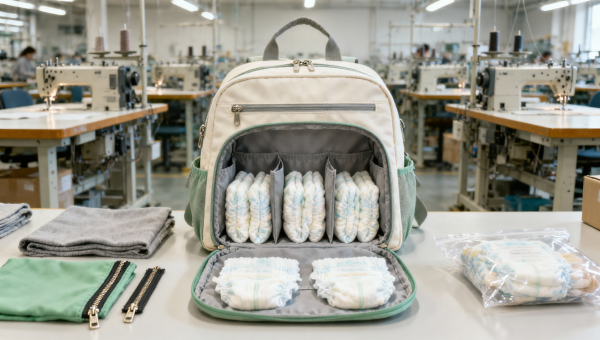
How long does custom diaper bag production usually take? For retail buyers and private-label brands, a practical planning estimate is 30–60 days after sample approval.
This estimate covers bulk manufacturing only. Product development, material sourcing, testing, freight, and destination receiving can add several weeks or months to your overall schedule.
Actual lead times depend on order volume, fabric availability, design complexity, factory capacity, and applicable testing requirements. Understanding these variables helps prevent missed launches.
This guide explains how to estimate a realistic delivery date, identify likely delays, and confirm supplier commitments before placing a custom diaper bag order.
What Does a 30–60-Day Production Quote Actually Include?
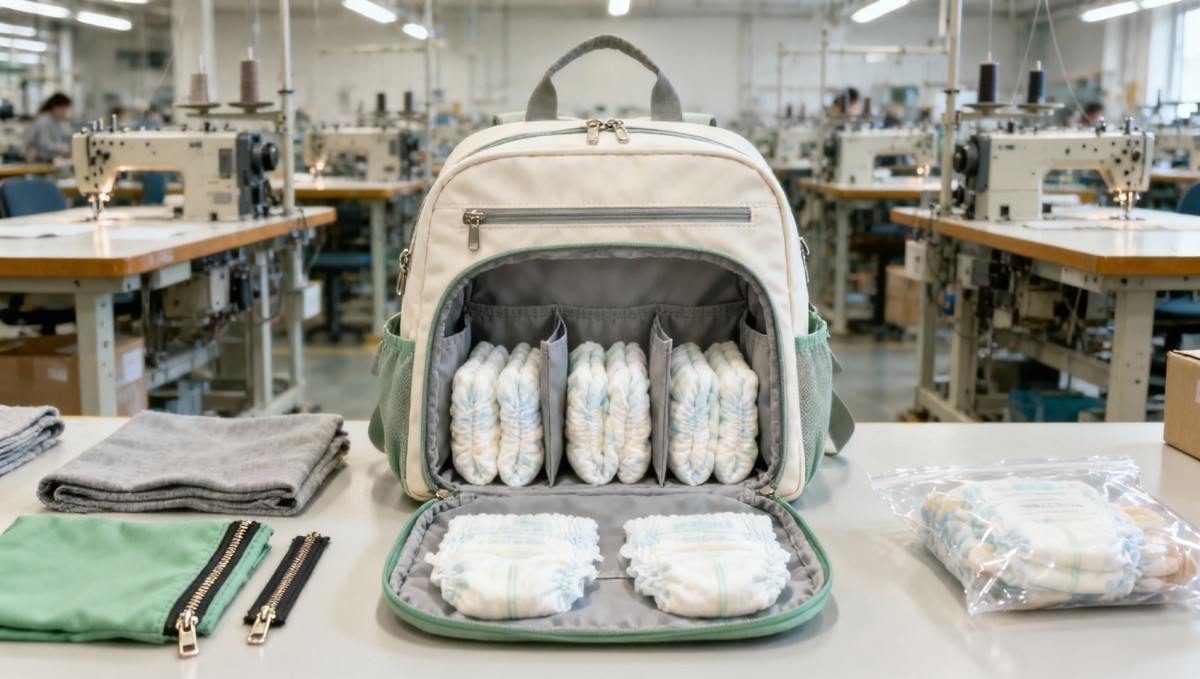
A supplier’s production estimate is useful only when its starting point and finishing point are clear. “Delivery” can mean factory completion, shipment departure, or warehouse arrival.
For planning purposes, treat 30–60 calendar days as an indicative bulk manufacturing window after final sample approval, subject to material readiness and a confirmed production slot.
Some factories count from deposit receipt, while others begin after fabric arrives or artwork approval. Ask which conditions must be satisfied before the clock starts.
The finishing point matters equally. Goods ready for inspection are different from goods packed for collection, cleared for export, or available in your distribution center.
A straightforward private-label order using an existing bag design may move faster. A fully custom backpack with new construction details usually requires additional development time.
For an initial planning budget, allow roughly 10–18 weeks from a reasonably complete brief to warehouse receipt, assuming limited revisions and a manageable shipping route.
This is a working allowance, not a guaranteed industry average. Complex development, unavailable materials, seasonal congestion, or long freight routes can extend the schedule substantially.
How Long Does Each Stage Take?
Separate development, manufacturing, and logistics when reviewing quotations. Otherwise, a short factory lead time can conceal a much longer period before products become available for sale.
The following ranges are indicative planning allowances rather than measured industry benchmarks. Confirm current timings with your supplier, testing provider, and freight forwarder before committing.
These stages do not always run consecutively. Packaging development, testing preparation, and some procurement can overlap, but only when specifications are stable enough to proceed.
Ask for a dated milestone schedule instead of adding every range mechanically. The critical path is whichever sequence of dependent tasks determines the earliest shipment.
For example, sewing capacity provides little benefit if custom zippers arrive late. Conversely, early material availability cannot compensate for an unapproved pattern or missing artwork.
Which Customization Choices Add the Most Time?
The largest schedule difference often comes from choosing between an existing factory design and a newly developed product. Clarify that distinction before comparing supplier quotations.
Adding a logo to an established diaper bag generally requires fewer approvals than changing its dimensions, pocket layout, opening mechanism, or overall sewing pattern.
New compartments can affect several components simultaneously. An insulated bottle pocket, for example, may require different lining, revised stitching, and changes to adjacent storage areas.
Custom fabric colors introduce procurement uncertainty when material must be dyed. Color approval samples, minimum order quantities, and fabric production slots can all affect timing.
Special hardware can create similar dependencies. Branded zipper pulls, molded buckles, and custom metal fittings may require tooling, finish approval, or separate component production.
A stocked fabric is only helpful if enough usable material is reserved for your order. Confirm quantity, batch consistency, and reservation before approving the schedule.
For a fixed launch date, standardize components that customers rarely notice. Reserve customization for features that support positioning, usability, or a defensible selling point.
How Do Order Volume and Factory Capacity Affect Lead Time?
A larger order does not always take proportionally longer. Factories may allocate additional sewing lines, but that depends on capacity, staffing, and component availability.
Small orders can also face delays when they fall below fabric or hardware suppliers’ minimums. Waiting to combine purchases may offset the shorter sewing requirement.
Ask whether the quoted schedule reflects an allocated production slot or simply a typical turnaround. Capacity available today may disappear before your deposit arrives.
Request expected sewing start and finish dates, together with the material readiness date. These milestones reveal whether the factory has built a workable production sequence.
Peak retail ordering periods and local holidays can affect both the factory and its upstream suppliers. Obtain the actual shutdown calendar rather than assuming standard closures.
If subcontracting is planned, clarify which processes move elsewhere and how quality is controlled. Extra handoffs can introduce transport delays and inconsistent workmanship across batches.
Compare suppliers using the same specifications, quantity, approval assumptions, and shipping endpoint. A shorter headline lead time may simply exclude work included in another quotation.
Can Testing and Quality Checks Delay Shipment?
Testing can affect the schedule when requirements are identified late or samples fail. Determine the applicable market obligations while selecting materials and finalizing product claims.
A diaper bag is not automatically subject to every rule applicable to children’s products. Classification depends on intended use, marketing, design, and the destination jurisdiction.
Do not assume FDA approval, CE marking, or a Children’s Product Certificate is universally required. Obtain product-specific guidance from a qualified compliance professional where needed.
Requirements may involve restricted substances, labeling, or particular accessories. A bundled changing mat or separate childcare item can introduce obligations beyond those of the bag.
Ensure laboratory reports match the relevant materials and product configuration. A report for another fabric or an earlier design may not support your finished order.
Separately, agree on functional quality checks covering zipper operation, seam strength, strap attachment, dimensions, and workmanship. Add water-resistance testing when that claim supports your marketing.
Book any necessary laboratory work and final inspection early. Failed results can trigger material replacement or rework, so include time for corrective action before shipping.
How Should You Work Backward from Your Launch Date?
Start with the date inventory must be received and ready to sell. A factory completion date alone cannot establish whether your launch deadline is achievable.
Work backward through destination receiving, customs, freight, inspection, manufacturing, procurement, and sample approval. Identify the latest acceptable date for each milestone and assign an owner.
Consider an illustrative launch requiring 45 days of manufacturing, five days for inspection and release, and 35 days for freight and destination processing combined.
Those assumptions require 85 days after production authorization, before any contingency. Sample development and approvals must occur earlier, making the overall project considerably longer.
Replace these illustrative numbers with route-specific quotations. Air transport may shorten transit, but booking, export handling, customs clearance, and warehouse appointments still require time.
For an initial order, consider a contingency allowance of one to three weeks where practical. Increase it when development, supplier performance, or logistics remains uncertain.
If the schedule misses your deadline, change a specific constraint: simplify the design, use available materials, split delivery, or reconsider the launch commitment before ordering.
What Should You Confirm Before Paying a Deposit?
Your purchase documentation should turn a broad estimate into a measurable commitment. Define the approved product, schedule assumptions, inspection process, and shipment endpoint in writing.
- Confirm whether lead times use calendar days or business days.
- Define the exact event that starts the production clock.
- Record material availability and the planned production allocation.
- Attach approved specifications, artwork, packaging, and the reference sample.
- Specify required testing, inspection criteria, and responsibility for booking.
- Separate factory completion, freight departure, and warehouse arrival dates.
- Agree on milestone updates and prompt notification of delays.
- Document change approval, rework responsibilities, and shipment release conditions.
A useful schedule statement names the conditions explicitly: manufacturing begins after deposit receipt, approved sample confirmation, and material readiness, with a dated factory completion target.
Also clarify shipping responsibilities under the agreed Incoterms rule and named place. This helps identify who arranges transport and manages particular costs and risks.
Ask how delays will be reported and what recovery options are available. Regular updates should show milestone progress and unresolved dependencies, rather than vague reassurance.
How Can You Shorten Production Without Creating Expensive Problems?
The most effective time savings usually happen before manufacturing begins. A complete technical brief reduces questions, sample revisions, and conflicting interpretations between your team and supplier.
Provide dimensions, reference images, pocket functions, fabric specifications, logo placement, packaging details, and acceptance criteria together. Assign one person to consolidate feedback and authorize approvals.
Review samples against that brief rather than introducing new preferences at every round. Late changes to construction or materials can invalidate earlier sourcing and testing work.
Where justified, approve stable components separately so procurement can begin earlier. Document the exposure clearly, because materials purchased before final approval may become unusable after revisions.
A repeat order may move faster if specifications remain unchanged and materials are available. Nevertheless, confirm current capacity instead of assuming the previous schedule still applies.
Partial shipments can protect a launch when only an initial quantity is needed. Evaluate additional freight, inspection, and handling costs against the value of earlier availability.
Request a costed recovery plan before paying rush charges. Expedite the actual bottleneck; paying for faster sewing achieves little when delayed hardware controls the shipment date.
What Is a Realistic Timeline to Use in Your Buying Plan?
For custom diaper bags, 30–60 days is a practical starting estimate for bulk manufacturing after approval. It should always be qualified by readiness and capacity.
Your launch plan needs the complete timeline, including development, procurement, testing, inspection, and delivery. Confirm whether activities overlap before turning their estimates into a commitment.
The strongest supplier proposal explains when work starts, what could delay it, and how progress will be demonstrated. Evaluate those details alongside price and product quality.
Before committing, secure an approved specification, dated milestones, and a realistic arrival allowance. That gives your team a defensible basis for inventory decisions and launch promises.