Which Pet Grooming Tools Have the Lowest Return Risk?
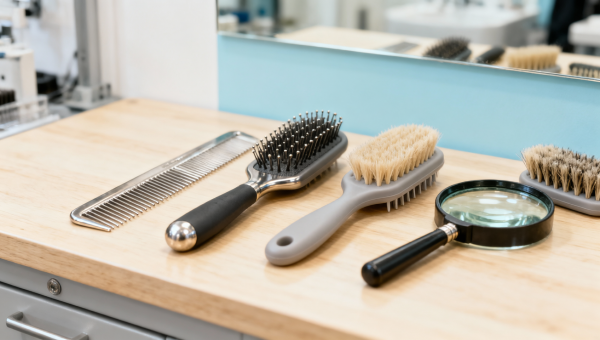
Which pet grooming tools have the lowest return risk? For retail buyers and private-label brands, the strongest starting points are usually well-made manual combs, rubber grooming brushes, and straightforward bristle brushes sold for clearly defined coat types. They have fewer failure points than powered tools and are easier for customers to understand before buying.
That is a sourcing hypothesis, not a universal return-rate ranking. A poorly finished comb can disappoint faster than a carefully engineered clipper. Grooming gloves may seem simple, yet fit problems and exaggerated hair-removal claims can undermine customer satisfaction. The most reliable assortment combines uncomplicated construction, appropriate use cases, consistent manufacturing, and honest product listings.
For buyers building a pet grooming range, the useful question is therefore not just “Which tool is least likely to break?” It is “Which tool is least likely to disappoint the customer who actually buys it?”
Start with the reasons customers send grooming tools back
A grooming product sits at the intersection of three variables: the tool, the pet, and the owner’s technique. Returns can occur even when the product has no manufacturing defect.
Consider a customer who orders a brush after seeing a photograph of a fluffy dog. Their own dog has a short, smooth coat. The brush arrives intact, but collects little loose hair and feels too scratchy. The problem began in the listing, not necessarily on the production line.
For sourcing and merchandising teams, return reasons generally fall into four useful groups:
- Physical defects: loose teeth, shedding bristles, cracked handles, detached pads, or mechanisms that jam.
- Compatibility errors: the wrong tooth spacing, brush firmness, tool size, or grooming function for the animal’s coat.
- Usability problems: uncomfortable grips, poor glove fit, awkward cleaning, or instructions that assume grooming experience.
- Expectation gaps: claims such as “removes all shedding” or “works on every coat” that ordinary use cannot support.
Lower-return sourcing addresses all four. Checking carton quantities and cosmetic appearance alone will not reveal whether a product belongs in the assortment.
Which pet grooming tools have the lowest return risk?
The comparison below is a practical starting point based on product complexity and common dissatisfaction triggers. It is not a measured industry league table; validate it against your own sales channels and customer feedback.
Manual combs: a strong baseline, not a universal solution
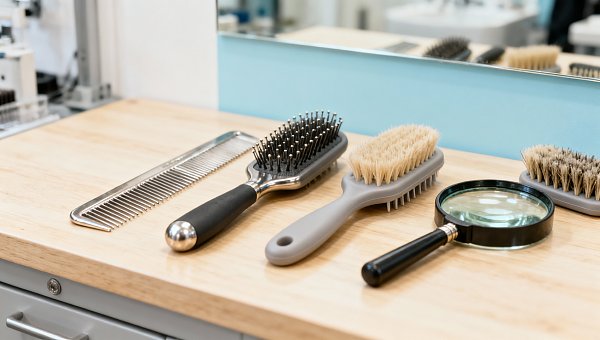
A rounded-tip metal comb is often a sensible entry product because its function is visible and its construction is easy to inspect. Buyers can assess tooth alignment, spacing, surface finish, and handle attachment without relying on electronic performance tests.
The critical detail is the finish. “Rounded tips” does not mean the entire tooth is free from burrs or rough plating. Examine tooth surfaces and junctions, and assess snagging using an appropriate test medium before conducting supervised grooming trials.
Specify the intended job. A comb for checking small tangles and finishing a suitable coat should not be marketed as a painless solution for severe matting. Tight mats may require professional attention rather than forceful combing.
Rubber brushes: promising when coat compatibility is narrow
Rubber grooming brushes can be attractive for short-coated pets and gentle surface grooming. Many designs avoid metal pins and moving parts, reducing certain mechanical failure modes.
However, material flexibility and nub shape matter. A brush that is too rigid may feel uncomfortable; one that is too soft may collapse under ordinary pressure. Thin sections can tear, and a strong persistent odor can prompt rejection before the product is used.
Ask suppliers to identify the material accurately rather than treating “rubber,” “silicone,” and “TPR” as interchangeable descriptions. If the brush is intended for bathing, verify wet grip, drainage, cleaning instructions, and compatibility with the recommended care routine.
Bristle brushes and gloves: manage the promise carefully
A soft bristle brush can be a dependable finishing product, but it is not necessarily an effective undercoat-removal tool. Listings should distinguish surface grooming from detangling and deshedding. Check bristle retention and firmness across multiple samples, especially where bristles are fixed into a separate pad.
Grooming gloves deserve a more conditional recommendation. Customers may appreciate the familiar petting motion, but hand size introduces a fit variable that conventional brushes do not have. Test cuff adjustment, finger reach, seam strength, and performance on both left and right hands where relevant.
Also test cleanup. A glove that collects hair but will not release it easily can feel like extra work. Avoid promising a neat, peel-away sheet of fur unless representative trials consistently support that result.
Why feature-rich tools need a higher evidence threshold
Self-cleaning slicker brushes, deshedding tools, clippers, and grinders are not automatically poor choices. They simply require more validation before a buyer treats them as low-return products.
A retractable-pin brush adds a mechanism that can misalign or jam. A deshedding tool needs careful assessment of tooth geometry, intended coat types, and instructions against excessive pressure or repeated passes. Clippers introduce blade condition, heat, noise, charging, battery performance, and maintenance requirements.
These variables also change the support burden. Someone using clippers for the first time may interpret poor results caused by coat preparation or technique as a defective motor. Accurate demonstrations and troubleshooting guidance can help, but they cannot compensate for weak engineering.
For a new private-label range with limited support capacity, simple manual tools are often a more manageable starting point. Add complex products when testing, replacement-part arrangements, and customer service can support them.
Turn “good quality” into a supplier test plan
Supplier samples often look reassuring on a desk. The real challenge is whether production units remain consistent after repeated use, cleaning, handling, and transport. A sourcing brief should translate subjective preferences into observable acceptance criteria.
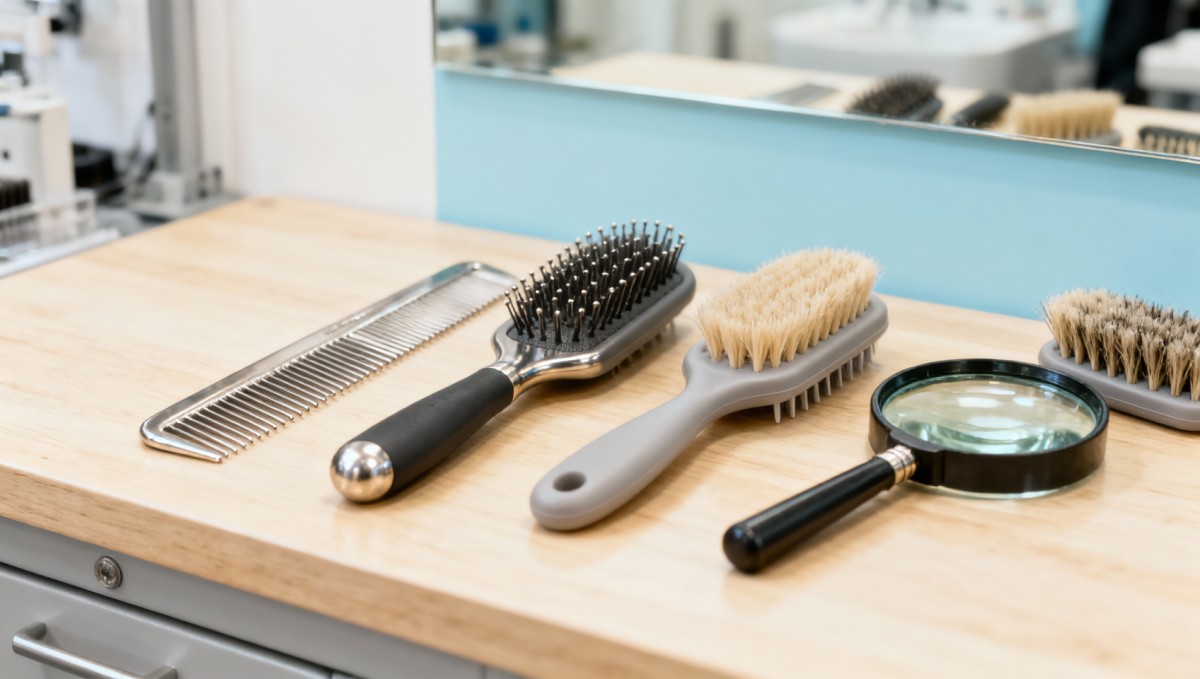
Check the surfaces that touch the pet
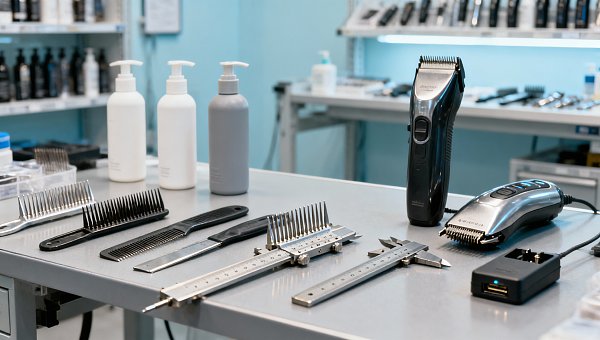
Inspect comb teeth, brush pins, bristles, and molded nubs for sharp edges, inconsistent shapes, exposed ends, and rough joints. Review pad seating and pin retention where applicable. Examine more than one unit: a single approved sample cannot establish production consistency.
Grooming trials should be supervised, use suitable coats, and stop if the pet shows discomfort. Severe matting, inflamed skin, and other conditions requiring veterinary or professional attention should not become informal product-testing scenarios.
Test the parts customers repeatedly stress
- Handles and joints: assess attachment security, grip comfort, and resistance to foreseeable handling stresses.
- Brush pads and bristles: check for loosening, shedding, deformation, and trapped debris after repeated use.
- Gloves: inspect seams, cuff closures, flexibility, and sizing consistency.
- Moving mechanisms: cycle them repeatedly and check performance after realistic hair accumulation and cleaning.
- Packaging: verify that teeth and pins remain protected during distribution and that essential instructions stay legible.
Agree on methods, sample sizes, and acceptance criteria before placing the order. “Durable” is not a test specification. Keep an approved reference sample, and require approval for changes to materials, tooling, coatings, or construction.
Review safety and compliance by product and destination
There is no single certification that makes every pet grooming tool suitable for every market. Applicable obligations depend on the product, materials, claims, destination, and whether electrical components are involved.
Request relevant material declarations, traceability information, and test documentation. Confirm that reports match the actual model and material configuration. Powered products may require additional electrical, battery, transport, and other market-specific assessments. Do not assume that CE marking, FDA references, or a Children’s Product Certificate are relevant merely because a supplier displays them.
Use the product page to prevent avoidable mismatches
Customers cannot feel bristle firmness or compare tooth spacing through a screen. The listing must supply the missing context without turning into a wall of warnings.
Show the tool beside a hand or include clear dimensions. Describe compatible coat characteristics, not just a list of popular breeds: coat length, density, condition, and grooming needs can vary within a breed.
A useful product page answers five questions quickly:
- What grooming task does this tool perform?
- Which coat types is it intended for?
- What tasks is it not designed to handle?
- How should the customer use and clean it?
- When should they stop and seek professional advice?
Replace “perfect for all dogs and cats” with specific, tested guidance. Demonstrate gentle technique on an appropriate coat, and avoid implying that every pet will enjoy the sensation. A clear limitation can prevent the wrong purchase while reassuring the right customer.
Validate the assortment before expanding it
For the pet-economy buyers served by Global Consumer Sourcing (GCS), the strongest sourcing decision connects product design with post-purchase evidence. Supplier capability matters, but so do listing accuracy, customer education, and the economics of handling returns.
Begin with a focused pilot rather than a broad range of visually similar tools. Track returns by SKU, reason, sales channel, and production batch. Separate defects from compatibility complaints and performance expectations. Review customer messages alongside platform reason codes, which may conceal the actual problem.
Calculate the return rate using a consistent denominator and comparable observation windows. Recent sales need time for returns to appear; small samples and seasonal shifts can make early rankings misleading. Also examine refunds without physical returns, replacements, support contacts, and repeated complaints.
When a pattern emerges, respond to its cause. Rough teeth call for manufacturing correction. Wrong-coat purchases call for better merchandising. Glove-fit complaints may require revised sizing rather than a new material.
The lowest-return-risk grooming assortment is usually not the one with the most features. It is the one in which each tool has a clear job, the supplier can reproduce the approved design, and customers know what they are buying. Start with well-finished manual essentials, validate their performance, and let actual customer outcomes guide expansion.
Related Intelligence
 Infant Feeding & CareOct 24, 2026FDA Issues Draft Guidance on Cadmium Action Levels in Baby FoodsFDA draft guidance on cadmium action levels in baby foods proposes category-specific targets. Explore potential impacts on sourcing, testing and compliance planning—and how to prepare.
 STEM & Educational ToysOct 23, 20262026 China Toy Expo Gives AI Toys a Dedicated Hall as Practical Features Take Priority2026 China Toy Expo spotlights AI toys with a dedicated hall. Explore how practical features and everyday play experiences are reshaping manufacturers’ product priorities.
 STEM & Educational ToysOct 22, 2026Blokees Showcases Over 900 Products at the 2026 China International Toy FairBlokees showcases over 900 products at the 2026 China International Toy Fair. Explore Model Kits, BLOKEES WHEELS and key sourcing checks to guide your next purchase.
 Cosmetics & PkgOct 21, 2026BASF Plans Beauty Innovation Showcase at in-cosmetics Asia 2026Explore BASF’s planned beauty innovations at in-cosmetics Asia 2026 in Bangkok, with a focus on skin protection, repair and sustainable solutions for personal care formulators.
 Cosmetics & PkgOct 20, 2026Beauty Tops Amazon’s 2026 Prime Big Deal Days Shopping CategoriesBeauty tops Amazon’s 2026 Prime Big Deal Days at 32% of shoppers, according to Market Defense. Explore what the findings could mean for product selection, inventory and promotional planning.
 Pet Grooming & TravelOct 14, 2026Which Pet Grooming Tools Have the Lowest Return Risk?Which pet grooming tools have the lowest return risk? Explore manual combs, rubber brushes, and sourcing tips to reduce avoidable returns and build a smarter, customer-friendly assortment.
 Pet Grooming & TravelOct 14, 2026How Should Buyers Assess a Pet Grooming Supplier Before Ordering?How do I assess a pet grooming supplier before ordering? Discover practical checks for quality, compliance, capacity, and contracts to reduce sourcing risks and buy with confidence.
 Corporate & Seasonal GiftsOct 14, 2026How Can Retailers Check Plush Toy Stuffing Quality?How do retailers check plush toy stuffing quality? Discover practical inspections, supplier checks, and testing tips to reduce defects and make smarter pet toy sourcing decisions.
 Corporate & Seasonal GiftsOct 14, 2026Are Embroidered Eyes Safer Than Plastic Eyes on Plush Toys?Are plush toys with embroidered eyes safer than plastic eyes? Discover key pet-toy risks, quality checks, and sourcing tips to make smarter buying decisions.
 Infant Feeding & CareOct 14, 2026What Documents Are Required to Import Baby Formula?What import documents are needed for baby formula? Explore shipment paperwork, health certificates, and market-specific requirements to avoid costly delays and prepare for compliant imports.
 Infant Feeding & CareOct 14, 2026Which Baby Formula Packaging Formats Reduce Shipping Damage?Which baby formula packaging formats reduce shipping damage? Compare metal cans, rigid tubs, and supported pouches to choose better protection and reduce costly transit losses.
 Baby Gear & StrollersOct 14, 2026How Long Does Custom Diaper Bag Production Usually Take?How long does custom diaper bag production usually take? Plan for 30–60 days after sample approval. Discover key lead-time factors and practical tips to avoid delays and launch on schedule.
 Baby Gear & StrollersOct 14, 2026Which Diaper Bag Features Justify a Higher Wholesale Price?What diaper bag features justify a higher wholesale price? Discover durability, comfort, and easy-clean upgrades worth paying for—and source smarter with practical buyer tips.