
Supply chain research on returns in oversized fitness equipment
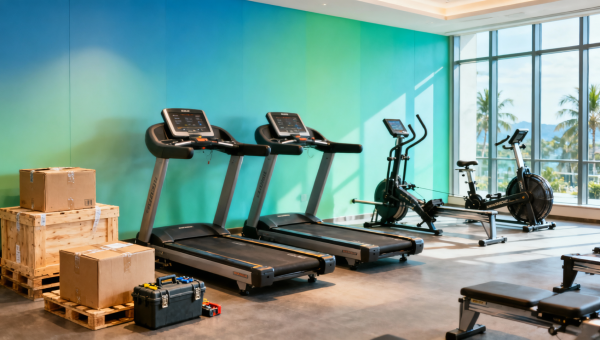
Returns of oversized fitness equipment expose hidden costs across international retail, from reverse logistics to product safety standards and product regulations. This supply chain research combines retail analysis, retail data, and practical supply chain analysis to help buyers, operators, and decision-makers improve brand supply resilience, reduce return losses, and strengthen international supply strategies in a demanding global market.
Why do returns of oversized fitness equipment become a supply chain problem in travel service channels?
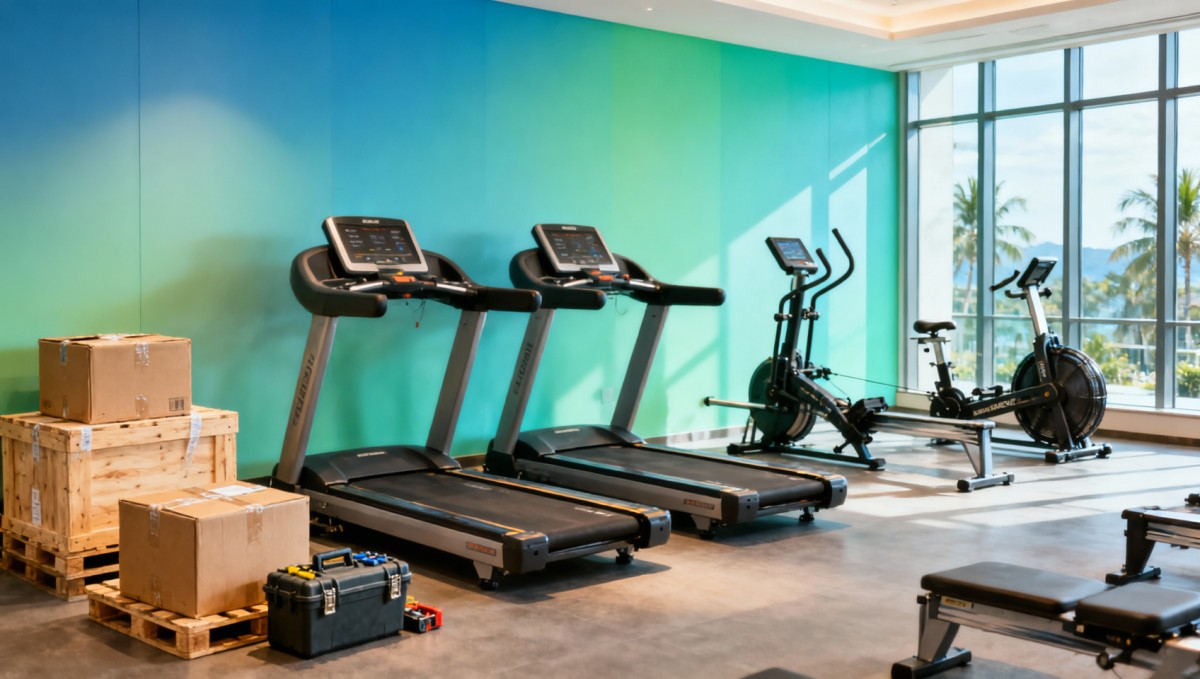
In travel service environments, oversized fitness equipment is no longer limited to retail resale. Hotels, resorts, cruise operators, serviced apartments, destination wellness centers, and premium recreation projects increasingly buy treadmills, rowing machines, bikes, and multifunction stations as part of the guest experience. When these products are returned, the issue is not only product dissatisfaction. It often triggers a chain of logistics, handling, compliance, refurbishment, and revenue loss problems across 3 to 5 operational teams.
Oversized returns are fundamentally different from small parcel returns. A compact accessory may move through parcel networks in 3 to 7 days, while a commercial-grade treadmill may need appointment-based pickup, dismantling, repalletization, and special loading equipment. For hospitality buyers and travel service operators, this means the real return cost can extend far beyond the original freight charge and may affect room revenue, fitness area uptime, and customer satisfaction.
This matters to multiple decision-makers. Procurement teams need visibility on landed cost and reverse cost. Technical evaluators must assess serviceability and failure points. Finance approvers want to understand whether a return should be repaired, resold, or scrapped. Quality and safety managers need clear documentation when electrical, mechanical, or stability concerns appear after transit or use.
Global Consumer Sourcing (GCS) brings value here by connecting supply chain research with buyer-facing decision support. For travel service procurement, the right question is not simply “How many returns occur?” but “Which return causes are preventable at sourcing stage, which are controllable during deployment, and which should be managed through supplier terms, packaging design, and regional service planning?”
- High freight-to-product ratio: return freight for large machines can become material within a 1-unit claim, especially across cross-border lanes.
- Operational disruption: a hotel gym with 6 to 12 machines cannot easily absorb downtime when one premium unit is removed for inspection.
- Safety exposure: instability, motor issues, or damaged guards create immediate risk in guest-facing environments.
- Weak resale recovery: customized branding, voltage differences, and regional plugs reduce remarketing options.
Where do the hidden return costs appear across the oversized fitness equipment supply chain?
For travel service buyers, the visible return fee is often only one line item. The larger burden sits in handling complexity, packaging loss, spare-part availability, labor coordination, and delayed guest facility reopening. A return can easily move through 4 stages: claim validation, technical inspection, physical collection, and disposition decision. Each stage adds time, cost, and approval friction.
In destination properties and hospitality projects, one returned unit may require coordination with engineering, front-of-house scheduling, local logistics vendors, and the supplier’s after-sales team. If the product was installed on an upper floor, inside a spa area, or in a limited-access gym, disassembly and extraction can take several labor hours. This is why supply chain analysis should include site conditions, not just warehouse assumptions.
The table below helps procurement, project, and finance stakeholders identify where return cost risk usually concentrates in oversized fitness equipment programs for hotels, resorts, and wellness facilities.
A useful procurement principle is to compare return cost against the full lifecycle value of the installed asset over 24 to 60 months, not just the invoice price. In hospitality and travel service operations, one poorly specified machine can create repeated service tickets, costly site interventions, and preventable replacement expense. GCS research helps buyers map these hidden nodes before contract award, not after claims start.
Three high-risk return drivers often missed at sourcing stage
First, packaging design is often optimized for outbound delivery but not for reverse handling. If crates, foam supports, or fixing brackets cannot survive a second movement cycle, the return journey creates additional damage and claim disputes. For large fitness products, return-ready packaging planning should be treated as a sourcing requirement, especially for projects with multi-country deployment.
Second, site-fit mistakes are common in travel service environments. Door widths, lift dimensions, floor loading, and humidity exposure are frequently reviewed late. A machine that technically works in a showroom may fail the operational reality of a resort basement gym or rooftop wellness space. This increases the probability of return, on-site modification, or partial dismantling.
Third, after-sales coverage is often judged only by warranty duration. That is not enough. Buyers should ask whether the supplier can support spare parts for 12 to 24 months, what the triage response window is, and whether local technicians can handle 220V or 110V variants without voiding warranty. These practical details shape return outcomes more than brochure promises.
What should buyers compare before selecting oversized fitness equipment for hospitality and travel projects?
Selection should start with the use case, not the catalog. A premium resort, a business hotel, a long-stay apartment operator, and a wellness retreat may all purchase cardio or strength equipment, but their return risk profile differs sharply. Guest turnover, maintenance staffing, climate conditions, and available technical support all influence which product type is commercially safer.
The next table compares common sourcing priorities. It is designed for procurement teams, technical assessors, project managers, and finance reviewers who need a structured way to compare oversized fitness equipment options beyond headline price.
This comparison shows why low purchase price does not automatically mean low supply chain cost. In many travel service projects, a machine with easier maintenance, clearer voltage planning, and better reverse packaging can protect both guest service continuity and total cost of ownership over 2 to 5 years.
A practical 5-point procurement checklist
Before issuing a purchase order, teams should validate five points: destination voltage and plug standard, access route dimensions, operator training need, spare-part commitment period, and return authorization workflow. These five checks reduce the most common preventable return causes in oversized equipment programs.
When premium hospitality projects should choose service-friendly models
If the property is in a remote island location, mountain resort, or secondary city with limited technical support, service-friendly models deserve priority. Equipment that allows component replacement within 1 to 2 visits often outperforms more feature-rich models that require factory-level intervention. For operators, uptime is often more valuable than marginal feature expansion.
GCS supports this decision process by combining retail-facing product insight with sourcing reality. That helps buyers compare suppliers not only on product presentation, but on packaging logic, compliance readiness, spare planning, and regional execution capability.
How do standards, safety, and compliance affect return rates and buyer risk?
In travel service environments, compliance is directly tied to guest safety and operational liability. Oversized fitness equipment involves moving parts, electrical systems, structural loads, and repeated public use. Returns often escalate when documentation is incomplete, warning labels are unclear, or market-specific requirements were not reviewed before shipment. For cross-border procurement, the safest approach is early compliance screening during supplier selection.
Buyers should distinguish between product safety documentation, market access requirements, and internal quality acceptance criteria. These are related but not identical. A product may be sellable in one market yet still create unacceptable operational risk in a hotel or resort if installation instructions, maintenance intervals, or replacement part procedures are poorly documented.
The table below summarizes how common compliance topics influence return prevention in hospitality, wellness, and travel service procurement. It does not replace legal review, but it provides a practical framework for cross-functional teams.
For quality and safety managers, three timelines matter: pre-production confirmation, pre-shipment documentation review, and post-installation acceptance. If any of these three stages are skipped, the probability of dispute increases. In practice, a 7 to 14 day documentation review buffer before shipment often prevents much larger disruption later.
What quality teams should check before accepting delivery
A practical incoming inspection can cover 6 items: carton integrity, serial number match, visible frame condition, moving-part protection, accessory completeness, and operating test result. For hospitality projects with phased opening schedules, this acceptance checklist should be linked to project milestones so that defective units are identified before guest-facing launch.
GCS is especially useful for buyers who must combine compliance, sourcing, and commercialization perspectives. Instead of treating safety as a separate issue after procurement, the platform helps teams evaluate product readiness, supplier discipline, and market-fit requirements as one connected decision.
How can operators reduce return losses through better planning, service workflow, and supplier collaboration?
Return reduction starts before installation. Travel service operators should align engineering, procurement, and site operations around a simple rule: do not let a large machine enter the property unless access, power, placement, and support responsibilities are confirmed. This sounds basic, yet it prevents many avoidable returns linked to space mismatch and installation confusion.
A workable response model usually has 4 steps: remote triage, local inspection, repair-versus-return decision, and controlled disposition. Remote triage should happen within 24 to 48 hours after a claim is logged. If the issue is minor, a local technician or trained site engineer may solve it using a spare kit. If the issue involves structural risk or unresolved electrical failure, return escalation becomes justified.
For travel service facilities, the best reverse logistics outcome is often not a physical return. It is a successful on-site recovery. That is why service manuals, video support, modular components, and spare-part stocking can influence financial performance more than a longer paper warranty. A hotel that restores one machine within 2 days preserves guest experience more effectively than one that waits 3 weeks for return authorization.
Implementation workflow for project managers and operators
- Pre-delivery survey: confirm dimensions, floor route, electrical standard, humidity considerations, and staffing plan at least 1 to 2 weeks before arrival.
- Arrival inspection: record packaging condition, serial numbers, and visible defects before installation starts.
- Commissioning test: run basic functionality, console checks, movement range, noise review, and user safety verification.
- Service escalation matrix: define who approves parts replacement, who authorizes return, and who absorbs logistics cost under each fault category.
This workflow is especially valuable for distributors, regional agents, and project integrators who serve multiple hotels or leisure properties. It creates a consistent method for handling claims across sites with different staffing levels. It also improves supplier accountability because fault evidence, response timing, and decision records are standardized.
Common mistakes that increase oversized equipment returns
One mistake is evaluating equipment only by showroom appearance and feature list. Another is assuming residential-style support is adequate for semi-commercial hospitality use. A third is neglecting spare-part planning for the first 12 months, when installation issues and early-use adjustments are most likely to surface. These gaps create avoidable claims and budget pressure.
GCS helps teams move from reactive claims handling to proactive return prevention. By linking product intelligence, supplier screening, and market-specific compliance discussion, the platform supports more resilient procurement decisions for global travel service buyers.
FAQ and next-step guidance for buyers, operators, and sourcing teams
How long does the return cycle for oversized fitness equipment usually take?
It depends on distance, site access, and fault type. A local diagnosis and parts replacement may close within 2 to 7 days. A full return involving cross-border collection, inspection, and disposition can take 2 to 6 weeks. For travel service projects, the target should be to resolve as many issues as possible on-site before a physical return is approved.
Which travel service scenarios face the highest return risk?
Remote resorts, properties with difficult access routes, fast-opening hotel projects, and multi-country leisure operators usually face higher risk. These environments often combine tight schedules, variable local technical support, and more complicated logistics. Equipment with strong serviceability and documented setup guidance is usually the safer procurement choice.
What should procurement teams ask suppliers before placing an order?
Ask about voltage configuration, packaging durability, spare-part lead times, installation guidance, return authorization process, and regional service coverage. Also request a clear list of wear parts and common fault parts. These questions give finance, technical, and operational stakeholders a better picture of total risk than unit price alone.
Why choose GCS when researching oversized fitness equipment supply chains?
GCS combines retail analysis, sourcing intelligence, product compliance awareness, and practical supply chain judgment in one place. For buyers in hospitality and travel service, that means faster evaluation of supplier fit, clearer understanding of return-risk drivers, and stronger support for cross-functional decisions involving procurement, quality, operations, and finance.
If you are planning a hotel gym rollout, a resort wellness upgrade, a distributor program, or a cross-border sourcing review, contact GCS for support on product selection, return-risk assessment, delivery cycle expectations, packaging review, certification checkpoints, sample evaluation, and quote discussions. These are the areas where early clarity can reduce oversized return losses and improve supply chain resilience over the next 12 to 36 months.
Related Intelligence
 Skincare OEMAug 16, 2026Amazon Enforces AI Human Metadata Rule for Beauty and Personal Care SellersAmazon now enforces AI human metadata rules for beauty sellers. Learn how to protect listings, traffic, and compliance in skincare, cosmetics, and beauty devices.
 Beauty DevicesAug 15, 2026China to Roll Out Nationwide Cross-Border Cash Pooling for MultinationalsChina to roll out nationwide cross-border cash pooling for multinationals from Sept. 14. Discover how this policy could improve treasury efficiency, liquidity management, and China-linked supply chains.
 Beauty DevicesAug 14, 2026China Imposes Temporary Export Ban on Helium, Affecting Cooling Supply ChainsChina's temporary helium export ban may disrupt cooling supply chains for beauty RF devices and laser systems. Learn what ODMs, buyers, and procurement teams should check now.
![]() Cosmetics & PkgAug 13, 2026PPWR becomes mandatory: Beauty and personal care packaging materials usher in new EPR and PFAS compliance requirementsPPWR takes effect for cosmetics packaging in the EU, bringing EPR registration and PFAS limits. Learn what brands, importers, and suppliers must do now.
Cosmetics & PkgAug 13, 2026PPWR becomes mandatory: Beauty and personal care packaging materials usher in new EPR and PFAS compliance requirementsPPWR takes effect for cosmetics packaging in the EU, bringing EPR registration and PFAS limits. Learn what brands, importers, and suppliers must do now. Cosmetics & PkgAug 12, 2026EU PPWR Now Enforced for Beauty Packaging ComplianceEU PPWR now enforced for beauty packaging compliance: learn how EPR, ERN, heavy metals and PFAS rules affect EU exports, customs clearance and platform sales.
 Cosmetics & PkgAug 11, 2026EU PPWR Rules Take Effect on Aug. 12 for Beauty PackagingEU PPWR rules for beauty packaging take effect on Aug. 12, 2026. Learn key compliance steps, EPR, labeling, PFAS limits, and how to avoid customs delays and fines.
 Smart Pet DevicesAug 10, 2026EU EPR Rules to Cover Smart Pet Devices on Aug. 15EU EPR Rules will cover smart pet devices from Aug. 15, 2026. Learn how smart collars, feeders, and monitoring devices can avoid delisting, customs delays, and compliance risks in the EU.
 Infant Feeding & CareAug 09, 2026CPSC Recalls Baby Sleep Sacks Over Undeclared TDCPPCPSC Recalls Baby Sleep Sacks Over Undeclared TDCPP: learn how this 2026 recall impacts CPC documents, third-party testing, and U.S. baby product compliance for exporters.
 Infant Feeding & CareAug 08, 2026ECHA Adds 5 SVHCs, Importer Notices Due From Oct 2026ECHA adds 5 SVHCs to the Candidate List, with importer notices due from October 2026. Learn how REACH affects exporters, supply chains, and documentation readiness.
 Baby Gear & StrollersAug 07, 2026CPSC Revises Crib Rail Standard for November 2026CPSC revises crib rail standard for November 2026, adding dynamic impact tests and mandatory third-party lab testing. Learn how the new rule affects U.S. market access, compliance, and shipments.
 Electronic & RC ToysAug 06, 2026EU to Require EN IEC 62115:2025 for Electronic ToysEU to Require EN IEC 62115:2025 for Electronic Toys from Oct 1, 2026. Learn scope, battery and AI safety updates, CE compliance risks, and how exporters can avoid customs delays.
 Baby Gear & StrollersAug 05, 2026US Stroller Stability Rule Takes Effect Aug. 15US Stroller Stability Rule Takes Effect Aug. 15: learn how new U.S. stroller compliance, ASTM F833-26a, and CPSC testing rules may affect imports, certification, and shipment readiness.
 Infant Feeding & CareAug 04, 2026ECHA Adds 5 SVHCs, Triggering Baby Care Export ReviewECHA adds 5 SVHCs, prompting an urgent baby care export review for EU-bound products. Learn the 0.1% threshold risks, compliance steps, and how to avoid customs delays and fines.












