EU EPR Dual-Country Registration Effective for Beauty Packaging
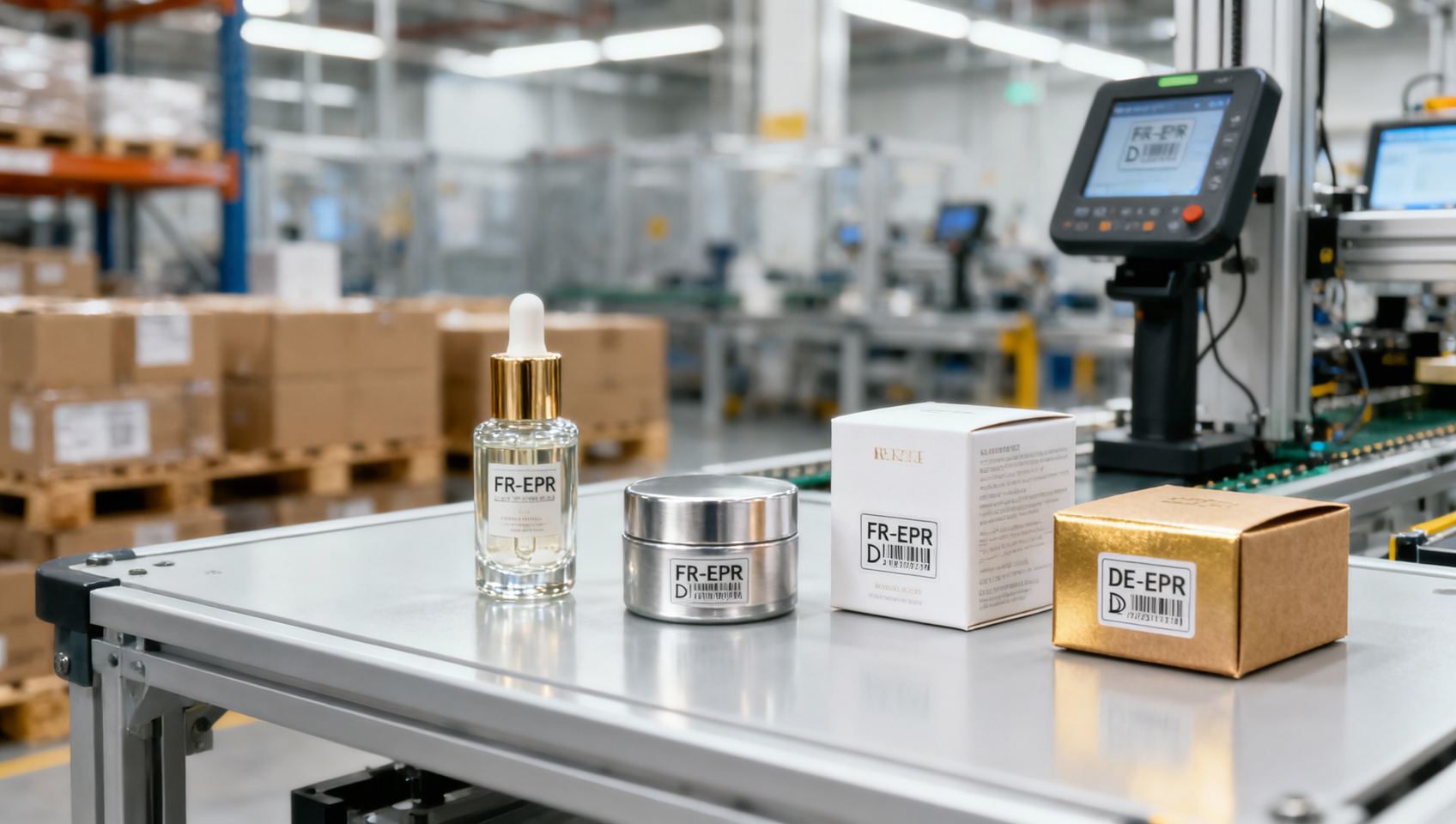
As of April 18, 2026, the European Union’s Extended Producer Responsibility (EPR) framework has entered into mandatory force in France and Germany, requiring simultaneous registration under both FR-EPR and DE-EPR schemes for cosmetic packaging imported into or placed on these markets. This development directly affects Chinese packaging manufacturers, export-oriented brands, and EU-based importers — particularly those engaged in cross-border trade of primary and secondary beauty packaging.
Event Overview
The EU EPR dual-country requirement for cosmetic packaging officially took effect on April 18, 2026. Under this regulation, importers and brand owners placing cosmetic packaging onto the French and German markets must hold valid production responsibility registrations in both countries. Chinese packaging manufacturers must appoint an EU-authorized representative and complete registration in both jurisdictions. Failure to comply results in customs clearance refusal and potential fines of up to €100,000 per country.
Industries Affected
Direct Trading Enterprises (Exporters & Importers)
These entities are directly responsible for EPR compliance at the point of entry. Since registration is tied to the legal entity placing packaging on the market, non-EU exporters without an EU-authorized representative cannot fulfill the obligation themselves. Their shipments risk being blocked at customs or rejected by fulfillment centers in France and Germany.
Manufacturing Enterprises (Chinese Packaging Suppliers)
While not legally liable under EU law as non-EU producers, Chinese manufacturers face de facto commercial pressure: EU clients increasingly require proof of compliant supply chains. Without documented alignment with FR-EPR/DE-EPR requirements — including formal delegation via authorized representatives — manufacturers may lose contracts or be excluded from tender processes for major beauty brands operating in France and Germany.
Supply Chain & Logistics Service Providers
Fulfillment centers, bonded warehouses, and customs brokers handling beauty packaging imports into France or Germany now require validated EPR registration numbers prior to release. Documentation verification has become a standard pre-clearance checkpoint. Providers lacking internal compliance screening capacity may face operational delays or client disputes over unprocessed consignments.
What Stakeholders Should Focus On & How to Respond
Confirm registration status with EU-authorized representatives
Brands and importers must verify whether their appointed EU representative has successfully submitted and received confirmation of both FR-EPR and DE-EPR registrations — not just application submissions. Registration numbers must be active and verifiable via official national portals (e.g., ADEME for France, EAR for Germany).
Review commercial agreements for EPR liability clauses
Contracts between Chinese suppliers and EU buyers should explicitly assign responsibilities for EPR registration, data reporting, and fee payments. Ambiguity may lead to enforcement actions targeting the EU-based party — but commercial fallout often falls on upstream suppliers.
Prepare documentation for customs and warehouse onboarding
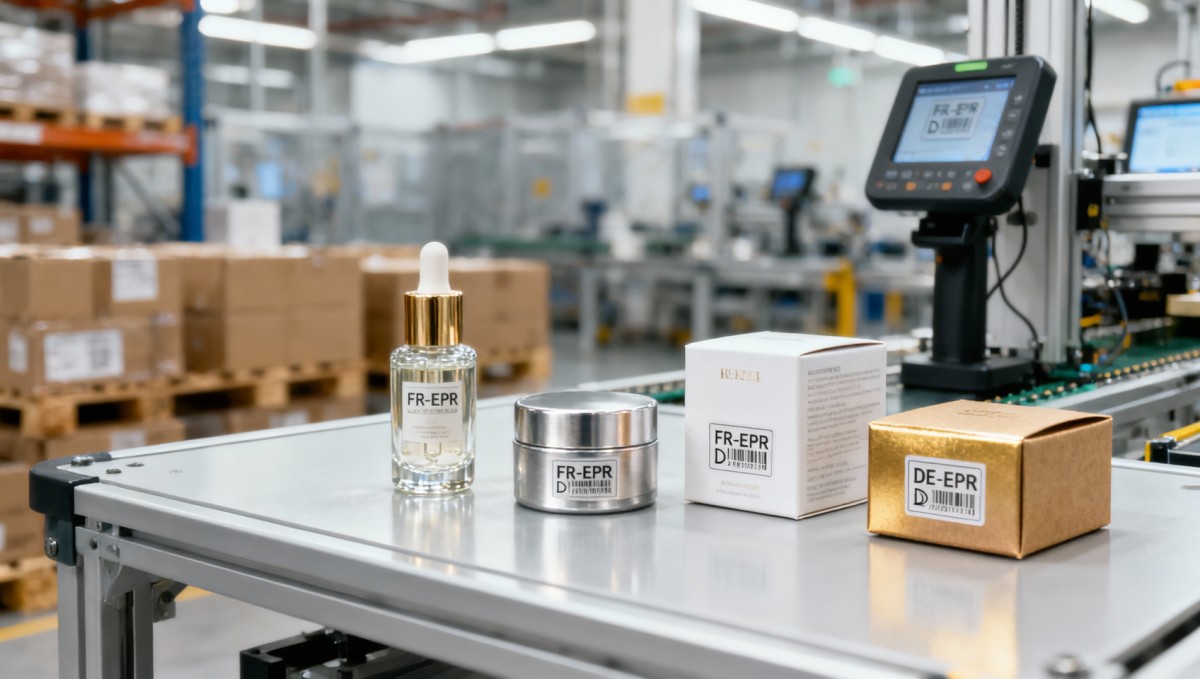
FR-EPR and DE-EPR registration numbers must be included in commercial invoices, packing lists, and customs declarations. Major logistics platforms (e.g., DHL E-commerce, Amazon FBA DE/FR) now request EPR IDs during seller onboarding — missing or mismatched IDs trigger manual review or rejection.
Monitor national implementation guidance, not just EU-level announcements
France and Germany maintain separate EPR systems, reporting frequencies, fee structures, and packaging categorizations. For example, Germany distinguishes between ‘sales packaging’ and ‘transport packaging’ under VerpackG, while France applies broader scope under AGEC Law. Stakeholders must track updates from ADEME and EAR — not rely solely on aggregated EU summaries.
Editorial Perspective / Industry Observation
From industry perspective, this dual-registration requirement signals a shift toward jurisdiction-specific enforcement rather than harmonized EU-wide administration. Analysis来看, it reflects growing divergence in national EPR implementation — even where directives originate from common EU frameworks. Observation来看, the April 18, 2026 effective date marks a hard compliance threshold, not a transitional phase: no grace period or phased rollout has been announced by either France or Germany. Current更值得关注的是 how enforcement agencies coordinate inspections across borders — especially for products distributed via pan-European logistics hubs. It更适合理解为 a procedural gatekeeping mechanism, not a sustainability certification; its immediate function is regulatory access control, not environmental performance evaluation.
This is not a signal of future expansion to other EU member states — though such possibility remains open — but rather confirmation that France and Germany are prioritizing parallel, independent enforcement for high-volume consumer packaging segments, starting with cosmetics.
Conclusion
The April 18, 2026 activation of mandatory FR-EPR and DE-EPR registration for cosmetic packaging establishes a concrete, enforceable compliance prerequisite for market access in two of Europe’s largest beauty markets. Its significance lies less in novelty — EPR obligations have existed in both countries for years — and more in the synchronization of enforcement timing and the explicit linkage of customs clearance to dual registration. Currently, it is best understood as an operational checkpoint, not a strategic policy shift — one demanding precise documentation alignment, not broad sustainability transformation.
Source Attribution
Main source: Official implementation notices issued by ADEME (France) and EAR (Germany), effective April 18, 2026.
Areas under ongoing observation: Potential extension to additional EU member states; updates to packaging classification criteria in national EPR registers; enforcement patterns in third-party logistics environments.
Related Intelligence
 Cosmetics & PkgApr 20, 2026SAMR Penalizes 7 Platforms for Unlicensed Food PackagingSAMR penalizes 7 platforms for unlicensed food packaging—key implications for manufacturers, platforms & suppliers. Learn compliance must-dos now.
 Beauty DevicesApr 20, 2026Global Li-ion Recycling Rate Hits 62%: Impact on Beauty Device Battery SupplyLi-ion recycling rate hits 62% — unlocking cost savings, faster lead times & MOQ flexibility for beauty device battery supply. Act now.
 Nursery Furniture & MonitorsApr 20, 2026Canton Fair Phase III: Infant Monitor Inquiries Surge, EN60601-1-12 Focus in Middle EastEN60601-1-12 compliance surges at Canton Fair Phase III as Middle East buyers prioritize certified infant monitors — act now to meet GCC market demands.
 Camping & WaterApr 20, 2026RCEP Cuts Tariff on Camping Water Bags for IndonesiaRCEP cuts tariff on camping water bags for Indonesia to 4.2%—boosting export opportunities. Dunia Luar’s new TPU + food-grade aluminum specs demand urgent compliance.
 Corporate & Seasonal GiftsApr 20, 2026TÜV Rheinland Enforces LCA Heatmap for Green Gift PackagingTÜV Rheinland now requires an LCA heat map for Green Gift Packaging certification—key for exporters, manufacturers & brand licensees targeting EU markets. Act now!
 Smart Pet DevicesApr 20, 2026Vietnam Enforces ISO 13485 + Vietnamese Manual for Smart Pet CollarsVietnam enforces ISO 13485 + Vietnamese manual for smart pet collars — essential compliance for exporters, manufacturers & distributors targeting the growing pet tech market.
 Infant Feeding & CareApr 20, 2026JETRO Spring 2026 Inspection: Silicone Infant Feeding Products Require Blockchain Batch CodesSilicone infant feeding products for Japan must now carry blockchain batch codes per JETRO Spring 2026 inspection—ensure compliance for pacifiers, teething rings & spoons.
 STEM & Educational ToysApr 20, 2026SASO Accelerates AI-Enabled STEM Toy Certification to 24 HoursSASO AI-STEM toy certification now in 24 hours — but only with pre-embedded EMC shielding. Act fast: meet new Saudi AI toy compliance rules.
 Cosmetics & PkgApr 20, 2026EU EPR Dual-Country Registration Effective for Beauty PackagingEU EPR dual-country registration is now mandatory for beauty packaging in France & Germany—act now to avoid customs delays, fines up to €100k, and lost market access.
 Cosmetics & PkgApr 20, 2026FDA Requires Separate VCRP Registration for Cosmetic Packaging as of April 19, 2026FDA requires separate VCRP registration for cosmetic packaging by April 19, 2026—critical for Chinese OEMs, U.S. importers & suppliers. Act now to avoid port detentions.
 Beauty DevicesApr 19, 2026Global Li-ion Recycling Rate Hits 62.3%: Beauty Device BOM Cost Down 9%Li-ion recycling rate hits 62.3% — driving 9% BOM cost reduction for beauty devices. Discover how cascade utilization is reshaping global supply chains & boosting margins.
 Cosmetics & PkgApr 19, 2026FDA Mandates Independent VCRP Registration for Cosmetic Packaging as of Apr 19, 2026FDA mandates independent VCRP registration for cosmetic packaging by Apr 19, 2026—avoid Import Alert 66-12. Act now to secure U.S. market access.
 Nursery Furniture & MonitorsApr 19, 2026Canton Fair Phase III: Smart Infant Monitors Surge Amid EN60601-1-12 DemandSmart infant monitors surge at Canton Fair Phase III amid rising EN60601-1-12 compliance demand — discover why Middle East buyers now prioritize medical-grade safety.