Canton Fair Phase III: Infant Monitor Inquiries Surge, EN60601-1-12 Focus in Middle East
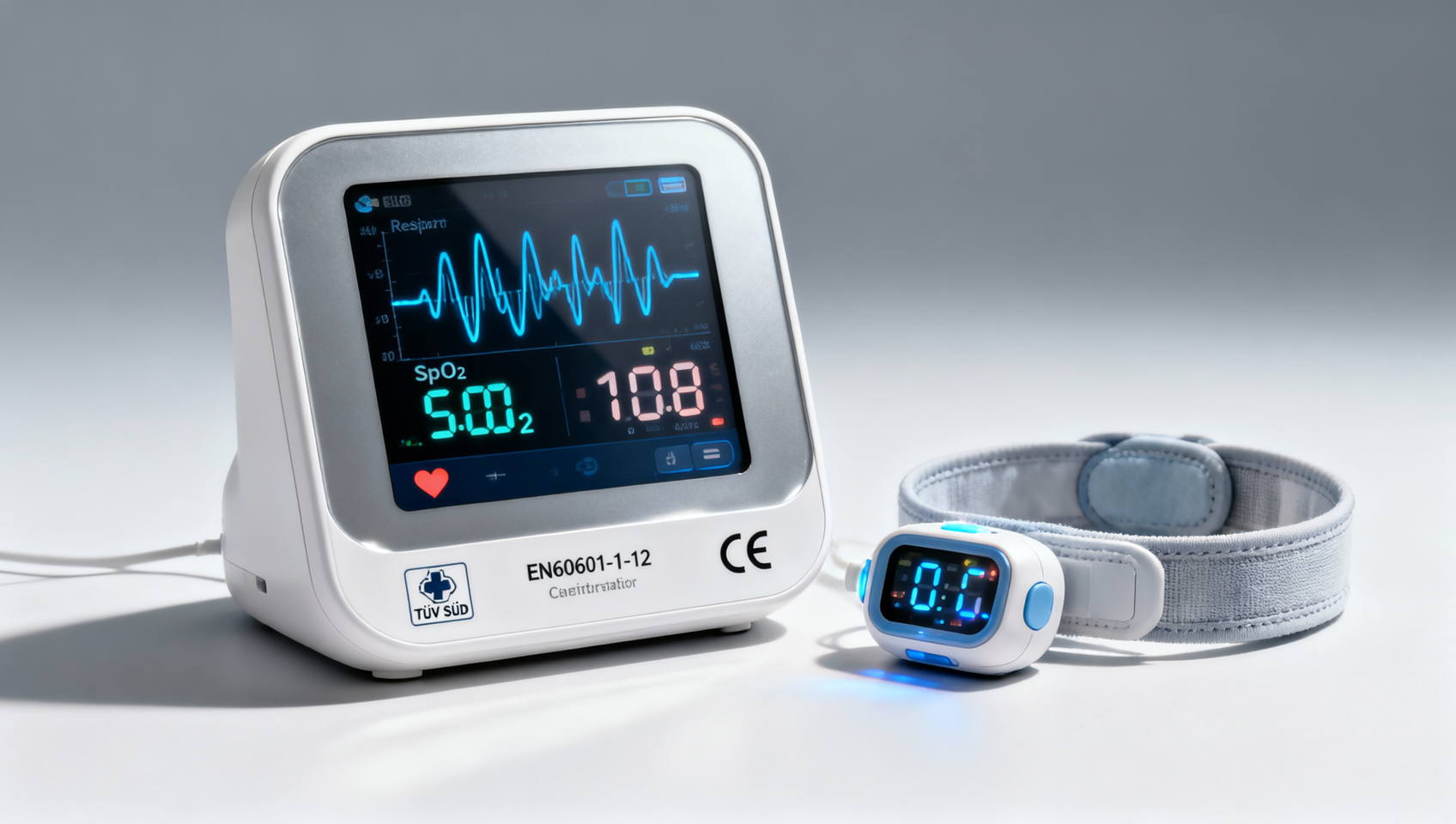
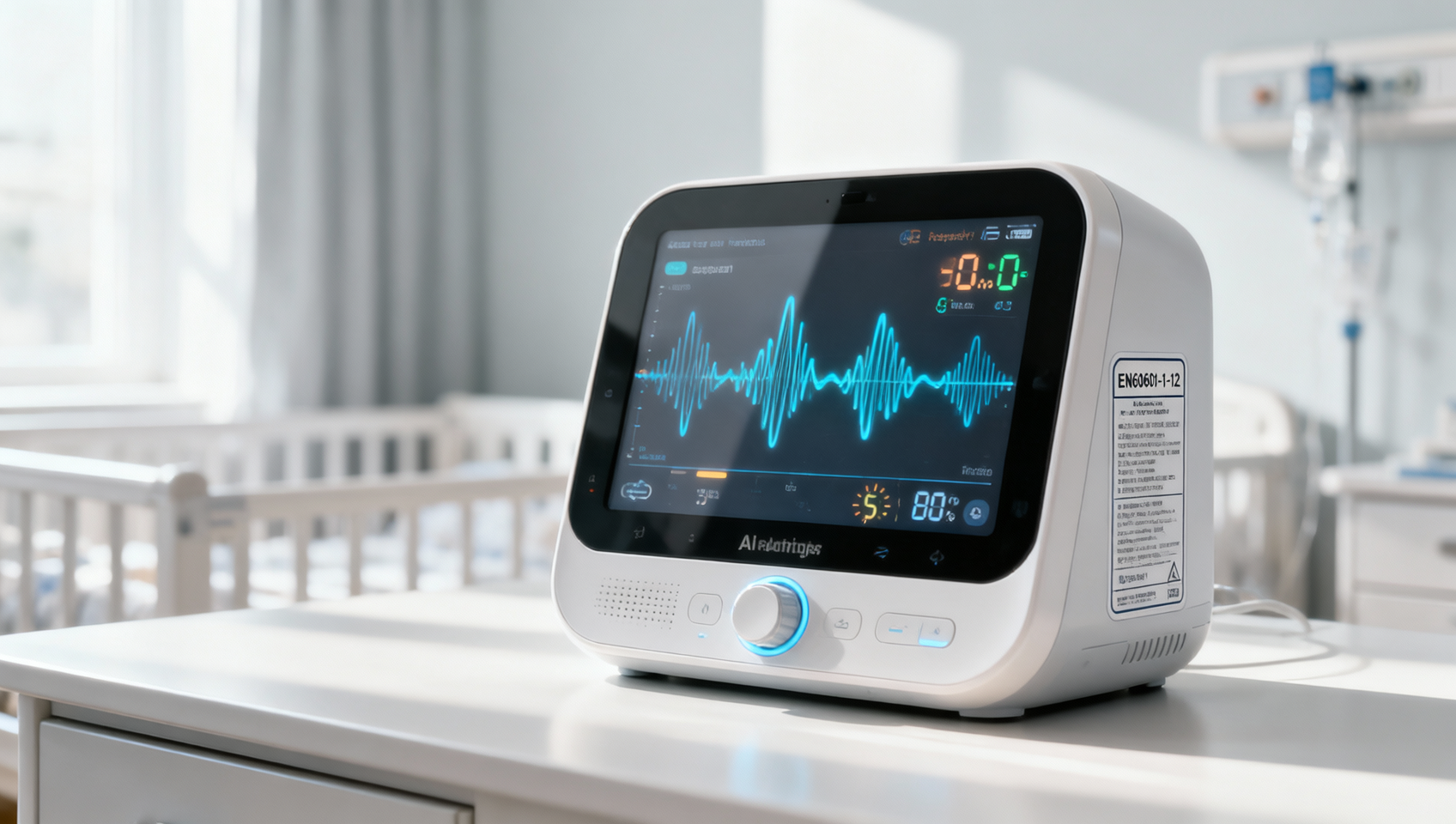
On April 19, 2026 — the opening day of Phase III of the 139th Canton Fair — inquiries for smart infant monitoring devices (featuring respiration, motion, and SpO₂ monitoring) spiked notably among buyers from the Middle East. Key procurement delegations from the UAE and Saudi Arabia explicitly required compliance with EN60601-1-12 (General requirements for basic safety and essential performance of medical electrical equipment) and a TÜV SÜD-issued Declaration of Conformity. This demand triggered a 300% month-on-month increase in certification inquiry volume among Chinese exhibitors. The development signals shifting regulatory expectations for infant health tech exporters targeting regulated healthcare markets.
Event Overview
On April 19, 2026, the third phase of the Canton Fair opened. During the first day, infant smart monitoring devices — specifically those incorporating respiratory, body movement, and blood oxygen saturation monitoring — attracted concentrated inquiry interest from Middle Eastern buyers. Delegations from the United Arab Emirates and Saudi Arabia emphasized that products must comply with EN60601-1-12 and be accompanied by a Declaration of Conformity issued by TÜV SÜD. Multiple Chinese exhibitors reported a 300% increase in inquiries related to this certification compared to the previous month.
Industries Affected
Direct Exporters & OEM/ODM Manufacturers
These firms face immediate pressure to validate product compliance pathways for regulated markets. EN60601-1-12 is not a general consumer electronics standard but a medical device-specific requirement — meaning previously CE-marked consumer-grade monitors may no longer meet buyer expectations without re-evaluation and formal certification. Impact includes extended time-to-market, higher upfront testing costs, and potential redesigns for electromagnetic compatibility (EMC), mechanical stability, and alarm system reliability.
Medical Device Certification Service Providers
Demand for EN60601-1-12 conformity assessment services — particularly those accepted by Gulf Cooperation Council (GCC) authorities — has risen sharply. Providers with TÜV SÜD accreditation or recognized Notified Body status are seeing accelerated inquiry volume. Impact includes workload prioritization challenges and increased scrutiny on turnaround timelines and documentation rigor.
Component & Subsystem Suppliers
Suppliers of critical subsystems — such as optical SpO₂ sensors, low-noise respiration transducers, and certified power supplies — may experience revised qualification requests. Buyers are increasingly asking for component-level evidence of compliance with clauses referenced in EN60601-1-12 (e.g., Clause 9 on mechanical hazards, Clause 11 on protection against excessive temperatures). Impact includes more detailed technical documentation demands and traceability requirements across the bill of materials.
Distribution & Regulatory Affairs Teams
Regional distributors and in-house regulatory affairs staff must now verify whether existing product registrations in GCC countries align with EN60601-1-12’s specific annexes for home healthcare environments (e.g., Annex BB on home use conditions). Impact includes potential re-submission of technical files to local authorities like the UAE’s MOHAP or Saudi FDA, especially where prior submissions were based on IEC 60601-1 Ed. 3.1 alone.
What Enterprises and Practitioners Should Focus On
Confirm alignment between current certifications and EN60601-1-12’s home healthcare scope
EN60601-1-12 is an amendment focused on equipment used in non-clinical settings — including homes and caregiver environments. Firms should audit whether their existing EN60601-1 certification covers Annex BB and associated usability and environmental stress tests. A generic ‘EN60601-1’ claim does not automatically imply EN60601-1-12 compliance.
Verify TÜV SÜD’s role in GCC market acceptance
While TÜV SÜD issues Declarations of Conformity, final market access in the UAE and Saudi Arabia depends on national authority recognition. Enterprises should confirm whether TÜV SÜD’s EN60601-1-12 assessment reports are currently accepted by MOHAP or SFDA — or whether supplementary local review remains required.
Prepare for extended lead times in certification cycles
EN60601-1-12 testing typically requires functional safety analysis, environmental stress validation (e.g., 40°C ambient operation), and alarm response verification under simulated home-use scenarios. Lead times can exceed 12 weeks. Exporters should initiate pre-assessment discussions with notified bodies now — especially if planning Q3 2026 shipments.
Review labeling, instructions for use (IFU), and packaging for home-use language requirements
EN60601-1-12 mandates specific IFU content for lay users, including clear warnings about sensor placement, battery replacement intervals, and interpretation of alerts. Arabic-language IFUs meeting GCC Type Approval requirements must reflect these clauses — not just translate prior English versions.
Editorial Perspective / Industry Observation
From industry perspective, this Canton Fair development is less a sudden policy shift and more a visible acceleration of an ongoing trend: the convergence of consumer infant wearables with medical device regulatory frameworks in export markets. Analysis来看, it reflects growing buyer risk awareness — particularly where devices display clinical-grade metrics (e.g., SpO₂ %, respiratory rate) and are marketed for health monitoring rather than entertainment. Observation来看, the 300% inquiry surge suggests procurement teams are proactively auditing supplier readiness ahead of formal regulatory enforcement deadlines — possibly anticipating upcoming GCC Medical Devices Regulation updates. Current更值得关注的是 whether this demand remains confined to high-value B2B buyers at trade fairs, or begins appearing in broader e-commerce or distributor channel RFPs later this year. It is better understood as an early signal of tightening regulatory gatekeeping — not yet a binding mandate, but one requiring operational attention before Q4 2026 order cycles.
This incident underscores how trade fairs increasingly serve as real-time barometers for regulatory expectation shifts — especially in cross-border health tech commerce. For exporters, the takeaway is not that EN60601-1-12 is newly mandatory everywhere, but that its adoption is becoming a de facto commercial prerequisite in specific high-potential markets. Rational interpretation favors proactive alignment over reactive compliance — particularly given the multi-month timeline involved in achieving full conformity.
Information Source: Official Canton Fair exhibitor feedback reports (Phase III, April 19, 2026); verified statements from participating Chinese manufacturers; publicly disclosed buyer requirements documented during on-site meetings. Ongoing observation is recommended regarding official GCC regulatory updates and TÜV SÜD’s GCC market acceptance status for EN60601-1-12 assessments.
Related Intelligence
 Cosmetics & PkgApr 20, 2026SAMR Penalizes 7 Platforms for Unlicensed Food PackagingSAMR penalizes 7 platforms for unlicensed food packaging—key implications for manufacturers, platforms & suppliers. Learn compliance must-dos now.
 Beauty DevicesApr 20, 2026Global Li-ion Recycling Rate Hits 62%: Impact on Beauty Device Battery SupplyLi-ion recycling rate hits 62% — unlocking cost savings, faster lead times & MOQ flexibility for beauty device battery supply. Act now.
 Nursery Furniture & MonitorsApr 20, 2026Canton Fair Phase III: Infant Monitor Inquiries Surge, EN60601-1-12 Focus in Middle EastEN60601-1-12 compliance surges at Canton Fair Phase III as Middle East buyers prioritize certified infant monitors — act now to meet GCC market demands.
 Camping & WaterApr 20, 2026RCEP Cuts Tariff on Camping Water Bags for IndonesiaRCEP cuts tariff on camping water bags for Indonesia to 4.2%—boosting export opportunities. Dunia Luar’s new TPU + food-grade aluminum specs demand urgent compliance.
 Corporate & Seasonal GiftsApr 20, 2026TÜV Rheinland Enforces LCA Heatmap for Green Gift PackagingTÜV Rheinland now requires an LCA heat map for Green Gift Packaging certification—key for exporters, manufacturers & brand licensees targeting EU markets. Act now!
 Smart Pet DevicesApr 20, 2026Vietnam Enforces ISO 13485 + Vietnamese Manual for Smart Pet CollarsVietnam enforces ISO 13485 + Vietnamese manual for smart pet collars — essential compliance for exporters, manufacturers & distributors targeting the growing pet tech market.
 Infant Feeding & CareApr 20, 2026JETRO Spring 2026 Inspection: Silicone Infant Feeding Products Require Blockchain Batch CodesSilicone infant feeding products for Japan must now carry blockchain batch codes per JETRO Spring 2026 inspection—ensure compliance for pacifiers, teething rings & spoons.
 STEM & Educational ToysApr 20, 2026SASO Accelerates AI-Enabled STEM Toy Certification to 24 HoursSASO AI-STEM toy certification now in 24 hours — but only with pre-embedded EMC shielding. Act fast: meet new Saudi AI toy compliance rules.
 Cosmetics & PkgApr 20, 2026EU EPR Dual-Country Registration Effective for Beauty PackagingEU EPR dual-country registration is now mandatory for beauty packaging in France & Germany—act now to avoid customs delays, fines up to €100k, and lost market access.
 Cosmetics & PkgApr 20, 2026FDA Requires Separate VCRP Registration for Cosmetic Packaging as of April 19, 2026FDA requires separate VCRP registration for cosmetic packaging by April 19, 2026—critical for Chinese OEMs, U.S. importers & suppliers. Act now to avoid port detentions.
 Beauty DevicesApr 19, 2026Global Li-ion Recycling Rate Hits 62.3%: Beauty Device BOM Cost Down 9%Li-ion recycling rate hits 62.3% — driving 9% BOM cost reduction for beauty devices. Discover how cascade utilization is reshaping global supply chains & boosting margins.
 Cosmetics & PkgApr 19, 2026FDA Mandates Independent VCRP Registration for Cosmetic Packaging as of Apr 19, 2026FDA mandates independent VCRP registration for cosmetic packaging by Apr 19, 2026—avoid Import Alert 66-12. Act now to secure U.S. market access.
 Nursery Furniture & MonitorsApr 19, 2026Canton Fair Phase III: Smart Infant Monitors Surge Amid EN60601-1-12 DemandSmart infant monitors surge at Canton Fair Phase III amid rising EN60601-1-12 compliance demand — discover why Middle East buyers now prioritize medical-grade safety.