EU EPR Dual-Country Registration Effective for Beauty Packaging

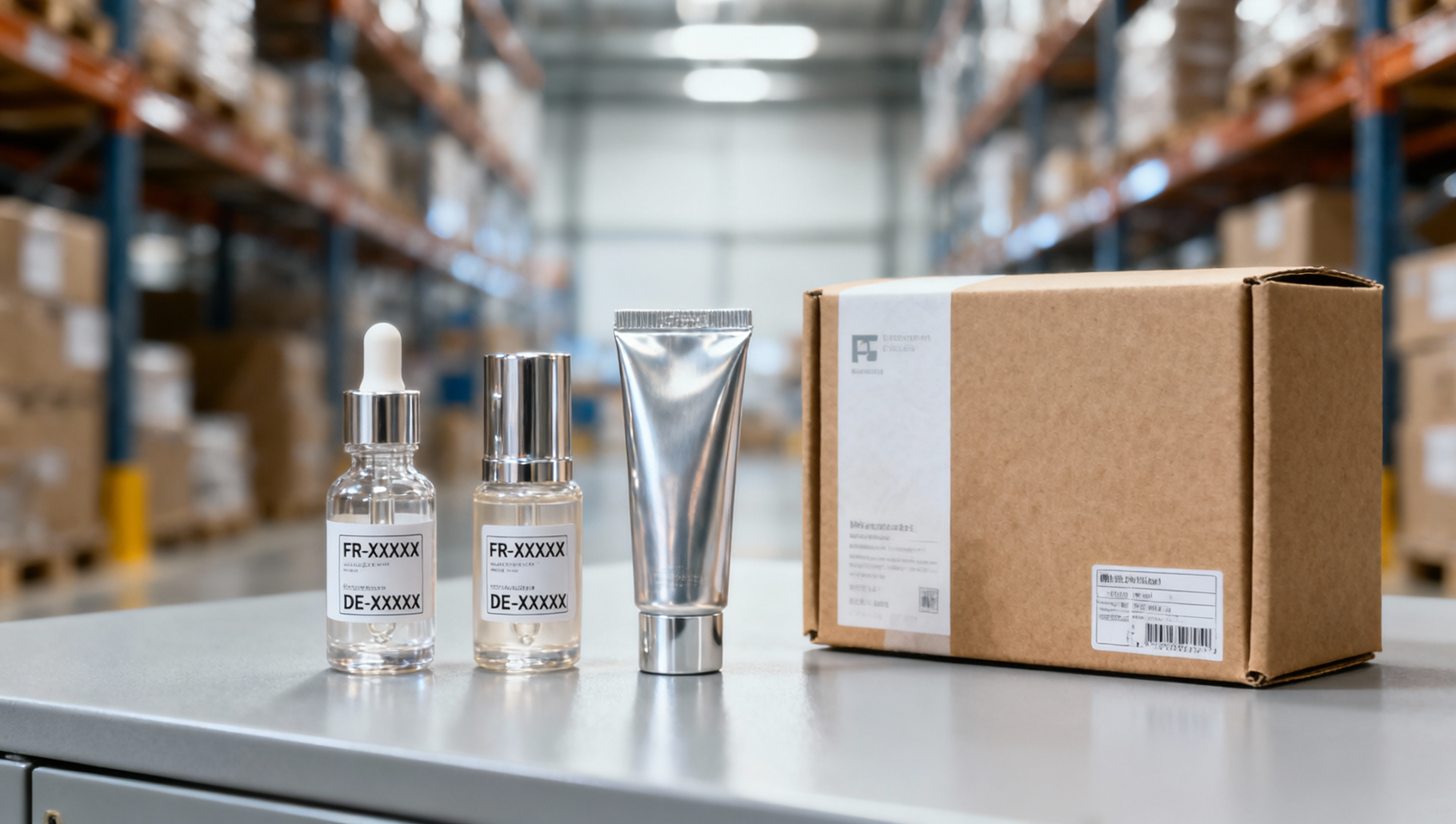
As of April 22, 2026, the European Union has implemented a binding cross-border Extended Producer Responsibility (EPR) coordination mechanism requiring Chinese manufacturers exporting beauty packaging — including vacuum bottles, aluminum-plastic laminates, and refillable serum containers — to complete simultaneous producer registration with accredited Producer Responsibility Organizations (PROs) in both France and Germany. This requirement directly impacts exporters serving the EU beauty supply chain and signals a tightening of compliance expectations across key Western European markets.
Event Overview
Effective April 22, 2026, the EU’s EPR cross-border coordination rule takes effect for beauty packaging placed on the French or German market. Under this rule, Chinese manufacturers must be registered with PROs in both countries — not just one — to remain eligible for online platform listing and customs clearance. The requirement applies to both B2B and B2C distribution channels. Additionally, companies must submit verified recycling compliance documentation, such as official certificates issued by DSD, EAR, or Interseroh.
Industries Affected by Segment
Direct Exporters (B2B & B2C)
These companies face immediate operational risk: failure to hold dual registration may result in platform delisting and import blockage at French or German ports. Impact is most acute for firms shipping under their own name or brand, where legal responsibility for EPR compliance rests squarely with the exporter rather than a local importer or distributor.
Contract Manufacturers & OEM/ODM Packaging Suppliers
Manufacturers producing beauty packaging for international brands are now subject to contractual and regulatory pressure from clients demanding proof of dual-country registration. Non-compliance could trigger supply chain suspension or loss of tender eligibility — especially for brands with centralized EU sustainability procurement policies.
Supply Chain & Logistics Service Providers
Courier, freight forwarders, and customs brokers handling beauty packaging shipments into France or Germany must now verify EPR registration status prior to release. Some platforms and logistics partners have begun requesting PRO registration numbers and valid recycling credentials as part of pre-clearance checks.
Brand Owners Sourcing from China
Brands placing products on the French or German market — even if they do not manufacture themselves — bear ultimate EPR liability under EU law. With this rule, reliance on single-country registration (e.g., only Germany via EAR) no longer satisfies compliance when sales occur in both jurisdictions. Brands must now confirm dual registration status of their Chinese suppliers or assume registration responsibility themselves.
What Enterprises and Practitioners Should Focus On Now
Verify current registration scope with PROs
Many Chinese exporters previously registered only in Germany (via EAR or Interseroh) or only in France (via Eco-Emballages or Citeo). As of April 22, 2026, registration in one country does not extend coverage to the other. Companies should immediately audit existing registrations and confirm whether each PRO enrollment explicitly covers both national markets — or whether separate applications and fees are required.
Confirm which packaging formats fall under the regulation
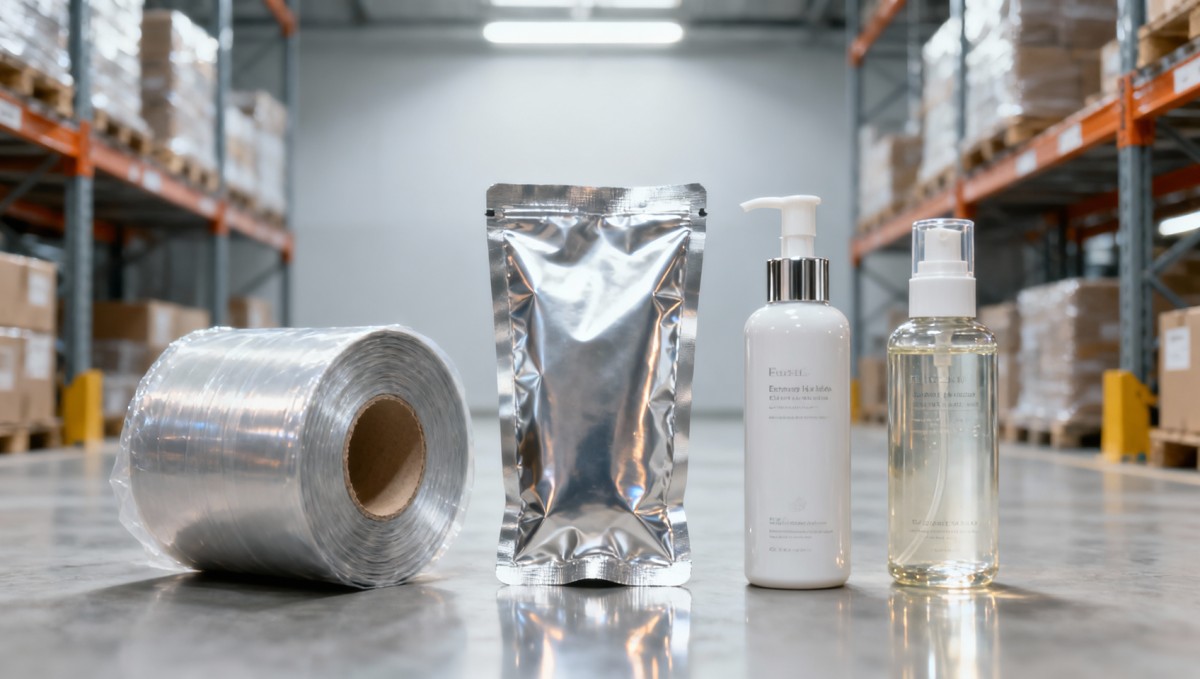
The notice specifies vacuum bottles, aluminum-plastic composite films, and refillable serum bottles as covered items. Analysis来看, these represent high-value, technically complex formats often used in premium skincare. It is not yet confirmed whether simpler formats — e.g., standard PET jars or mono-material tubes — are automatically included or subject to future expansion. Current more appropriate interpretation is to treat the listed items as minimum scope, not exhaustive list.
Prepare certified recycling documentation in advance
Submission of valid DSD, EAR, or Interseroh compliance certificates is mandatory — not optional — for customs clearance and platform onboarding. From industry perspective, delays often arise not from registration itself, but from timing mismatches between PRO enrollment, fee payment, and certificate issuance. Companies should initiate applications at least 8–10 weeks ahead of planned shipment dates.
Distinguish between policy signal and enforcement reality
While the rule enters force on April 22, 2026, enforcement cadence — including inspection frequency, penalties for non-compliance, and platform-level automation of verification — remains unconfirmed. Observation suggests initial enforcement will prioritize high-volume sellers and visible marketplace listings, rather than low-frequency B2B transactions. However, this does not reduce obligation; it only affects near-term risk exposure.
Editorial Perspective / Industry Observation
This regulation is better understood as an enforcement escalation within an existing EPR framework — not a new policy introduction. France and Germany have operated parallel EPR systems for packaging since 2022 and 2009 respectively. What changes on April 22, 2026 is the explicit linkage: selling in either market now triggers dual obligations. From industry angle, this reflects growing regulatory convergence among major EU member states, particularly where environmental accountability intersects with digital trade infrastructure. It also signals that cross-border harmonization — long discussed at EU level — is now being advanced through national-level enforcement alignment, rather than waiting for full EU-wide legislation. Continued monitoring is warranted, as similar dual-registration expectations may emerge in Italy or Spain in coming years.
In summary, the April 22, 2026 EPR dual-registration requirement marks a concrete step toward stricter upstream accountability for cosmetic packaging exporters. Its significance lies less in novelty and more in enforceability: it transforms longstanding EPR principles into a hard gate for market access in two of Europe’s largest beauty markets. For affected enterprises, the current priority is not speculation about future rules — but verification, documentation, and alignment of registration status across both jurisdictions.
Source: Official implementation notice published by the European Commission (2026), supplemented by publicly available guidance from French PRO Citeo and German PRO EAR. Note: Enforcement protocols, penalty structures, and potential exemptions for micro-enterprises remain under observation and are not yet publicly detailed.
Related Intelligence
 Cosmetics & PkgApr 22, 2026SAMR Penalizes 7 Platforms for 'Ghost Kitchen' Packaging ViolationsSAMR penalizes 7 platforms for 'ghost kitchen' packaging violations—critical for food-grade packaging OEMs, suppliers & procurement teams. Act now.
 Camping & WaterApr 22, 2026RCEP Camping Water Bags: Indonesia Cuts Tariff, Sets TPU+Aluminum SpecRCEP Camping Water Bags: Indonesia cuts tariff to 3.4% & mandates TPU+aluminum spec—key opportunity for exporters, TPU suppliers & converters in ASEAN-China supply chains.
 Corporate & Seasonal GiftsApr 22, 2026TÜV Green Packaging LCA Threshold Effective Apr 2026TÜV Green Packaging LCA Threshold takes effect Apr 2026 — mandatory carbon heatmaps & ISO-compliant LCAs for holiday, wedding &文创 packaging. Act now to meet EU tender requirements.
 Beauty DevicesApr 22, 2026Global Li-Battery Recycling Rate Hits 62%: Beauty Device BOM Cost Down 9%Li-battery recycling hits 62% globally—driving 9% BOM cost cuts for beauty devices. Discover how recycled LFP/NCM cells slash lead times & boost margins.
 Nursery Furniture & MonitorsApr 22, 2026Canton Fair Phase III: Infant Monitor Inquiries Surge, EN60601-1-12 Certification Critical for Middle EastEN60601-1-12 certification is now critical for infant monitors targeting the Middle East — Canton Fair Phase III reveals surging buyer demand from UAE & KSA.
 Smart Pet DevicesApr 22, 2026Vietnam Enforces ISO 13485 + Vietnamese Manual for Smart Pet CollarsISO 13485 + Vietnamese manual now mandatory for smart pet collars entering Vietnam — avoid import delays. Learn compliance essentials for Class IIa medical device classification.
 Infant Feeding & CareApr 22, 2026JETRO Spring Sourcing: Silicone Baby Feeding Items Must Link to BlockchainSilicone baby feeding items must link to blockchain for JETRO Spring Sourcing — avoid 11-day delays & 100% inspections. Act now to ensure compliance.
 STEM & Educational ToysApr 22, 2026SASO Launches 24-Hour AI STEM Toy Certification in Saudi ArabiaSASO's 24-hour AI STEM toy certification now live in Saudi Arabia — fast-track CoC for robotics, voice/vision learning toys meeting GB/T 34667-2025 & IEC 62368-1.
 Cosmetics & PkgApr 22, 2026EU EPR Dual-Country Registration Effective for Beauty PackagingEU EPR dual-country registration is now mandatory for beauty packaging exporters—secure France & Germany compliance before April 22, 2026 to avoid delisting and customs delays.
 Cosmetics & PkgApr 22, 2026FDA Requires Independent VCRP Registration for Cosmetic Packaging as of Apr 21, 2026FDA requires independent VCRP registration for cosmetic packaging by Apr 21, 2026—essential for U.S. importers, Chinese suppliers & OEMs. Act now to avoid delays.
 Cosmetics & PkgApr 21, 2026SAMR Penalizes 7 Platforms for 'Ghost Kitchen' Packaging ViolationsSAMR penalizes 7 platforms for 'ghost kitchen' packaging violations—key alert for food packaging exporters, converters & brands on licensing compliance.
 Cosmetics & PkgApr 21, 2026EU EPR Dual-Country Registration Effective for Beauty PackagingEU EPR Dual-Country Registration is now live for beauty packaging in France & Germany — act now to avoid shipment delays, fees, and customs holds.
 Cosmetics & PkgApr 21, 2026FDA MoCRA Rule: Cosmetic Packaging Must File Separate VCRPFDA MoCRA Rule requires cosmetic packaging—vacuum bottles, pumps, tubes—to file separate VCRP registration by April 17, 2026. Stay compliant & avoid shipment delays!