Canton Fair Phase III: Infant Monitor Inquiries Surge, EN60601-1-12 Certification Critical for Middle East
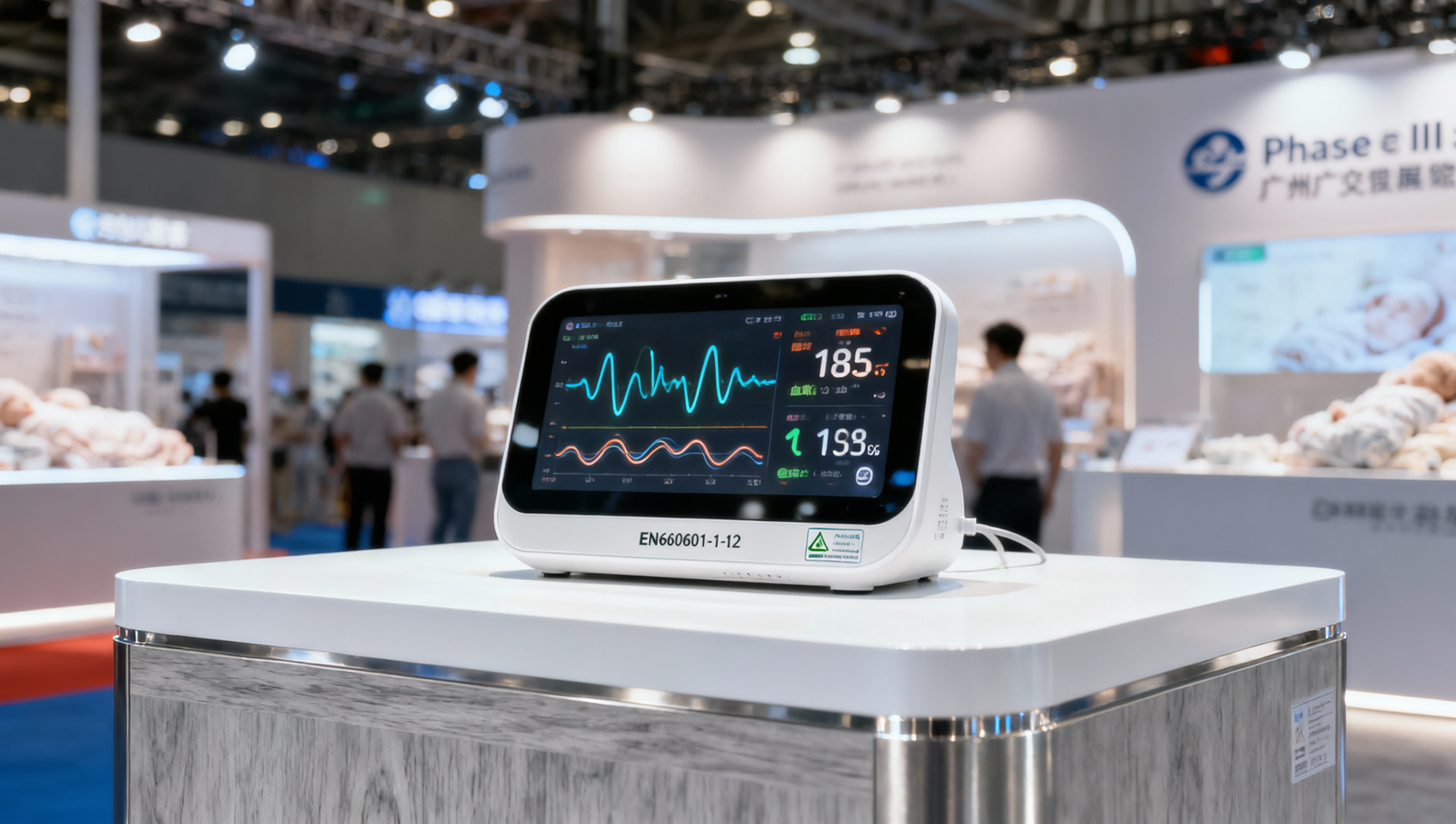
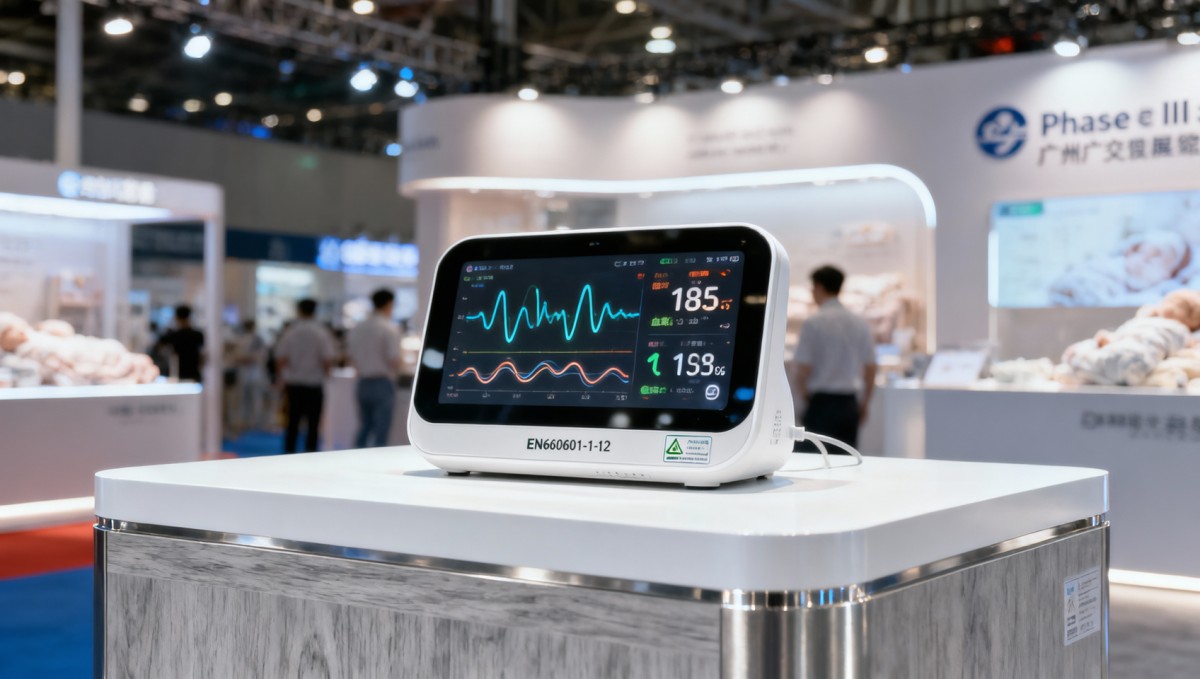
On April 21, 2026 — the opening day of Phase III of the Canton Fair (Maternity, Baby & Home Products Exhibition) — intelligent infant monitoring devices with respiratory, movement, and blood oxygen monitoring functions drew heightened inquiry from Middle Eastern buyers, particularly those from the UAE and Saudi Arabia, who prioritized verification of EN60601-1-12 certification status. This development signals emerging regulatory gatekeeping in high-value healthcare-adjacent consumer markets, warranting attention from medical device exporters, OEM manufacturers, and compliance service providers.
Event Overview
On April 21, 2026, the third phase of the China Import and Export Fair (Canton Fair) opened, focusing on maternity, baby, and home products. During the first day, multiple Chinese exhibitors reported a notable increase in inquiries for smart infant monitors featuring respiratory, body movement, and blood oxygen monitoring capabilities. Buyers from the United Arab Emirates and Saudi Arabia specifically asked about compliance with EN60601-1-12 — the European standard for basic safety and essential performance of medical electrical equipment, Part 1-12. Exhibitors confirmed that this certification has become a mandatory prerequisite for inclusion in tender shortlists for hospitals and premium maternity retail chains in the Middle East; products lacking it are excluded from procurement consideration.
Industries Affected by This Development
Direct Exporters & Trade Enterprises
Exporters targeting the Middle East — especially those supplying infant monitors positioned at the intersection of consumer electronics and clinical-grade functionality — are directly affected. The shift reflects a de facto harmonization of regulatory expectations: even non-hospital-use devices are now evaluated against medical device standards when marketed for health-critical applications. Impact manifests as increased pre-shipment compliance validation, longer lead times for market entry, and higher upfront certification costs.
OEM/ODM Manufacturing Firms
Manufacturers producing infant monitors for global brands or private-label clients face revised technical specifications from buyers. EN60601-1-12 compliance requires design-level adaptations — including electromagnetic compatibility (EMC), mechanical stability under clinical use conditions, and alarm system reliability — beyond typical CE or FCC requirements. This affects product development cycles, component sourcing (e.g., certified power supplies, isolation barriers), and internal testing protocols.
Compliance & Certification Service Providers
Third-party testing and certification bodies supporting export-oriented medical or quasi-medical devices are seeing intensified demand for EN60601-1-12 assessments. As more Middle Eastern importers treat this standard as a proxy for regional acceptability — despite its origin as an EU norm — service providers must clarify scope boundaries (e.g., applicability to Class I vs. Class II devices, relevance of Annexes) and avoid conflating it with local national approvals such as SFDA (Saudi FDA) or MOH (UAE Ministry of Health) registration.
Distribution & Channel Partners in Target Markets
Regional distributors and retail chains operating in the UAE and Saudi Arabia report stricter vetting of supplier documentation. Without verified EN60601-1-12 conformity evidence — not just self-declarations — products are disqualified from shelf placement or hospital tender submissions. This elevates documentation management and traceability requirements across the supply chain, particularly for multi-tiered distribution models.
What Relevant Enterprises or Practitioners Should Focus On Now
Monitor official updates from Gulf Cooperation Council (GCC) health authorities
While EN60601-1-12 is currently being applied de facto by buyers, no GCC-wide regulation formally mandates it for infant monitors. Current practice appears driven by risk-averse procurement policies rather than statutory law. Enterprises should track whether Saudi FDA, UAE MOH, or GCC Standardization Organization (GSO) issues formal guidance — distinguishing between voluntary benchmarking and binding requirement.
Prioritize verification of existing product certifications against EN60601-1-12 scope
Many infant monitors already hold CE marking under the Medical Devices Regulation (MDR) or general product safety directives. However, EN60601-1-12 introduces specific requirements for emergency response systems, environmental robustness, and interoperability in home healthcare settings. Companies should audit whether current certifications cover all applicable clauses — particularly Clause 202 (Alarm Systems) and Annex BB (Home Healthcare Environment).
Differentiate between procurement signal and regulatory enforcement
From industry perspective, the Canton Fair feedback reflects buyer behavior, not legal enactment. It signals growing commercial risk aversion — not yet a legal barrier. Companies should avoid over-investing in full EN60601-1-12 certification for low-risk consumer variants unless explicitly required by contract. Instead, consider phased alignment: prioritize documentation readiness, then targeted testing for high-margin or institutional-facing SKUs.
Prepare technical documentation and test reports for immediate buyer review
Multiple exhibitors noted that buyers requested evidence within minutes of initial contact — not after follow-up. Preparing concise, English-language summaries of test reports (including laboratory accreditation details), risk management files per ISO 14971, and declaration of conformity referencing EN60601-1-12 clauses will reduce response latency and improve qualification rates during trade shows or RFP processes.
Editorial Observation / Industry Insight
This Canton Fair observation is best understood as an early-stage procurement signal — not yet a codified regulatory mandate. Analysis来看, it reveals how regional buyers are adopting internationally recognized medical device standards as de facto quality proxies in markets where dedicated regulatory frameworks for hybrid consumer-medical products remain under development. From industry angle, it underscores a broader trend: convergence of safety expectations across clinical and domestic environments, especially where devices monitor vital physiological parameters. Current more appropriate interpretation is that EN60601-1-12 is becoming a competitive differentiator — and increasingly, a commercial precondition — for premium positioning in Gulf healthcare-adjacent retail and institutional channels.
Conclusion
This development highlights an evolving threshold for market access in select high-income Middle Eastern markets: functional capability alone is no longer sufficient — demonstrable alignment with medical-grade safety architecture is now part of the baseline expectation for certain infant health technologies. Rather than indicating imminent regulation, it reflects pragmatic risk mitigation by buyers navigating regulatory ambiguity. Enterprises should treat it as a forward-looking indicator of tightening technical due diligence, not as an immediate compliance deadline — but one requiring structured, evidence-based preparation.
Information Sources
Main source: Official participant feedback and on-site reporting from the 2026 Canton Fair Phase III (April 21, 2026), collected during the opening day of the Maternity, Baby & Home Products Exhibition. Note: Ongoing observation is warranted regarding whether GCC health authorities issue formal alignment statements or update national medical device classification guidelines to reflect this trend.
Related Intelligence
 Cosmetics & PkgApr 22, 2026SAMR Penalizes 7 Platforms for 'Ghost Kitchen' Packaging ViolationsSAMR penalizes 7 platforms for 'ghost kitchen' packaging violations—critical for food-grade packaging OEMs, suppliers & procurement teams. Act now.
 Camping & WaterApr 22, 2026RCEP Camping Water Bags: Indonesia Cuts Tariff, Sets TPU+Aluminum SpecRCEP Camping Water Bags: Indonesia cuts tariff to 3.4% & mandates TPU+aluminum spec—key opportunity for exporters, TPU suppliers & converters in ASEAN-China supply chains.
 Corporate & Seasonal GiftsApr 22, 2026TÜV Green Packaging LCA Threshold Effective Apr 2026TÜV Green Packaging LCA Threshold takes effect Apr 2026 — mandatory carbon heatmaps & ISO-compliant LCAs for holiday, wedding &文创 packaging. Act now to meet EU tender requirements.
 Beauty DevicesApr 22, 2026Global Li-Battery Recycling Rate Hits 62%: Beauty Device BOM Cost Down 9%Li-battery recycling hits 62% globally—driving 9% BOM cost cuts for beauty devices. Discover how recycled LFP/NCM cells slash lead times & boost margins.
 Nursery Furniture & MonitorsApr 22, 2026Canton Fair Phase III: Infant Monitor Inquiries Surge, EN60601-1-12 Certification Critical for Middle EastEN60601-1-12 certification is now critical for infant monitors targeting the Middle East — Canton Fair Phase III reveals surging buyer demand from UAE & KSA.
 Smart Pet DevicesApr 22, 2026Vietnam Enforces ISO 13485 + Vietnamese Manual for Smart Pet CollarsISO 13485 + Vietnamese manual now mandatory for smart pet collars entering Vietnam — avoid import delays. Learn compliance essentials for Class IIa medical device classification.
 Infant Feeding & CareApr 22, 2026JETRO Spring Sourcing: Silicone Baby Feeding Items Must Link to BlockchainSilicone baby feeding items must link to blockchain for JETRO Spring Sourcing — avoid 11-day delays & 100% inspections. Act now to ensure compliance.
 STEM & Educational ToysApr 22, 2026SASO Launches 24-Hour AI STEM Toy Certification in Saudi ArabiaSASO's 24-hour AI STEM toy certification now live in Saudi Arabia — fast-track CoC for robotics, voice/vision learning toys meeting GB/T 34667-2025 & IEC 62368-1.
 Cosmetics & PkgApr 22, 2026EU EPR Dual-Country Registration Effective for Beauty PackagingEU EPR dual-country registration is now mandatory for beauty packaging exporters—secure France & Germany compliance before April 22, 2026 to avoid delisting and customs delays.
 Cosmetics & PkgApr 22, 2026FDA Requires Independent VCRP Registration for Cosmetic Packaging as of Apr 21, 2026FDA requires independent VCRP registration for cosmetic packaging by Apr 21, 2026—essential for U.S. importers, Chinese suppliers & OEMs. Act now to avoid delays.
 Cosmetics & PkgApr 21, 2026SAMR Penalizes 7 Platforms for 'Ghost Kitchen' Packaging ViolationsSAMR penalizes 7 platforms for 'ghost kitchen' packaging violations—key alert for food packaging exporters, converters & brands on licensing compliance.
 Cosmetics & PkgApr 21, 2026EU EPR Dual-Country Registration Effective for Beauty PackagingEU EPR Dual-Country Registration is now live for beauty packaging in France & Germany — act now to avoid shipment delays, fees, and customs holds.
 Cosmetics & PkgApr 21, 2026FDA MoCRA Rule: Cosmetic Packaging Must File Separate VCRPFDA MoCRA Rule requires cosmetic packaging—vacuum bottles, pumps, tubes—to file separate VCRP registration by April 17, 2026. Stay compliant & avoid shipment delays!