SAMR Penalizes 7 Platforms for 'Ghost Kitchen' Packaging Violations

On April 21, 2026, China’s State Administration for Market Regulation (SAMR) imposed billion-level fines on seven major food delivery platforms—including Meituan and Ele.me—for facilitating the use of non-compliant food-contact packaging in unlicensed ‘ghost kitchens’. This enforcement action directly impacts manufacturers, suppliers, and procurement teams across the food-grade packaging supply chain, particularly those involved in silicone containers, biodegradable straws, and greaseproof paper bags.
Event Overview
On April 21, 2026, SAMR announced the outcomes of its ‘Online Catering Food Safety Special Rectification Campaign’, issuing substantial administrative penalties against seven leading food delivery platforms. The violations centered on the circulation and use of food-contact packaging materials—such as silicone meal boxes, compostable straws, and oil-resistant paper bags—that lack valid SC (Production License for Food-Related Products) certification. No further details regarding individual penalty amounts or platform-specific corrective timelines were publicly disclosed at the time of announcement.
Industries Affected by This Enforcement
Food-Contact Packaging OEM/ODM Manufacturers
Manufacturers producing food-grade packaging for domestic or export clients are directly affected because SAMR’s action reinforces SC licensing as a non-negotiable market access requirement. Firms without SC certification—and especially those lacking concurrent ISO 22000 certification—are at heightened risk of losing platform-listed customers and downstream procurement contracts.
Raw Material Suppliers to Packaging Producers
Suppliers of base materials (e.g., food-grade silicone compounds, PLA resins, certified kraft pulp) face increased due diligence pressure. Buyers are likely to require full traceability documentation—including batch-level SC-linked compliance records—to support their own regulatory accountability, tightening qualification thresholds for upstream vendors.
Distribution & Logistics Providers for Packaging Goods
Third-party logistics and warehousing operators handling food-contact packaging may see revised contractual terms from clients, including mandatory storage condition verification (e.g., temperature/humidity logs) and enhanced documentation for inbound goods—especially for items labeled as ‘SC-compliant’ but arriving without verifiable certification copies.
Procurement & Sourcing Teams in Food Service Operators
Restaurant groups, cloud kitchen operators, and QSR chains using third-party delivery platforms must now treat packaging compliance as part of vendor risk management—not just cost or aesthetics. Non-SC-certified packaging may trigger platform-level de-listing or audit escalations, affecting operational continuity.
What Enterprises and Practitioners Should Monitor and Do Now
Track official updates on SC implementation guidance
Current enforcement targets packaging used *in conjunction with* unlicensed kitchens—but SAMR has not yet clarified whether future inspections will extend to standalone packaging distributors or e-commerce sellers of food-contact items. Monitoring SAMR’s upcoming technical bulletins on SC scope expansion is critical.
Verify SC status on all high-volume, high-exposure packaging SKUs
Priority should be placed on items most frequently flagged in the April 21 notice: silicone food containers, single-use biodegradable straws, and greaseproof paper bags. Cross-check SC certificate validity (including expiration date and product scope alignment) against SAMR’s public database—not just supplier-provided copies.
Distinguish between policy signal and operational rollout
The April 21 announcement signals intensified oversight—not immediate nationwide enforcement saturation. Regional SAMR bureaus may vary in inspection capacity and priority sequencing. Companies should assess local bureau activity levels (e.g., recent local announcements, inspection frequency in provincial SAMR work plans) before adjusting lead times or inventory strategies.
Prepare updated compliance documentation for procurement onboarding
Platforms and large food service buyers are expected to tighten onboarding requirements for packaging suppliers in Q2 2026. Firms should compile SC certificates, ISO 22000 certifications (where held), material safety data sheets (MSDS), and production batch traceability protocols in advance—not as reactive submissions.
Editorial Perspective / Industry Observation
From an industry perspective, this enforcement is best understood as a calibrated signal—not a completed regulatory shift. It confirms that SAMR is extending food safety accountability upstream from kitchens to their packaging inputs, but does not yet mandate universal third-party certification for all food-contact items sold online. Analysis来看, the focus remains on high-risk usage contexts (i.e., unlicensed preparation facilities linked to delivery platforms), rather than blanket application across retail or export channels. Observation来看, the stated 5–8% price increase for compliant packaging in Q2 reflects short-term supply-side adjustment, not structural cost inflation—driven by consolidation among smaller, uncertified producers rather than raw material or energy cost changes. Current more appropriate interpretation is that SAMR is testing enforcement leverage in a visible, high-traffic segment (platform-enabled food delivery) to catalyze broader supply chain alignment—not launching a fully scaled, cross-sector compliance regime.
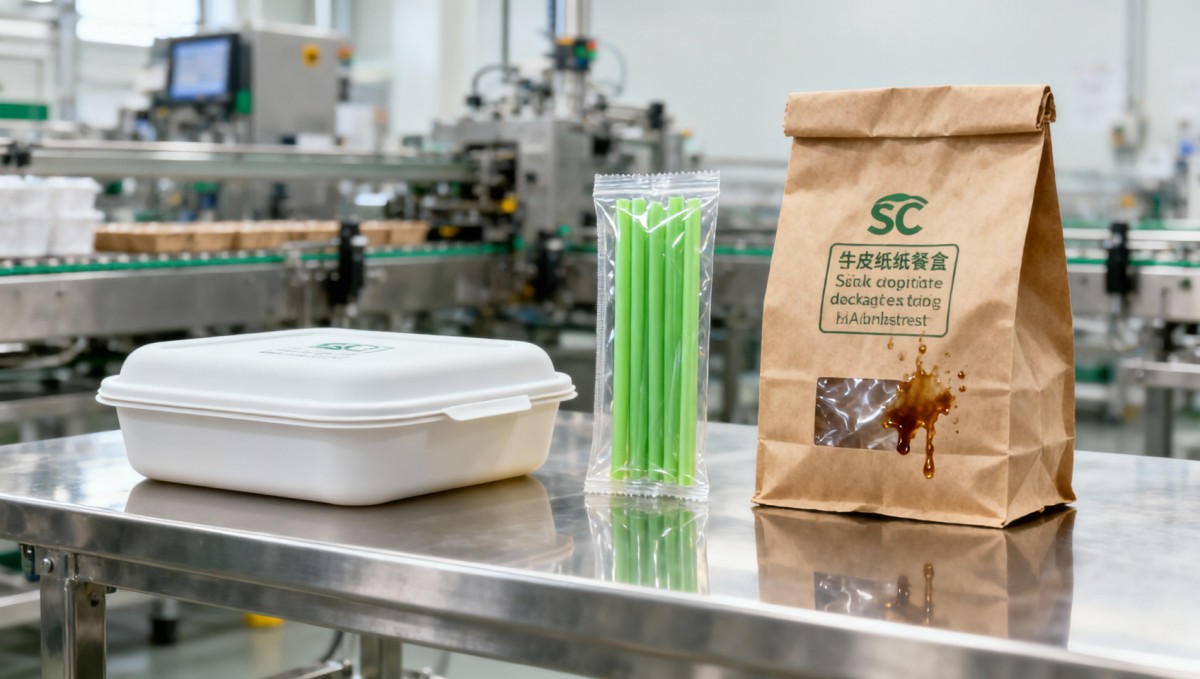
In summary, this SAMR action marks a concrete escalation in regulatory accountability for food-contact packaging within China’s digital food ecosystem. Its significance lies less in immediate financial penalties and more in its function as a precedent-setting enforcement vector—one that redefines compliance expectations for OEMs, suppliers, and procurement stakeholders alike. It is more accurately interpreted as a directional marker than a finalized regulatory endpoint; enterprises benefit most from treating it as a catalyst for proactive documentation readiness and tiered supplier qualification—not as a trigger for broad operational overhauls.
Source: State Administration for Market Regulation (SAMR), official announcement dated April 21, 2026. Note: Ongoing monitoring is advised for SAMR’s forthcoming technical guidelines on SC scope for food-contact packaging, which have not yet been published.
Related Intelligence
 Cosmetics & PkgApr 22, 2026SAMR Penalizes 7 Platforms for 'Ghost Kitchen' Packaging ViolationsSAMR penalizes 7 platforms for 'ghost kitchen' packaging violations—critical for food-grade packaging OEMs, suppliers & procurement teams. Act now.
 Camping & WaterApr 22, 2026RCEP Camping Water Bags: Indonesia Cuts Tariff, Sets TPU+Aluminum SpecRCEP Camping Water Bags: Indonesia cuts tariff to 3.4% & mandates TPU+aluminum spec—key opportunity for exporters, TPU suppliers & converters in ASEAN-China supply chains.
 Corporate & Seasonal GiftsApr 22, 2026TÜV Green Packaging LCA Threshold Effective Apr 2026TÜV Green Packaging LCA Threshold takes effect Apr 2026 — mandatory carbon heatmaps & ISO-compliant LCAs for holiday, wedding &文创 packaging. Act now to meet EU tender requirements.
 Beauty DevicesApr 22, 2026Global Li-Battery Recycling Rate Hits 62%: Beauty Device BOM Cost Down 9%Li-battery recycling hits 62% globally—driving 9% BOM cost cuts for beauty devices. Discover how recycled LFP/NCM cells slash lead times & boost margins.
 Nursery Furniture & MonitorsApr 22, 2026Canton Fair Phase III: Infant Monitor Inquiries Surge, EN60601-1-12 Certification Critical for Middle EastEN60601-1-12 certification is now critical for infant monitors targeting the Middle East — Canton Fair Phase III reveals surging buyer demand from UAE & KSA.
 Smart Pet DevicesApr 22, 2026Vietnam Enforces ISO 13485 + Vietnamese Manual for Smart Pet CollarsISO 13485 + Vietnamese manual now mandatory for smart pet collars entering Vietnam — avoid import delays. Learn compliance essentials for Class IIa medical device classification.
 Infant Feeding & CareApr 22, 2026JETRO Spring Sourcing: Silicone Baby Feeding Items Must Link to BlockchainSilicone baby feeding items must link to blockchain for JETRO Spring Sourcing — avoid 11-day delays & 100% inspections. Act now to ensure compliance.
 STEM & Educational ToysApr 22, 2026SASO Launches 24-Hour AI STEM Toy Certification in Saudi ArabiaSASO's 24-hour AI STEM toy certification now live in Saudi Arabia — fast-track CoC for robotics, voice/vision learning toys meeting GB/T 34667-2025 & IEC 62368-1.
 Cosmetics & PkgApr 22, 2026EU EPR Dual-Country Registration Effective for Beauty PackagingEU EPR dual-country registration is now mandatory for beauty packaging exporters—secure France & Germany compliance before April 22, 2026 to avoid delisting and customs delays.
 Cosmetics & PkgApr 22, 2026FDA Requires Independent VCRP Registration for Cosmetic Packaging as of Apr 21, 2026FDA requires independent VCRP registration for cosmetic packaging by Apr 21, 2026—essential for U.S. importers, Chinese suppliers & OEMs. Act now to avoid delays.
 Cosmetics & PkgApr 21, 2026SAMR Penalizes 7 Platforms for 'Ghost Kitchen' Packaging ViolationsSAMR penalizes 7 platforms for 'ghost kitchen' packaging violations—key alert for food packaging exporters, converters & brands on licensing compliance.
 Cosmetics & PkgApr 21, 2026EU EPR Dual-Country Registration Effective for Beauty PackagingEU EPR Dual-Country Registration is now live for beauty packaging in France & Germany — act now to avoid shipment delays, fees, and customs holds.
 Cosmetics & PkgApr 21, 2026FDA MoCRA Rule: Cosmetic Packaging Must File Separate VCRPFDA MoCRA Rule requires cosmetic packaging—vacuum bottles, pumps, tubes—to file separate VCRP registration by April 17, 2026. Stay compliant & avoid shipment delays!












