TÜV Green Packaging LCA Threshold Effective Apr 2026
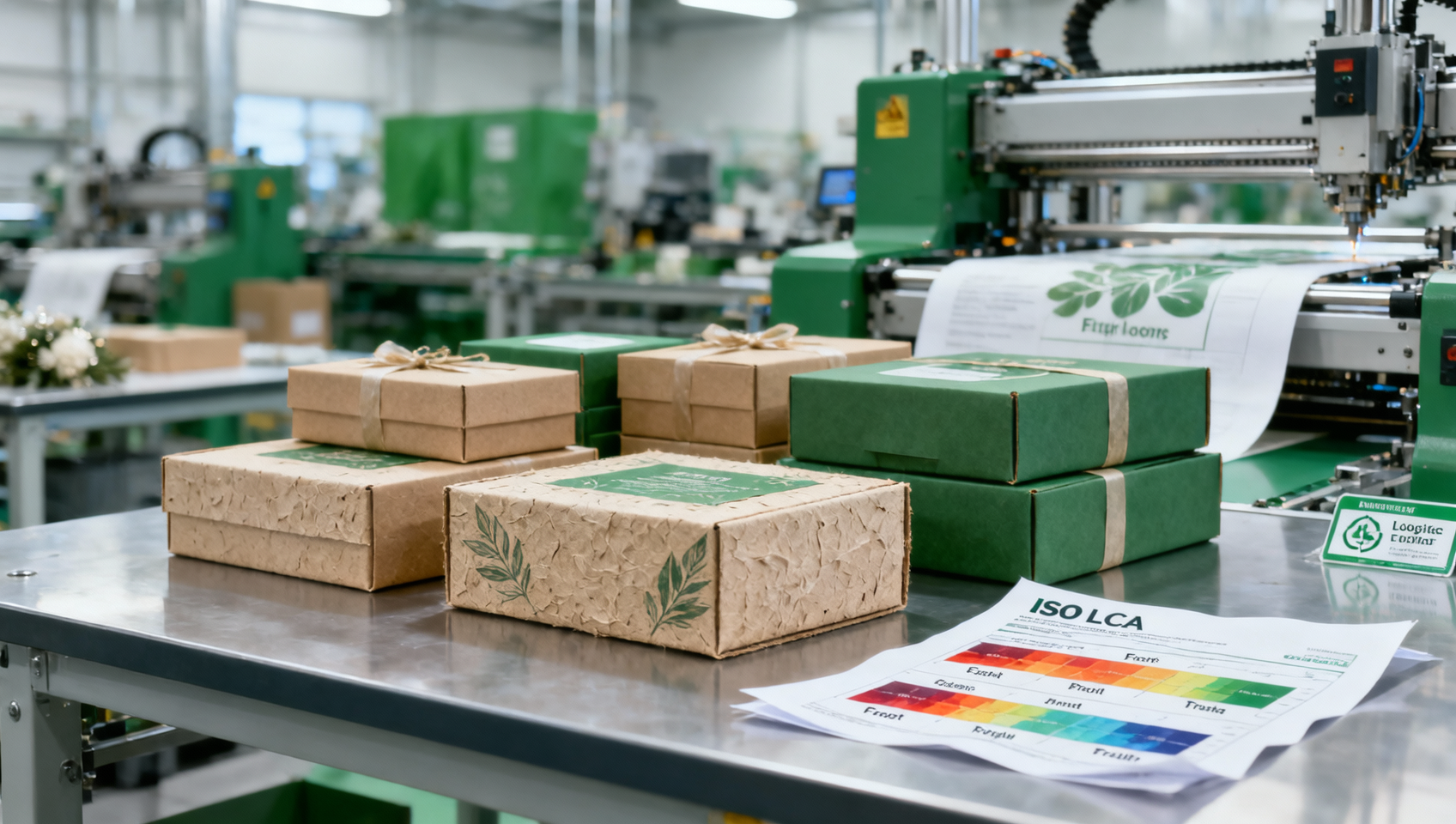
On April 21, 2026, TÜV Rheinland officially launched the Green Gift Packaging Assessment Protocol v3.0, introducing mandatory life cycle assessment (LCA)-based carbon footprint reporting and interactive carbon heatmaps for gift packaging seeking the ‘TÜV Green Packaging’ certification — impacting holiday gift boxes, custom cultural-creative packaging, and wedding sets. Suppliers targeting European premium gifting markets must now treat carbon heatmaps as a de facto order requirement.
Event Overview
On April 21, 2026, TÜV Rheinland activated the revised Green Gift Packaging Assessment Protocol v3.0. Under this protocol, all applicants for the ‘TÜV Green Packaging’ certification in the gift packaging category — specifically covering holiday gift boxes, custom文创 boxes (cultural-creative packaging), and wedding套装 (wedding sets) — must submit a full life cycle assessment (LCA) report compliant with ISO 14040 and ISO 14044. The report must include an interactive heatmap visualizing carbon emission shares across four defined stages: raw materials, printing, die-cutting, and transportation. Leading European gift distributors have formally designated this heatmap as a mandatory attachment for tender submissions in the 2026 autumn procurement season.
Industries Affected
Direct Exporters & Brand-OEM Packaging Suppliers
These enterprises face direct compliance pressure because certification is often contractually required by European buyers. The new protocol shifts verification from end-product attributes (e.g., recyclability) to upstream process transparency — meaning suppliers must now quantify and visualize emissions across specific operational stages, not just declare environmental claims.
Raw Material Providers (e.g., Specialty Paper, Bioplastics, Ink Manufacturers)
Material-level carbon data becomes operationally relevant: buyers may request verified emission factors per ton of substrate or ink used. Suppliers lacking LCA-ready material declarations risk being excluded from certified packaging BOMs (bills of materials), especially where low-carbon alternatives are prioritized in heatmaps.
Contract Packaging Converters (Printing, Die-Cutting, Assembly Facilities)
Facilities handling physical production steps must now track and report energy sources, machine efficiency, transport distances, and waste ratios per batch — as these directly feed into the ‘printing’ and ‘die-cutting’ segments of the mandated heatmap. Absence of granular operational data limits their ability to support clients’ certification applications.
Distribution & Wholesaling Channels (EU-Focused Gift Distributors)
European distributors have elevated the heatmap from a voluntary sustainability document to a binding tender requirement for fall 2026. This signals a shift toward procurement gatekeeping based on verifiable decarbonization granularity — affecting supplier qualification, lead-time planning, and audit readiness timelines.
Supply Chain Data & LCA Service Providers
Third-party LCA modeling, data validation, and interactive visualization services are now embedded in the pre-certification workflow. Demand is rising for providers able to deliver ISO-compliant reports with stage-specific allocation logic and exportable heatmap outputs — not generic carbon calculators.
What Enterprises Should Focus On Now
Monitor official protocol implementation guidance — not just the v3.0 release
The April 21, 2026 activation marks enforcement start, but TÜV Rheinland has not yet published detailed technical annexes on acceptable data sources, boundary definitions (e.g., whether logistics includes last-mile delivery), or heatmap interactivity standards (e.g., file format, API compatibility). These details will determine practical compliance scope.
Prioritize categories aligned with EU distributors’ near-term procurement cycles
The 2026 autumn procurement season is the first confirmed enforcement window. Companies should prioritize LCA preparation for high-volume items in holiday gifting (e.g., Christmas, Easter boxes) and wedding packaging — rather than broad portfolio coverage — to meet imminent tender deadlines.
Distinguish between certification eligibility and commercial competitiveness
Submitting a compliant heatmap satisfies the minimum threshold for bidding; however, analysis suggests that distributors are beginning to compare heatmaps cross-supplier — favoring those showing lower raw material or transport shares. Certification is necessary but no longer sufficient for competitive differentiation.
Initiate internal data mapping — starting from material sourcing and facility energy use
Preparing an ISO-compliant LCA requires traceable input data. Enterprises should begin cataloging current material certifications (e.g., FSC, ISCC), utility bills per production line, transport manifests (origin/destination, mode, weight), and waste diversion records — as these form the foundational dataset for third-party LCA modeling.
Editorial Perspective / Industry Observation
From industry perspective, this protocol update is less a sudden regulatory shock and more a formalization of an already accelerating market expectation: carbon accountability is moving from aggregate claims to stage-level transparency. The heatmap requirement reflects a growing preference among EU buyers for actionable, comparable, and auditable environmental data — not just labels. It is currently best understood as a procurement signal with immediate contractual effect, rather than a standalone regulation. Ongoing observation is warranted on whether other certification bodies (e.g., SGS, Bureau Veritas) adopt similar visualization mandates, and whether downstream retailers extend heatmap review beyond tenders into routine quality audits.
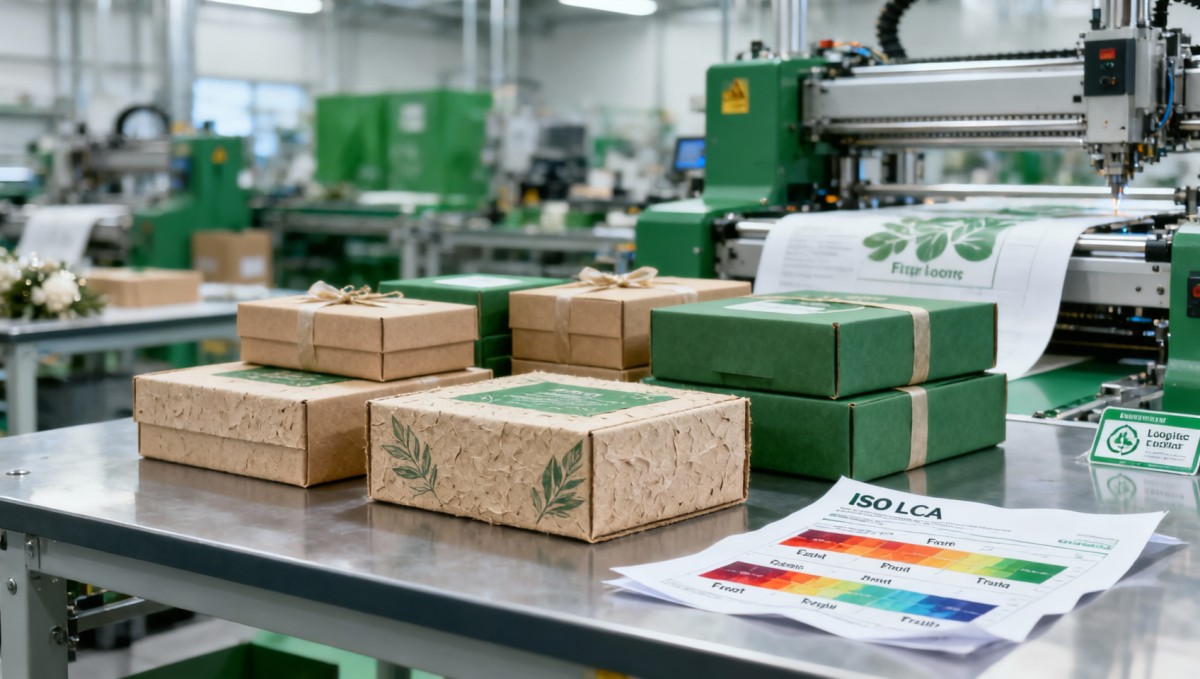
Conclusively, this development signifies a structural shift in how environmental performance is verified and valued in the gift packaging supply chain — from qualitative assurance to quantitative, stage-resolved disclosure. It does not introduce new carbon targets, but it raises the bar for evidence rigor and data interoperability. Currently, it is more accurately interpreted as an operational benchmark for market access in key European channels, rather than a broad-based sustainability standard.
Source: TÜV Rheinland official announcement of Green Gift Packaging Assessment Protocol v3.0, effective April 21, 2026. Note: Technical annexes, data validation rules, and heatmap format specifications remain pending publication and are subject to ongoing monitoring.
Related Intelligence
 Cosmetics & PkgApr 22, 2026SAMR Penalizes 7 Platforms for 'Ghost Kitchen' Packaging ViolationsSAMR penalizes 7 platforms for 'ghost kitchen' packaging violations—critical for food-grade packaging OEMs, suppliers & procurement teams. Act now.
 Camping & WaterApr 22, 2026RCEP Camping Water Bags: Indonesia Cuts Tariff, Sets TPU+Aluminum SpecRCEP Camping Water Bags: Indonesia cuts tariff to 3.4% & mandates TPU+aluminum spec—key opportunity for exporters, TPU suppliers & converters in ASEAN-China supply chains.
 Corporate & Seasonal GiftsApr 22, 2026TÜV Green Packaging LCA Threshold Effective Apr 2026TÜV Green Packaging LCA Threshold takes effect Apr 2026 — mandatory carbon heatmaps & ISO-compliant LCAs for holiday, wedding &文创 packaging. Act now to meet EU tender requirements.
 Beauty DevicesApr 22, 2026Global Li-Battery Recycling Rate Hits 62%: Beauty Device BOM Cost Down 9%Li-battery recycling hits 62% globally—driving 9% BOM cost cuts for beauty devices. Discover how recycled LFP/NCM cells slash lead times & boost margins.
 Nursery Furniture & MonitorsApr 22, 2026Canton Fair Phase III: Infant Monitor Inquiries Surge, EN60601-1-12 Certification Critical for Middle EastEN60601-1-12 certification is now critical for infant monitors targeting the Middle East — Canton Fair Phase III reveals surging buyer demand from UAE & KSA.
 Smart Pet DevicesApr 22, 2026Vietnam Enforces ISO 13485 + Vietnamese Manual for Smart Pet CollarsISO 13485 + Vietnamese manual now mandatory for smart pet collars entering Vietnam — avoid import delays. Learn compliance essentials for Class IIa medical device classification.
 Infant Feeding & CareApr 22, 2026JETRO Spring Sourcing: Silicone Baby Feeding Items Must Link to BlockchainSilicone baby feeding items must link to blockchain for JETRO Spring Sourcing — avoid 11-day delays & 100% inspections. Act now to ensure compliance.
 STEM & Educational ToysApr 22, 2026SASO Launches 24-Hour AI STEM Toy Certification in Saudi ArabiaSASO's 24-hour AI STEM toy certification now live in Saudi Arabia — fast-track CoC for robotics, voice/vision learning toys meeting GB/T 34667-2025 & IEC 62368-1.
 Cosmetics & PkgApr 22, 2026EU EPR Dual-Country Registration Effective for Beauty PackagingEU EPR dual-country registration is now mandatory for beauty packaging exporters—secure France & Germany compliance before April 22, 2026 to avoid delisting and customs delays.
 Cosmetics & PkgApr 22, 2026FDA Requires Independent VCRP Registration for Cosmetic Packaging as of Apr 21, 2026FDA requires independent VCRP registration for cosmetic packaging by Apr 21, 2026—essential for U.S. importers, Chinese suppliers & OEMs. Act now to avoid delays.
 Cosmetics & PkgApr 21, 2026SAMR Penalizes 7 Platforms for 'Ghost Kitchen' Packaging ViolationsSAMR penalizes 7 platforms for 'ghost kitchen' packaging violations—key alert for food packaging exporters, converters & brands on licensing compliance.
 Cosmetics & PkgApr 21, 2026EU EPR Dual-Country Registration Effective for Beauty PackagingEU EPR Dual-Country Registration is now live for beauty packaging in France & Germany — act now to avoid shipment delays, fees, and customs holds.
 Cosmetics & PkgApr 21, 2026FDA MoCRA Rule: Cosmetic Packaging Must File Separate VCRPFDA MoCRA Rule requires cosmetic packaging—vacuum bottles, pumps, tubes—to file separate VCRP registration by April 17, 2026. Stay compliant & avoid shipment delays!