SASO Updates Cosmetics Packaging Rules for Plant Extracts in Saudi Arabia
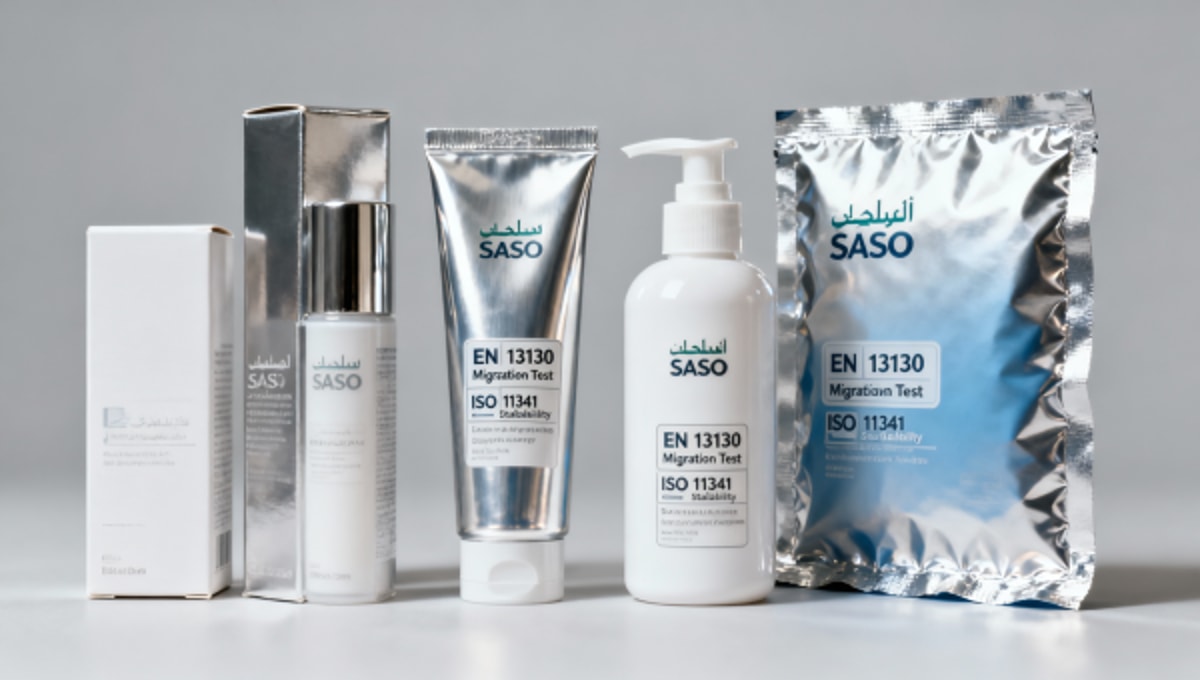
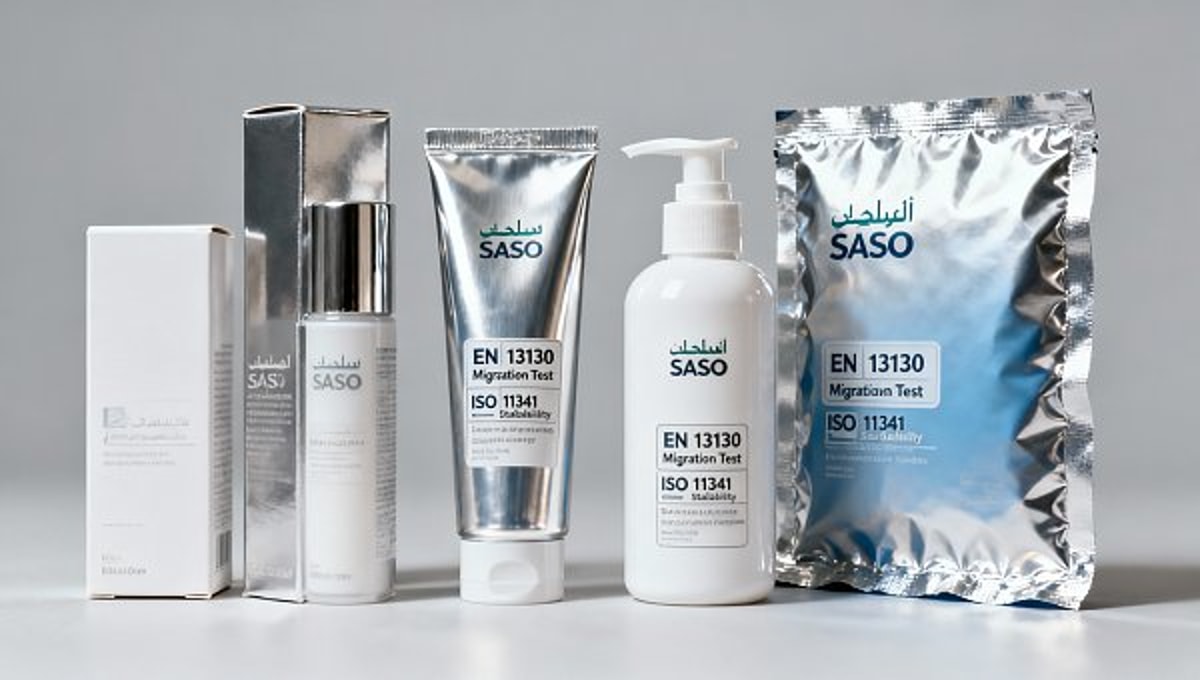
On April 30, 2026, the Saudi Standards, Metrology and Quality Organization (SASO) issued SASO COSM-2026-Rev.2, mandating new compliance requirements for cosmetic packaging containing plant extracts—such as aloe vera, centella asiatica, and portulaca oleracea. Effective August 1, 2026, direct-contact packaging—including laminated tubes, vacuum bottles, and aluminum-plastic composite films—must pass food-grade migration testing (EN 13130) and ISO 11341 photostability accelerated aging validation. This update directly impacts Chinese OEM packaging manufacturers supplying to the Saudi cosmetics market, particularly those lacking pre-clearance certification in the SABER system, which is now required for inclusion on Saudi customs’ approved clearance list.
Event Overview
On April 30, 2026, SASO published SASO COSM-2026-Rev.2, specifying that all cosmetic packaging materials in direct contact with formulations containing plant extracts must undergo EN 13130 migration testing and ISO 11341 photostability validation. The requirement takes effect on August 1, 2026. The announcement explicitly identifies soft tubes, vacuum bottles, and aluminum-plastic composite films as covered packaging types. It further states that Chinese packaging OEMs without prior SABER system pre-assessment certification will be excluded from the Saudi customs white list for import clearance.
Industries Affected
Direct Exporters & Trading Companies
Companies exporting cosmetic packaging directly to Saudi Arabia face immediate regulatory gatekeeping: shipments arriving after August 1, 2026 without valid test reports and SABER pre-certification will be denied customs release. Impact manifests as shipment delays, rework costs, or outright rejection—especially for orders finalized before May 2026 without updated compliance planning.
Packaging OEM Manufacturers (China-based)
Chinese contract manufacturers producing tubes, vacuum bottles, or laminated films for international cosmetic brands are affected at the production and documentation level. They must now integrate migration and photostability testing into their quality assurance protocols—not only for final products but also for material batches and formulation-specific variants (e.g., different extract concentrations). Absence of SABER registration blocks end-market access regardless of product conformity.
Cosmetic Brand Owners & Formulators
Brands sourcing packaging from third-party OEMs must verify supplier compliance status proactively. Since the regulation targets packaging *in contact with plant extracts*, formulators using such actives—even in low concentrations—cannot rely on generic packaging certifications. Responsibility for verifying test validity (including substrate-extract interaction) rests with the brand placing the product on the Saudi market.
Supply Chain & Certification Service Providers
Testing laboratories accredited to EN 13130 and ISO 11341—and authorized SABER agents—face increased demand for verification services targeting specific packaging-actives combinations. However, no official list of SASO-recognized labs for this exact scope has been published; service providers must confirm their accreditation alignment with SASO’s current interpretation of the standard.
What Stakeholders Should Focus On Now
Monitor Official Clarifications on Scope and Timing
Analysis shows SASO COSM-2026-Rev.2 does not define threshold concentrations for ‘plant extract’ inclusion nor specify whether testing applies per extract type or per formulation. Stakeholders should track any SASO technical circulars or FAQs expected before June 2026, especially regarding grandfathering of existing stock or transitional arrangements.
Verify Packaging-Specific Test Validity, Not Just Material Certification
Observably, EN 13130 and ISO 11341 testing outcomes depend on actual packaging configuration (e.g., layer structure, seal integrity) and extract composition—not just base polymer or laminate film grade. Suppliers must provide test reports tied to identical packaging formats and representative extract formulations, not generic material certificates.
Distinguish Between Policy Signal and Enforceable Requirement
From industry perspective, SASO’s issuance of Rev.2 signals tightening harmonization with EU-level safety expectations for active-containing cosmetics—but enforcement capacity (e.g., lab capacity at Saudi ports, document review timelines) remains unconfirmed. Businesses should treat August 1, 2026 as the formal deadline while preparing for possible phased implementation based on early clearance patterns.
Initiate SABER Pre-Assessment and Align Supply Contracts
Current more suitable approach is to complete SABER system registration—including submission of test reports, technical files, and factory audit evidence—no later than July 1, 2026. Contractual terms with OEMs should explicitly assign responsibility for test execution, report ownership, and SABER filing to avoid post-shipment liability gaps.
Editorial Perspective / Industry Observation
This update is better understood as a regulatory signal reinforcing SASO’s shift toward substance-specific packaging safety—moving beyond general material compliance to functional interaction between botanical actives and packaging systems. Analysis suggests it reflects growing scrutiny of phytochemical migration risks, especially under heat and UV exposure common in Gulf climates. While not yet accompanied by penalties or audit frequency details, its linkage to SABER—a mandatory digital platform—means non-compliance carries immediate operational consequences. Industry observers note this aligns with broader GCC trends toward adopting EU-derived safety frameworks, though local implementation rigor remains variable and warrants ongoing monitoring.
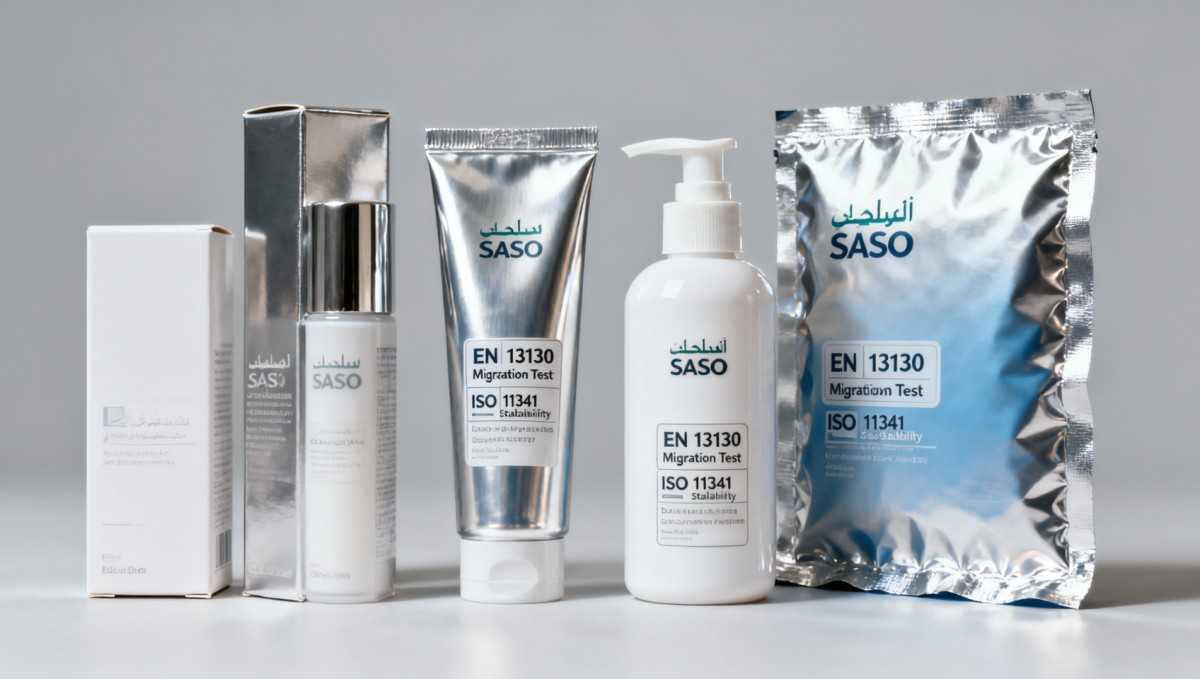
In summary, SASO COSM-2026-Rev.2 introduces enforceable, time-bound technical requirements that reshape packaging qualification workflows for plant-active cosmetics entering Saudi Arabia. Its significance lies less in novelty and more in binding integration with the SABER clearance infrastructure—making compliance a prerequisite for market access, not a post-market formality. Currently, it is more accurately interpreted as an operational checkpoint than a strategic policy shift, demanding focused technical and procedural readiness over broad strategic repositioning.
Source: Saudi Standards, Metrology and Quality Organization (SASO), official announcement SASO COSM-2026-Rev.2, published April 30, 2026.
Note: Pending clarification on extract concentration thresholds, test report acceptance criteria, and potential transitional provisions—these aspects remain under observation.
Related Intelligence
 Beauty DevicesMay 01, 20262026 Foshan Tanzhou Auto Industry Expo Spring Edition2026 Foshan Tanzhou Auto Industry Expo Spring Edition features the debut 'Beauty Devices & Smart Cabin' zone—driving cross-industry innovation and global sourcing opportunities.
 Electronic & RC ToysMay 01, 2026RC Toy Orders Shift to South China, Lead Time Cuts to 6 WeeksRC toy orders shift to South China with 6-week lead times—key for importers, OEMs & logistics firms. Discover ICTA-QMS certified factories in Shenzhen/Dongguan now driving speed and reliability.
 STEM & Educational ToysMay 01, 2026CPSC Tightens Battery Compartment Standards for STEM ToysCPSC Tightens Battery Compartment Standards for STEM Toys: New 30 N bite-force test mandatory for U.S. market access starting July 1, 2026—act now to avoid shipment delays.
 Infant Feeding & CareMay 01, 2026RCEP ASEAN Adds Fast Track for Infant Feeding ProductsRCEP ASEAN fast tracks infant feeding products—baby bottles, breast pumps & warmers—with NMPA Class II filing. Save 11 days on customs clearance in ASEAN markets.
 Smart Pet DevicesMay 01, 2026Japan METI Expands Smart Pet Device PSE White List: Chinese Self-Cleaning Litter Boxes Gain Priority ReviewJapan METI expands PSE white list for smart pet devices—Chinese self-cleaning litter boxes now qualify for priority PSE review, cutting certification to 12 days.
 Corporate & Seasonal GiftsMay 01, 2026Germany’s UBA Launches Mandatory Carbon Labeling for Corporate Gift InksGermany’s UBA mandates carbon labeling for corporate gift inks—key for exporters, ODMs & ink suppliers. Act now to comply by July 2026.
 Fitness EquipmentMay 01, 2026THE Alliance Cuts Shanghai–LA Capacity: Fitness Equipment Shipment Delays to 8–10 WeeksFitness equipment shipment delays hit 8–10 weeks as THE Alliance cuts Shanghai–LA capacity by 32%. Act now to secure slots, revise ETAs & optimize FOB planning.
 Camping & WaterMay 01, 2026Vietnam Suspends Camping & Water Import Licenses Effective Apr 30, 2026Vietnam suspends Camping & Water import licenses from Apr 30, 2026—IP6X + ASTM B117 testing now mandatory. Act now to avoid shipment delays!
 Cosmetics & PkgMay 01, 2026SASO Updates Cosmetics Packaging Rules for Plant Extracts in Saudi ArabiaSASO cosmetics packaging rules updated: Plant extract cosmetics now require EN 13130 migration & ISO 11341 photostability testing—mandatory for Saudi market access after Aug 1, 2026.
") Skincare OEMMay 01, 2026FDA Adds New Code for Plant Stem Cell Extracts (PCSC-2026)FDA's new PCSC-2026 code for plant stem cell extracts reshapes U.S. cosmetic compliance—key for OEMs, exporters & suppliers. Act now!
Skincare OEMMay 01, 2026FDA Adds New Code for Plant Stem Cell Extracts (PCSC-2026)FDA's new PCSC-2026 code for plant stem cell extracts reshapes U.S. cosmetic compliance—key for OEMs, exporters & suppliers. Act now! Cosmetics & PkgMay 01, 2026Vegan Makeup Wholesale in 2026: What Brands Are Prioritizing NowVegan makeup wholesale in 2026 is driven by compliance, transparency, and private-label agility. See what brands prioritize now and how buyers choose smarter suppliers.
 Skincare OEMMay 01, 2026Organic Face Serum OEM: What Makes Certification and Claims More Complex Than They LookOrganic face serum OEM is more complex than it seems. Explore certification, claims, traceability, and cross-border compliance risks to choose credible partners and launch with confidence.
 Skincare OEMMay 01, 2026Anti Aging Cream Wholesale: How to Judge Formula Value Without Chasing TrendsAnti aging cream wholesale buyers: learn how to judge real formula value through stability, compliance, ingredient logic, and travel-ready performance for smarter sourcing.