Germany’s UBA Launches Mandatory Carbon Labeling for Corporate Gift Inks
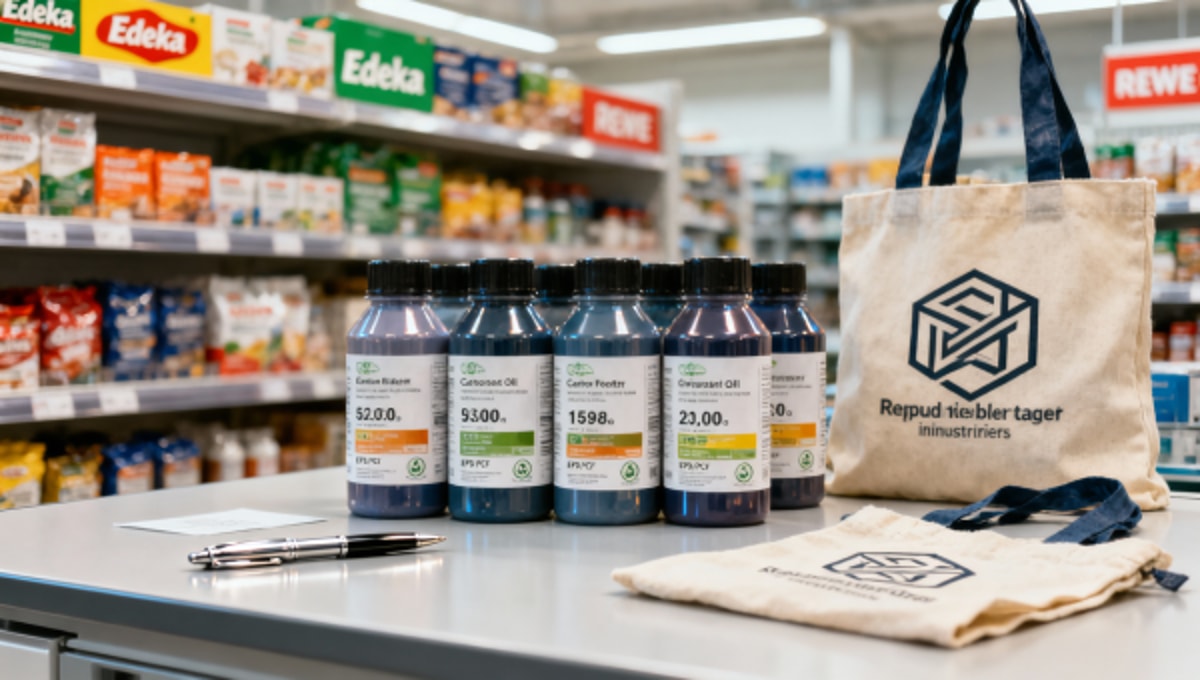
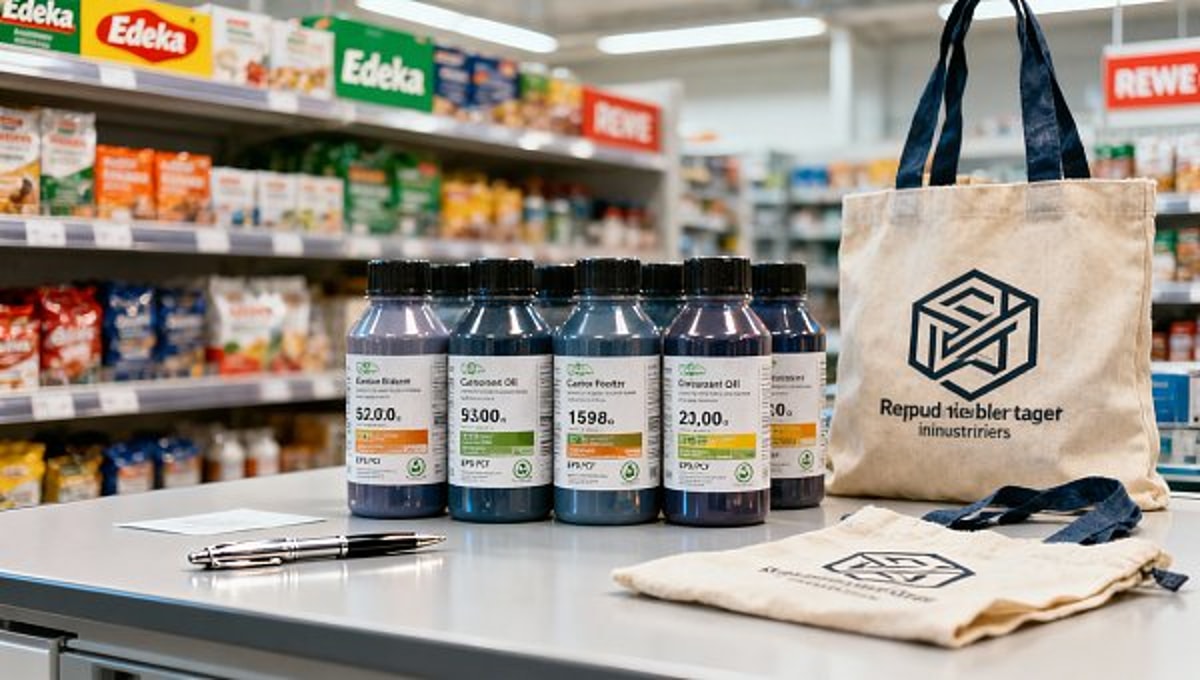
On April 29, 2026, Germany’s Federal Environment Agency (UBA) and the German Retail Association (HDE) launched a mandatory carbon labeling pilot for corporate and seasonal gifts — specifically targeting the inks used in branded promotional items. This initiative directly affects exporters, ODM manufacturers, ink suppliers, and retailers supplying to major German supermarkets in Berlin, Hamburg, and Munich. It signals an early operational test of product-level lifecycle carbon accountability beyond conventional packaging or electronics sectors.
Event Overview
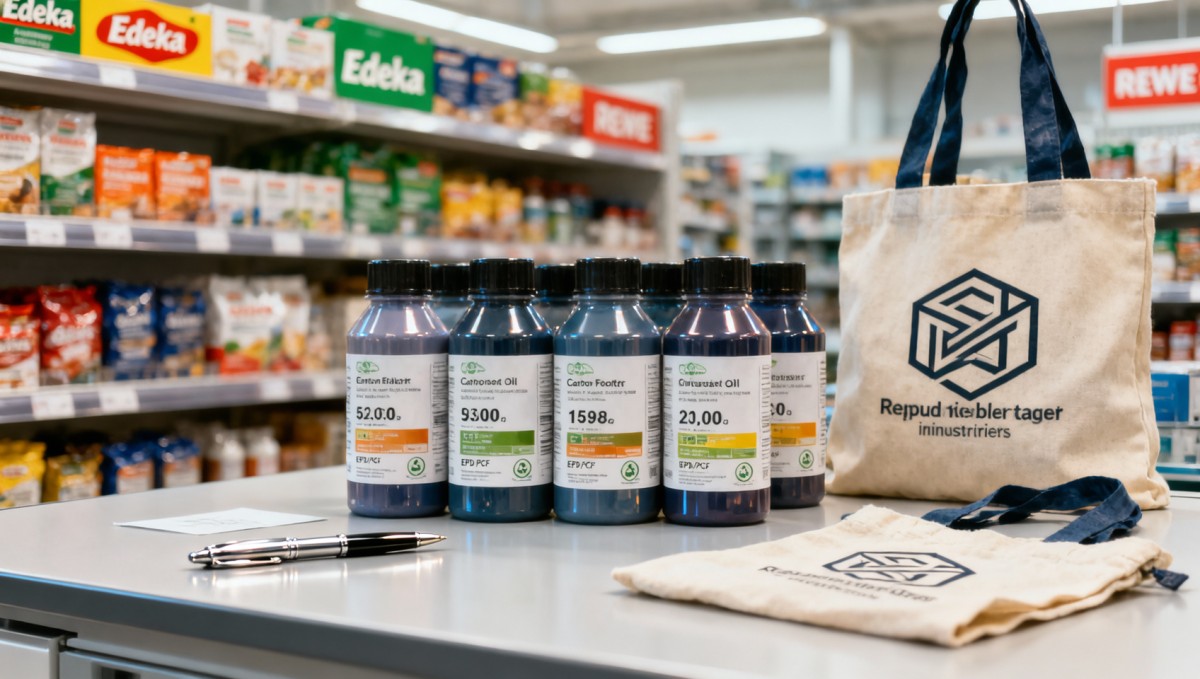
On April 29, 2026, the German Federal Environment Agency (UBA), in collaboration with the German Retail Association (HDE), officially initiated the Corporate & Seasonal Gifts Carbon Labeling Pilot Program. The pilot applies to custom-branded promotional items — including reusable shopping bags, metal pens, and canvas tote bags — sold through large supermarkets in Berlin, Hamburg, and Munich. Starting July 2026, all such items must display a verified carbon footprint label for the ink used, calculated across its full life cycle: raw material extraction, solvent emissions, and curing energy consumption. Verification must follow either Environmental Product Declaration (EPD) or Product Carbon Footprint (PCF) methodology. Chinese ODM manufacturers are required to provide their ink suppliers’ Life Cycle Assessment (LCA) reports to comply.
Industries Affected
Direct Exporters & ODM Manufacturers
ODM firms — particularly those based in China and supplying branded corporate gifts to German retailers — face direct compliance obligations. Since UBA requires ink-specific LCA documentation from the supplier tier, ODMs must now manage traceability upstream, not just final product conformity. Non-compliant items will be barred from shelf placement in pilot regions as of July 2026.
Ink Suppliers & Raw Material Providers
Ink formulators and pigment/solvent suppliers are now de facto data providers under this policy. Their LCA reports — previously optional or used internally — become contractual deliverables. The requirement to cover raw material extraction and solvent volatility adds methodological specificity not always reflected in generic EPDs.
Contract Printers & Decoration Service Providers
Firms applying logos via screen printing, pad printing, or digital decoration must verify ink origin and ensure alignment between applied ink batches and declared PCF/EPD data. Batch-level traceability — rather than facility- or brand-level averages — becomes operationally relevant.
Retailers & Brand Owners Sourcing Promotional Items
German retailers participating in the pilot (e.g., Edeka, REWE, and Metro affiliates in the three cities) bear commercial responsibility for shelf-ready compliance. They are expected to audit supplier documentation pre-shipment and may enforce contractual penalties for missing or non-verifiable ink footprint labels.
What Stakeholders Should Monitor and Do Now
Track official guidance on verification pathways
UBA and HDE have not yet published detailed technical criteria for acceptable LCA boundaries, allocation rules, or third-party verification requirements. Companies should monitor UBA’s dedicated pilot webpage and HDE’s compliance bulletins for updates before July 2026.
Identify high-risk SKUs and ink types by market channel
Not all corporate gifts are equally exposed: items sold via supermarket promotions in the three pilot cities — especially those using solvent-based inks or UV-cured coatings — carry higher immediate risk. Firms should map current SKUs against these criteria and prioritize documentation for affected lines.
Distinguish between policy signal and enforceable requirement
This is a time-bound pilot, not national legislation. Its scope is limited to specific geographies, retail channels, and ink use cases. While indicative of broader EU trends, it does not yet extend to general merchandise, B2B gifting outside retail, or non-ink components (e.g., bag fabric or pen plastic).
Prepare upstream data collection protocols now
ODMs and printers should initiate dialogue with ink suppliers to confirm LCA report availability, version date, system boundary coverage (e.g., cradle-to-gate vs. cradle-to-grave), and whether reports support batch-level attribution. Internal recordkeeping systems should accommodate ink lot numbers linked to footprint data.
Editorial Perspective / Industry Observation
Observably, this pilot represents one of the first regulatory interventions targeting carbon disclosure at the *component-material level* within the promotional products sector — not the finished item, but the ink layer applied to it. Analysis shows it functions less as an immediate compliance burden and more as a structured stress test of supply chain transparency capacity. From an industry perspective, it highlights how sustainability regulation is shifting downstream: from brand-level commitments to tier-2 material verification. Current evidence suggests it is best understood as a procedural signal — testing feasibility, stakeholder readiness, and data infrastructure — rather than a fully scaled mandate. Continued observation is warranted on whether results inform future revisions to the EU’s Ecodesign for Sustainable Products Regulation (ESPR) or national labeling schemes.
Overall, this initiative underscores a narrowing window for reactive compliance in export-oriented manufacturing. Its significance lies not in scale, but in precision: mandating carbon accountability for a narrowly defined input, in a specific sales context, with clear enforcement timing. For stakeholders, the most rational interpretation is not alarm, but calibration — aligning data governance, supplier engagement, and documentation practices with emerging expectations for material-level environmental intelligence.
Source: Official announcements from the German Federal Environment Agency (UBA) and the German Retail Association (HDE), dated April 29, 2026. Note: Implementation details — including accepted LCA standards, verification bodies, and potential expansion beyond the pilot phase — remain subject to ongoing clarification and are listed here as pending observation.
Related Intelligence
 Beauty DevicesMay 01, 20262026 Foshan Tanzhou Auto Industry Expo Spring Edition2026 Foshan Tanzhou Auto Industry Expo Spring Edition features the debut 'Beauty Devices & Smart Cabin' zone—driving cross-industry innovation and global sourcing opportunities.
 Electronic & RC ToysMay 01, 2026RC Toy Orders Shift to South China, Lead Time Cuts to 6 WeeksRC toy orders shift to South China with 6-week lead times—key for importers, OEMs & logistics firms. Discover ICTA-QMS certified factories in Shenzhen/Dongguan now driving speed and reliability.
 STEM & Educational ToysMay 01, 2026CPSC Tightens Battery Compartment Standards for STEM ToysCPSC Tightens Battery Compartment Standards for STEM Toys: New 30 N bite-force test mandatory for U.S. market access starting July 1, 2026—act now to avoid shipment delays.
 Infant Feeding & CareMay 01, 2026RCEP ASEAN Adds Fast Track for Infant Feeding ProductsRCEP ASEAN fast tracks infant feeding products—baby bottles, breast pumps & warmers—with NMPA Class II filing. Save 11 days on customs clearance in ASEAN markets.
 Smart Pet DevicesMay 01, 2026Japan METI Expands Smart Pet Device PSE White List: Chinese Self-Cleaning Litter Boxes Gain Priority ReviewJapan METI expands PSE white list for smart pet devices—Chinese self-cleaning litter boxes now qualify for priority PSE review, cutting certification to 12 days.
 Corporate & Seasonal GiftsMay 01, 2026Germany’s UBA Launches Mandatory Carbon Labeling for Corporate Gift InksGermany’s UBA mandates carbon labeling for corporate gift inks—key for exporters, ODMs & ink suppliers. Act now to comply by July 2026.
 Fitness EquipmentMay 01, 2026THE Alliance Cuts Shanghai–LA Capacity: Fitness Equipment Shipment Delays to 8–10 WeeksFitness equipment shipment delays hit 8–10 weeks as THE Alliance cuts Shanghai–LA capacity by 32%. Act now to secure slots, revise ETAs & optimize FOB planning.
 Camping & WaterMay 01, 2026Vietnam Suspends Camping & Water Import Licenses Effective Apr 30, 2026Vietnam suspends Camping & Water import licenses from Apr 30, 2026—IP6X + ASTM B117 testing now mandatory. Act now to avoid shipment delays!
 Cosmetics & PkgMay 01, 2026SASO Updates Cosmetics Packaging Rules for Plant Extracts in Saudi ArabiaSASO cosmetics packaging rules updated: Plant extract cosmetics now require EN 13130 migration & ISO 11341 photostability testing—mandatory for Saudi market access after Aug 1, 2026.
") Skincare OEMMay 01, 2026FDA Adds New Code for Plant Stem Cell Extracts (PCSC-2026)FDA's new PCSC-2026 code for plant stem cell extracts reshapes U.S. cosmetic compliance—key for OEMs, exporters & suppliers. Act now!
Skincare OEMMay 01, 2026FDA Adds New Code for Plant Stem Cell Extracts (PCSC-2026)FDA's new PCSC-2026 code for plant stem cell extracts reshapes U.S. cosmetic compliance—key for OEMs, exporters & suppliers. Act now! Cosmetics & PkgMay 01, 2026Vegan Makeup Wholesale in 2026: What Brands Are Prioritizing NowVegan makeup wholesale in 2026 is driven by compliance, transparency, and private-label agility. See what brands prioritize now and how buyers choose smarter suppliers.
 Skincare OEMMay 01, 2026Organic Face Serum OEM: What Makes Certification and Claims More Complex Than They LookOrganic face serum OEM is more complex than it seems. Explore certification, claims, traceability, and cross-border compliance risks to choose credible partners and launch with confidence.
 Skincare OEMMay 01, 2026Anti Aging Cream Wholesale: How to Judge Formula Value Without Chasing TrendsAnti aging cream wholesale buyers: learn how to judge real formula value through stability, compliance, ingredient logic, and travel-ready performance for smarter sourcing.