THE Alliance Cuts Shanghai–LA Capacity: Fitness Equipment Shipment Delays to 8–10 Weeks
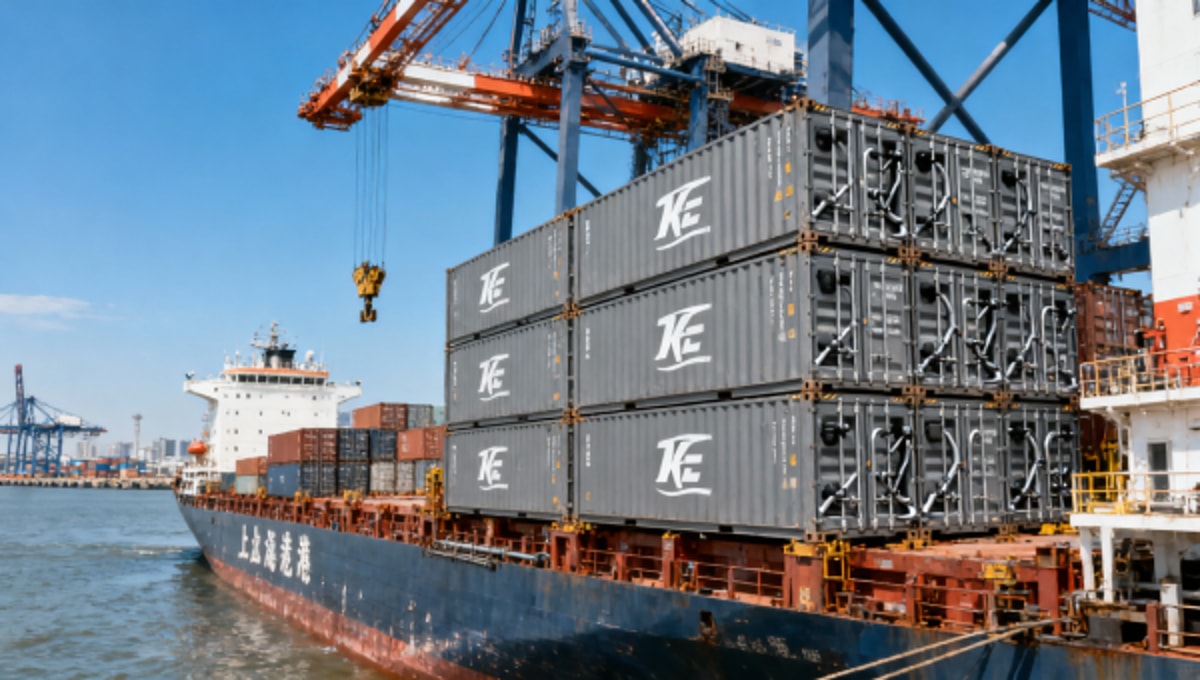
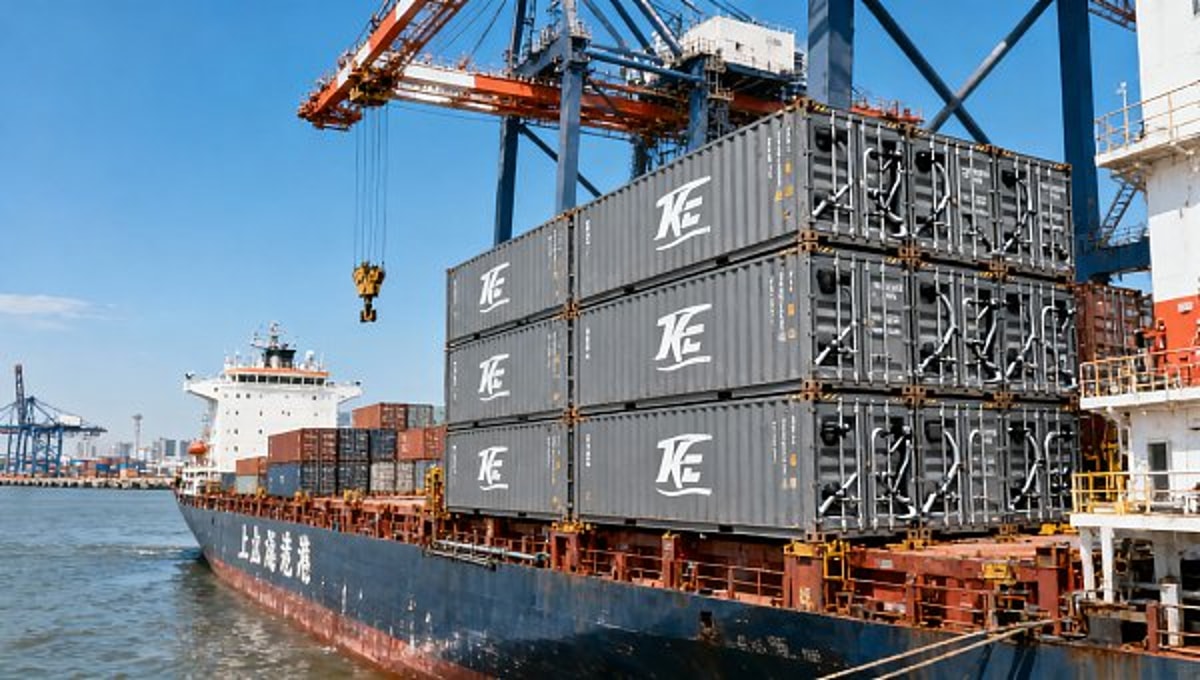
On April 30, 2026, THE Alliance announced a further 32% reduction in container slot allocations on the Shanghai–Los Angeles/Long Beach (LGB) route, citing persistent West Coast port congestion and insufficient empty container return rates. This development directly impacts exporters of large-volume, space-intensive goods—particularly fitness equipment—and signals tightening capacity for key U.S.-bound trade lanes. Companies engaged in cross-Pacific export logistics, OEM manufacturing, and branded fitness product distribution should monitor this closely.
Event Overview
On April 30, 2026, THE Alliance issued a May 2026 vessel capacity adjustment notice, confirming a 32% reduction in allocated TEU slots on services from Shanghai Port to Los Angeles/Long Beach (LGB). The alliance attributed the cut to ongoing congestion at U.S. West Coast ports and low empty container repositioning efficiency. As a result, new FOB orders for fitness equipment now face standard lead times of 8–10 weeks; several carriers have suspended firm full-container-load (FCL) pricing for shipments with loading dates after May 15, 2026.
Impact on Specific Industry Segments
Direct Exporters (FOB Sellers)
Fitness equipment exporters—especially those shipping assembled treadmills, ellipticals, or multi-station gyms—are most affected due to high cubic volume, strict stowage requirements, and limited alternative routing options. The delay directly extends order-to-delivery cycles, compresses margin visibility, and increases working capital pressure as inventory remains tied up longer pre-shipment.
Contract Manufacturers & OEMs
OEMs producing fitness gear for international brands face cascading schedule pressure. With ocean lead times extended and carrier booking windows narrowing, production planning must now accommodate longer buffer periods before shipment. Missed vessel cutoffs may trigger penalty clauses or customer service escalations if not proactively communicated.
Distribution & Brand Importers (U.S.-Based)
U.S. importers and brand distributors relying on consistent Shanghai-origin replenishment will experience inventory gaps, especially for seasonal or promotional SKUs. Reduced slot availability also limits flexibility in adjusting order sizes or timing mid-cycle, increasing reliance on air freight or inland warehousing buffers where feasible.
Freight Forwarders & NVOCCs
Forwarders handling fitness equipment cargo report rising client inquiries about alternate ports (e.g., Oakland, Seattle), transshipment options, or consolidated LCL solutions. However, these alternatives carry higher cost, longer transit times, or added handling risks—particularly for heavy, fragile units—making them suboptimal substitutes for direct Shanghai–LGB FCL service.
What Relevant Businesses Should Monitor and Do Now
Track official capacity updates from THE Alliance and partner carriers
Monitor weekly service advisories and blank sailing announcements—not just from THE Alliance but also from Ocean Network Express (ONE), Hapag-Lloyd, and Yang Ming, as they jointly operate the alliance’s Shanghai–LGB services. Slot allocation changes often precede broader network adjustments.
Assess exposure by shipment window and product category
Identify all open orders scheduled for loading between May 15 and July 2026, particularly those involving fully assembled, non-knocked-down (non-KD) fitness equipment. Prioritize communication with buyers on revised ETAs and evaluate whether partial KD configurations could reduce cube demand and improve booking success.
Review contractual terms around force majeure and delivery timelines
Re-examine Incoterms® (especially FOB Shanghai) and commercial contracts for clauses covering port delays, carrier capacity constraints, or “beyond reasonable control” events. Document all carrier notifications and booking rejections to support potential timeline renegotiations or insurance claims.
Pre-position documentation and secure early booking slots
For confirmed May–June shipments, submit booking requests and required documents (e.g., packing lists, BL instructions) at least 10 days prior to vessel cutoff—not the standard 5–7 days—to maximize slot assignment priority. Avoid last-minute changes that may trigger automatic cancellation under tightened carrier policies.
Editorial Observation / Industry Insight
Observably, this capacity cut is less a short-term operational correction and more a structural signal: it reflects sustained imbalance in container flow dynamics—not just port congestion, but systemic inefficiencies in empty repositioning across the Transpacific lane. Analysis shows that fitness equipment is acting as a leading indicator here—not because demand has surged, but because its physical characteristics (high cube, low density, strict lashing) make it disproportionately vulnerable to capacity compression. From an industry perspective, this event is better understood as an early stress test of supply chain resilience for volume-sensitive, non-perishable exports—not yet a full-blown crisis, but one requiring proactive recalibration of planning horizons and contingency protocols.
Conclusion: This capacity reduction does not indicate a broad-based collapse in Transpacific shipping, but rather highlights growing friction points in specific port–commodity pairings. For fitness equipment exporters and their partners, the immediate implication is not unpredictability—but predictability with longer lead times. It is more accurate to interpret this as a shift toward ‘extended normal’ rather than a temporary disruption. Stakeholders are advised to treat the 8–10 week FOB lead time not as an exception, but as the new baseline for planning through Q3 2026.
Source: Official capacity advisory issued by THE Alliance on April 30, 2026. Note: Ongoing monitoring is recommended for subsequent adjustments to May and June 2026 sailings, as well as any coordinated responses from competing alliances (e.g., 2M, Ocean Alliance).
Related Intelligence
 Beauty DevicesMay 01, 20262026 Foshan Tanzhou Auto Industry Expo Spring Edition2026 Foshan Tanzhou Auto Industry Expo Spring Edition features the debut 'Beauty Devices & Smart Cabin' zone—driving cross-industry innovation and global sourcing opportunities.
 Electronic & RC ToysMay 01, 2026RC Toy Orders Shift to South China, Lead Time Cuts to 6 WeeksRC toy orders shift to South China with 6-week lead times—key for importers, OEMs & logistics firms. Discover ICTA-QMS certified factories in Shenzhen/Dongguan now driving speed and reliability.
 STEM & Educational ToysMay 01, 2026CPSC Tightens Battery Compartment Standards for STEM ToysCPSC Tightens Battery Compartment Standards for STEM Toys: New 30 N bite-force test mandatory for U.S. market access starting July 1, 2026—act now to avoid shipment delays.
 Infant Feeding & CareMay 01, 2026RCEP ASEAN Adds Fast Track for Infant Feeding ProductsRCEP ASEAN fast tracks infant feeding products—baby bottles, breast pumps & warmers—with NMPA Class II filing. Save 11 days on customs clearance in ASEAN markets.
 Smart Pet DevicesMay 01, 2026Japan METI Expands Smart Pet Device PSE White List: Chinese Self-Cleaning Litter Boxes Gain Priority ReviewJapan METI expands PSE white list for smart pet devices—Chinese self-cleaning litter boxes now qualify for priority PSE review, cutting certification to 12 days.
 Corporate & Seasonal GiftsMay 01, 2026Germany’s UBA Launches Mandatory Carbon Labeling for Corporate Gift InksGermany’s UBA mandates carbon labeling for corporate gift inks—key for exporters, ODMs & ink suppliers. Act now to comply by July 2026.
 Fitness EquipmentMay 01, 2026THE Alliance Cuts Shanghai–LA Capacity: Fitness Equipment Shipment Delays to 8–10 WeeksFitness equipment shipment delays hit 8–10 weeks as THE Alliance cuts Shanghai–LA capacity by 32%. Act now to secure slots, revise ETAs & optimize FOB planning.
 Camping & WaterMay 01, 2026Vietnam Suspends Camping & Water Import Licenses Effective Apr 30, 2026Vietnam suspends Camping & Water import licenses from Apr 30, 2026—IP6X + ASTM B117 testing now mandatory. Act now to avoid shipment delays!
 Cosmetics & PkgMay 01, 2026SASO Updates Cosmetics Packaging Rules for Plant Extracts in Saudi ArabiaSASO cosmetics packaging rules updated: Plant extract cosmetics now require EN 13130 migration & ISO 11341 photostability testing—mandatory for Saudi market access after Aug 1, 2026.
") Skincare OEMMay 01, 2026FDA Adds New Code for Plant Stem Cell Extracts (PCSC-2026)FDA's new PCSC-2026 code for plant stem cell extracts reshapes U.S. cosmetic compliance—key for OEMs, exporters & suppliers. Act now!
Skincare OEMMay 01, 2026FDA Adds New Code for Plant Stem Cell Extracts (PCSC-2026)FDA's new PCSC-2026 code for plant stem cell extracts reshapes U.S. cosmetic compliance—key for OEMs, exporters & suppliers. Act now! Cosmetics & PkgMay 01, 2026Vegan Makeup Wholesale in 2026: What Brands Are Prioritizing NowVegan makeup wholesale in 2026 is driven by compliance, transparency, and private-label agility. See what brands prioritize now and how buyers choose smarter suppliers.
 Skincare OEMMay 01, 2026Organic Face Serum OEM: What Makes Certification and Claims More Complex Than They LookOrganic face serum OEM is more complex than it seems. Explore certification, claims, traceability, and cross-border compliance risks to choose credible partners and launch with confidence.
 Skincare OEMMay 01, 2026Anti Aging Cream Wholesale: How to Judge Formula Value Without Chasing TrendsAnti aging cream wholesale buyers: learn how to judge real formula value through stability, compliance, ingredient logic, and travel-ready performance for smarter sourcing.