2026 World Intelligent Industry Expo Opens in Tianjin
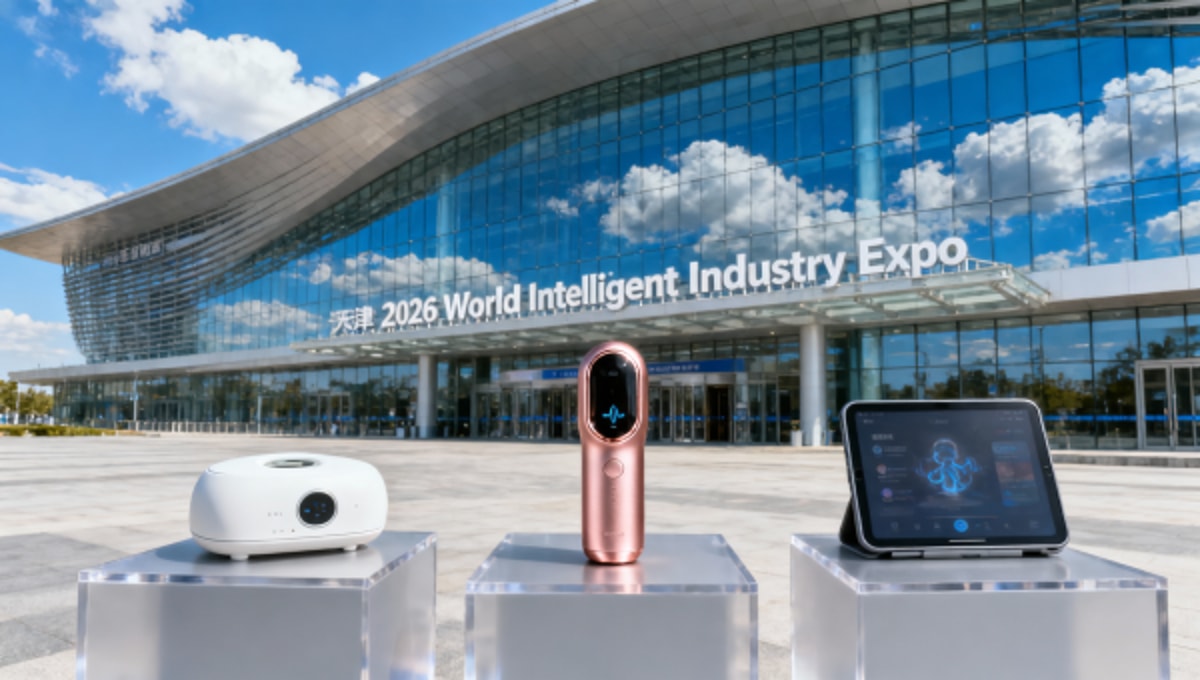
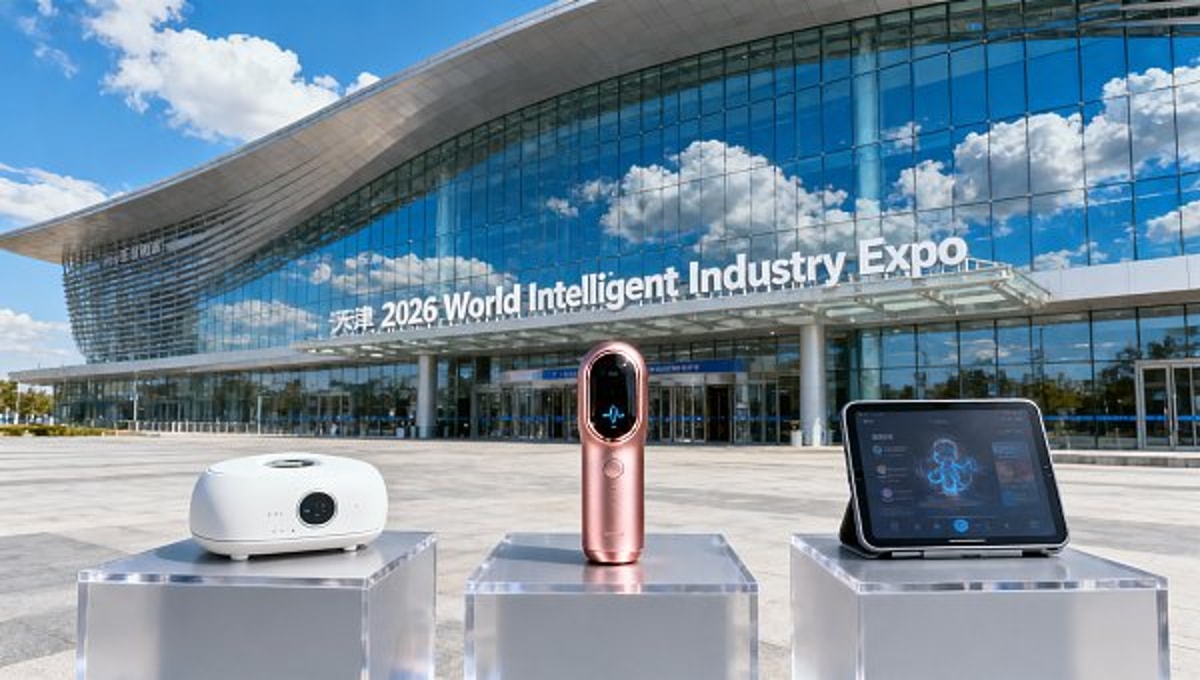
On May 28–31, 2026, the World Intelligent Industry Expo (WIIE) will open at the Tianjin National Convention and Exhibition Center — with confirmed inclusion of intelligent personal care and infant monitoring devices in its Smart Terminals exhibition zone. This event signals growing institutional recognition of AI-enabled health and wellness hardware, particularly for consumer-facing segments including maternal-infant care and aesthetic technology. Stakeholders in smart hardware trade, regulatory compliance, and cross-border health tech distribution should monitor developments closely.
Event Overview
The 2026 World Intelligent Industry Expo has been approved by China’s Ministry of Commerce and is scheduled to take place from May 28 to 31, 2026, at the Tianjin National Convention and Exhibition Center. The expo will spotlight six thematic areas: core AI technologies, intelligent connected vehicles, embodied AI, intelligent manufacturing, low-altitude economy, and smart terminals. Within the Smart Terminals zone, explicitly listed products include wearable beauty devices, smart infant respiratory/sleep monitors, and AI-driven child developmental assessment tools. The first two days will feature dedicated B2B compliance matchmaking sessions between Chinese and German, and Chinese and Japanese enterprises focused on intelligent health products.
Industries Affected
Direct Trade Enterprises
Companies engaged in cross-border export or import of smart personal care and infant monitoring devices face heightened relevance: the expo’s designated Sino-German and Sino-Japanese compliance对接 sessions indicate an emerging focus on harmonizing technical standards, labeling requirements, and clinical validation expectations across markets. Impact manifests in tighter pre-market alignment needs — especially where CE, PSE, or NMPA classification pathways differ.
Manufacturing Enterprises (OEM/ODM)
Firms producing wearable beauty instruments or infant physiological monitors may experience increased demand for documentation-ready designs — e.g., embedded data logging compliant with EU MDR Annex III or China’s Class II medical device cybersecurity guidelines. The expo’s emphasis on ‘AI-driven’ functionality suggests rising scrutiny of algorithm transparency and training-data provenance, not just hardware certification.
Supply Chain & Regulatory Support Providers
Third-party testing labs, regulatory consultants, and logistics partners specializing in health-tech clearance are likely to see elevated inquiry volume ahead of the event. The explicit mention of ‘compliance对接’ implies demand for bilingual, jurisdiction-specific support — particularly for dual-certification strategies covering both Chinese and European/Japanese frameworks.
What Relevant Enterprises or Practitioners Should Focus On
Monitor official updates on expo-organized compliance frameworks
The Sino-German and Sino-Japanese sessions are currently described as matchmaking events — not formal regulatory harmonization mechanisms. Analysis shows these should be viewed as early signal channels, not binding policy outcomes. Track whether post-event white papers or joint working group announcements follow.
Validate classification status for targeted product categories
Wearable beauty devices and infant sleep monitors occupy regulatory gray zones in multiple jurisdictions — ranging from general consumer electronics to Class I/II medical devices. Current more appropriate action is to reconfirm intended regulatory pathway (e.g., FDA 510(k), MDR Class IIa, NMPA Category II) for each model before engaging in expo-related outreach.
Prepare technical documentation aligned with AI-specific guidance
AI-driven child developmental assessment tools fall under evolving AI Act and NMPA AI medical software rules. Observation shows that documentation readiness — including algorithm validation reports, bias testing summaries, and human oversight protocols — is becoming a prerequisite for serious B2B engagement at such forums.
Assess supply chain resilience for dual-market launch scenarios
If targeting both Chinese and Japanese/German markets, consider whether current production lines support parallel labeling, packaging language variants, and firmware localization — not just hardware specs. The expo’s structure suggests buyers increasingly expect ‘regulatory-ready’ inventory, not just prototype-level demonstrations.
Editorial Perspective / Industry Observation
Observably, this expo inclusion reflects institutional acknowledgment that intelligent personal care and infant monitoring are transitioning from niche consumer gadgets toward regulated health-support categories. It is not yet a regulatory milestone, but rather a coordination signal — indicating where standard-setting activity may concentrate over the next 12–18 months. From an industry perspective, the emphasis on bilateral compliance sessions suggests fragmented regulatory landscapes remain a bottleneck; multilateral harmonization remains distant. What matters now is not whether rules have changed, but whether companies have begun aligning internal processes with the direction of convergence.
Conclusion
This announcement does not introduce new regulations or market access changes — but it does confirm that intelligent personal care and infant monitoring devices are entering structured, high-visibility policy and trade dialogues. For stakeholders, the current value lies in preparation: verifying classification, upgrading documentation practices, and treating compliance not as a post-launch checkpoint, but as a continuous operational requirement. It is better understood as an early-stage coordination marker than as an immediate commercial trigger.
Information Sources
Main source: Official announcement of the 2026 World Intelligent Industry Expo, approved by China’s Ministry of Commerce. No additional background data, statistics, or third-party commentary were used. Areas requiring ongoing observation include post-expo publication of bilateral compliance guidelines and any formalized working group outcomes from the Sino-German and Sino-Japanese sessions.
Related Intelligence
 Beauty DevicesMay 03, 2026WeChat Pay QR Code Cross-Border Payments Live in 5 ASEAN CountriesWeChat Pay QR Code Cross-Border Payments go live in 5 ASEAN countries—enabling T+1 RMB settlements for Beauty, Pet & Travel exporters. Boost cash flow, cut FX loss by up to 1.8%.
 Infant Feeding & CareMay 03, 2026RCEP ASEAN Fast Track for Infant Feeding Products Effective May 2026RCEP ASEAN Fast Track for Infant Feeding Products launches May 2026—speed up exports of bottles, breast pumps & food processors with NMPA Class II cert.
 Cosmetics & PkgMay 03, 2026SASO Cosmetic Packaging新规:Plant Extracts Require Migration & Light Stability Tests from May 2026SASO Cosmetic Packaging新规:2026年5月起,含植物提取物的化妆品包材须通过迁移性与光稳定性测试——立即获取合规指南!
 Activewear OEMMay 03, 20262026 China Bike Expo Opens May 5 in Shanghai: Smart Cycling Gear Draws EU/US Buyers2026 China Bike Expo in Shanghai: Smart cycling gear — GPS helmets, solar jerseys, LED backpacks — draws EU/US buyers seeking EN 1078 & REACH compliance.
 STEM & Educational ToysMay 03, 202638th Firefly Comic Con Guangzhou: RC & STEM Toy Procurement SurgesRC & STEM toy procurement surges at 38th Firefly Comic Con Guangzhou — discover key ASTM F963-23 compliance, localization, and education-whitelist insights for global exporters.
 Fitness EquipmentMay 03, 2026Shanghai–Los Angeles Container Capacity Cut: Fitness & Smart Nursery Gear Shipments Delayed to 9–11 WeeksShanghai–Los Angeles container capacity cut delays fitness & smart nursery gear shipments to 9–11 weeks—act now to secure Q3 inventory and avoid stockouts.
 Beauty DevicesMay 03, 2026Foshan Tanzhou Auto Show 2026 Hosts Cross-Border Health Tech SourcingFoshan Tanzhou Auto Show 2026 launches Cross-Border Health Technology Sourcing—key for beauty device & fitness equipment exporters targeting Indonesia, Thailand, Vietnam.
 Skincare OEMMay 03, 2026New Hazardous Chemicals Safety Law Effective May 2026New Hazardous Chemicals Safety Law (effective May 2026) mandates UN number & GHS label e-filing for cosmetics raw materials and packaging — act now to avoid export delays.
 Beauty DevicesMay 03, 20262026 World Intelligent Industry Expo Opens in Tianjin2026 World Intelligent Industry Expo in Tianjin highlights AI-powered smart terminals — including infant monitors & wearable beauty devices. Key event for global health-tech compliance & market access.
 Beauty DevicesMay 03, 20262026 Global Trade & Investment Summit in Beijing, May 182026 Global Trade & Investment Summit in Beijing (May 18) unveils the Beijing Initiative—boosting AI-integrated smart hardware exports, standards alignment & supply chain resilience for intelligent terminals, beauty devices, infant monitors and pet tech.
 Cosmetics & PkgMay 02, 2026OEM Cosmetics Manufacturer: 7 Questions to Ask Before Product Development StartsOEM cosmetics manufacturer selection starts with the right questions. Learn 7 smart checks to reduce compliance, cost, and launch risks before product development begins.
 Beauty DevicesMay 02, 2026How to Evaluate a Gua Sha Tools Manufacturer for Consistent QualityGua sha tools manufacturer selection starts with quality control. Learn how to assess materials, certifications, production consistency, and supply reliability with confidence.
 Beauty DevicesMay 02, 2026Body Contouring Machine: When the Higher Price Is Actually JustifiedBody contouring machine buyers in travel services: learn when a higher price is justified through ROI, compliance, uptime, and premium package revenue potential.