New Hazardous Chemicals Safety Law Effective May 2026

Starting 1 May 2026, the revised Hazardous Chemicals Safety Law introduces new UN number declaration and GHS label electronic filing requirements for cosmetics raw materials and certain packaging exports — directly affecting skincare OEM manufacturers, cosmetics formulators, and packaging suppliers serving international markets.
Event Overview
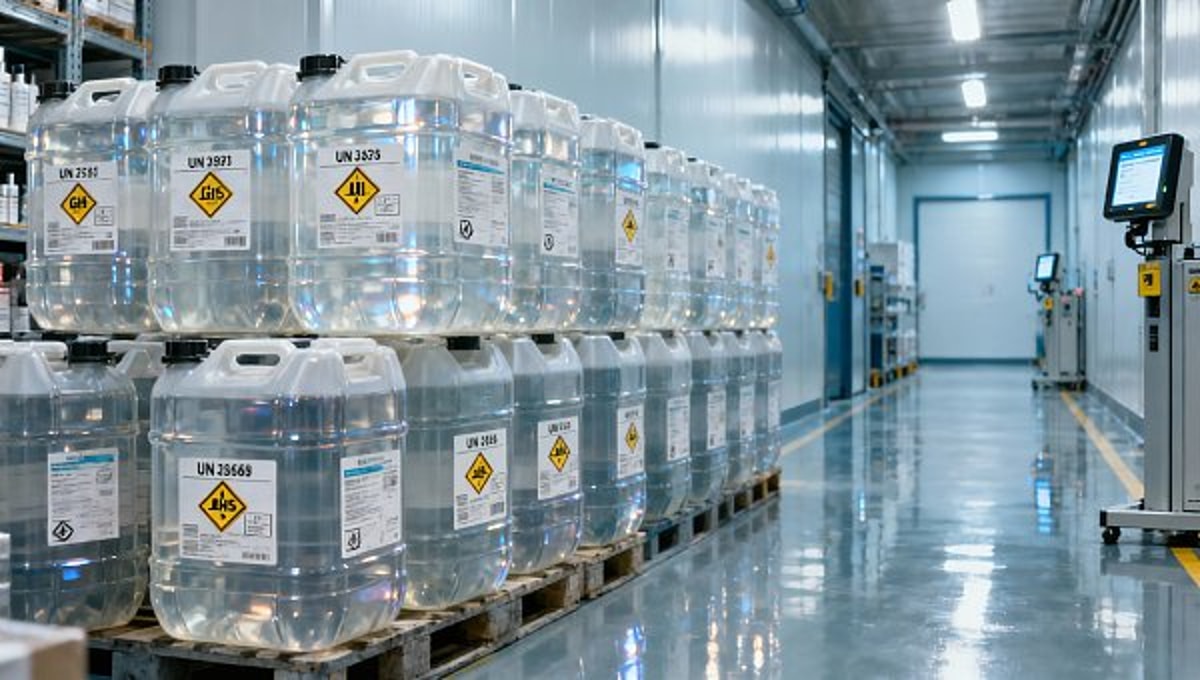
The revised Hazardous Chemicals Safety Law enters into force on 1 May 2026. As confirmed in official announcements, it mandates that export declarations for cosmetic OEM semi-finished products (e.g., essence bases), active ingredient solutions (e.g., containing alcohol, propylene glycol, or salicylic acid), and specific composite packaging (e.g., vacuum bottles printed with UV-curable ink) must include a valid UN number and electronic submission of GHS-compliant labels. This requirement applies at the point of customs clearance for export shipments.
Industries Affected by Segment
Direct Exporters (Skincare OEM & Cosmetics & Pkg Suppliers)
These enterprises are directly responsible for customs declaration and regulatory compliance. Because their exported goods now fall under the scope of hazardous chemical regulation — based on ingredient composition or packaging material properties — they must verify UN classification, prepare GHS documentation, and integrate this into export workflows. Impact includes extended pre-shipment lead time, added third-party verification costs, and potential delays if documentation is rejected at port.
Raw Material Procurement Entities
Suppliers sourcing ingredients such as denatured alcohol, propylene glycol, or salicylic acid — especially from non-domestic sources — must now confirm whether their supplied batches carry assigned UN numbers and accompanying safety data. Lack of traceable UN assignment may trigger retesting, relabeling, or rejection by downstream OEMs prior to formulation or export.
Contract Manufacturing & Filling Facilities
Firms producing semi-finished cosmetics (e.g., serums, toners, base creams) must assess whether final formulations meet the law’s threshold criteria for hazardous classification. Even low-concentration alcohol-based products may require UN assignment depending on flash point and formulation stability. Impact manifests in reformulation review cycles, updated SDS/GHS label generation, and internal training on hazardous chemical handling protocols.
Packaging Importers & Composite Packaging Producers
Manufacturers supplying vacuum bottles, airless pumps, or other containers featuring UV-curable inks or adhesives must determine whether finished packaging units qualify as hazardous articles under transport regulations. If so, UN numbers must be assigned at the unit level — not just for ink components — and reflected in labeling and export records. This adds complexity to packaging specification management and supplier qualification.
Key Points for Enterprises and Practitioners to Monitor and Act On
Track official guidance on UN assignment thresholds and exemptions
Analysis shows that the law does not specify universal concentration cutoffs or flash point benchmarks for cosmetics; instead, enforcement will rely on case-by-case UN classification per UN Model Regulations. Enterprises should monitor updates from China’s Ministry of Emergency Management (MEM) and General Administration of Customs (GACC) regarding interpretation notes or implementation bulletins.
Identify high-risk SKUs by formulation and packaging type
Observably, alcohol-based toners (>24% v/v), propylene glycol–rich emulsions, salicylic acid solutions (>5%), and UV-ink–printed rigid packaging are most likely to trigger mandatory UN assignment. Companies should conduct preliminary hazard screening across top 20 export SKUs and flag those requiring formal classification reports.
Distinguish between regulatory signal and operational readiness
From an industry perspective, the law’s effective date (1 May 2026) sets a hard deadline — but classification services, UN number issuance, and GHS label validation are not yet standardized across Chinese testing institutions. Enterprises should treat Q4 2025 as a critical window to engage accredited labs and align internal labeling systems, rather than assuming process maturity by launch date.
Update supplier communication protocols and documentation templates
Current best practice involves revising purchase orders and quality agreements to require UN numbers and GHS-ready SDS from raw material and packaging vendors — effective no later than January 2026. Internal SOPs for export documentation should also be revised to include UN number fields and GHS label version control.
Editorial Perspective / Industry Observation
This regulatory update is better understood as a structural shift in how cosmetic supply chains interface with hazardous goods frameworks — not merely a procedural adjustment. Observably, it reflects growing alignment between China’s domestic chemical safety regime and international transport standards (UN TDG, ADR, IMDG). Analysis suggests the law functions less as an isolated compliance hurdle and more as an early indicator of broader regulatory convergence, particularly for dual-use ingredients and functional packaging. The fact that EU importers have already initiated secondary supplier audits signals that downstream markets anticipate upstream accountability — making proactive alignment strategically advantageous beyond minimum legal compliance.
Conclusion
The revised Hazardous Chemicals Safety Law marks a formal integration of select cosmetic inputs and packaging into China’s hazardous chemical oversight system. Its significance lies not in immediate disruption, but in the recalibration it demands across procurement, formulation, labeling, and export logistics functions. For affected stakeholders, the current phase is best approached as a documentation and classification readiness period — where clarity on scope, early engagement with authorities and labs, and cross-functional alignment matter more than reactive compliance.
Information Sources
Main source: Official text and implementation notice issued by China’s State Council and Ministry of Emergency Management, published April 2025. Pending clarification: Final list of exempted cosmetic ingredients and packaging categories; timeline for national UN number assignment platform rollout; recognition status of foreign GHS label certifications. These items remain under observation.
Related Intelligence
 Beauty DevicesMay 03, 2026WeChat Pay QR Code Cross-Border Payments Live in 5 ASEAN CountriesWeChat Pay QR Code Cross-Border Payments go live in 5 ASEAN countries—enabling T+1 RMB settlements for Beauty, Pet & Travel exporters. Boost cash flow, cut FX loss by up to 1.8%.
 Infant Feeding & CareMay 03, 2026RCEP ASEAN Fast Track for Infant Feeding Products Effective May 2026RCEP ASEAN Fast Track for Infant Feeding Products launches May 2026—speed up exports of bottles, breast pumps & food processors with NMPA Class II cert.
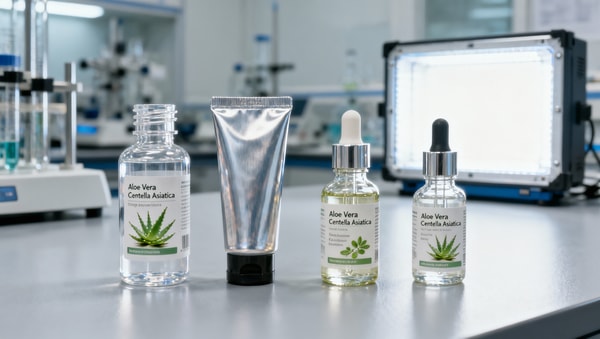
 Cosmetics & PkgMay 03, 2026SASO Cosmetic Packaging新规:Plant Extracts Require Migration & Light Stability Tests from May 2026SASO Cosmetic Packaging新规:2026年5月起,含植物提取物的化妆品包材须通过迁移性与光稳定性测试——立即获取合规指南!
 Activewear OEMMay 03, 20262026 China Bike Expo Opens May 5 in Shanghai: Smart Cycling Gear Draws EU/US Buyers2026 China Bike Expo in Shanghai: Smart cycling gear — GPS helmets, solar jerseys, LED backpacks — draws EU/US buyers seeking EN 1078 & REACH compliance.
 STEM & Educational ToysMay 03, 202638th Firefly Comic Con Guangzhou: RC & STEM Toy Procurement SurgesRC & STEM toy procurement surges at 38th Firefly Comic Con Guangzhou — discover key ASTM F963-23 compliance, localization, and education-whitelist insights for global exporters.
 Fitness EquipmentMay 03, 2026Shanghai–Los Angeles Container Capacity Cut: Fitness & Smart Nursery Gear Shipments Delayed to 9–11 WeeksShanghai–Los Angeles container capacity cut delays fitness & smart nursery gear shipments to 9–11 weeks—act now to secure Q3 inventory and avoid stockouts.
 Beauty DevicesMay 03, 2026Foshan Tanzhou Auto Show 2026 Hosts Cross-Border Health Tech SourcingFoshan Tanzhou Auto Show 2026 launches Cross-Border Health Technology Sourcing—key for beauty device & fitness equipment exporters targeting Indonesia, Thailand, Vietnam.
 Skincare OEMMay 03, 2026New Hazardous Chemicals Safety Law Effective May 2026New Hazardous Chemicals Safety Law (effective May 2026) mandates UN number & GHS label e-filing for cosmetics raw materials and packaging — act now to avoid export delays.
 Beauty DevicesMay 03, 20262026 World Intelligent Industry Expo Opens in Tianjin2026 World Intelligent Industry Expo in Tianjin highlights AI-powered smart terminals — including infant monitors & wearable beauty devices. Key event for global health-tech compliance & market access.
 Beauty DevicesMay 03, 20262026 Global Trade & Investment Summit in Beijing, May 182026 Global Trade & Investment Summit in Beijing (May 18) unveils the Beijing Initiative—boosting AI-integrated smart hardware exports, standards alignment & supply chain resilience for intelligent terminals, beauty devices, infant monitors and pet tech.
 Cosmetics & PkgMay 02, 2026OEM Cosmetics Manufacturer: 7 Questions to Ask Before Product Development StartsOEM cosmetics manufacturer selection starts with the right questions. Learn 7 smart checks to reduce compliance, cost, and launch risks before product development begins.
 Beauty DevicesMay 02, 2026How to Evaluate a Gua Sha Tools Manufacturer for Consistent QualityGua sha tools manufacturer selection starts with quality control. Learn how to assess materials, certifications, production consistency, and supply reliability with confidence.
 Beauty DevicesMay 02, 2026Body Contouring Machine: When the Higher Price Is Actually JustifiedBody contouring machine buyers in travel services: learn when a higher price is justified through ROI, compliance, uptime, and premium package revenue potential.