2026 China Bike Expo Opens May 5 in Shanghai: Smart Cycling Gear Draws EU/US Buyers
The 2026 China International Bicycle Exhibition opens on May 5, 2026 in Shanghai — marking a pivotal moment for manufacturers and suppliers of smart cycling activewear, particularly those serving European and U.S. importers focused on safety, sustainability, and regulatory compliance.
Event Overview
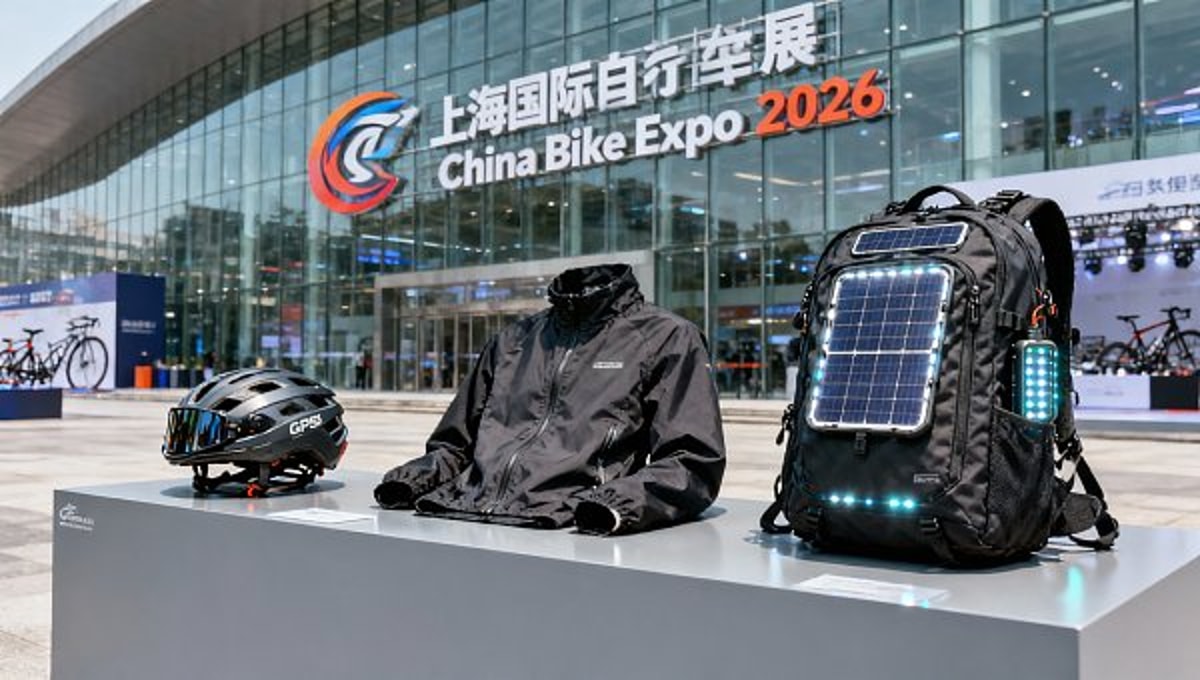
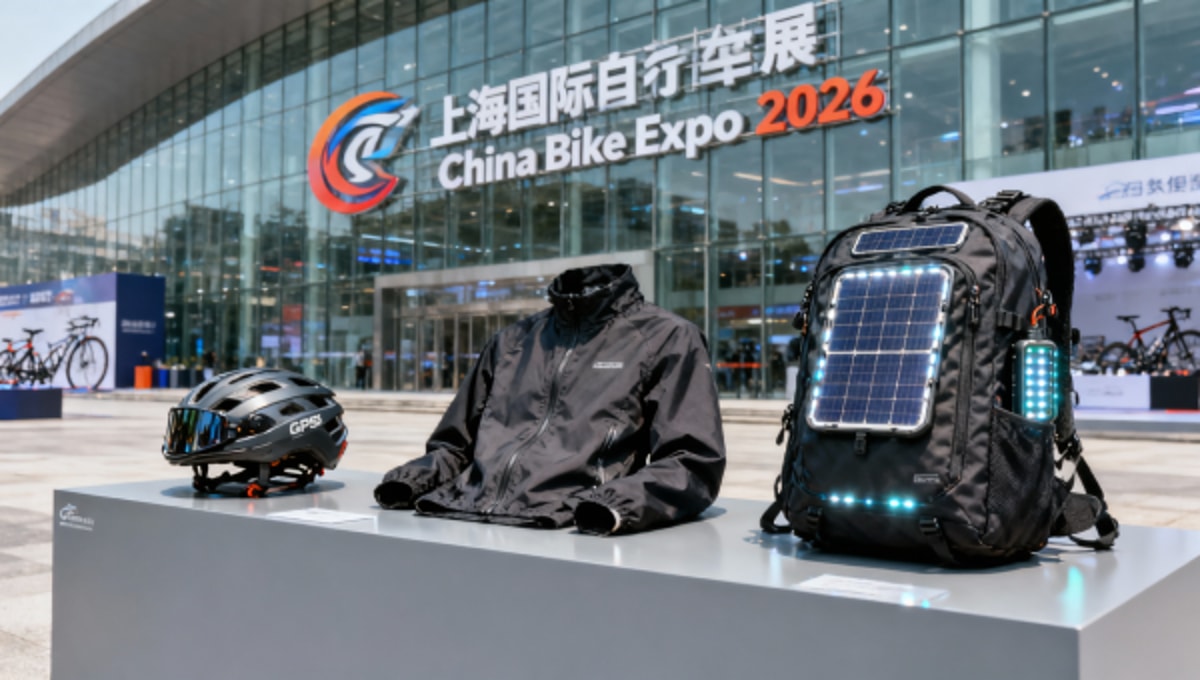
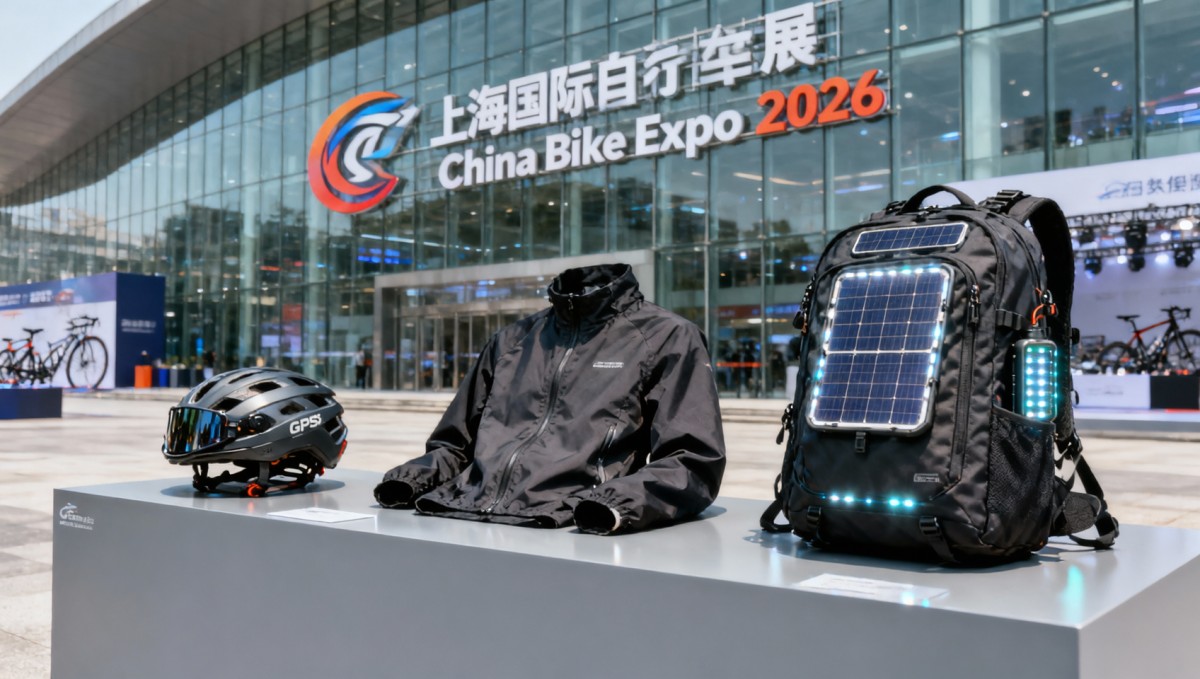
The 2026 China International Bicycle Exhibition will be held from May 5 to 8, 2026 in Shanghai. Confirmed pre-show procurement interest has been reported from buyers in Germany, the Netherlands, and the United States — specifically targeting OEM smart cycling apparel including fall-detection GPS-enabled helmets, solar-charging cycling jerseys, and LED-integrated cycling backpacks. EU-based buyers have explicitly required concurrent submission of EN 1078:2012+A1:2012 helmet certification and REACH SVHC 247-substance declarations.
Industries Affected
Direct Export-Oriented Trading Companies
These firms face immediate pressure to align product documentation with EU regulatory expectations. The explicit request for EN 1078:2012+A1:2012 certification and REACH SVHC 247 declarations signals that compliance readiness — not just product availability — is now a prerequisite for order conversion.
Raw Material & Component Suppliers
Suppliers of helmet shell polymers, photovoltaic textile laminates, or LED circuit modules may see revised specification requests. For example, helmet material vendors may need to provide traceable polymer batch data supporting EN 1078 mechanical testing; solar fabric suppliers may be asked to verify cadmium- or lead-free soldering processes per REACH Annex XVII.
OEM/ODM Manufacturing Facilities
Factories producing smart headwear or integrated apparel must verify whether their current quality management systems cover third-party test reporting workflows (e.g., issuing certified lab reports aligned with EN standards) and chemical inventory tracking for SVHC disclosure. Production lines handling both electronics and textiles may require updated hazard communication protocols.
Supply Chain & Compliance Service Providers
Testing labs, certification bodies, and regulatory consultants specializing in EU mobility PPE or textile chemical compliance are likely to experience increased inquiry volume ahead of the show. Demand may rise for bundled services covering EN 1078 test coordination, REACH declaration drafting, and bilingual technical file preparation.
What Relevant Companies or Practitioners Should Focus On Now
Verify certification status and documentation readiness for priority items
Manufacturers should confirm whether existing helmet certifications meet EN 1078:2012+A1:2012 (not earlier versions), and whether REACH SVHC declarations reflect the full 247-substance list effective as of the latest ECHA update — not legacy 205- or 224-item versions.
Map supply chain touchpoints requiring SVHC traceability
For solar-integrated garments or LED backpacks, identify all subcomponents — including battery cells, PCB substrates, wiring insulation, and reflective trims — where SVHC substances may originate. Document supplier-level declarations for each tier, not just final assembly.
Prepare dual-format technical files for EU and U.S. buyers
While EU buyers emphasize EN and REACH, U.S. importers may request ASTM F2032 or CPSC guidance references. Preparing parallel documentation frameworks — e.g., one aligned with EN 1078 + REACH, another referencing ASTM + CPSIA — avoids last-minute rework during negotiations.
Confirm lab capacity and lead times for pre-show testing
Independent testing labs often face scheduling bottlenecks in April ahead of May trade shows. Companies planning to present new smart gear at the exhibition should book EN 1078 impact/retention testing and REACH screening no later than early April 2026.
Editorial Perspective / Industry Observation
Observably, this procurement pattern reflects a structural shift: EU bicycle importers are treating smart activewear not as novelty accessories but as regulated personal protective equipment (PPE) falling under harmonized standards. Analysis shows that the emphasis on EN 1078 — historically applied to mass-market bike helmets — now extends to connected variants with embedded electronics, implying functional safety requirements now intersect with digital reliability expectations. This is less a short-term sourcing trend and more an early signal of converging regulatory pathways across mobility wearables. From an industry perspective, it suggests that certification infrastructure built for traditional PPE may need adaptation for hybrid electro-textile products — a development requiring sustained monitoring beyond the exhibition cycle.
Conclusion
This development does not yet indicate a formal regulatory change, nor does it confirm broad market adoption of smart cycling apparel. It does, however, signal growing buyer-side discipline around compliance integration — especially for products crossing safety, electronics, and textile domains. Currently, it is more accurately understood as a procurement-level alignment exercise, not a policy mandate. Stakeholders are advised to treat it as a leading indicator of near-term operational expectations, not a retrospective compliance trigger.
Source Attribution
Main source: Official announcement of the 2026 China International Bicycle Exhibition (Shanghai), including confirmed buyer requirements published via exhibition organizer channels. Note: Specific buyer names and order volumes remain unconfirmed and are subject to ongoing verification.
Related Intelligence
 Beauty DevicesMay 03, 2026WeChat Pay QR Code Cross-Border Payments Live in 5 ASEAN CountriesWeChat Pay QR Code Cross-Border Payments go live in 5 ASEAN countries—enabling T+1 RMB settlements for Beauty, Pet & Travel exporters. Boost cash flow, cut FX loss by up to 1.8%.
 Infant Feeding & CareMay 03, 2026RCEP ASEAN Fast Track for Infant Feeding Products Effective May 2026RCEP ASEAN Fast Track for Infant Feeding Products launches May 2026—speed up exports of bottles, breast pumps & food processors with NMPA Class II cert.
 Cosmetics & PkgMay 03, 2026SASO Cosmetic Packaging新规:Plant Extracts Require Migration & Light Stability Tests from May 2026SASO Cosmetic Packaging新规:2026年5月起,含植物提取物的化妆品包材须通过迁移性与光稳定性测试——立即获取合规指南!
 Activewear OEMMay 03, 20262026 China Bike Expo Opens May 5 in Shanghai: Smart Cycling Gear Draws EU/US Buyers2026 China Bike Expo in Shanghai: Smart cycling gear — GPS helmets, solar jerseys, LED backpacks — draws EU/US buyers seeking EN 1078 & REACH compliance.
 STEM & Educational ToysMay 03, 202638th Firefly Comic Con Guangzhou: RC & STEM Toy Procurement SurgesRC & STEM toy procurement surges at 38th Firefly Comic Con Guangzhou — discover key ASTM F963-23 compliance, localization, and education-whitelist insights for global exporters.
 Fitness EquipmentMay 03, 2026Shanghai–Los Angeles Container Capacity Cut: Fitness & Smart Nursery Gear Shipments Delayed to 9–11 WeeksShanghai–Los Angeles container capacity cut delays fitness & smart nursery gear shipments to 9–11 weeks—act now to secure Q3 inventory and avoid stockouts.
 Beauty DevicesMay 03, 2026Foshan Tanzhou Auto Show 2026 Hosts Cross-Border Health Tech SourcingFoshan Tanzhou Auto Show 2026 launches Cross-Border Health Technology Sourcing—key for beauty device & fitness equipment exporters targeting Indonesia, Thailand, Vietnam.
 Skincare OEMMay 03, 2026New Hazardous Chemicals Safety Law Effective May 2026New Hazardous Chemicals Safety Law (effective May 2026) mandates UN number & GHS label e-filing for cosmetics raw materials and packaging — act now to avoid export delays.
 Beauty DevicesMay 03, 20262026 World Intelligent Industry Expo Opens in Tianjin2026 World Intelligent Industry Expo in Tianjin highlights AI-powered smart terminals — including infant monitors & wearable beauty devices. Key event for global health-tech compliance & market access.
 Beauty DevicesMay 03, 20262026 Global Trade & Investment Summit in Beijing, May 182026 Global Trade & Investment Summit in Beijing (May 18) unveils the Beijing Initiative—boosting AI-integrated smart hardware exports, standards alignment & supply chain resilience for intelligent terminals, beauty devices, infant monitors and pet tech.
 Cosmetics & PkgMay 02, 2026OEM Cosmetics Manufacturer: 7 Questions to Ask Before Product Development StartsOEM cosmetics manufacturer selection starts with the right questions. Learn 7 smart checks to reduce compliance, cost, and launch risks before product development begins.
 Beauty DevicesMay 02, 2026How to Evaluate a Gua Sha Tools Manufacturer for Consistent QualityGua sha tools manufacturer selection starts with quality control. Learn how to assess materials, certifications, production consistency, and supply reliability with confidence.
 Beauty DevicesMay 02, 2026Body Contouring Machine: When the Higher Price Is Actually JustifiedBody contouring machine buyers in travel services: learn when a higher price is justified through ROI, compliance, uptime, and premium package revenue potential.