Global Li-ion Recycling Rate Hits 62%: Beauty Device Battery BOM Cost Down 9%
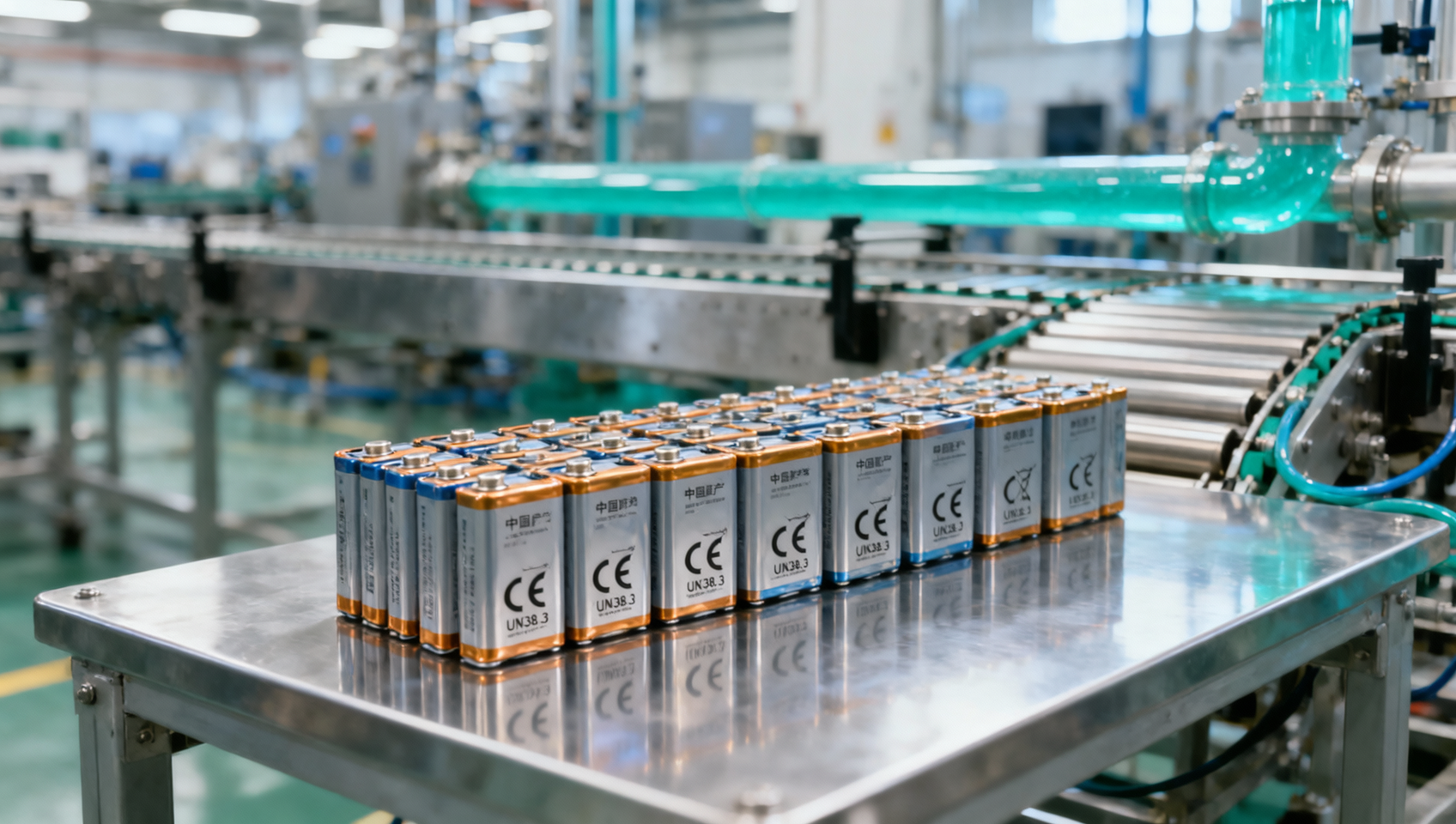
On April 22, 2026, the CIBF2026 Organizing Committee reported that the global recycling rate for power and consumer lithium-ion batteries reached 62% in Q1 2026 — a milestone with tangible implications for battery-dependent consumer electronics, particularly China-made beauty devices. This development directly affects cost structures, lead times, and supply chain responsiveness for ODM manufacturers serving fast-reacting Western markets.
Event Overview
According to data released by the CIBF2026 Organizing Committee on April 22, 2026, the global combined recycling rate for automotive动力电池 and consumer lithium-ion batteries stood at 62% in Q1 2026. This elevated recovery level has stabilized the supply of recycled cobalt and nickel materials, contributing to a 9% year-on-year reduction in the bill-of-materials (BOM) cost for polymer lithium batteries used in Chinese beauty devices. Concurrently, the average delivery lead time for mainstream battery models shortened from 8 weeks to 6 weeks.
Impact on Specific Industry Segments
ODM/EMS Providers for Beauty Devices
These manufacturers rely heavily on predictable battery cost and availability to quote competitively for fast-turnaround orders from U.S. and EU brands. The 9% BOM cost reduction and 2-week lead time compression directly improve gross margin visibility and order acceptance capacity — especially for seasonal or trend-driven SKUs.
Battery Component Sourcing & Procurement Teams
Procurement functions face revised cost benchmarks and tighter timing windows. With recycled cobalt/nickel now more consistently available, long-term contracts may shift toward volume-based pricing over fixed-price terms. Lead time compression also reduces buffer stock requirements but increases sensitivity to upstream material volatility.
Supply Chain Logistics & Planning Units
A 6-week standard battery delivery cycle tightens the window for demand forecasting, customs clearance, and final assembly scheduling. Planning teams must now align battery intake more closely with marketing launch calendars and retail replenishment cycles — particularly for DTC brands with short product lifecycles.
Export-Oriented Battery Module Assemblers
For firms supplying battery modules (not just cells) to beauty device OEMs, the recycling-driven cost and lead-time improvements create both opportunity and pressure: opportunity to add value via integrated testing or certification; pressure to maintain quality consistency amid faster throughput and thinner margins.
What Relevant Enterprises or Practitioners Should Focus On Now
Monitor official updates on recycled material certification standards
Current recycling rate data reflects volume recovery — not necessarily compliance with evolving EU Battery Regulation (2027) or U.S. IRA-sourced material thresholds. Companies should track upcoming technical guidelines from CIBF and China’s Ministry of Ecology and Environment regarding traceability and purity reporting for recycled cobalt/nickel.
Validate cost pass-through timing with Tier-2 battery suppliers
The 9% BOM cost reduction is an aggregate figure. Actual savings realization depends on contract terms, minimum order quantities, and whether suppliers are passing through recycled material cost benefits immediately or phasing them in. Procurement teams should request line-item cost breakdowns for Q2 2026 quotes.
Reassess safety stock levels for polymer LiPo cells
With lead time reduced to 6 weeks, traditional 8–10 week safety buffers may now be excessive — increasing working capital strain without commensurate risk mitigation. A dynamic safety stock model, calibrated to historical demand variance and supplier on-time delivery performance, is advisable before Q3 2026 planning cycles.
Prepare documentation for fast-response order qualification
The improved lead time enhances competitiveness for quick-turn orders — but only if supporting documentation (e.g., UN38.3 reports, CE/UKCA declarations, RoHS compliance) can be delivered within the same timeline. Cross-functional alignment between engineering, QA, and export compliance teams is critical to avoid bottlenecks.
Editor Perspective / Industry Observation
This data point is best understood as an early-stage operational signal — not yet a structural shift. Analysis来看, the 62% recycling rate reflects progress in collection infrastructure and hydrometallurgical processing scale, but it does not yet indicate full circularity: primary material inputs remain essential for high-purity cathode synthesis. From industry角度看, the BOM cost and lead time improvements are real and actionable — yet they are contingent on sustained recycling throughput and stable policy support. Current更值得关注的是 whether this Q1 rate proves repeatable across Q2–Q3, especially amid seasonal fluctuations in EV battery return volumes.
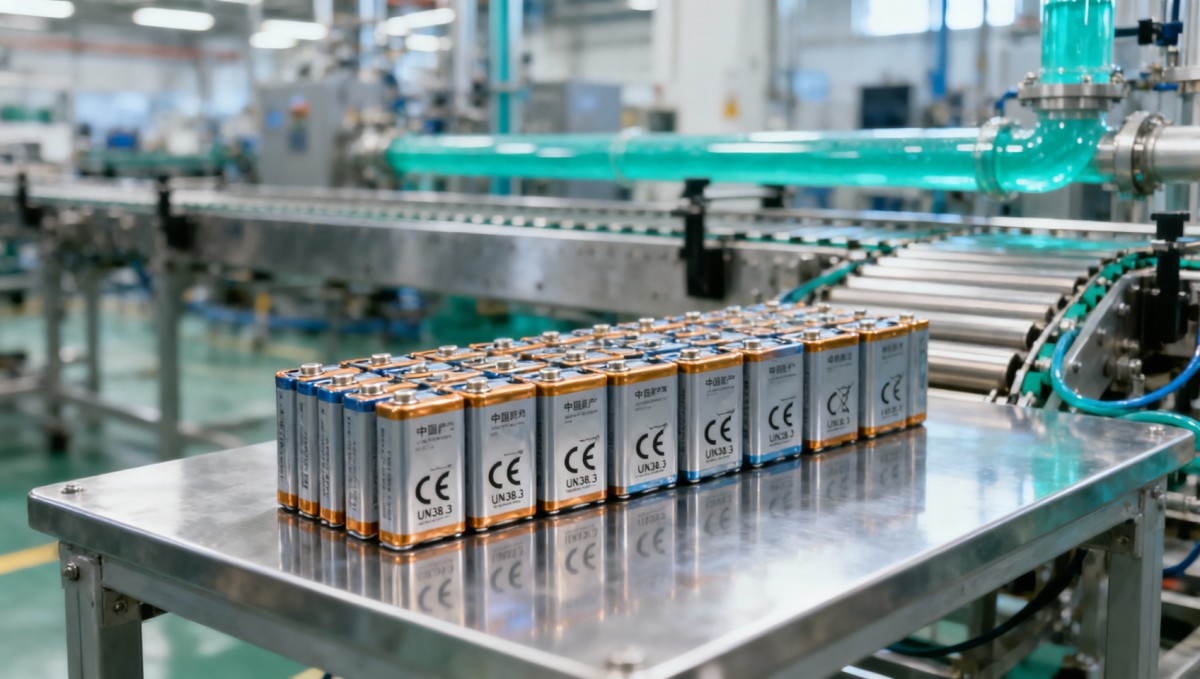
Overall, the event signals growing maturity in the secondary lithium supply chain — one that is beginning to deliver measurable downstream benefits beyond environmental compliance. However, its impact remains concentrated in specific applications (e.g., low-voltage, low-energy-density consumer batteries) rather than across all lithium-ion use cases.
Conclusion: This development marks a measurable step toward cost and lead time optimization in a narrow but commercially significant segment — beauty device batteries. It is neither a broad industry inflection nor a transient anomaly, but rather a concrete indicator of how recycling scale can translate into competitive advantage for agile, export-oriented manufacturers — provided they act on the timing and cost implications deliberately and operationally.
Source: CIBF2026 Organizing Committee (data released April 22, 2026). Note: Ongoing observation is recommended for Q2 2026 recycling rate confirmation and associated material price indices.
Related Intelligence
 Cosmetics & PkgApr 23, 2026SAMR Penalizes 7 Platforms for 'Ghost Food Delivery' PackagingSAMR penalizes 7 platforms for 'ghost food delivery' packaging—critical for infant pouch & supplement container suppliers. Verify your Food-Related Product Production License now to secure global orders.
 Cosmetics & PkgApr 23, 2026EU EPR Dual-Country Registration Effective for Cosmetics PackagingEU EPR Dual-Country Registration is now mandatory for cosmetics packaging in France & Germany—register with ADEME and EAR by April 2026 to avoid delisting.
 Cosmetics & PkgApr 23, 2026US FDA Enforces VCRP Registration for Cosmetic Packaging as of Apr 22, 2026US FDA mandates VCRP registration for cosmetic packaging as of Apr 22, 2026 — learn how bottles, tubes & aerosol cans must comply to clear U.S. customs.
 Corporate & Seasonal GiftsApr 23, 2026TÜV Rheinland LCA Rule for Green Gift Packaging Takes Effect in EUTÜV Rheinland LCA Rule for Green Gift Packaging is now live in EU—mandatory carbon heat maps & certified LCAs required for DE/AT/NL market access. Act now!
 Beauty DevicesApr 23, 2026Global Li-ion Recycling Rate Hits 62%: Beauty Device Battery BOM Cost Down 9%Li-ion recycling rate hits 62% — beauty device battery BOM costs drop 9%. Discover how this boosts margins, cuts lead times, and strengthens global supply agility.
 Nursery Furniture & MonitorsApr 23, 2026Canton Fair Phase III: Baby Monitors Surge, EN60601-1-12 Focus in Middle EastCanton Fair Phase III: Baby monitors surge 142%—Middle East buyers prioritize EN60601-1-12:2023 compliance. Discover key implications for exporters & certifiers.
 Infant Feeding & CareApr 23, 2026JETRO Mandates Blockchain Batch Codes for Infant Silicone Feeding ProductsJETRO mandates blockchain batch codes for infant silicone feeding products—pacifiers, teething rings & spoons—to ensure traceability and market access in Japan. Act now!
 STEM & Educational ToysApr 23, 2026SASO Cuts AI Module Certification for STEM Toys to 24 HoursSASO Cuts AI Module Certification for STEM Toys to 24 Hours — Fast-track CoC for voice/image AI toys entering Saudi Arabia. Act now before summer procurement!
 Smart Pet DevicesApr 23, 2026Vietnam Enforces ISO 13485 + Vietnamese Manual for Smart Pet CollarsVietnam enforces ISO 13485 + Vietnamese manual for smart pet collars—key compliance update impacting exporters, OEMs & importers. Act now!
 Camping & WaterApr 23, 2026RCEP Camping Water Bag Tariff Cut: Indonesia Updates TPU+Aluminum SpecRCEP Camping Water Bag tariff cut + TPU+aluminum spec update in Indonesia—key implications for OEMs, material suppliers & exporters. Act now!
 Cosmetics & PkgApr 22, 2026SAMR Penalizes 7 Platforms for 'Ghost Kitchen' Packaging ViolationsSAMR penalizes 7 platforms for 'ghost kitchen' packaging violations—critical for food-grade packaging OEMs, suppliers & procurement teams. Act now.
 Camping & WaterApr 22, 2026RCEP Camping Water Bags: Indonesia Cuts Tariff, Sets TPU+Aluminum SpecRCEP Camping Water Bags: Indonesia cuts tariff to 3.4% & mandates TPU+aluminum spec—key opportunity for exporters, TPU suppliers & converters in ASEAN-China supply chains.
 Corporate & Seasonal GiftsApr 22, 2026TÜV Green Packaging LCA Threshold Effective Apr 2026TÜV Green Packaging LCA Threshold takes effect Apr 2026 — mandatory carbon heatmaps & ISO-compliant LCAs for holiday, wedding &文创 packaging. Act now to meet EU tender requirements.