Zanglong Island Semiconductor Park Land Acquisition Begins
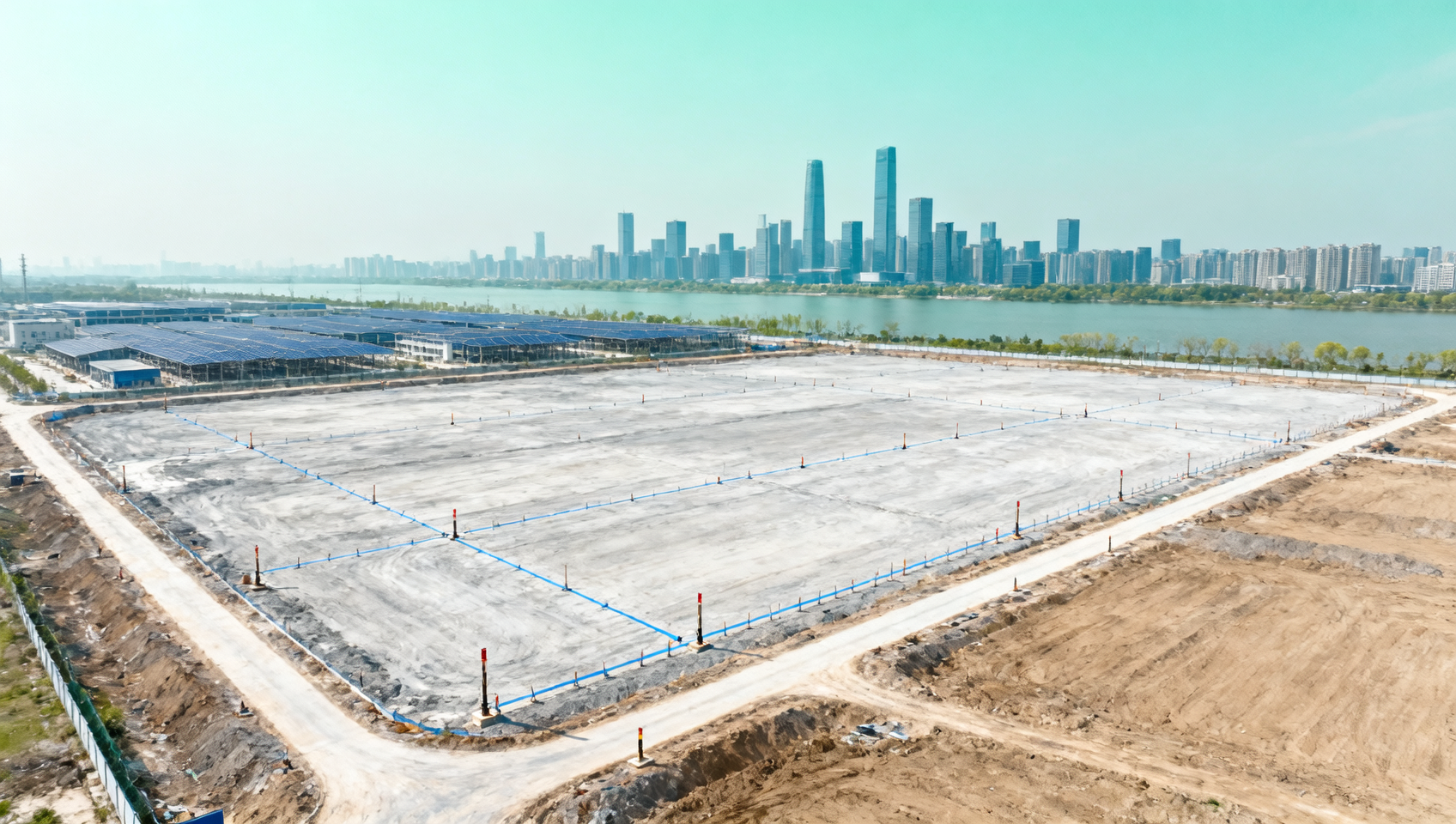
On April 15, 2026, Jiangxia District of Wuhan initiated land expropriation (approx. 461 mu / 76.8 hectares) for the Zanglong Island Semiconductor Industrial Park — a development focused on domestic substitution of automotive-grade and IoT-grade microcontroller units (MCUs) and power management ICs (PMICs). This move is particularly relevant for manufacturers of beauty devices (e.g., RF skin-treatment instruments) and smart pet devices (e.g., AI-enabled feeders), where supply stability of core controllers has long relied on imported MCUs such as STMicroelectronics’ STM32 and Infineon’s XMC series.
Event Overview
On April 15, 2026, Wuhan Jiangxia District officially commenced land expropriation procedures for the Zanglong Island Semiconductor Industrial Park, covering approximately 461 mu (about 76.8 hectares). The park is designated to produce automotive-grade and IoT-grade MCUs and PMICs, with an explicit focus on domestic substitution. According to publicly released information, full-scale production is expected to begin in 2027, supporting Chinese ODM vendors in achieving 100% localized inventory of core controllers for targeted device categories.
Industries Affected by This Development
Beauty Device OEM/ODM Manufacturers
These firms rely heavily on high-reliability, low-power MCUs for real-time control in RF-based facial devices and laser hair-removal systems. Import dependency has introduced lead-time volatility and export compliance risks — especially under tightening global export controls. The park’s output will directly address controller-level supply continuity for this segment.
Smart Pet Device Producers
Manufacturers of intelligent pet feeders, GPS trackers, and behavior-monitoring collars depend on edge-capable MCUs for local data processing and low-latency response. Current reliance on foreign-sourced chips creates bottlenecks in scaling production and adapting firmware across regional certifications. Domestic MCU availability from Zanglong Island may reduce time-to-market for new SKUs.
IoT Module Design Houses & Embedded Solution Providers
Firms integrating MCU-based subsystems into white-label hardware platforms (e.g., certified reference designs for beauty or pet verticals) face validation overhead when switching chipsets. With Zanglong Island targeting IoT-grade specifications, these providers may see accelerated compatibility testing cycles — provided documentation, SDKs, and certification support align with international standards (e.g., IEC 60601-1 for medical-grade beauty tools).
What Stakeholders Should Monitor and Act On Now
Track official technical roadmaps and qualification timelines
While land acquisition has started, no public schedule confirms wafer fabrication ramp-up, process node (e.g., 55nm vs. 40nm), or AEC-Q100 qualification status for automotive-grade variants. Stakeholders should monitor announcements from Jiangxia government portals and project consortium updates — not just construction milestones, but verified product readiness signals.
Assess current inventory buffer and dual-sourcing feasibility for STM32/XMC-dependent BOMs
ODM vendors using STM32G0/G4 or XMC1000-series MCUs in active production should evaluate whether existing contracts allow gradual transition, and whether second-source design-in is technically viable (e.g., pin compatibility, toolchain migration effort). Avoid premature redesign; instead, map critical SKUs against projected local MCU availability windows.
Distinguish between policy intent and near-term procurement impact
The 2027 target reflects planned capacity, not immediate stock availability. No public confirmation exists on initial wafer output volume, yield rates, or allocation mechanisms (e.g., priority access for local firms). Treat this as a medium-term supply resilience initiative — not a short-term sourcing alternative.
Engage with local industry associations on joint validation initiatives
Early engagement with groups such as the China Semiconductor Industry Association (CSIA) or Wuhan Electronics Industry Promotion Center may offer access to pre-release evaluation samples or shared test labs — especially for medical-adjacent beauty devices requiring regulatory alignment.
Editorial Perspective / Industry Observation
From an industry perspective, the Zanglong Island land acquisition is best understood as a structural signal — not yet an operational shift. It reflects growing institutional commitment to securing upstream control in mission-critical embedded segments, but actual supply chain impact remains contingent on fab yield, IP licensing terms, and ecosystem maturity (e.g., IDE support, peripheral drivers, security certification). Analysis来看, this development matters less as a near-term replacement path and more as a risk-mitigation anchor: it lowers the probability of systemic disruption for exporters reliant on single-source MCUs. Observation来看, its strategic weight lies in enabling coordinated planning — e.g., aligning firmware architecture roadmaps with anticipated local silicon capabilities over the next 18–24 months.
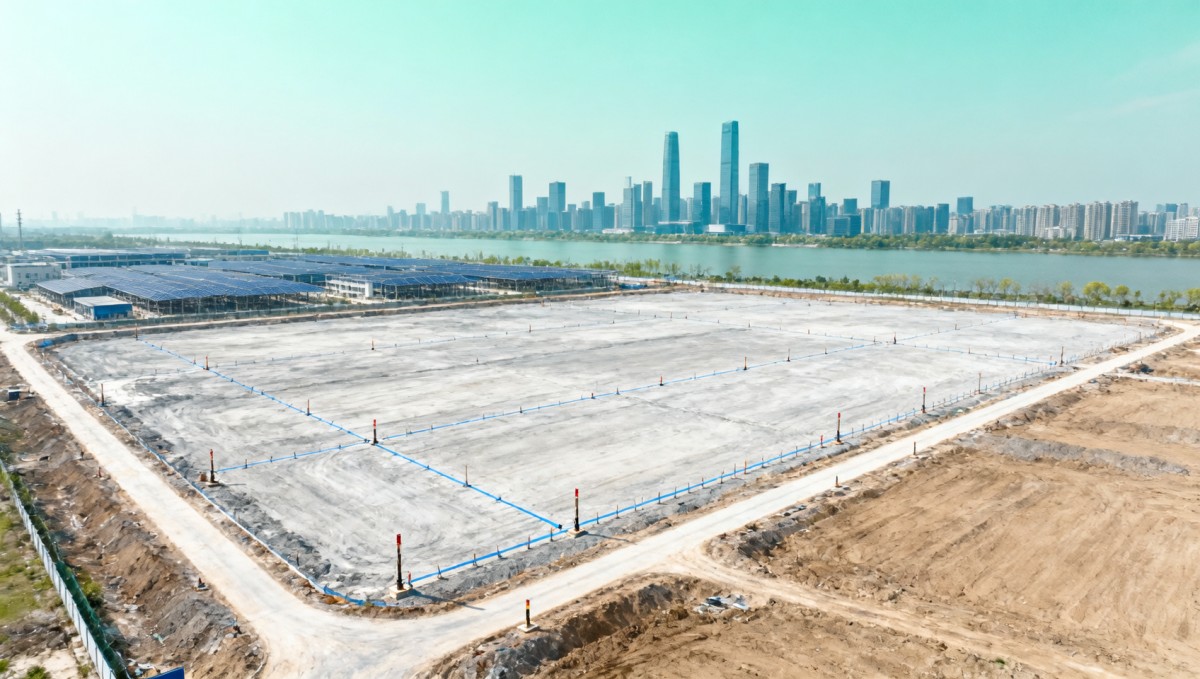
Concluding this update: the Zanglong Island Semiconductor Park land acquisition marks a formal step toward localized MCU supply for specific IoT verticals — but its value is currently procedural and preparatory. It does not eliminate import dependency today, nor does it guarantee performance parity with incumbent solutions. Instead, it introduces a credible, government-backed pathway for progressive substitution — one that requires careful monitoring, realistic timing assumptions, and deliberate integration planning. Currently, it is more appropriately interpreted as a mid-cycle resilience enabler than a near-term sourcing solution.
Source: Official land expropriation notice issued by Jiangxia District Government (Wuhan), dated April 15, 2026. Note: Wafer production timeline, process technology details, and product qualification status remain unconfirmed and require ongoing observation.
Related Intelligence
 Pet Grooming & TravelApr 16, 2026China Synthetic Rubber Price Surge Impacts TPR Footwear CostsChina synthetic rubber price surge hits TPR footwear costs—18% granule hike impacts pet travel gear & camping suppliers. Act now to secure Q2 inventory and assess TPU alternatives.
 Beauty DevicesApr 16, 2026Intel Launches World’s Thinnest GaN Chip for Beauty & Fitness DevicesIntel's world’s thinnest GaN chip—19μm, 78V, 300GHz—revolutionizes power efficiency for beauty & fitness devices. Boost EU ErP Lot 12 compliance, cut power use by 35–40%, and accelerate next-gen product launches.
 Infant Feeding & CareApr 16, 20262026 CHINASHOP Reveals Clean Label Push Driving Infant Nutrition Packaging ExportsClean label push at 2026 CHINASHOP drives infant nutrition packaging exports—FDA-compliant, BPA-free aluminum-plastic films in high demand for EU/US markets.
 Beauty DevicesApr 16, 2026Zanglong Island Semiconductor Park Land Acquisition BeginsZanglong Island Semiconductor Park land acquisition begins—key step toward domestic MCU & PMIC supply for beauty devices, smart pet tech, and IoT OEMs. Track 2027 production readiness.
 Activewear OEMApr 16, 2026Aksu Textile Capacity Ramps Up: 25-Day OEM Delivery for Cotton Babywear & ActivewearAksu textile capacity surge cuts OEM delivery to 25 days for cotton babywear & activewear—faster lead times, lower carbon shipping, ideal for NA/EU Q3 demand.
 Skincare OEMApr 16, 2026Yangsen Pharma’s Sensitive-Skin ODM Patent Approved in GuangzhouYangsen Pharma’s Sensitive-Skin ODM patent approved in Guangzhou—micro-liposomal barrier repair tech, alcohol-free & ECOCERT-compatible for EU organic skincare brands.
 STEM & Educational ToysApr 16, 2026Gaode Unveils First Quadruped Robot, Accelerating China's Embodied AI Hardware ExportGaode's first quadruped robot—powered by ABot-M0, the world’s first unified-architecture embodied AI base—accelerates China's AI hardware export to global STEM education markets.
 Beauty DevicesApr 16, 2026Lithium Carbonate Price Surge Impacts Beauty & Fitness Device BOMLithium carbonate price surge hits beauty & fitness device BOMs—12% cost rise, 14–18 week lead times. Act now to secure Q3 production capacity.
 Effective July 2026") Nursery Furniture & MonitorsApr 16, 2026CPSC Revises Infant Bed Rail Standard (16 CFR 1220) Effective July 2026CPSC revises Infant Bed Rail Standard (16 CFR 1220) effective July 2026—new dynamic testing, 5mm finger-trap limits & 120N detachment force. Act now to avoid port detention or recall.
Nursery Furniture & MonitorsApr 16, 2026CPSC Revises Infant Bed Rail Standard (16 CFR 1220) Effective July 2026CPSC revises Infant Bed Rail Standard (16 CFR 1220) effective July 2026—new dynamic testing, 5mm finger-trap limits & 120N detachment force. Act now to avoid port detention or recall. Cosmetics & PkgApr 16, 2026EU CBAM Carbon Tariff Takes Effect April 1, 2026EU CBAM carbon tariff takes effect April 1, 2026 — what it means for cosmetics packaging, baby gear & electronic toy exporters. Act now to avoid delays.
 Beauty DevicesApr 15, 2026Commercial microdermabrasion machine: what affects treatment consistency?Microdermabrasion machine commercial buying guide for tourism spas: learn what affects treatment consistency, supplier reliability, maintenance, and rollout value for high-turnover service environments.
 Beauty DevicesApr 15, 2026IPL hair removal device OEM quotes vary so much for one reasonIPL hair removal device OEM quotes vary for one key reason: manufacturing depth. Compare suppliers smarter across microdermabrasion machine commercial and beauty OEM projects.
 Cosmetics & PkgApr 15, 2026False eyelashes vendor selection often fails at sample qualityFalse eyelashes vendor selection often fails at sample quality. Learn how travel retail buyers compare suppliers, packaging, and adjacent sourcing like custom lip gloss vendor, organic face serum OEM, anti aging cream wholesale, IPL hair removal device OEM, and microdermabrasion machine commercial solutions.