ICTA: RC Toy Orders Shift to South China, Lead Time Cuts to 6 Weeks
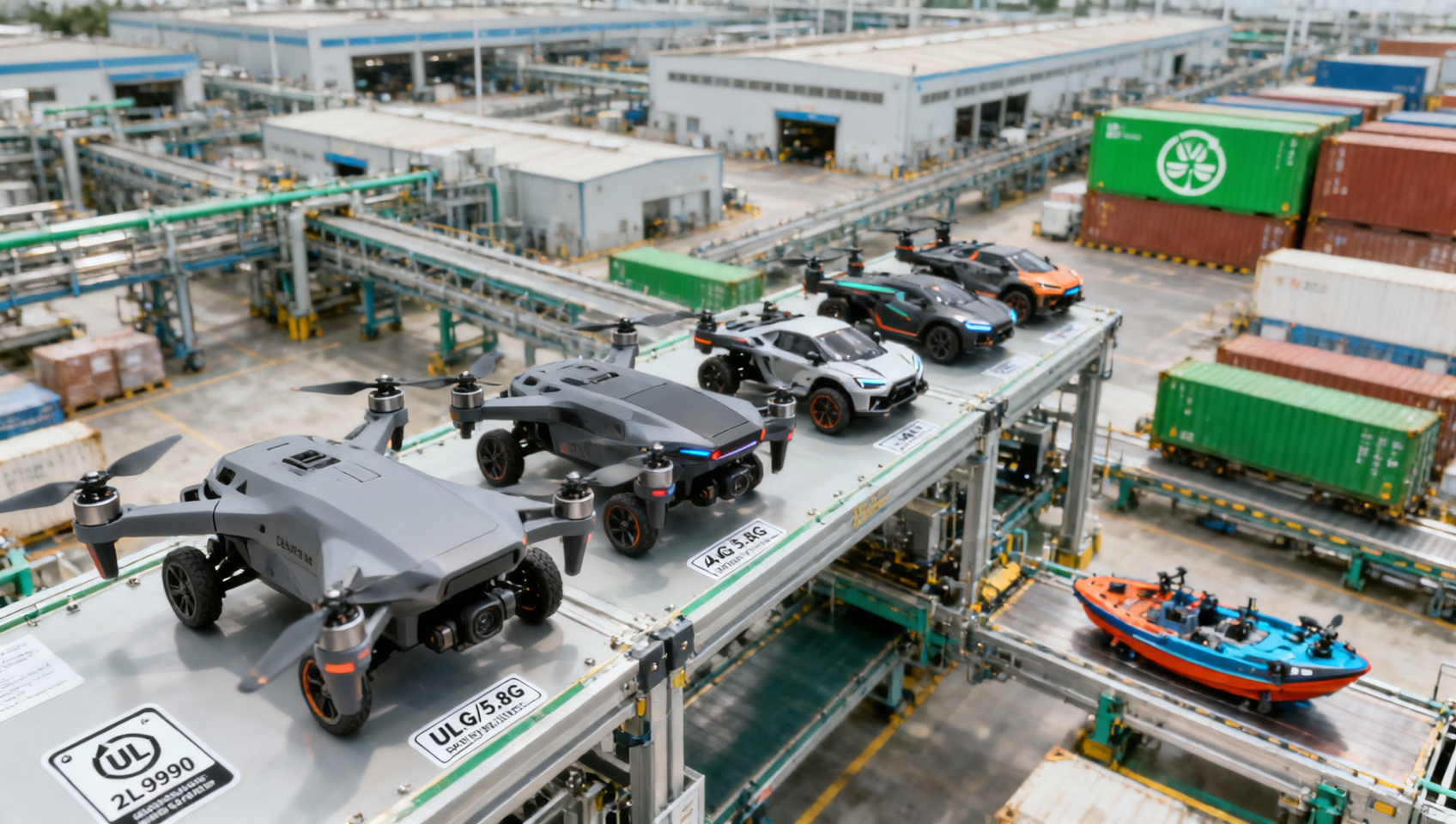
On April 28, 2026, the International Council of Toy Associations (ICTA) released its Q2 2026 Global Sourcing Trends Report, revealing a notable concentration of electronic and remote-controlled (RC) toy orders toward Guangdong’s manufacturing cluster — comprising Dongguan, Shenzhen, and Zhongshan. This shift coincides with completed inventory digestion in North America and Europe and the onset of summer promotional campaigns. The development directly impacts global toy sourcing, supply chain planning, and regional manufacturing competitiveness — particularly for companies engaged in RC toy design, component procurement, contract manufacturing, and cross-border logistics.
Event Overview
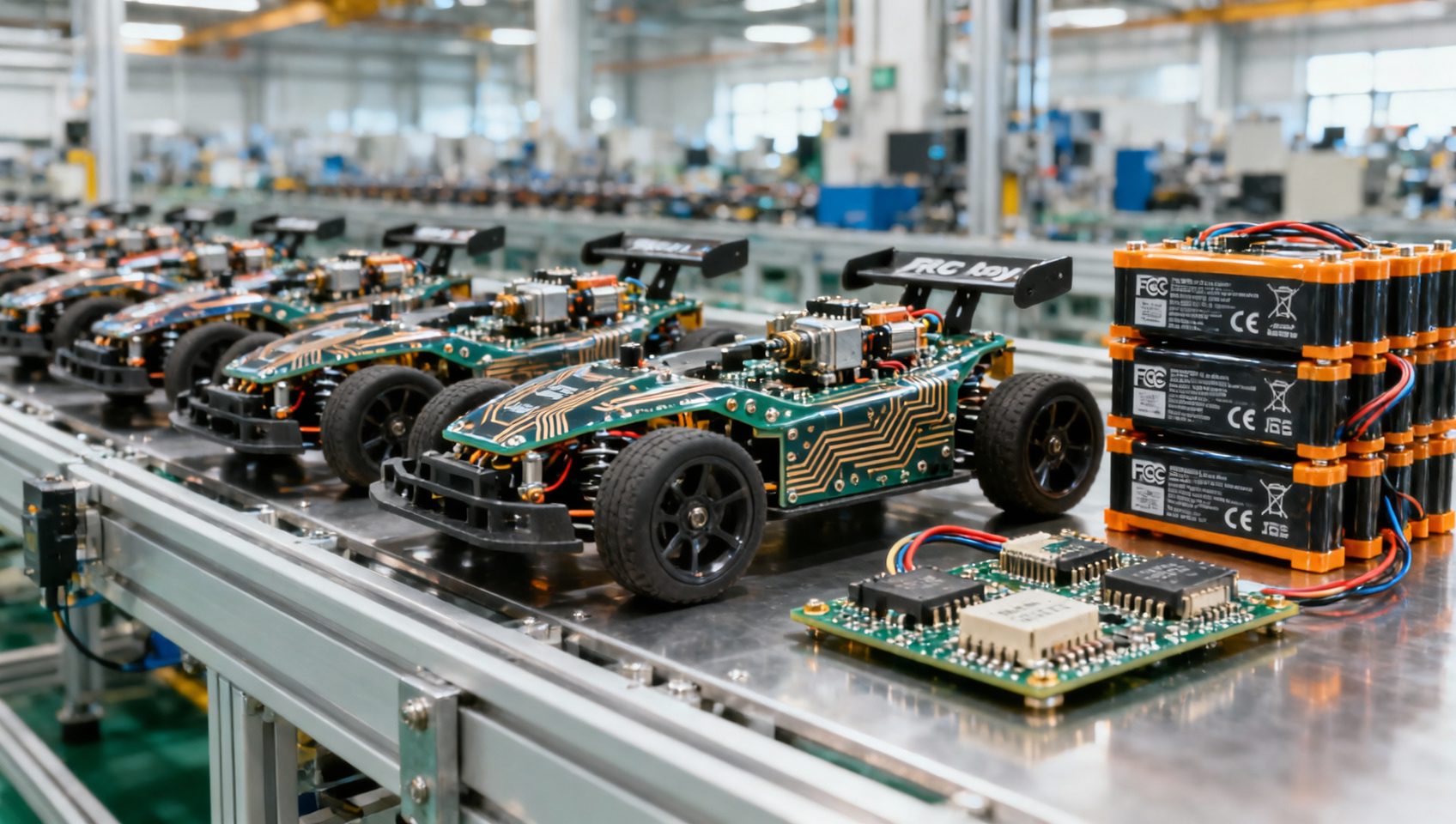
On April 28, 2026, the International Council of Toy Associations (ICTA) published its Q2 2026 Global Sourcing Trends Report. The report states that electronic and RC toy orders rose 37% quarter-on-quarter, driven by restocking in North America and Europe and the start of summer retail promotions. Of the new orders, 78% were placed with manufacturers located in the ‘South China RC Manufacturing Cluster’ — defined as Dongguan, Shenzhen, and Zhongshan in Guangdong Province. Leveraging localized supply chains for motors, batteries, and RF modules, average delivery lead time for these orders has shortened to six weeks — four weeks faster than the Yangtze River Delta region.
Which Subsectors Are Affected
Direct Trading Companies (Exporters & Importers)
These firms face compressed decision windows due to accelerated order cycles. With lead times now at six weeks, pre-shipment coordination, compliance verification (e.g., FCC/CE), and documentation turnaround must be prioritized earlier in the procurement cycle — especially for seasonal launches tied to summer promotions.
Raw Material & Component Suppliers
Suppliers of motors, lithium-based batteries, and RF communication modules are seeing intensified demand from OEMs and ODMs within the South China cluster. Regional concentration increases pressure on just-in-time delivery performance and technical alignment — particularly around battery safety certifications and RF frequency harmonization across target markets.
Contract Manufacturers & OEMs
Manufacturers inside the South China cluster benefit from shorter lead times, but face tighter capacity utilization and heightened scrutiny on consistent output quality. Those outside the cluster — especially in Jiangsu, Zhejiang, or non-Chinese locations — may experience order diversion unless they demonstrate comparable integration of key subassemblies or faster response protocols.
Distribution & Cross-Border Logistics Providers
Freight forwarders and customs brokers servicing RC toy shipments must adapt to more frequent, smaller-batch consignments aligned with the six-week cycle. Documentation accuracy — especially for radio-controlled devices subject to spectrum regulations — becomes more critical, as delays risk missing promotional windows.
What Relevant Companies or Practitioners Should Focus On Now
Monitor ICTA’s upcoming regional sourcing advisories
The April 28 report is part of ICTA’s quarterly series; follow-up releases may clarify whether this trend reflects structural realignment or short-term seasonality — particularly regarding order volume sustainability beyond Q2 2026.
Track motor, battery, and RF module availability in South China
Given the cited reliance on localized components, procurement teams should verify current lead times and allocation policies from Tier-2 suppliers in Dongguan and Shenzhen — not just final assembly partners — to avoid bottlenecks.
Validate compliance readiness for key export markets
Shorter lead times reduce buffer for regulatory testing and certification. Companies should confirm whether their chosen South China partners maintain up-to-date FCC, RED, and CPSIA documentation — and whether test reports are transferable across SKUs.
Assess internal capacity for rapid order intake and revision
With order cycles compressing, commercial, engineering, and QA teams need synchronized workflows to handle design changes, sample approvals, and production ramp-ups within tighter windows — especially for retailers with agile summer campaign calendars.
Editorial Perspective / Industry Observation
Observably, this ICTA data point signals a tactical acceleration — not yet a strategic relocation — in RC toy sourcing. The six-week lead time reflects optimized local integration rather than wholesale supply chain overhaul. Analysis shows the shift is demand-triggered (post-inventory restocking + summer promo timing) and geographically contingent (dependent on proximity to mature component ecosystems). From an industry perspective, it functions less as a permanent reconfiguration and more as a stress test of responsiveness: those who can align compliance, logistics, and component sourcing within tight cycles gain competitive advantage — while others risk marginalization in time-sensitive categories.
Current developments are better understood as a near-term operational signal — one requiring immediate process calibration — rather than evidence of long-term geographic displacement. Continuous monitoring of Q3 ordering patterns will clarify whether this is a repeatable model or a seasonal anomaly.
Conclusion
This ICTA report highlights how regional supply chain maturity — not just cost or scale — increasingly determines order allocation in time-sensitive toy categories. For stakeholders, the takeaway is pragmatic: lead time compression benefits speed-to-market but raises the bar for end-to-end coordination. It is not a mandate to relocate, but a prompt to audit and tighten synchronization across design, component sourcing, compliance, and logistics — especially when serving seasonal retail windows.
Information Source
Main source: International Council of Toy Associations (ICTA), Q2 2026 Global Sourcing Trends Report, issued April 28, 2026.
Points requiring ongoing observation: Whether the 78% order concentration and six-week lead time persist into Q3 2026; and whether similar trends emerge in adjacent categories such as STEM toys or smart play devices.
Related Intelligence
 2026/789 on Beauty Device Packaging Takes Effect") Beauty DevicesApr 29, 2026EU Regulation (EU) 2026/789 on Beauty Device Packaging Takes EffectEU Regulation (EU) 2026/789 mandates 30% recycled plastic & LCA declarations for beauty device packaging — act now to avoid Amazon.de/fr rejections!
Beauty DevicesApr 29, 2026EU Regulation (EU) 2026/789 on Beauty Device Packaging Takes EffectEU Regulation (EU) 2026/789 mandates 30% recycled plastic & LCA declarations for beauty device packaging — act now to avoid Amazon.de/fr rejections! Electronic & RC ToysApr 29, 2026ICTA: RC Toy Orders Shift to South China, Lead Time Cuts to 6 WeeksICTA reports RC toy orders shifting to South China—78% now flow to Guangdong’s cluster, cutting lead times to just 6 weeks. Act now to optimize sourcing, compliance & logistics.
 STEM & Educational ToysApr 29, 2026CPSC Nanomaterial Migration Rule for STEM Toys Effective Q3 2026CPSC Nanomaterial Migration Rule for STEM Toys: New ASTM F963–24 testing (≤0.05 mg/cm²/h) mandatory from Oct 1, 2026—avoid detention & recalls.
 Fitness EquipmentApr 29, 2026THE Alliance Cuts Shanghai–LA Capacity by 22%: Fitness Equipment Delays ExtendFitness equipment shippers: THE Alliance cuts Shanghai–LA capacity by 22% in May 2026—delays, surcharges, and 12–14-week bookings loom. Act now.
 Smart Pet DevicesApr 29, 2026Japan METI Expands Smart Pet Device White List, 10-Day Certification for Chinese DevicesJapan METI expands Smart Pet Device white list—Bluetooth 5.3+ collars & AI feeders now qualify for fast 10-day certification. Key opportunity for Chinese exporters.
 Infant Feeding & CareApr 29, 2026ASEAN-FFL 2026: RCEP Infant Feeding Labeling Rules Take EffectASEAN-FFL 2026 labeling rules take effect April 2026—ensure RCEP infant feeding product compliance now to avoid shelf bans & delays.
 Corporate & Seasonal GiftsApr 29, 2026Germany UBA to Pilot Carbon Labelling for Corporate GiftsGermany UBA's 2026 carbon labelling pilot for corporate gifts mandates ISO 14067 LCAs — vital for Chinese exporters, printers & ink suppliers targeting EU green procurement.
 Nursery Furniture & MonitorsApr 29, 2026Vietnam MOIT Eases Infant Monitor Registration, Requires NMPA Class II FilingVietnam MOIT eases infant monitor registration: NMPA Class II filing now accepted—skip local testing, cut time-to-market. Key for China-Vietnam medtech exporters.
 Camping & WaterApr 29, 2026SASO Mandates IP6X + Salt Spray for Camping Power & Inflators in Saudi ArabiaSASO mandates IP6X + salt spray for camping power stations & inflators in Saudi Arabia—act now to avoid shipment delays and customs rejection.
") Skincare OEMApr 29, 2026FDA Adds Plant Stem Cell Extract Code to CPIS (Apr 2026)FDA adds 'Plant Stem Cell Extract' code to CPIS—urgent compliance action needed for skincare OEMs, suppliers & importers before July 1, 2026.
Skincare OEMApr 29, 2026FDA Adds Plant Stem Cell Extract Code to CPIS (Apr 2026)FDA adds 'Plant Stem Cell Extract' code to CPIS—urgent compliance action needed for skincare OEMs, suppliers & importers before July 1, 2026. Electronic & RC ToysApr 28, 2026ICTA 2026 Q2 RC Toy Sourcing Report: Shift to Guangdong ClusterICTA 2026 Q2 RC Toy Sourcing Report reveals 68% of global electronic RC toy orders shifting to Guangdong’s Shenzhen–Dongguan–Zhongshan cluster — driven by dual-band modules, UL9990 batteries & rapid prototyping. Act now.
 Skincare OEMApr 28, 2026FDA Adds Plant Stem Cell Extract Code to CPIS SystemFDA adds COS-PLS-2026 code for plant stem cell extract in CPIS — vital for skincare OEMs, suppliers & U.S. importers. Act now to ensure compliance by July 1, 2026.
 Nursery Furniture & MonitorsApr 28, 2026Vietnam Exempts Infant Monitors from Local Type TestingVietnam exempts infant monitors from local type testing—leverage your NMPA Class II filing to fast-track Vietnam market entry starting June 1, 2026.