Japan METI Expands Smart Pet Device White List, 10-Day Certification for Chinese Devices
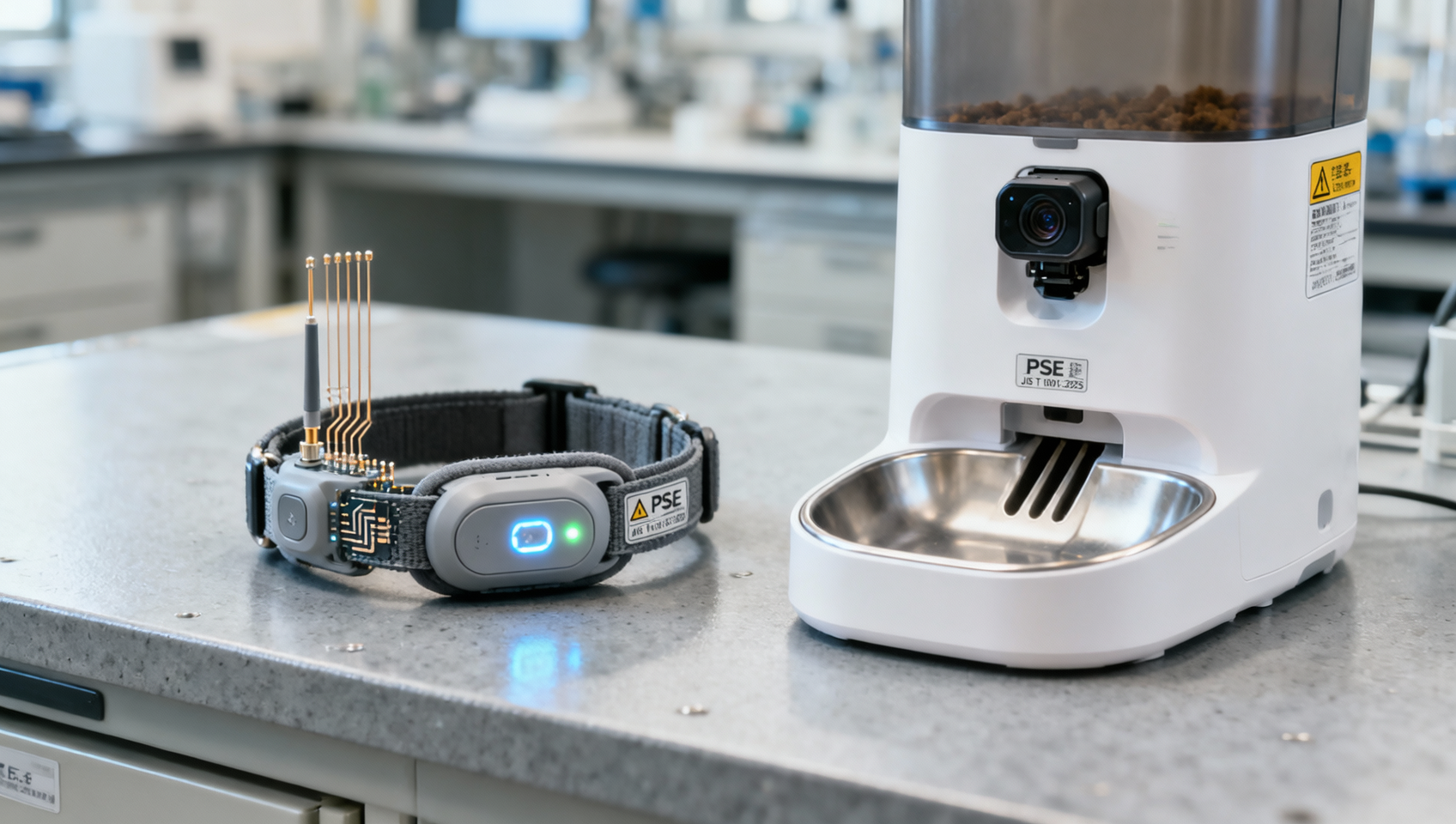
On April 28, 2026, Japan’s Ministry of Economy, Trade and Industry (METI) expanded its ‘Smart Pet Device’ green procurement white list—adding Bluetooth 5.3+-enabled low-power pet tracking collars and AI-powered automatic feeders—and shortened the METI备案 (notification) review period to 10 working days. This development directly impacts manufacturers, exporters, and compliance service providers in the smart pet hardware sector—particularly those based in China supplying to the Japanese market—due to accelerated regulatory pathways and revised eligibility criteria.
Event Overview
On April 28, 2026, METI announced an expansion of its ‘Smart Pet Device’ green procurement white list. Two new device categories were added: (1) smart pet collars supporting Bluetooth 5.3+ with low-power positioning functionality, and (2) AI-based automatic pet feeders. Concurrently, METI reduced the official notification (METI备案) review timeline from the previous standard to 10 working days. Eligibility for the expedited pathway requires prior compliance with PSE marking and JIS T 1001:2025 safety standards; Chinese manufacturers may further qualify for fast-track processing by submitting equivalent conformity reports issued by China’s NMPA or the U.S. FDA.
Industries Affected
Direct Exporters & OEM/ODM Manufacturers
These enterprises are directly affected because the white list expansion defines new product categories eligible for METI notification—and thus for legal import and public-sector procurement in Japan. The 10-day review window lowers time-to-market, but only for devices meeting both technical (Bluetooth 5.3+, AI recognition) and certification (PSE + JIS T 1001:2025) prerequisites. Impact includes tighter alignment between R&D roadmaps and Japanese regulatory expectations, as well as increased pressure to pre-validate firmware behavior (e.g., BLE connection stability, AI feeding logic) against METI’s functional interpretation.
Compliance & Certification Service Providers
Third-party labs and regulatory consultants face recalibration of service offerings. With JIS T 1001:2025 now a mandatory baseline—and NMPA/FDA reports accepted conditionally—the scope of acceptable evidence shifts. Providers must verify whether their existing test protocols cover Bluetooth 5.3+ power management verification and AI decision-logging requirements referenced in METI’s updated guidance (though not yet publicly detailed). Impact centers on service lead times, documentation templates, and cross-border report equivalency assessments.
Supply Chain Integrators & Component Sourcing Firms
Firms sourcing Bluetooth SoCs, AI inference modules, or food-dispensing actuators must now screen components for JIS T 1001:2025-aligned safety margins—not just generic CE or FCC compliance. For example, battery management circuits in collars must support the thermal and overcurrent thresholds specified in JIS T 1001:2025. Impact manifests in supplier qualification checklists, BOM-level compliance annotations, and traceability documentation required for end-device METI filing.
What Enterprises and Practitioners Should Focus On
Monitor Official METI Guidance on ‘AI Recognition’ Functional Scope
METI has not yet published technical definitions for ‘AI recognition’ in feeders (e.g., species identification vs. portion counting vs. health anomaly detection). Companies should track updates from METI’s Consumer Affairs Agency and Japan Electrical Safety & Environment Technology Laboratories (JET), as implementation details will determine whether edge-AI inference or cloud-dependent models qualify.
Prioritize JIS T 1001:2025 Testing Before Initiating METI Notification
The 10-working-day timeline applies only after full submission of valid PSE certificates and JIS T 1001:2025 test reports. Delays most commonly arise from incomplete test documentation—not review backlog. Manufacturers should confirm lab accreditation status for JIS T 1001:2025 with JET or JQA before testing begins, especially for firmware-related safety validations.
Distinguish Between Policy Signal and Operational Readiness
The white list expansion signals METI’s prioritization of interoperable, energy-efficient pet IoT devices—but does not equate to automatic market access. Devices still require PSE marking (Class A or B, depending on radio use), RoHS/J-Moss compliance, and proper Japanese-language user documentation. Companies should treat the 10-day target as a process benchmark—not a guaranteed outcome—unless all upstream compliance steps are fully closed.
Prepare Cross-Agency Documentation Alignment Now
Since NMPA or FDA reports are accepted conditionally, companies should compile side-by-side comparison tables mapping each test parameter in their existing reports to corresponding clauses in JIS T 1001:2025. This accelerates internal gap analysis and reduces back-and-forth during METI review—especially for battery safety, mechanical durability, and unintended actuation tests.
Editorial Perspective / Industry Observation
Observably, this update is less a standalone policy shift and more a procedural calibration aligned with Japan’s broader Digital Garden City Nation initiative—which emphasizes interoperable, low-energy IoT devices for daily life applications. Analysis shows the 10-day METI notification window is feasible only for applicants with mature, pre-validated compliance infrastructure; it does not lower technical thresholds. From an industry perspective, the inclusion of AI feeders suggests METI is beginning to treat deterministic AI functions (e.g., image-based food detection) as embedded safety-critical features—not just software enhancements. That framing could inform future revisions to JIS standards beyond pet devices. Current attention should focus on how METI interprets ‘low-power positioning’ in Bluetooth 5.3+ collars: if ultra-wideband (UWB) or AoA-based localization falls under scope, it may trigger additional radio law (ARIB STD-T108) considerations beyond basic PSE.
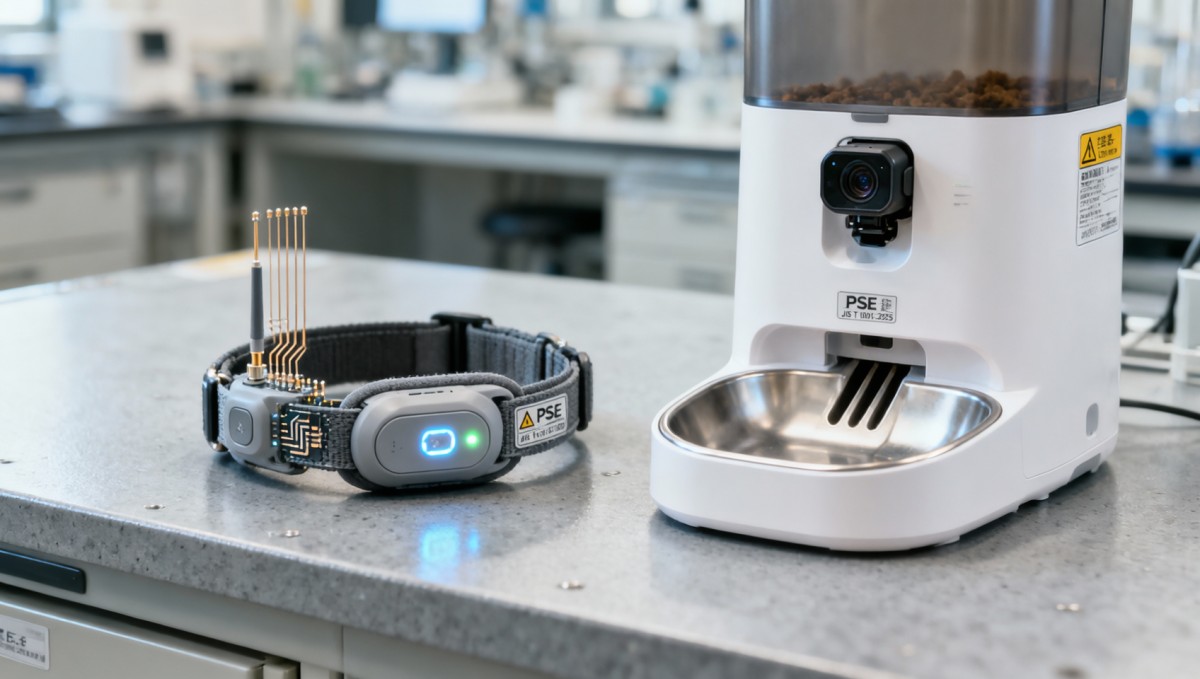
In summary, METI’s white list expansion introduces a time-bound opportunity—not a de facto market opening—for qualified Chinese smart pet device suppliers. Its significance lies not in immediate volume impact, but in signaling a tightening linkage between Japanese public-sector procurement preferences, energy-efficiency mandates, and functional safety expectations for consumer IoT. It is best understood as an early indicator of how Japan may structure conformity assessment for next-generation connected home devices—where AI and wireless performance are treated as integrated safety parameters, not separate features.
Source: Japan Ministry of Economy, Trade and Industry (METI), official announcement dated April 28, 2026. Note: Technical implementation details—including exact definitions of ‘AI recognition’ and ‘low-power positioning’ in this context—remain pending formal publication by METI or JET and are subject to ongoing observation.
Related Intelligence
 2026/789 on Beauty Device Packaging Takes Effect") Beauty DevicesApr 29, 2026EU Regulation (EU) 2026/789 on Beauty Device Packaging Takes EffectEU Regulation (EU) 2026/789 mandates 30% recycled plastic & LCA declarations for beauty device packaging — act now to avoid Amazon.de/fr rejections!
Beauty DevicesApr 29, 2026EU Regulation (EU) 2026/789 on Beauty Device Packaging Takes EffectEU Regulation (EU) 2026/789 mandates 30% recycled plastic & LCA declarations for beauty device packaging — act now to avoid Amazon.de/fr rejections! Electronic & RC ToysApr 29, 2026ICTA: RC Toy Orders Shift to South China, Lead Time Cuts to 6 WeeksICTA reports RC toy orders shifting to South China—78% now flow to Guangdong’s cluster, cutting lead times to just 6 weeks. Act now to optimize sourcing, compliance & logistics.
 STEM & Educational ToysApr 29, 2026CPSC Nanomaterial Migration Rule for STEM Toys Effective Q3 2026CPSC Nanomaterial Migration Rule for STEM Toys: New ASTM F963–24 testing (≤0.05 mg/cm²/h) mandatory from Oct 1, 2026—avoid detention & recalls.
 Fitness EquipmentApr 29, 2026THE Alliance Cuts Shanghai–LA Capacity by 22%: Fitness Equipment Delays ExtendFitness equipment shippers: THE Alliance cuts Shanghai–LA capacity by 22% in May 2026—delays, surcharges, and 12–14-week bookings loom. Act now.
 Smart Pet DevicesApr 29, 2026Japan METI Expands Smart Pet Device White List, 10-Day Certification for Chinese DevicesJapan METI expands Smart Pet Device white list—Bluetooth 5.3+ collars & AI feeders now qualify for fast 10-day certification. Key opportunity for Chinese exporters.
 Infant Feeding & CareApr 29, 2026ASEAN-FFL 2026: RCEP Infant Feeding Labeling Rules Take EffectASEAN-FFL 2026 labeling rules take effect April 2026—ensure RCEP infant feeding product compliance now to avoid shelf bans & delays.
 Corporate & Seasonal GiftsApr 29, 2026Germany UBA to Pilot Carbon Labelling for Corporate GiftsGermany UBA's 2026 carbon labelling pilot for corporate gifts mandates ISO 14067 LCAs — vital for Chinese exporters, printers & ink suppliers targeting EU green procurement.
 Nursery Furniture & MonitorsApr 29, 2026Vietnam MOIT Eases Infant Monitor Registration, Requires NMPA Class II FilingVietnam MOIT eases infant monitor registration: NMPA Class II filing now accepted—skip local testing, cut time-to-market. Key for China-Vietnam medtech exporters.
 Camping & WaterApr 29, 2026SASO Mandates IP6X + Salt Spray for Camping Power & Inflators in Saudi ArabiaSASO mandates IP6X + salt spray for camping power stations & inflators in Saudi Arabia—act now to avoid shipment delays and customs rejection.
") Skincare OEMApr 29, 2026FDA Adds Plant Stem Cell Extract Code to CPIS (Apr 2026)FDA adds 'Plant Stem Cell Extract' code to CPIS—urgent compliance action needed for skincare OEMs, suppliers & importers before July 1, 2026.
Skincare OEMApr 29, 2026FDA Adds Plant Stem Cell Extract Code to CPIS (Apr 2026)FDA adds 'Plant Stem Cell Extract' code to CPIS—urgent compliance action needed for skincare OEMs, suppliers & importers before July 1, 2026. Electronic & RC ToysApr 28, 2026ICTA 2026 Q2 RC Toy Sourcing Report: Shift to Guangdong ClusterICTA 2026 Q2 RC Toy Sourcing Report reveals 68% of global electronic RC toy orders shifting to Guangdong’s Shenzhen–Dongguan–Zhongshan cluster — driven by dual-band modules, UL9990 batteries & rapid prototyping. Act now.
 Skincare OEMApr 28, 2026FDA Adds Plant Stem Cell Extract Code to CPIS SystemFDA adds COS-PLS-2026 code for plant stem cell extract in CPIS — vital for skincare OEMs, suppliers & U.S. importers. Act now to ensure compliance by July 1, 2026.
 Nursery Furniture & MonitorsApr 28, 2026Vietnam Exempts Infant Monitors from Local Type TestingVietnam exempts infant monitors from local type testing—leverage your NMPA Class II filing to fast-track Vietnam market entry starting June 1, 2026.