Vietnam Exempts Infant Monitors from Local Type Testing
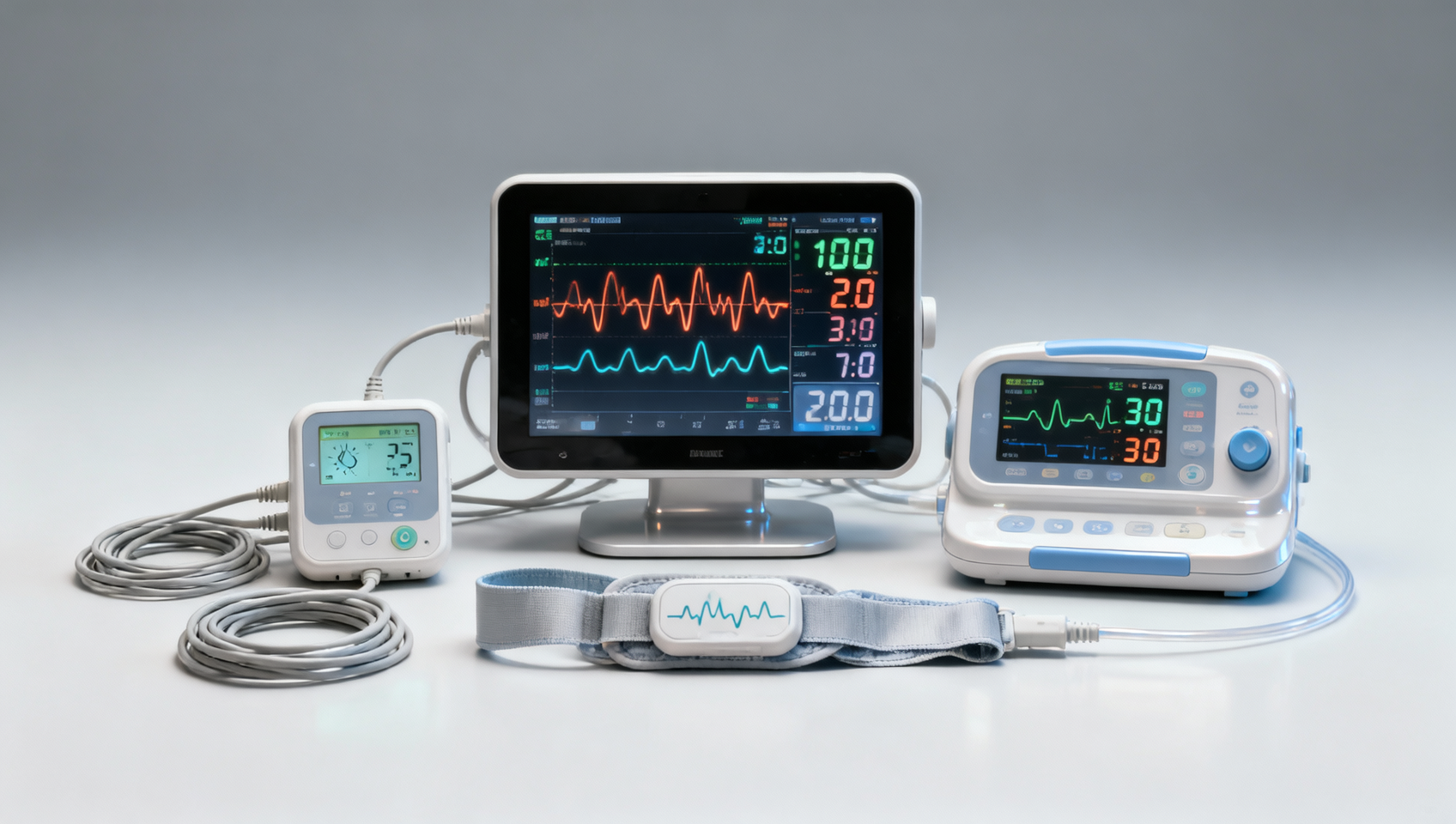
On April 27, 2026, Vietnam’s Ministry of Industry and Trade (MOIT) updated its Guidelines for Import Management of Medical Auxiliary Equipment, effective June 1, 2026. The revision exempts infant monitors—including video, audio, respiration, and temperature monitoring devices—from mandatory local type testing upon import. However, importers must submit a valid Chinese NMPA Class II medical device filing certificate (bilingual Chinese–English version). This change directly affects exporters and importers of nursery furniture and infant monitoring equipment in China–Vietnam trade channels.
Event Overview
The Ministry of Industry and Trade of Vietnam (MOIT) issued an update to the Guidelines for Import Management of Medical Auxiliary Equipment on April 27, 2026. Starting June 1, 2026, infant monitors—defined as devices for video, audio, respiration, or temperature monitoring of infants—are no longer subject to compulsory local type testing during registration. Instead, importers must provide a valid Class II medical device filing certificate issued by China’s National Medical Products Administration (NMPA), in both Chinese and English. The policy applies exclusively to this product category under the revised guidelines.
Industries Affected
Direct Exporters & Importers
Companies exporting infant monitors from China to Vietnam will experience reduced technical compliance lead time, as local type testing—a historically time- and resource-intensive step—is now waived. However, reliance on NMPA Class II filing introduces a new dependency: only products already registered under China’s Class II framework qualify. Firms without such filings cannot leverage this exemption, regardless of device functionality or conformity with Vietnamese standards.
Contract Manufacturers & OEMs
OEM/ODM manufacturers producing infant monitors for Chinese export brands must ensure their client-facing documentation aligns with NMPA Class II requirements—including technical files, risk management reports, and labeling in Chinese. Any deviation may prevent downstream importers from meeting the MOIT requirement, even if the physical product remains unchanged.
Distribution & Channel Operators
Vietnamese distributors and authorized representatives handling infant monitors must verify the authenticity and validity of submitted NMPA Class II certificates prior to registration submission. Unlike previous MOIT procedures, the absence of local testing shifts verification responsibility upstream—to document accuracy, bilingual consistency, and regulatory alignment between China’s filing scope and Vietnam’s intended use classification.
Regulatory & Compliance Service Providers
Third-party regulatory consultants supporting China–Vietnam medical device trade must now integrate NMPA filing validation into pre-submission checks. This includes confirming that the NMPA certificate explicitly covers the exact model(s) being imported, and that its “intended use” statement matches MOIT’s definition of infant monitor functions (e.g., respiration or temperature monitoring).
What Stakeholders Should Focus On Now
Monitor official MOIT implementation notices and interpretation guidance
While the exemption takes effect June 1, 2026, MOIT has not yet published detailed instructions on certificate format, translation requirements beyond bilingual presentation, or acceptance criteria for NMPA filing scope alignment. Stakeholders should track MOIT’s official portal and Vietnam’s National Agency for Technical Regulation (NATR) for clarifications ahead of first submissions.
Verify NMPA Class II filing status before initiating Vietnam registration
Importers must confirm that each infant monitor model has an active, non-expired NMPA Class II filing—and that the filing explicitly includes functions cited in MOIT’s definition (e.g., “infant respiration monitoring”). Relying solely on general “medical electronic device” classifications is insufficient; functional specificity matters.
Distinguish between policy signal and operational readiness
This update signals MOIT’s intent to harmonize certain regulatory steps with China’s existing oversight—but it does not replace other Vietnam-specific requirements (e.g., labeling in Vietnamese, local authorized representative appointment, or post-market surveillance obligations). Companies should treat the exemption as one streamlined step within a broader, unchanged registration workflow.
Prepare bilingual NMPA certificate packages and internal alignment
Exporters and importers should compile complete NMPA filing dossiers—including original Chinese documents, certified English translations, and evidence of current validity (e.g., screenshot of NMPA public database entry). Internal teams (regulatory, logistics, sales) must align on which models qualify and how to communicate eligibility to Vietnamese partners.
Editorial Perspective / Industry Observation
Observably, this measure is less a full regulatory convergence and more a pragmatic administrative alignment—targeting a high-volume, low-risk device category where China’s Class II framework already imposes substantive technical and quality controls. Analysis shows MOIT is selectively leveraging existing foreign assessments rather than outsourcing oversight; the exemption applies only to infant monitors, not broader categories of medical auxiliary equipment. From an industry perspective, this reflects growing recognition of China’s evolving medical device regulatory infrastructure—but also highlights continued fragmentation: NMPA filing remains a prerequisite, not a substitute, for Vietnam’s market access process. Current developments suggest MOIT is testing interoperability on narrowly defined products before considering wider application.
Concluding, this policy adjustment shortens one specific procedural step for a defined product group but does not reduce overall regulatory diligence. It is best understood not as deregulation, but as a targeted efficiency measure contingent on prior compliance in another jurisdiction. Stakeholders should view it as an opportunity to accelerate time-to-market—provided foundational documentation is already in place.
Source: Ministry of Industry and Trade of Vietnam (MOIT), Guidelines for Import Management of Medical Auxiliary Equipment, updated April 27, 2026; effective June 1, 2026. Note: Implementation details—including certificate validation protocols and scope interpretation—are pending further MOIT or NATR guidance and remain under observation.
Related Intelligence
 Electronic & RC ToysApr 28, 2026ICTA 2026 Q2 RC Toy Sourcing Report: Shift to Guangdong ClusterICTA 2026 Q2 RC Toy Sourcing Report reveals 68% of global electronic RC toy orders shifting to Guangdong’s Shenzhen–Dongguan–Zhongshan cluster — driven by dual-band modules, UL9990 batteries & rapid prototyping. Act now.
 Skincare OEMApr 28, 2026FDA Adds Plant Stem Cell Extract Code to CPIS SystemFDA adds COS-PLS-2026 code for plant stem cell extract in CPIS — vital for skincare OEMs, suppliers & U.S. importers. Act now to ensure compliance by July 1, 2026.
 Nursery Furniture & MonitorsApr 28, 2026Vietnam Exempts Infant Monitors from Local Type TestingVietnam exempts infant monitors from local type testing—leverage your NMPA Class II filing to fast-track Vietnam market entry starting June 1, 2026.
 Corporate & Seasonal GiftsApr 28, 2026UBA to Pilot Carbon Labels for Corporate Gifts in Germany from Q3 2026UBA carbon labels for corporate gifts launch Q3 2026 in Germany—key for OEMs, packaging & print suppliers. Act now to prep LCA data & stay ahead.
 Camping & WaterApr 28, 2026SASO TA-2026-03: Camping Power & Inflatable Pumps Require IP6X + Salt Spray Testing for Saudi MarketSASO TA-2026-03 mandates IP6X + salt spray testing for camping power & inflatable pumps in Saudi Arabia — act now to avoid shipment delays post-Sept 1, 2026.
 Fitness EquipmentApr 28, 2026THE Alliance Cuts Shanghai–LA Capacity by 22% Amid Port CongestionTHE Alliance cuts Shanghai–LA capacity by 22% amid port congestion—impacting fitness equipment exporters, importers & logistics providers with longer lead times and higher deposits.
 Smart Pet DevicesApr 28, 2026Japan METI Launches Smart Pet Device Green Procurement ListSmart Pet Device Green Procurement List launched by Japan METI—key for Chinese exporters of smart pet collars, feeders & water dispensers. Act now to meet JIS T 1002:2026 and NB-IoT requirements.
 Infant Feeding & CareApr 28, 2026RCEP Members Adopt ASEAN-FFL 2026 for Infant Feeding ProductsRCEP Members Adopt ASEAN-FFL 2026 for Infant Feeding Products: New multilingual labelling rules for pacifiers, baby bottles & grinders take effect 1 Dec 2026 in Vietnam, Thailand, Indonesia — act now to avoid customs delays.
 2026/789: Beauty Device Packaging Must Declare Recycled Plastic & LCA") Beauty DevicesApr 28, 2026EU Regulation (EU) 2026/789: Beauty Device Packaging Must Declare Recycled Plastic & LCAEU Regulation (EU) 2026/789 mandates recycled plastic labeling & EN 15804+A2 LCA for beauty devices—act now to ensure EU market access and avoid delays.
Beauty DevicesApr 28, 2026EU Regulation (EU) 2026/789: Beauty Device Packaging Must Declare Recycled Plastic & LCAEU Regulation (EU) 2026/789 mandates recycled plastic labeling & EN 15804+A2 LCA for beauty devices—act now to ensure EU market access and avoid delays. STEM & Educational ToysApr 28, 2026CPSC Requires Nano-Material Migration Testing for STEM Toys from Q2 2026CPSC requires nano-material migration testing for STEM toys starting Q2 2026—key for exporters, OEMs & labs. Act now to ensure compliance with ZnO/TiO₂ saliva/sweat testing.
 Baby Gear & StrollersApr 27, 2026Global Shipping Alliances Cut Shanghai–Rotterdam Capacity by 15%Global shipping alliances cut Shanghai–Rotterdam capacity by 15%—impacting baby strollers & gear exporters, EU retailers, and forwarders. Act now to secure space, assess rail/air alternatives, and build resilient supply chains.
 Camping & WaterApr 27, 2026SASO IEC 62368-3:2026 Released for GCC: IP6X Dust Testing Required for Camping & Water PumpsSASO IEC 62368-3:2026 now mandates IP6X dust testing for camping & water pumps in GCC — act now to avoid customs delays and ensure compliance by Oct 1, 2026.
 Nursery Furniture & MonitorsApr 27, 2026Indonesia BPOM Fast-Tracks Baby Monitor Registration to 14 Working DaysIndonesia BPOM Fast-Tracks Baby Monitor Registration to 14 working days—leverage CNAS reports & ID-SNI 7203:2025 for rapid market entry.