SASO Mandates IP6X + Salt Spray for Camping Power & Inflators in Saudi Arabia
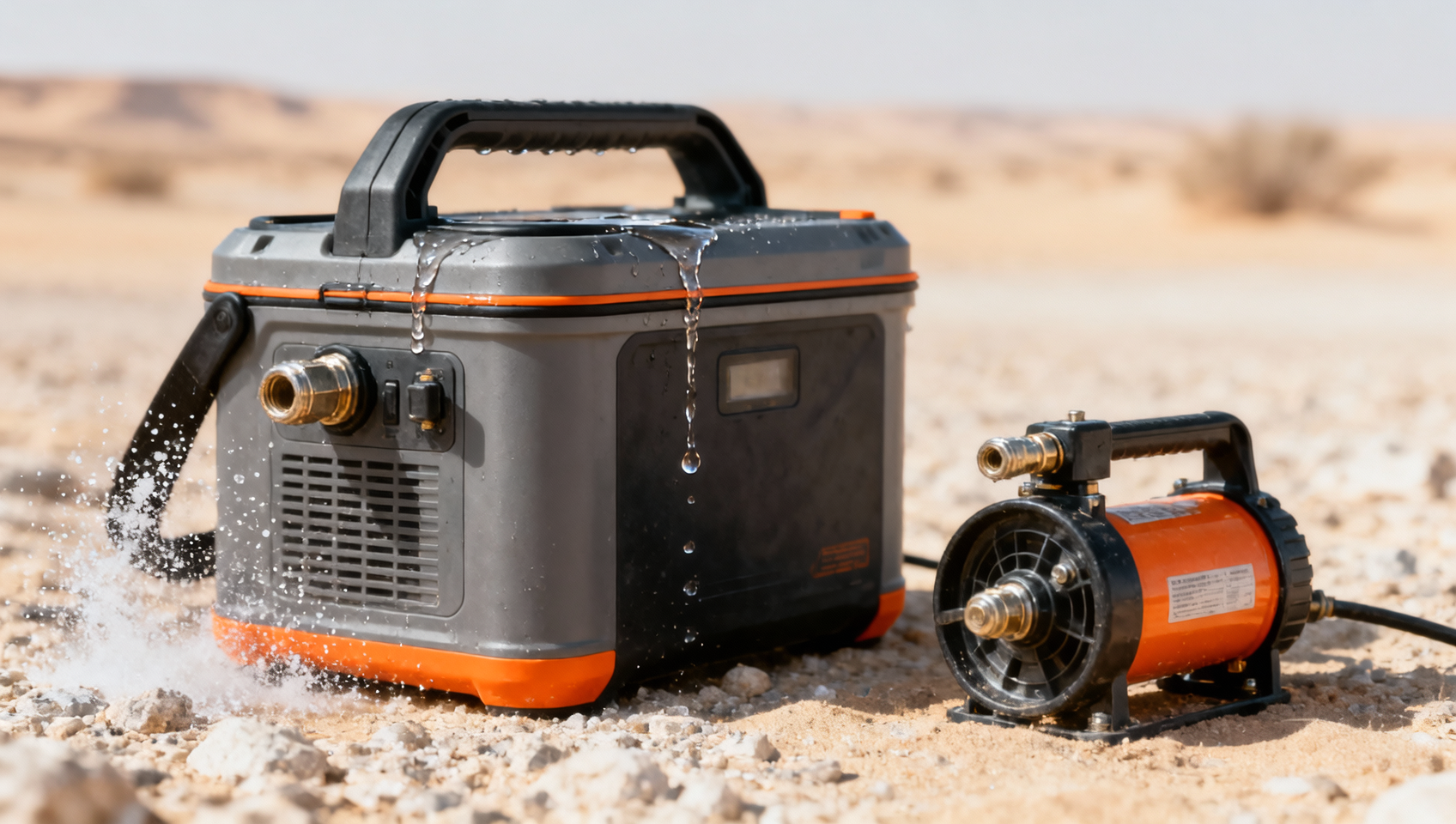
Saudi Arabia’s Standards, Metrology and Quality Organization (SASO) implemented Technical Notice No. 3 of 2026 on April 28, 2026, requiring IP6X dust protection and 48-hour neutral salt spray testing for camping power stations and portable water inflators entering the Saudi market. This affects exporters targeting the Middle East summer procurement season — particularly manufacturers, traders, and logistics providers handling Camping & Water products.
Event Overview
SASO Technical Notice No. 3 of 2026 took effect on April 28, 2026. It mandates dual certification — IP6X ingress protection against dust and a continuous 48-hour neutral salt spray test — for all camping power stations and portable water inflators destined for the Saudi Arabian market. As of late April 2026, third-party laboratories in China report testing backlogs extending to mid-June. Local type-testing reports are also mandatory, and current lead times for full compliance documentation are adding 3–4 weeks to export delivery schedules.
Industries Affected
Direct Exporters & Trading Companies
These entities face delayed shipment confirmations and potential contract penalties due to extended certification timelines. The requirement applies at point of customs clearance, meaning non-compliant shipments may be rejected or held pending retesting.
Manufacturers of Portable Power Stations & Inflators
Production planning is disrupted: units built prior to April 28 cannot be cleared without retroactive testing. Factories must now allocate additional time for sample submission, lab coordination, and report integration into SASO’s SABER platform — all before goods can be shipped.
Supply Chain & Certification Service Providers
Third-party labs and conformity assessment bodies are experiencing capacity strain. Lead times for test scheduling and report issuance have increased significantly. Local agent services supporting SABER registration are also reporting longer turnaround for document validation tied to new test evidence.
Component & Subassembly Suppliers
Suppliers of enclosures, seals, connectors, and PCB coatings may see revised specification requests from OEMs seeking pre-validated IP6X+salt-spray-ready subassemblies — though no such requirement is stated in the notice itself.
What Enterprises Should Monitor & Do Now
Track official SASO guidance on transitional arrangements
While the notice took effect April 28, SASO has not publicly clarified whether products already in transit or with pre-April 28 test reports will be grandfathered. Enterprises should monitor SASO’s official portal and SABER system announcements for any grace period or interpretation updates.
Verify test scope alignment with product classification
The notice explicitly names ‘camping power stations’ and ‘portable water inflators’. Enterprises should confirm whether their specific SKUs fall under this definition — e.g., battery-powered air pumps used for pool toys or kayak inflation — as misclassification could result in unnecessary retesting.
Coordinate early with accredited labs and local SASO agents
Given lab backlogs through June, submitting samples and initiating SABER dossier preparation by early May is advisable. Prioritize models with highest Saudi order volume, and ensure test reports include all required metadata (e.g., model number, serial batch, test date, lab accreditation code) per SASO’s SABER documentation checklist.
Adjust logistics timelines and communicate proactively with buyers
Exporters should revise ETAs for Saudi-bound shipments and update purchase orders or letters of credit accordingly. Buyers relying on summer inventory replenishment — especially distributors serving outdoor retail channels — need visibility into revised delivery windows to manage stock levels.
Editorial Perspective / Industry Observation
Observably, this technical notice signals SASO’s increasing emphasis on environmental durability for consumer-grade outdoor electronics — moving beyond basic safety to long-term corrosion resistance in high-humidity, high-salinity conditions common across coastal and inland desert regions of Saudi Arabia. Analysis shows it is not yet a broad-based regulatory shift across all portable electronics, but rather a targeted intervention for two high-volume, seasonally sensitive categories. From an industry perspective, it functions less as an immediate barrier and more as a lead-time signal: the bottleneck lies not in technical feasibility, but in verification infrastructure capacity. Current delays reflect operational scaling lag, not policy ambiguity — suggesting that once lab capacity adjusts, compliance will become procedural rather than exceptional.
Conclusion
This notice does not change product design fundamentals, but reshapes timing expectations for market access. It is best understood not as a sudden compliance shock, but as a structural adjustment in the Saudi import workflow — one that prioritizes verifiable resilience over speed-to-market. Enterprises should treat the 3–4 week extension as a near-term operational reality, not a temporary anomaly.
Source Attribution
Main source: SASO Technical Notice No. 3 of 2026, effective April 28, 2026.
Additional context: Publicly reported laboratory scheduling data from three CNAS-accredited testing institutions in Guangdong and Zhejiang, as of April 25–27, 2026.
Note: Transitional provisions, if any, remain unconfirmed and require ongoing monitoring of SASO’s official communications.
Related Intelligence
 2026/789 on Beauty Device Packaging Takes Effect") Beauty DevicesApr 29, 2026EU Regulation (EU) 2026/789 on Beauty Device Packaging Takes EffectEU Regulation (EU) 2026/789 mandates 30% recycled plastic & LCA declarations for beauty device packaging — act now to avoid Amazon.de/fr rejections!
Beauty DevicesApr 29, 2026EU Regulation (EU) 2026/789 on Beauty Device Packaging Takes EffectEU Regulation (EU) 2026/789 mandates 30% recycled plastic & LCA declarations for beauty device packaging — act now to avoid Amazon.de/fr rejections! Electronic & RC ToysApr 29, 2026ICTA: RC Toy Orders Shift to South China, Lead Time Cuts to 6 WeeksICTA reports RC toy orders shifting to South China—78% now flow to Guangdong’s cluster, cutting lead times to just 6 weeks. Act now to optimize sourcing, compliance & logistics.
 STEM & Educational ToysApr 29, 2026CPSC Nanomaterial Migration Rule for STEM Toys Effective Q3 2026CPSC Nanomaterial Migration Rule for STEM Toys: New ASTM F963–24 testing (≤0.05 mg/cm²/h) mandatory from Oct 1, 2026—avoid detention & recalls.
 Fitness EquipmentApr 29, 2026THE Alliance Cuts Shanghai–LA Capacity by 22%: Fitness Equipment Delays ExtendFitness equipment shippers: THE Alliance cuts Shanghai–LA capacity by 22% in May 2026—delays, surcharges, and 12–14-week bookings loom. Act now.
 Smart Pet DevicesApr 29, 2026Japan METI Expands Smart Pet Device White List, 10-Day Certification for Chinese DevicesJapan METI expands Smart Pet Device white list—Bluetooth 5.3+ collars & AI feeders now qualify for fast 10-day certification. Key opportunity for Chinese exporters.
 Infant Feeding & CareApr 29, 2026ASEAN-FFL 2026: RCEP Infant Feeding Labeling Rules Take EffectASEAN-FFL 2026 labeling rules take effect April 2026—ensure RCEP infant feeding product compliance now to avoid shelf bans & delays.
 Corporate & Seasonal GiftsApr 29, 2026Germany UBA to Pilot Carbon Labelling for Corporate GiftsGermany UBA's 2026 carbon labelling pilot for corporate gifts mandates ISO 14067 LCAs — vital for Chinese exporters, printers & ink suppliers targeting EU green procurement.
 Nursery Furniture & MonitorsApr 29, 2026Vietnam MOIT Eases Infant Monitor Registration, Requires NMPA Class II FilingVietnam MOIT eases infant monitor registration: NMPA Class II filing now accepted—skip local testing, cut time-to-market. Key for China-Vietnam medtech exporters.
 Camping & WaterApr 29, 2026SASO Mandates IP6X + Salt Spray for Camping Power & Inflators in Saudi ArabiaSASO mandates IP6X + salt spray for camping power stations & inflators in Saudi Arabia—act now to avoid shipment delays and customs rejection.
") Skincare OEMApr 29, 2026FDA Adds Plant Stem Cell Extract Code to CPIS (Apr 2026)FDA adds 'Plant Stem Cell Extract' code to CPIS—urgent compliance action needed for skincare OEMs, suppliers & importers before July 1, 2026.
Skincare OEMApr 29, 2026FDA Adds Plant Stem Cell Extract Code to CPIS (Apr 2026)FDA adds 'Plant Stem Cell Extract' code to CPIS—urgent compliance action needed for skincare OEMs, suppliers & importers before July 1, 2026. Electronic & RC ToysApr 28, 2026ICTA 2026 Q2 RC Toy Sourcing Report: Shift to Guangdong ClusterICTA 2026 Q2 RC Toy Sourcing Report reveals 68% of global electronic RC toy orders shifting to Guangdong’s Shenzhen–Dongguan–Zhongshan cluster — driven by dual-band modules, UL9990 batteries & rapid prototyping. Act now.
 Skincare OEMApr 28, 2026FDA Adds Plant Stem Cell Extract Code to CPIS SystemFDA adds COS-PLS-2026 code for plant stem cell extract in CPIS — vital for skincare OEMs, suppliers & U.S. importers. Act now to ensure compliance by July 1, 2026.
 Nursery Furniture & MonitorsApr 28, 2026Vietnam Exempts Infant Monitors from Local Type TestingVietnam exempts infant monitors from local type testing—leverage your NMPA Class II filing to fast-track Vietnam market entry starting June 1, 2026.