THE Alliance Cuts Shanghai–LA Capacity by 22%: Fitness Equipment Delays Extend
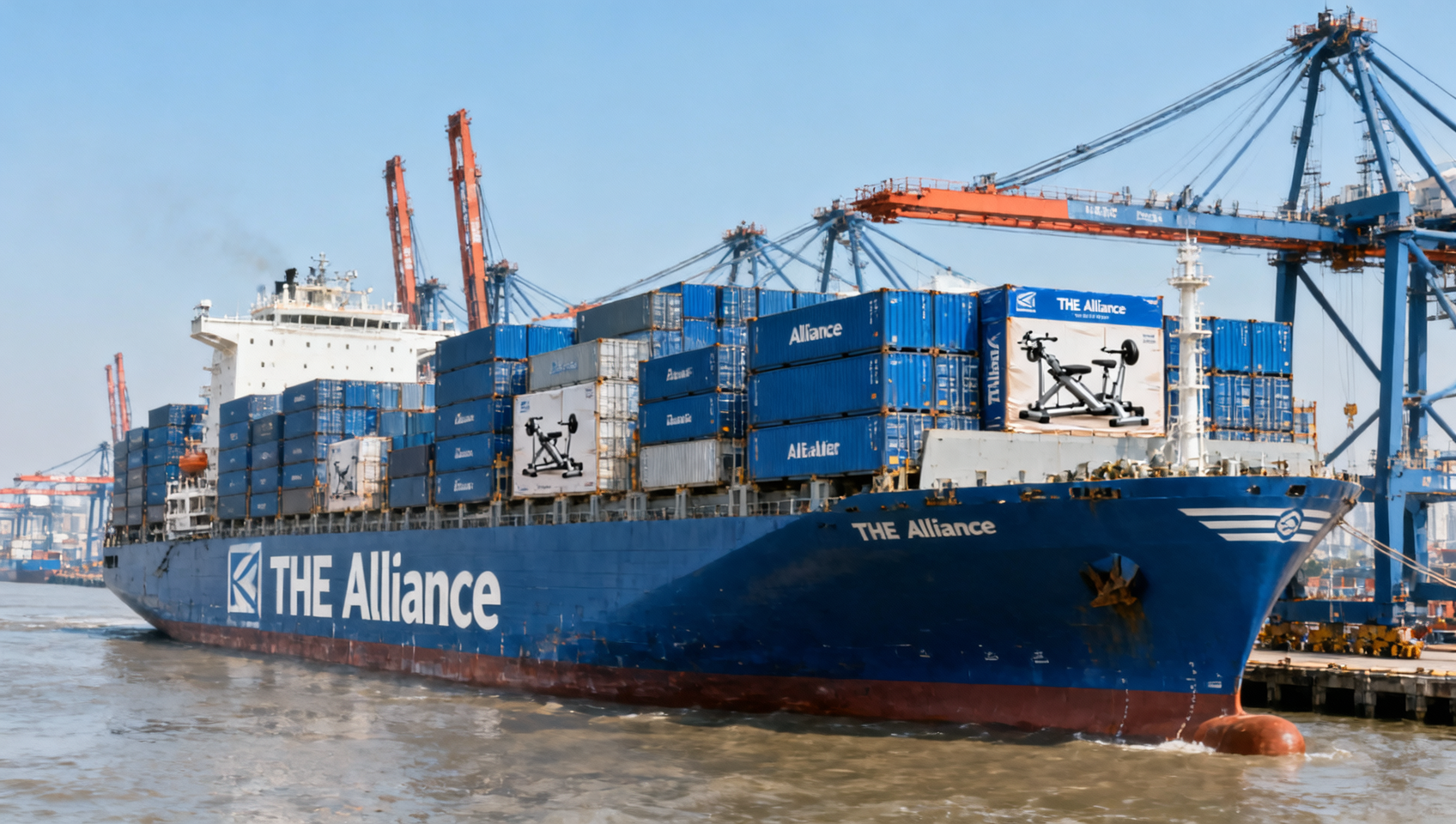
On April 28, 2026, THE Alliance announced a 22% reduction in vessel capacity on the Shanghai–Los Angeles route, effective May 2026. This adjustment directly impacts exporters and importers of fitness equipment—particularly those relying on just-in-time delivery or operating under tight retail season timelines—and signals mounting pressure on trans-Pacific container logistics.
Event Overview
On April 28, 2026, THE Alliance issued an official capacity adjustment notice stating it would reduce booked container slots on the Shanghai–Los Angeles shipping lane by 22%, beginning in May 2026. The alliance cited two primary reasons: ongoing congestion at U.S. West Coast ports and insufficient repositioning of empty containers back to Asia. Concurrently, the risk of labor action at the Port of Los Angeles has escalated. As a result, average booking lead times for fitness equipment shipments have extended to 12–14 weeks. At least one carrier has introduced a daily 0.15% demurrage surcharge for cargo exceeding free time at destination terminals.
Industries Affected
Direct Trading Enterprises
Fitness equipment exporters based in China—and U.S.-based importers handling branded or private-label products—are facing longer order-to-delivery cycles. The 12–14-week booking window now applies not only to new orders but also to rescheduled shipments previously committed for Q2 2026 delivery. This compression affects seasonal inventory planning, especially ahead of North American summer and back-to-school retail windows.
Manufacturing Enterprises
Contract manufacturers and OEMs producing fitness equipment (e.g., treadmills, resistance machines, smart home gyms) must now align production schedules with extended ocean transit and terminal dwell times. Inventory buffers may need recalibration, as finished-goods warehousing costs rise alongside delayed revenue recognition from shipped orders.
Supply Chain Service Providers
Freight forwarders, NVOCCs, and customs brokers servicing fitness equipment clients are experiencing increased client inquiries regarding alternative routing (e.g., via U.S. East Coast or Mexico), documentation readiness for surcharge disputes, and pre-arrival customs coordination to minimize post-discharge delays. Their operational workflows must now incorporate real-time port congestion alerts and carrier-specific surcharge tracking.
What Relevant Businesses Should Monitor and Do Now
Track official updates from carriers and port authorities
Monitor THE Alliance’s scheduled service advisories and Los Angeles Harbor Commission statements for confirmation—or revision—of the May 2026 capacity cut and any formal strike notification. Changes in vessel sailings, blank sailings, or revised detention/demurrage policies will directly impact shipment execution.
Assess exposure by product category and destination terminal
Fitness equipment shipments destined specifically for Terminal Island or APM Terminals at the Port of Los Angeles face higher risk than those routed to neighboring terminals (e.g., Pier 400 or TraPac). Prioritize visibility into which carrier-operated terminal handles each consignment to evaluate contingency options.
Differentiate between policy announcements and actual implementation
The 22% capacity cut reflects allocated vessel space—not necessarily reduced physical sailings. Some services may consolidate volume onto fewer vessels, increasing per-vessel utilization but preserving frequency. Confirm whether bookings are being rejected outright or merely deferred before adjusting procurement timelines.
Adjust inland logistics and warehouse planning immediately
With ocean transit now averaging 12–14 weeks from booking, inland transport scheduling—including drayage appointments, rail intermodal bookings, and cross-dock availability—must be locked in earlier. Review existing contracts for force majeure clauses covering port delays and surcharge liability allocation.
Editorial Perspective / Industry Observation
Observably, this capacity adjustment is less a standalone event and more a structural signal: it reflects persistent imbalances in container equipment circulation and terminal throughput resilience on the U.S. West Coast. Analysis shows that while THE Alliance’s move is operationally reactive, its timing—coinciding with heightened labor uncertainty—amplifies systemic vulnerability rather than indicating short-term volatility alone. From an industry perspective, this is best understood not as an isolated schedule change, but as evidence of tightening constraints across the trans-Pacific lane’s midstream capacity layer. Continuous monitoring is warranted—not only for further reductions, but for how competing alliances respond in terms of slot allocation and surcharge structures.
This development underscores that fitness equipment supply chains—historically sensitive to both tariff shifts and consumer demand cycles—are now equally exposed to maritime infrastructure bottlenecks. It is not yet a full-scale disruption, but it is a measurable constraint with cascading implications for working capital, inventory turns, and customer fulfillment SLAs.
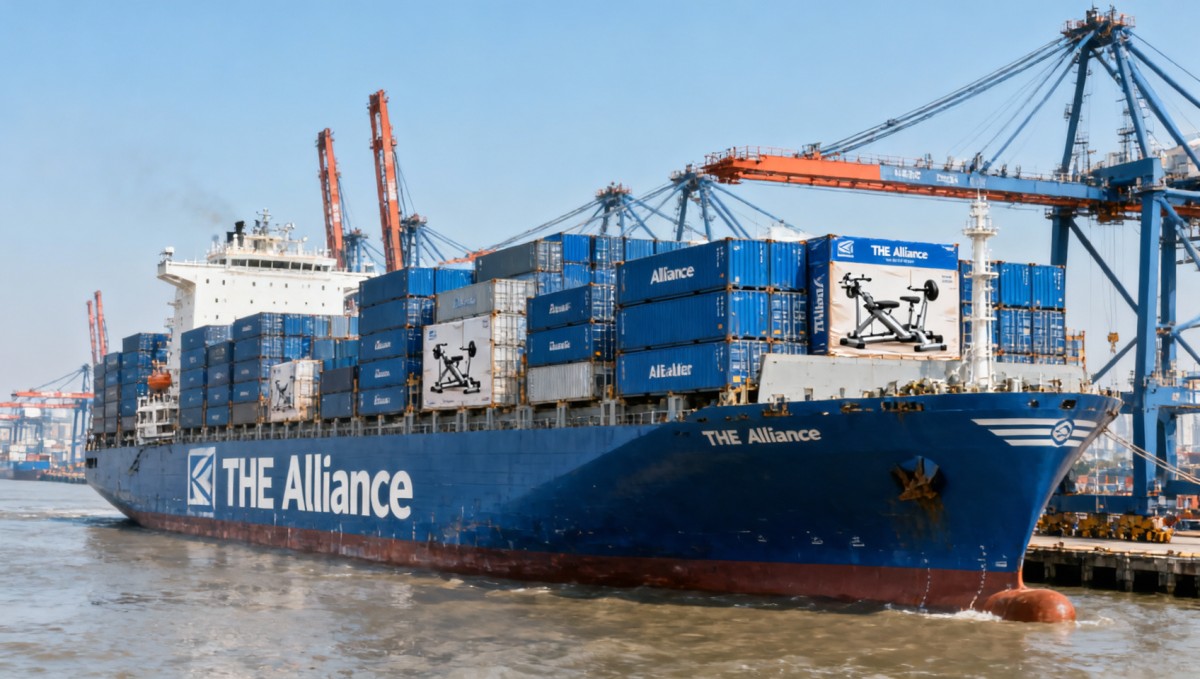
In summary, the THE Alliance capacity reduction represents a tangible escalation in trans-Pacific shipping friction—not a temporary anomaly. Its significance lies not in scale alone, but in how it compounds pre-existing vulnerabilities for time-sensitive, high-volume consumer durables. Current interpretation should focus on operational adaptation, not speculation about reversal or escalation.
Source: Official capacity advisory issued by THE Alliance on April 28, 2026. Note: Ongoing developments—including potential labor action at the Port of Los Angeles and subsequent carrier responses—remain subject to verification and will require continued observation.
Related Intelligence
 2026/789 on Beauty Device Packaging Takes Effect") Beauty DevicesApr 29, 2026EU Regulation (EU) 2026/789 on Beauty Device Packaging Takes EffectEU Regulation (EU) 2026/789 mandates 30% recycled plastic & LCA declarations for beauty device packaging — act now to avoid Amazon.de/fr rejections!
Beauty DevicesApr 29, 2026EU Regulation (EU) 2026/789 on Beauty Device Packaging Takes EffectEU Regulation (EU) 2026/789 mandates 30% recycled plastic & LCA declarations for beauty device packaging — act now to avoid Amazon.de/fr rejections! Electronic & RC ToysApr 29, 2026ICTA: RC Toy Orders Shift to South China, Lead Time Cuts to 6 WeeksICTA reports RC toy orders shifting to South China—78% now flow to Guangdong’s cluster, cutting lead times to just 6 weeks. Act now to optimize sourcing, compliance & logistics.
 STEM & Educational ToysApr 29, 2026CPSC Nanomaterial Migration Rule for STEM Toys Effective Q3 2026CPSC Nanomaterial Migration Rule for STEM Toys: New ASTM F963–24 testing (≤0.05 mg/cm²/h) mandatory from Oct 1, 2026—avoid detention & recalls.
 Fitness EquipmentApr 29, 2026THE Alliance Cuts Shanghai–LA Capacity by 22%: Fitness Equipment Delays ExtendFitness equipment shippers: THE Alliance cuts Shanghai–LA capacity by 22% in May 2026—delays, surcharges, and 12–14-week bookings loom. Act now.
 Smart Pet DevicesApr 29, 2026Japan METI Expands Smart Pet Device White List, 10-Day Certification for Chinese DevicesJapan METI expands Smart Pet Device white list—Bluetooth 5.3+ collars & AI feeders now qualify for fast 10-day certification. Key opportunity for Chinese exporters.
 Infant Feeding & CareApr 29, 2026ASEAN-FFL 2026: RCEP Infant Feeding Labeling Rules Take EffectASEAN-FFL 2026 labeling rules take effect April 2026—ensure RCEP infant feeding product compliance now to avoid shelf bans & delays.
 Corporate & Seasonal GiftsApr 29, 2026Germany UBA to Pilot Carbon Labelling for Corporate GiftsGermany UBA's 2026 carbon labelling pilot for corporate gifts mandates ISO 14067 LCAs — vital for Chinese exporters, printers & ink suppliers targeting EU green procurement.
 Nursery Furniture & MonitorsApr 29, 2026Vietnam MOIT Eases Infant Monitor Registration, Requires NMPA Class II FilingVietnam MOIT eases infant monitor registration: NMPA Class II filing now accepted—skip local testing, cut time-to-market. Key for China-Vietnam medtech exporters.
 Camping & WaterApr 29, 2026SASO Mandates IP6X + Salt Spray for Camping Power & Inflators in Saudi ArabiaSASO mandates IP6X + salt spray for camping power stations & inflators in Saudi Arabia—act now to avoid shipment delays and customs rejection.
") Skincare OEMApr 29, 2026FDA Adds Plant Stem Cell Extract Code to CPIS (Apr 2026)FDA adds 'Plant Stem Cell Extract' code to CPIS—urgent compliance action needed for skincare OEMs, suppliers & importers before July 1, 2026.
Skincare OEMApr 29, 2026FDA Adds Plant Stem Cell Extract Code to CPIS (Apr 2026)FDA adds 'Plant Stem Cell Extract' code to CPIS—urgent compliance action needed for skincare OEMs, suppliers & importers before July 1, 2026. Electronic & RC ToysApr 28, 2026ICTA 2026 Q2 RC Toy Sourcing Report: Shift to Guangdong ClusterICTA 2026 Q2 RC Toy Sourcing Report reveals 68% of global electronic RC toy orders shifting to Guangdong’s Shenzhen–Dongguan–Zhongshan cluster — driven by dual-band modules, UL9990 batteries & rapid prototyping. Act now.
 Skincare OEMApr 28, 2026FDA Adds Plant Stem Cell Extract Code to CPIS SystemFDA adds COS-PLS-2026 code for plant stem cell extract in CPIS — vital for skincare OEMs, suppliers & U.S. importers. Act now to ensure compliance by July 1, 2026.
 Nursery Furniture & MonitorsApr 28, 2026Vietnam Exempts Infant Monitors from Local Type TestingVietnam exempts infant monitors from local type testing—leverage your NMPA Class II filing to fast-track Vietnam market entry starting June 1, 2026.