
EN14683:2026 Medical Mask Standard Enforced from 9 May 2026
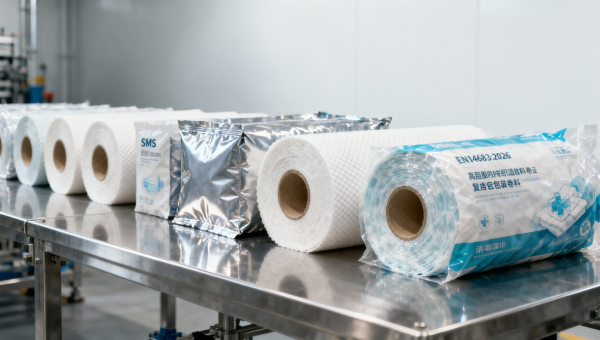
On 9 May 2026, the revised EU standard EN14683:2026 for medical masks enters mandatory application. Its new requirements — bacterial filtration efficiency (BFE) ≥99% at 0.1 μm and resistance to synthetic blood penetration at 160 mmHg — now extend beyond traditional medical masks to include cross-sector products with medical-grade functional claims, such as nonwoven face covers for beauty devices, inner-seal films for premium skincare sets, and composite packaging for disinfecting wipes. Cosmetic and personal care OEMs in China, particularly those supplying into EU markets, must reassess material compliance and testing protocols.
Event Overview
The European standard EN14683:2026 for medical masks becomes mandatory on 9 May 2026. It introduces two new mandatory performance criteria: bacterial filtration efficiency (BFE) of at least 99% against 0.1 μm particles, and resistance to synthetic blood penetration under pressure of 160 mmHg. The scope explicitly extends to certain non-traditional products — including nonwoven facial covers for cosmetic devices, inner-seal films used in high-end skincare kits, and composite packaging for disinfecting wipes — provided they carry medical-grade functional claims. Chinese skincare OEM manufacturers report that previously approved SMS nonwoven materials used in cosmetic soft packaging now require retesting, resulting in extended lead times of 12–15 working days.
Industries Affected
Direct Exporters to the EU
Companies exporting beauty or personal care products with medical-grade claims into the EU are directly subject to EN14683:2026 compliance. Because the standard now applies to ancillary items like device covers and inner packaging, exporters must verify whether their product documentation, labeling, or marketing language triggers regulatory coverage — even if the primary product is not classified as a medical device.
Raw Material Suppliers
Suppliers of nonwoven materials — especially SMS (spunbond-meltblown-spunbond) laminates — face renewed demand for certified test reports aligned with EN14683:2026’s updated BFE and synthetic blood penetration requirements. Materials previously qualified under EN14683:2019 may no longer meet the stricter 0.1 μm BFE threshold or the 160 mmHg blood resistance criterion.
Contract Manufacturers (OEM/ODM)
Skincare and beauty OEMs producing private-label kits or bundled accessories must review all components bearing medical-related claims. Internal sealing films, disposable face covers, and wipe packaging substrates may now fall within the standard’s scope — requiring full revalidation, updated technical files, and potential redesign to maintain EU market access.
Supply Chain & Certification Service Providers
Laboratories offering EN14683 testing and Notified Bodies supporting CE marking must accommodate increased demand for dual-parameter validation (BFE at 0.1 μm + synthetic blood penetration). Lead times for certification-related testing have already lengthened by 12–15 working days, per feedback from Chinese OEMs.
Key Considerations and Recommended Actions
Monitor official scope clarifications from EU authorities
While EN14683:2026’s annexes reference ‘products with medical claims’, precise boundaries for terms like ‘medical-grade function’ or ‘intended use’ remain subject to interpretation by national market surveillance authorities. Companies should track guidance issued by the European Commission or notified bodies on borderline cases.
Review product labeling, claims, and packaging documentation
Any explicit or implicit claim suggesting barrier protection, microbial filtration, or clinical hygiene performance — even in marketing copy or user manuals — may bring associated packaging or accessories under EN14683:2026. A systematic audit of all public-facing content is recommended before May 2026.
Confirm material retesting timelines with accredited labs
Given reported delays of 12–15 working days for requalification of SMS nonwovens, procurement and production planning must account for extended validation cycles. Early engagement with testing labs — especially those with EN14683:2026 accreditation — is advisable to secure slots ahead of the enforcement deadline.
Distinguish between regulatory applicability and voluntary positioning
Not all cosmetic packaging requires EN14683:2026 compliance — only those making medical-related claims. Companies should assess whether such claims are essential to market positioning or can be adjusted to avoid triggering the standard, without compromising product integrity or consumer expectations.
Editorial Observation / Industry Insight
Observably, EN14683:2026 represents more than a technical update — it signals an expansion of medical-device-adjacent regulation into adjacent consumer health categories. Analysis shows this extension reflects increasing regulatory attention on functional claims across product ecosystems, not just core devices. From an industry perspective, the standard’s reach into beauty and personal care packaging suggests that compliance is increasingly determined by *how a product is positioned*, not solely by its physical form. Current enforcement timing and documented lab bottlenecks indicate this is already operational reality, not merely a policy signal — though final interpretation of borderline cases remains pending further official clarification.
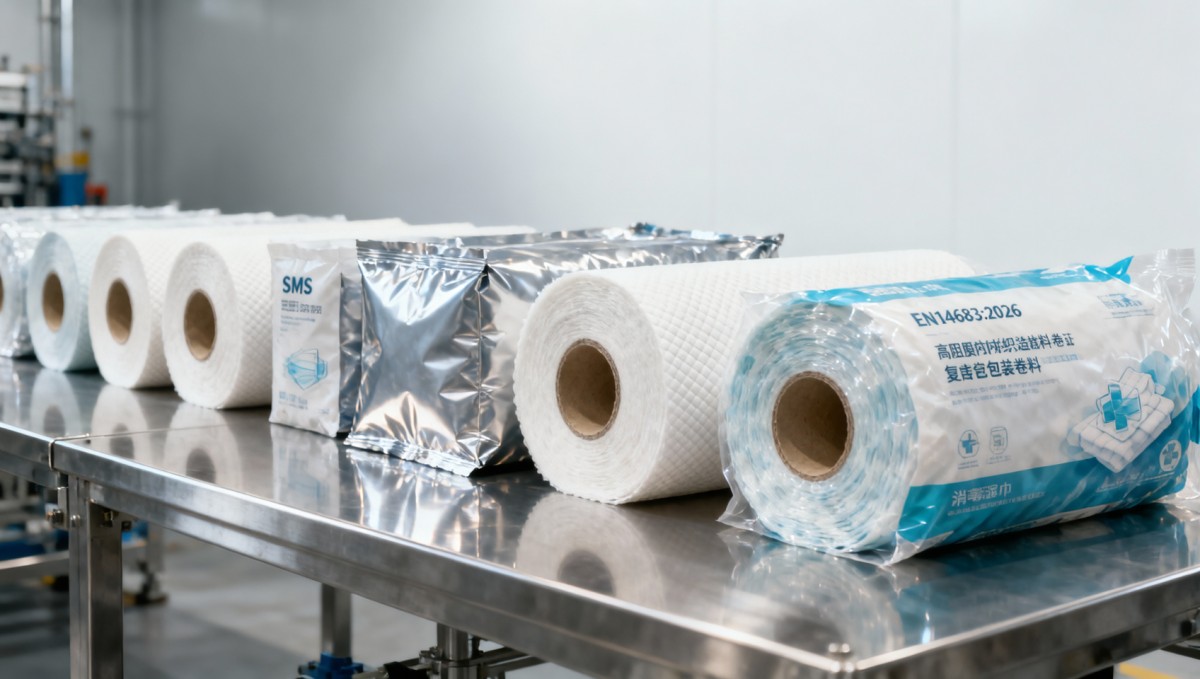
Conclusion: EN14683:2026’s enforcement marks a tangible shift in regulatory expectations for cosmetic and personal care supply chains serving the EU. It does not broadly apply to all packaging, but specifically targets items carrying medical-grade functional claims — making claim management, material validation, and documentation review critical near-term priorities. This development is best understood not as a sudden disruption, but as a formalization of existing regulatory logic around intended use and performance representation.
Source: Official publication of EN14683:2026 in the EU Official Journal; verified manufacturer feedback from Chinese skincare OEM sector (as of Q1 2026).
Note: Ongoing monitoring is advised for official interpretations of ‘medical-grade functional claims’ issued by EU Member State market surveillance authorities.
Related Intelligence
 Skincare OEMAug 16, 2026Amazon Enforces AI Human Metadata Rule for Beauty and Personal Care SellersAmazon now enforces AI human metadata rules for beauty sellers. Learn how to protect listings, traffic, and compliance in skincare, cosmetics, and beauty devices.
 Beauty DevicesAug 15, 2026China to Roll Out Nationwide Cross-Border Cash Pooling for MultinationalsChina to roll out nationwide cross-border cash pooling for multinationals from Sept. 14. Discover how this policy could improve treasury efficiency, liquidity management, and China-linked supply chains.
 Beauty DevicesAug 14, 2026China Imposes Temporary Export Ban on Helium, Affecting Cooling Supply ChainsChina's temporary helium export ban may disrupt cooling supply chains for beauty RF devices and laser systems. Learn what ODMs, buyers, and procurement teams should check now.
![]() Cosmetics & PkgAug 13, 2026PPWR becomes mandatory: Beauty and personal care packaging materials usher in new EPR and PFAS compliance requirementsPPWR takes effect for cosmetics packaging in the EU, bringing EPR registration and PFAS limits. Learn what brands, importers, and suppliers must do now.
Cosmetics & PkgAug 13, 2026PPWR becomes mandatory: Beauty and personal care packaging materials usher in new EPR and PFAS compliance requirementsPPWR takes effect for cosmetics packaging in the EU, bringing EPR registration and PFAS limits. Learn what brands, importers, and suppliers must do now. Cosmetics & PkgAug 12, 2026EU PPWR Now Enforced for Beauty Packaging ComplianceEU PPWR now enforced for beauty packaging compliance: learn how EPR, ERN, heavy metals and PFAS rules affect EU exports, customs clearance and platform sales.
 Cosmetics & PkgAug 11, 2026EU PPWR Rules Take Effect on Aug. 12 for Beauty PackagingEU PPWR rules for beauty packaging take effect on Aug. 12, 2026. Learn key compliance steps, EPR, labeling, PFAS limits, and how to avoid customs delays and fines.
 Smart Pet DevicesAug 10, 2026EU EPR Rules to Cover Smart Pet Devices on Aug. 15EU EPR Rules will cover smart pet devices from Aug. 15, 2026. Learn how smart collars, feeders, and monitoring devices can avoid delisting, customs delays, and compliance risks in the EU.
 Infant Feeding & CareAug 09, 2026CPSC Recalls Baby Sleep Sacks Over Undeclared TDCPPCPSC Recalls Baby Sleep Sacks Over Undeclared TDCPP: learn how this 2026 recall impacts CPC documents, third-party testing, and U.S. baby product compliance for exporters.
 Infant Feeding & CareAug 08, 2026ECHA Adds 5 SVHCs, Importer Notices Due From Oct 2026ECHA adds 5 SVHCs to the Candidate List, with importer notices due from October 2026. Learn how REACH affects exporters, supply chains, and documentation readiness.
 Baby Gear & StrollersAug 07, 2026CPSC Revises Crib Rail Standard for November 2026CPSC revises crib rail standard for November 2026, adding dynamic impact tests and mandatory third-party lab testing. Learn how the new rule affects U.S. market access, compliance, and shipments.
 Electronic & RC ToysAug 06, 2026EU to Require EN IEC 62115:2025 for Electronic ToysEU to Require EN IEC 62115:2025 for Electronic Toys from Oct 1, 2026. Learn scope, battery and AI safety updates, CE compliance risks, and how exporters can avoid customs delays.
 Baby Gear & StrollersAug 05, 2026US Stroller Stability Rule Takes Effect Aug. 15US Stroller Stability Rule Takes Effect Aug. 15: learn how new U.S. stroller compliance, ASTM F833-26a, and CPSC testing rules may affect imports, certification, and shipment readiness.
 Infant Feeding & CareAug 04, 2026ECHA Adds 5 SVHCs, Triggering Baby Care Export ReviewECHA adds 5 SVHCs, prompting an urgent baby care export review for EU-bound products. Learn the 0.1% threshold risks, compliance steps, and how to avoid customs delays and fines.












