
TÜV Rheinland Releases AI Voice Interaction Safety White Paper for STEM Toys
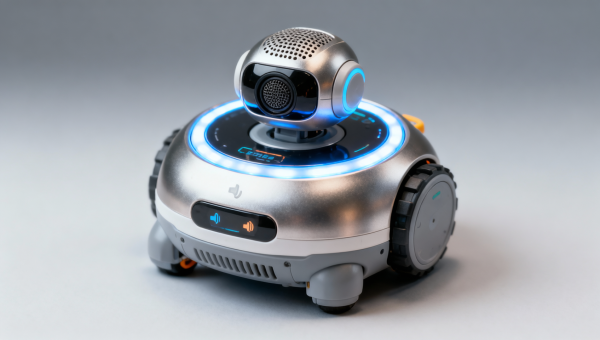
On May 9, 2026, TÜV Rheinland published its white paper AI in Educational Toys – Safety Requirements for Voice Interaction, introducing the world’s first evaluation framework for ‘anti-manipulative voice instruction response’ in children’s voice-interactive toys. The framework includes 12 high-risk semantic interception rules. Its associated test module has been adopted by EU Notified Bodies as a supplementary CE conformity assessment item, effective May 2026. Manufacturers—particularly Chinese STEM toy producers—failing this test will receive CE certificates marked ‘AI functionality restricted’, potentially limiting access to major EU and US retail channels. This development directly affects exporters, OEM/ODM manufacturers, certification service providers, and supply chain stakeholders engaged in AI-enabled educational toys.
Event Overview
On May 9, 2026, TÜV Rheinland officially released the white paper titled AI in Educational Toys – Safety Requirements for Voice Interaction. It defines a new assessment framework focused on ‘anti-manipulative instruction response’ for voice-based interactions in STEM toys intended for children. The framework specifies 12 categories of high-risk semantic patterns requiring interception. This test module has been formally accepted by EU Notified Bodies as an optional but increasingly consequential supplement to CE certification procedures. Certification bodies began accepting submissions for this module starting in May 2026. For Chinese STEM toy manufacturers, non-compliance results in CE certificates bearing the notation ‘AI functionality restricted’.
Industries Affected
Export-Oriented Toy Manufacturers (especially China-based)
These companies are directly subject to CE certification requirements for EU market access. Since the new module is now part of the CE assessment pathway, failure to pass it triggers a functional limitation label—impacting product positioning, retailer acceptance, and cross-border e-commerce eligibility. The impact is operational (certification delays), commercial (channel rejection risk), and reputational (perceived safety gap).
OEM/ODM Suppliers to Global Brands
Suppliers integrated into international brand supply chains face upstream compliance mandates. Major brands may require pre-certification evidence or contractual adherence to the white paper’s criteria—even before formal regulatory enforcement ramps up. Non-compliance could lead to order cancellations or qualification removal from vendor lists.
Certification & Testing Service Providers
Third-party labs and conformity assessment bodies must now validate technical capability to perform the 12-rule semantic interception testing. Capacity building—including staff training, test script development, and lab accreditation alignment—is required to offer this service. Demand for such testing is expected to rise among clients preparing for Q3–Q4 2026 EU shipments.
Distribution & E-commerce Platform Operators
EU-based importers and online marketplaces (e.g., Amazon DE, OTTO) may begin requesting proof of compliance with the new module as part of vendor onboarding or listing reviews. While not yet mandated by law, platform-level policy updates often precede formal regulation—and can trigger de-listing if documentation is incomplete or inconclusive.
Key Focus Areas and Recommended Actions
Monitor official CE guidance updates from EU Notified Bodies
While the module is currently accepted, its status as a *mandatory* requirement remains pending. Companies should track announcements from NBs—including any timelines for phase-in, scope expansion (e.g., age-group thresholds), or harmonization with EN IEC 62115 amendments.
Prioritize voice-AI products targeting children under 12 for immediate internal review
The white paper explicitly addresses developmental vulnerability in young users. Products marketed to ages 3–12—especially those with open-ended voice assistants—are most likely to undergo scrutiny. Manufacturers should audit current voice interaction logic against the 12 semantic rule categories (e.g., commands prompting self-harm, data sharing, or unauthorized purchases) before engaging external labs.
Distinguish between policy signal and enforceable requirement
This module reflects a strong regulatory signal—not yet a legal obligation under the EU Toy Safety Directive. However, its adoption by NBs means it functions as a *de facto gatekeeper* for CE issuance where AI voice features are claimed. Companies should treat it as operationally binding for new certifications, while noting that legacy CE certificates remain valid unless renewed or amended.
Initiate supplier and lab coordination ahead of Q3 2026 production cycles
Lead times for specialized AI-interaction testing are currently unstandardized. Early engagement with accredited labs (e.g., TÜV Rheinland’s own facilities or authorized partners) helps avoid bottlenecks. OEMs should also align firmware update schedules with test readiness—since voice logic modifications may be needed post-assessment.
Editorial Perspective / Industry Observation
Observably, this white paper represents a targeted regulatory anticipation—not a reaction to widespread harm, but a proactive calibration of AI safety expectations in child-facing products. Analysis shows the 12-rule framework focuses narrowly on *instructional intent manipulation*, rather than general AI performance or data privacy. From an industry perspective, it signals a shift toward behavior-based safety validation in embedded AI systems, moving beyond static hardware checks. Current evidence suggests this is still a voluntary but rapidly institutionalizing benchmark; its real-world weight derives less from legal force and more from market gatekeeping behavior by NBs and retailers. Continued observation is warranted for whether other regions (e.g., UKCA, Canada’s SCC) adopt similar modules—or whether the EU eventually codifies them into harmonized standards.
In summary, the release of TÜV Rheinland’s white paper marks a concrete step toward standardized safety governance for AI voice features in children’s toys. It does not introduce new legislation, but it does activate a new layer of technical due diligence for CE certification. For affected stakeholders, the appropriate stance is neither alarm nor dismissal—but calibrated readiness: treating the module as a near-term operational checkpoint, while tracking how its application evolves across certification practice and channel policy.
Source: TÜV Rheinland official announcement, May 9, 2026; publicly confirmed adoption by EU Notified Bodies as of May 2026. Note: Ongoing monitoring is recommended for potential updates to NB implementation guidance, scope definitions, or integration into future revisions of EN IEC 62115.
Related Intelligence
 Skincare OEMAug 16, 2026Amazon Enforces AI Human Metadata Rule for Beauty and Personal Care SellersAmazon now enforces AI human metadata rules for beauty sellers. Learn how to protect listings, traffic, and compliance in skincare, cosmetics, and beauty devices.
 Beauty DevicesAug 15, 2026China to Roll Out Nationwide Cross-Border Cash Pooling for MultinationalsChina to roll out nationwide cross-border cash pooling for multinationals from Sept. 14. Discover how this policy could improve treasury efficiency, liquidity management, and China-linked supply chains.
 Beauty DevicesAug 14, 2026China Imposes Temporary Export Ban on Helium, Affecting Cooling Supply ChainsChina's temporary helium export ban may disrupt cooling supply chains for beauty RF devices and laser systems. Learn what ODMs, buyers, and procurement teams should check now.
![]() Cosmetics & PkgAug 13, 2026PPWR becomes mandatory: Beauty and personal care packaging materials usher in new EPR and PFAS compliance requirementsPPWR takes effect for cosmetics packaging in the EU, bringing EPR registration and PFAS limits. Learn what brands, importers, and suppliers must do now.
Cosmetics & PkgAug 13, 2026PPWR becomes mandatory: Beauty and personal care packaging materials usher in new EPR and PFAS compliance requirementsPPWR takes effect for cosmetics packaging in the EU, bringing EPR registration and PFAS limits. Learn what brands, importers, and suppliers must do now. Cosmetics & PkgAug 12, 2026EU PPWR Now Enforced for Beauty Packaging ComplianceEU PPWR now enforced for beauty packaging compliance: learn how EPR, ERN, heavy metals and PFAS rules affect EU exports, customs clearance and platform sales.
 Cosmetics & PkgAug 11, 2026EU PPWR Rules Take Effect on Aug. 12 for Beauty PackagingEU PPWR rules for beauty packaging take effect on Aug. 12, 2026. Learn key compliance steps, EPR, labeling, PFAS limits, and how to avoid customs delays and fines.
 Smart Pet DevicesAug 10, 2026EU EPR Rules to Cover Smart Pet Devices on Aug. 15EU EPR Rules will cover smart pet devices from Aug. 15, 2026. Learn how smart collars, feeders, and monitoring devices can avoid delisting, customs delays, and compliance risks in the EU.
 Infant Feeding & CareAug 09, 2026CPSC Recalls Baby Sleep Sacks Over Undeclared TDCPPCPSC Recalls Baby Sleep Sacks Over Undeclared TDCPP: learn how this 2026 recall impacts CPC documents, third-party testing, and U.S. baby product compliance for exporters.
 Infant Feeding & CareAug 08, 2026ECHA Adds 5 SVHCs, Importer Notices Due From Oct 2026ECHA adds 5 SVHCs to the Candidate List, with importer notices due from October 2026. Learn how REACH affects exporters, supply chains, and documentation readiness.
 Baby Gear & StrollersAug 07, 2026CPSC Revises Crib Rail Standard for November 2026CPSC revises crib rail standard for November 2026, adding dynamic impact tests and mandatory third-party lab testing. Learn how the new rule affects U.S. market access, compliance, and shipments.
 Electronic & RC ToysAug 06, 2026EU to Require EN IEC 62115:2025 for Electronic ToysEU to Require EN IEC 62115:2025 for Electronic Toys from Oct 1, 2026. Learn scope, battery and AI safety updates, CE compliance risks, and how exporters can avoid customs delays.
 Baby Gear & StrollersAug 05, 2026US Stroller Stability Rule Takes Effect Aug. 15US Stroller Stability Rule Takes Effect Aug. 15: learn how new U.S. stroller compliance, ASTM F833-26a, and CPSC testing rules may affect imports, certification, and shipment readiness.
 Infant Feeding & CareAug 04, 2026ECHA Adds 5 SVHCs, Triggering Baby Care Export ReviewECHA adds 5 SVHCs, prompting an urgent baby care export review for EU-bound products. Learn the 0.1% threshold risks, compliance steps, and how to avoid customs delays and fines.












