
Australia Enforces New RCM Rules for Beauty & Baby Monitors
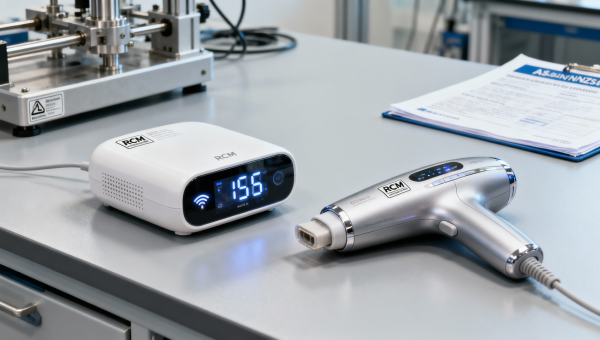
Starting 22 May 2026, Australia’s Australian Competition and Consumer Commission (ACCC) has updated the enforcement requirements for the Regulatory Compliance Mark (RCM), mandating that beauty devices—including RF-based facial devices—and nursery monitors—including Wi-Fi-enabled infant breathing monitors—must pass three distinct assessments: SAA safety certification, EMC (electromagnetic compatibility), and EMI (electromagnetic interference) testing. Reports must be issued by an Australian-licensed testing body. This change directly affects exporters—particularly those based in China—whose existing SAA-only compliant products may face market withdrawal if not upgraded to full RCM compliance.
Event Overview
On 22 May 2026, the ACCC implemented revised RCM enforcement guidelines. Under the update, beauty devices (e.g., radiofrequency facial devices) and nursery furniture & monitors (e.g., Wi-Fi infant respiratory monitors) are explicitly designated as subject to mandatory concurrent SAA, EMC, and EMI testing. Only test reports issued by Australian-accredited bodies qualify for RCM marking. Products previously certified under SAA alone no longer meet RCM eligibility criteria for sale in Australia.
Industries Affected
Direct Exporters (OEM/ODM Manufacturers)
Manufacturers exporting beauty or baby monitoring devices from China to Australia will face extended lead times and higher certification costs due to the added EMC and EMI testing requirements. These tests typically require specialized labs, repeat iterations for design adjustments, and formal validation by Australian-licensed entities—unlike standalone SAA testing, which may have been outsourced regionally.
Supply Chain Service Providers (Testing & Certification Agencies)
Third-party testing laboratories and certification consultants supporting Australian market access must now verify their capacity to deliver integrated SAA+EMC+EMI reporting aligned with ACCC’s licensed-body requirement. Agencies without Australian accreditation—or without partnerships with such bodies—may no longer support full RCM compliance pathways for affected product categories.
Distribution & Retail Partners (Importers & Brand Holders)
Importers and brand owners placing these devices into the Australian market bear legal responsibility for RCM compliance. They must confirm that incoming shipments carry valid, ACCC-recognized test reports covering all three domains. Stock already in distribution but certified only to SAA may be subject to recall or removal upon audit, introducing inventory risk and potential channel disruption.
Key Considerations and Recommended Actions
Monitor official ACCC guidance and licensing updates
Track published lists of ACCC-recognized testing bodies and any clarifications on transitional arrangements. The ACCC has not announced a grace period; therefore, verification of current licensing status for testing partners is essential before initiating new submissions.
Prioritize assessment of high-volume or high-risk SKUs
Focus initial retesting efforts on best-selling or newly launched models in the beauty and nursery monitor categories—especially those with wireless connectivity (e.g., Wi-Fi, Bluetooth), as these are most likely to trigger EMC/EMI failures and require iterative redesign.
Distinguish policy enforcement from technical feasibility
While the rule mandates three-test compliance, actual implementation depends on product architecture. Some legacy devices may require hardware modifications (e.g., shielding, filter upgrades) to pass EMI—meaning certification readiness cannot be assumed solely from prior SAA approval. Engineering review should precede formal lab engagement.
Update procurement and labeling workflows
Revise internal documentation controls to ensure RCM-marked units reflect full SAA+EMC+EMI report numbers—not just SAA IDs. Coordinate with packaging and labeling vendors to prevent premature use of the RCM mark on non-compliant batches during transition.
Editorial Perspective / Industry Observation
Observably, this update signals a tightening of regulatory gatekeeping—not a broad expansion of scope. The ACCC has not introduced new product categories; instead, it has elevated the evidentiary threshold for two existing, high-growth segments where electromagnetic behavior poses measurable consumer and network risks. Analysis shows the move reflects growing alignment with international EMC frameworks (e.g., AS/NZS CISPR standards), rather than an isolated national shift. From an industry perspective, this is less a sudden disruption and more a formalization of expectations that were already emerging in pre-market consultations. Current enforcement appears operational, not transitional—meaning businesses should treat it as effective and binding, not anticipatory.
This development underscores how regulatory convergence increasingly hinges on technical validation depth—not just certification breadth. For export-dependent manufacturers, it reinforces that compliance strategy must evolve alongside product functionality, especially as wireless features proliferate in personal wellness and childcare devices. It also highlights the growing centrality of accredited local representation in mature regulatory markets: overseas test reports, even if technically sound, no longer suffice without formal recognition by the enforcing authority.
The ACCC’s official notice and associated regulatory instruments (AS/NZS 62368.1, AS/NZS CISPR 32, AS/NZS CISPR 35) serve as primary sources. No transitional provisions or grandfathering clauses have been publicly confirmed; this remains a point requiring ongoing observation.
Related Intelligence
 Skincare OEMAug 16, 2026Amazon Enforces AI Human Metadata Rule for Beauty and Personal Care SellersAmazon now enforces AI human metadata rules for beauty sellers. Learn how to protect listings, traffic, and compliance in skincare, cosmetics, and beauty devices.
 Beauty DevicesAug 15, 2026China to Roll Out Nationwide Cross-Border Cash Pooling for MultinationalsChina to roll out nationwide cross-border cash pooling for multinationals from Sept. 14. Discover how this policy could improve treasury efficiency, liquidity management, and China-linked supply chains.
 Beauty DevicesAug 14, 2026China Imposes Temporary Export Ban on Helium, Affecting Cooling Supply ChainsChina's temporary helium export ban may disrupt cooling supply chains for beauty RF devices and laser systems. Learn what ODMs, buyers, and procurement teams should check now.
![]() Cosmetics & PkgAug 13, 2026PPWR becomes mandatory: Beauty and personal care packaging materials usher in new EPR and PFAS compliance requirementsPPWR takes effect for cosmetics packaging in the EU, bringing EPR registration and PFAS limits. Learn what brands, importers, and suppliers must do now.
Cosmetics & PkgAug 13, 2026PPWR becomes mandatory: Beauty and personal care packaging materials usher in new EPR and PFAS compliance requirementsPPWR takes effect for cosmetics packaging in the EU, bringing EPR registration and PFAS limits. Learn what brands, importers, and suppliers must do now. Cosmetics & PkgAug 12, 2026EU PPWR Now Enforced for Beauty Packaging ComplianceEU PPWR now enforced for beauty packaging compliance: learn how EPR, ERN, heavy metals and PFAS rules affect EU exports, customs clearance and platform sales.
 Cosmetics & PkgAug 11, 2026EU PPWR Rules Take Effect on Aug. 12 for Beauty PackagingEU PPWR rules for beauty packaging take effect on Aug. 12, 2026. Learn key compliance steps, EPR, labeling, PFAS limits, and how to avoid customs delays and fines.
 Smart Pet DevicesAug 10, 2026EU EPR Rules to Cover Smart Pet Devices on Aug. 15EU EPR Rules will cover smart pet devices from Aug. 15, 2026. Learn how smart collars, feeders, and monitoring devices can avoid delisting, customs delays, and compliance risks in the EU.
 Infant Feeding & CareAug 09, 2026CPSC Recalls Baby Sleep Sacks Over Undeclared TDCPPCPSC Recalls Baby Sleep Sacks Over Undeclared TDCPP: learn how this 2026 recall impacts CPC documents, third-party testing, and U.S. baby product compliance for exporters.
 Infant Feeding & CareAug 08, 2026ECHA Adds 5 SVHCs, Importer Notices Due From Oct 2026ECHA adds 5 SVHCs to the Candidate List, with importer notices due from October 2026. Learn how REACH affects exporters, supply chains, and documentation readiness.
 Baby Gear & StrollersAug 07, 2026CPSC Revises Crib Rail Standard for November 2026CPSC revises crib rail standard for November 2026, adding dynamic impact tests and mandatory third-party lab testing. Learn how the new rule affects U.S. market access, compliance, and shipments.
 Electronic & RC ToysAug 06, 2026EU to Require EN IEC 62115:2025 for Electronic ToysEU to Require EN IEC 62115:2025 for Electronic Toys from Oct 1, 2026. Learn scope, battery and AI safety updates, CE compliance risks, and how exporters can avoid customs delays.
 Baby Gear & StrollersAug 05, 2026US Stroller Stability Rule Takes Effect Aug. 15US Stroller Stability Rule Takes Effect Aug. 15: learn how new U.S. stroller compliance, ASTM F833-26a, and CPSC testing rules may affect imports, certification, and shipment readiness.
 Infant Feeding & CareAug 04, 2026ECHA Adds 5 SVHCs, Triggering Baby Care Export ReviewECHA adds 5 SVHCs, prompting an urgent baby care export review for EU-bound products. Learn the 0.1% threshold risks, compliance steps, and how to avoid customs delays and fines.












