
Hospitalar 2026 Closes: Lomitech Secures Latin American Orders for Chronic Disease Management Solutions
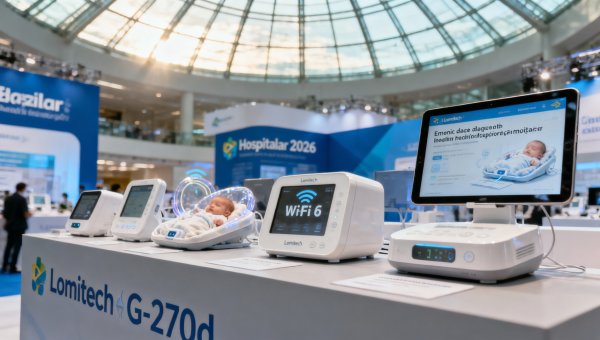
Hospitalar 2026 — the 31st edition of Brazil’s leading healthcare exhibition — concluded on May 22, 2026. The event signaled a notable shift in procurement priorities across Latin America’s health tech and infant monitoring sectors, with implications for medical device exporters, ODM manufacturers, regulatory compliance providers, and supply chain stakeholders.
Event Overview
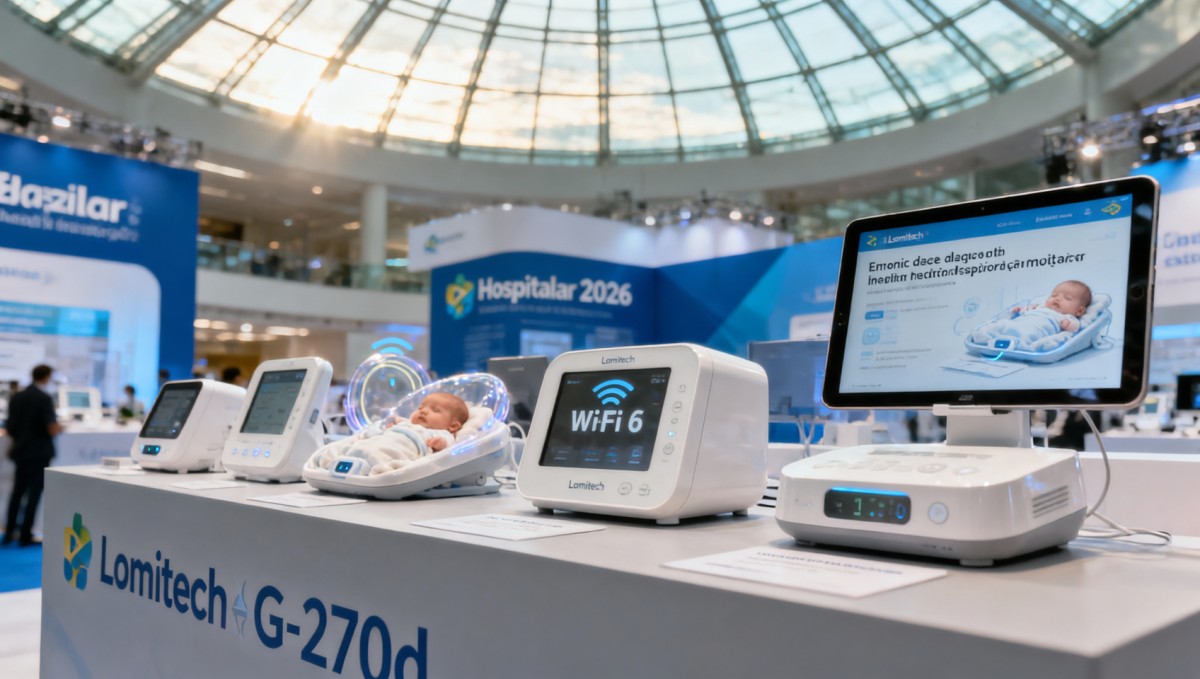
The Hospitalar 2026 exhibition took place in São Paulo and closed on May 22, 2026. At booth G-270d, Lomitech showcased its digital chronic disease management solution covering full-spectrum home health monitoring. The company secured binding agreements with 12 distributors across Latin America. Concurrently, multiple exhibitors specializing in nursery furniture and infant monitors reported increased demand for devices compliant with new ANVISA requirements — specifically, mandatory integration of Wi-Fi 6 and Portuguese-language user interfaces for infant respiratory and motion monitoring equipment.
Industries Affected
Medical Device Exporters
Exporters targeting Latin America are now encountering stronger emphasis on system-level localization — not just CE or FDA certification, but functional adaptation to local connectivity standards (e.g., Wi-Fi 6) and language-specific UI/UX. This raises barriers for legacy hardware-only offerings.
ODM/Contract Manufacturers Serving Infant Monitoring Segment
Manufacturers producing nursery monitors or embedded modules face revised design mandates: hardware must support regional wireless protocols and software stacks must include localized firmware and interface layers. This shifts value capture toward firms capable of integrated hardware-software development and regulatory documentation in Portuguese.
Regulatory & Compliance Service Providers
Firms offering ANVISA registration support, technical file preparation, or local representative services are seeing heightened demand for bilingual (Portuguese–English) documentation review and testing coordination — particularly for wireless interoperability and UI accessibility validation.
Supply Chain & Logistics Operators
Importers and logistics partners handling infant monitoring or chronic care devices must now verify pre-shipment compliance evidence (e.g., Wi-Fi 6 certification reports, Portuguese UI verification logs) before customs clearance in Brazil — adding verification steps to standard import workflows.
What Relevant Businesses or Practitioners Should Focus On
Monitor official updates from ANVISA on implementation timelines
While the requirement for Wi-Fi 6 and Portuguese UI is confirmed, the effective date for enforcement beyond new registrations remains pending. Stakeholders should track ANVISA’s official notices (e.g., Resoluções da Diretoria Colegiada) for phase-in schedules and transitional provisions.
Prioritize product categories where local connectivity and language compliance are non-negotiable
Infant respiratory monitors, wearable chronic disease trackers, and home-based diagnostic gateways are highest-risk categories under the new expectations. Firms should audit current product portfolios against these two criteria first.
Distinguish between regulatory signals and commercial readiness
The surge in ODM inquiries reflects early market response — not yet widespread enforcement. Companies should treat this as a signal to initiate internal capability upgrades (e.g., firmware localization pipelines, RF test lab partnerships), not an immediate mandate to halt shipments of non-compliant stock.
Prepare cross-functional alignment between engineering, regulatory, and sales teams
Localizing UI and integrating Wi-Fi 6 requires coordinated input from firmware developers, RF engineers, UX designers fluent in Portuguese, and regulatory affairs staff. Establishing joint review checkpoints ahead of product launch cycles is now operationally essential.
Editorial Perspective / Industry Observation
Observably, Hospitalar 2026 did not introduce new regulations — rather, it crystallized an emerging procurement norm: Latin American buyers are increasingly treating local technical and linguistic adaptation as a baseline qualification, not a value-add option. Analysis shows this reflects broader regional trends toward digital sovereignty and health data localization, especially in public-sector tenders and private payer networks. From an industry perspective, this is currently best understood as a directional signal — not yet a fully enforced standard — but one that is accelerating product development roadmaps and reshaping vendor selection criteria in real time. Continued observation is warranted as ANVISA formalizes enforcement mechanisms and Brazilian hospitals scale remote patient monitoring deployments.
In summary, Hospitalar 2026 underscores a structural evolution in Latin America’s health technology procurement: from standalone hardware imports toward system-integrated, locally adapted solutions. For stakeholders, this is less about reacting to a single policy change and more about recognizing a durable shift in how functionality, compliance, and user experience are jointly evaluated in the region. It is better interpreted today as an operational inflection point than as a completed regulatory transition.
Source: Official Hospitalar 2026 exhibition summary (released May 22, 2026); publicly reported statements by Lomitech and multiple nursery monitor exhibitors at booth interviews; ANVISA’s draft guidance on connected medical devices (RDC No. 481/2025, under consultation).
Noted for ongoing observation: Final publication date and scope of ANVISA’s Wi-Fi 6 and UI localization enforcement directive.
Related Intelligence
 Skincare OEMAug 16, 2026Amazon Enforces AI Human Metadata Rule for Beauty and Personal Care SellersAmazon now enforces AI human metadata rules for beauty sellers. Learn how to protect listings, traffic, and compliance in skincare, cosmetics, and beauty devices.
 Beauty DevicesAug 15, 2026China to Roll Out Nationwide Cross-Border Cash Pooling for MultinationalsChina to roll out nationwide cross-border cash pooling for multinationals from Sept. 14. Discover how this policy could improve treasury efficiency, liquidity management, and China-linked supply chains.
 Beauty DevicesAug 14, 2026China Imposes Temporary Export Ban on Helium, Affecting Cooling Supply ChainsChina's temporary helium export ban may disrupt cooling supply chains for beauty RF devices and laser systems. Learn what ODMs, buyers, and procurement teams should check now.
![]() Cosmetics & PkgAug 13, 2026PPWR becomes mandatory: Beauty and personal care packaging materials usher in new EPR and PFAS compliance requirementsPPWR takes effect for cosmetics packaging in the EU, bringing EPR registration and PFAS limits. Learn what brands, importers, and suppliers must do now.
Cosmetics & PkgAug 13, 2026PPWR becomes mandatory: Beauty and personal care packaging materials usher in new EPR and PFAS compliance requirementsPPWR takes effect for cosmetics packaging in the EU, bringing EPR registration and PFAS limits. Learn what brands, importers, and suppliers must do now. Cosmetics & PkgAug 12, 2026EU PPWR Now Enforced for Beauty Packaging ComplianceEU PPWR now enforced for beauty packaging compliance: learn how EPR, ERN, heavy metals and PFAS rules affect EU exports, customs clearance and platform sales.
 Cosmetics & PkgAug 11, 2026EU PPWR Rules Take Effect on Aug. 12 for Beauty PackagingEU PPWR rules for beauty packaging take effect on Aug. 12, 2026. Learn key compliance steps, EPR, labeling, PFAS limits, and how to avoid customs delays and fines.
 Smart Pet DevicesAug 10, 2026EU EPR Rules to Cover Smart Pet Devices on Aug. 15EU EPR Rules will cover smart pet devices from Aug. 15, 2026. Learn how smart collars, feeders, and monitoring devices can avoid delisting, customs delays, and compliance risks in the EU.
 Infant Feeding & CareAug 09, 2026CPSC Recalls Baby Sleep Sacks Over Undeclared TDCPPCPSC Recalls Baby Sleep Sacks Over Undeclared TDCPP: learn how this 2026 recall impacts CPC documents, third-party testing, and U.S. baby product compliance for exporters.
 Infant Feeding & CareAug 08, 2026ECHA Adds 5 SVHCs, Importer Notices Due From Oct 2026ECHA adds 5 SVHCs to the Candidate List, with importer notices due from October 2026. Learn how REACH affects exporters, supply chains, and documentation readiness.
 Baby Gear & StrollersAug 07, 2026CPSC Revises Crib Rail Standard for November 2026CPSC revises crib rail standard for November 2026, adding dynamic impact tests and mandatory third-party lab testing. Learn how the new rule affects U.S. market access, compliance, and shipments.
 Electronic & RC ToysAug 06, 2026EU to Require EN IEC 62115:2025 for Electronic ToysEU to Require EN IEC 62115:2025 for Electronic Toys from Oct 1, 2026. Learn scope, battery and AI safety updates, CE compliance risks, and how exporters can avoid customs delays.
 Baby Gear & StrollersAug 05, 2026US Stroller Stability Rule Takes Effect Aug. 15US Stroller Stability Rule Takes Effect Aug. 15: learn how new U.S. stroller compliance, ASTM F833-26a, and CPSC testing rules may affect imports, certification, and shipment readiness.
 Infant Feeding & CareAug 04, 2026ECHA Adds 5 SVHCs, Triggering Baby Care Export ReviewECHA adds 5 SVHCs, prompting an urgent baby care export review for EU-bound products. Learn the 0.1% threshold risks, compliance steps, and how to avoid customs delays and fines.












