
2026 Yiwu International Pet Expo Opens
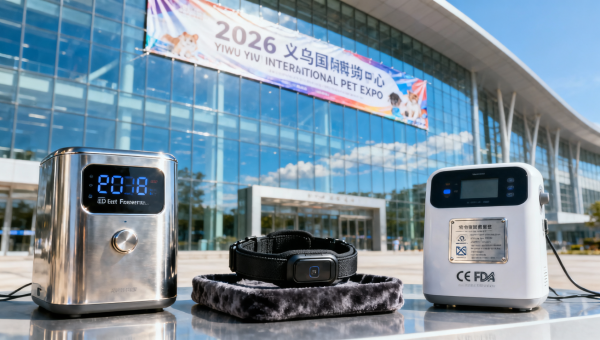
From May 22–24, 2026, the Yiwu International Pet Products Exhibition took place at Yiwu International Expo Center, drawing over 600 source factories and 30,000+ professional visitors across 20,000 m² of exhibition space. The event signals growing international attention toward China’s compliant, modular pet smart hardware supply chain—particularly among importers in North America, Europe, the Middle East, and Latin America. Stakeholders in pet tech manufacturing, veterinary device distribution, cross-border OEM services, and global pet product sourcing should take note.
Event Overview
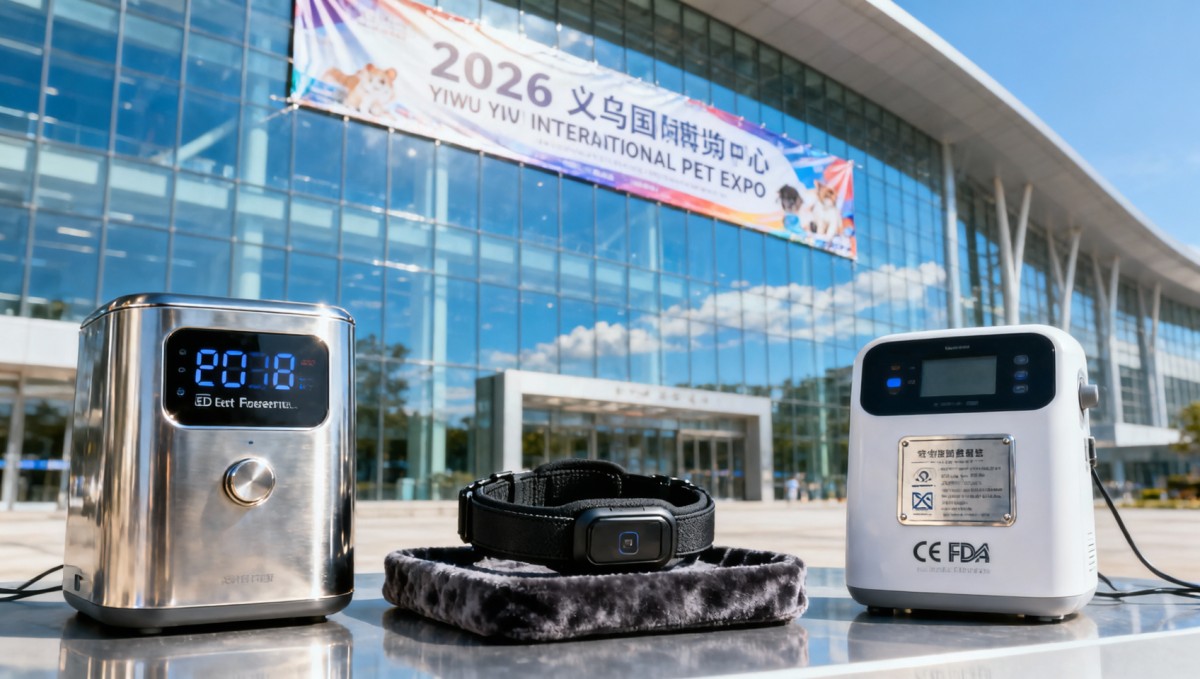
The 2026 Yiwu International Pet Products Exhibition was held from May 22 to 24, 2026, at Yiwu International Expo Center. The exhibition covered 20,000 square meters and hosted more than 600 original equipment manufacturers (OEMs) and over 30,000 professional attendees. Dedicated zones included Smart Pet Devices, Pet Grooming & Travel, and Veterinary Articles. Multiple FDA- and CE-certified products were showcased—including smart feeders, remote-monitoring collars, and portable pet ultrasound devices. Verified reports indicate bulk factory audits and OEM negotiation sessions were initiated by importers from Europe, the Middle East, and Latin America during the event.
Impact on Specific Industry Segments
Direct Trading Enterprises
Importers and export trading firms engaged in B2B pet product distribution are directly affected due to intensified demand for certified smart hardware. Impact manifests as increased scrutiny of compliance documentation (e.g., FDA/CE files), tighter lead-time expectations for sample validation, and rising requests for modular design support (e.g., configurable firmware or branding-ready enclosures).
Contract Manufacturing & OEM Service Providers
Factories offering white-label or co-development services face higher baseline requirements: certification readiness is no longer optional but a prerequisite for serious buyer engagement. Impact includes expanded internal QA workflows for regulatory documentation, greater emphasis on traceable component sourcing, and need for standardized technical dossiers per product category.
Distribution & Channel Operators
Regional distributors and e-commerce platform partners serving overseas markets observed shifting buyer priorities—from price-led sourcing to compliance- and integration-readiness evaluation. Impact includes pressure to pre-validate regulatory alignment for target markets (e.g., FDA registration status for U.S.-bound shipments) and to offer technical support capacity (e.g., firmware localization, cloud API documentation) alongside physical logistics.
Supply Chain Support Services
Third-party testing labs, certification consultants, and logistics providers specializing in medical-grade or electronic pet devices reported elevated inquiry volumes related to FDA 510(k) pathway guidance, CE marking under MDR/IVDR for veterinary tools, and packaging compliance for dual-use electronics. Impact centers on demand for faster turnaround times and bundled service packages covering both certification and documentation handover.
What Relevant Enterprises or Practitioners Should Focus On Now
Monitor official updates on regulatory harmonization initiatives
Analysis shows that FDA and EU authorities have recently published draft guidance on AI-enabled animal health devices. While not yet binding, these documents signal tightening review criteria for remote monitoring and diagnostic tools. Enterprises should track final versions and assess implications for current or planned product roadmaps.
Prioritize verification of certification scope and validity
Observably, multiple exhibitors displayed CE/FDA marks without specifying applicable directives or submission numbers. Buyers conducting post-show factory audits are increasingly requesting full certification dossiers—not just logo usage rights. Firms should proactively audit their own documentation completeness and confirm authorized representative status where required.
Distinguish between market interest and operational readiness
From industry perspective, strong attendance from Latin American and Middle Eastern buyers reflects growing regional demand—but infrastructure gaps (e.g., local after-sales service networks, language-localized user manuals) remain barriers to scale. Companies should assess whether expressed interest aligns with existing service capabilities before committing production capacity.
Prepare for modular delivery expectations in OEM negotiations
Current more relevant understanding is that ‘modular delivery’ refers to standardized mechanical/electrical interfaces, firmware update protocols, and pre-approved labeling templates—not just cosmetic customization. Suppliers should inventory and document interface specifications (e.g., UART pinout, OTA update frequency limits, BLE UUID structure) ahead of upcoming RFQ cycles.
Editorial Perspective / Industry Observation
This event is better understood as a signal—not yet an outcome—of maturation in China’s pet smart hardware ecosystem. Analysis shows that while certification visibility has improved significantly since 2023, actual end-market registration (e.g., FDA listing under owner/operator name) remains uneven across exhibitors. Observably, the shift toward module-based OEM engagement suggests consolidation pressure on smaller factories lacking integrated QA and regulatory functions. From industry angle, the real inflection point will be whether 2027 exhibitions show measurable growth in verified post-show order fulfillment—not just inquiry volume or MOQ commitments.
In summary, the 2026 Yiwu International Pet Expo underscores a structural pivot: international buyers are no longer evaluating Chinese pet hardware solely on cost or novelty, but on verifiable regulatory alignment and scalable integration readiness. This does not represent immediate market saturation or universal compliance—but rather a threshold where baseline expectations have risen measurably. Current interpretation should emphasize capability benchmarking over celebration: it is a marker of evolving buyer standards, not proof of systemic readiness.
Source: Official exhibition data released by Yiwu International Expo Center (May 2026); publicly confirmed attendee and exhibitor figures; verified product certifications cited in on-site press materials.
Note: Ongoing observation is needed regarding post-event order conversion rates, FDA/EU registration verification status of exhibited products, and OEM agreement execution timelines.
Related Intelligence
 Skincare OEMAug 16, 2026Amazon Enforces AI Human Metadata Rule for Beauty and Personal Care SellersAmazon now enforces AI human metadata rules for beauty sellers. Learn how to protect listings, traffic, and compliance in skincare, cosmetics, and beauty devices.
 Beauty DevicesAug 15, 2026China to Roll Out Nationwide Cross-Border Cash Pooling for MultinationalsChina to roll out nationwide cross-border cash pooling for multinationals from Sept. 14. Discover how this policy could improve treasury efficiency, liquidity management, and China-linked supply chains.
 Beauty DevicesAug 14, 2026China Imposes Temporary Export Ban on Helium, Affecting Cooling Supply ChainsChina's temporary helium export ban may disrupt cooling supply chains for beauty RF devices and laser systems. Learn what ODMs, buyers, and procurement teams should check now.
![]() Cosmetics & PkgAug 13, 2026PPWR becomes mandatory: Beauty and personal care packaging materials usher in new EPR and PFAS compliance requirementsPPWR takes effect for cosmetics packaging in the EU, bringing EPR registration and PFAS limits. Learn what brands, importers, and suppliers must do now.
Cosmetics & PkgAug 13, 2026PPWR becomes mandatory: Beauty and personal care packaging materials usher in new EPR and PFAS compliance requirementsPPWR takes effect for cosmetics packaging in the EU, bringing EPR registration and PFAS limits. Learn what brands, importers, and suppliers must do now. Cosmetics & PkgAug 12, 2026EU PPWR Now Enforced for Beauty Packaging ComplianceEU PPWR now enforced for beauty packaging compliance: learn how EPR, ERN, heavy metals and PFAS rules affect EU exports, customs clearance and platform sales.
 Cosmetics & PkgAug 11, 2026EU PPWR Rules Take Effect on Aug. 12 for Beauty PackagingEU PPWR rules for beauty packaging take effect on Aug. 12, 2026. Learn key compliance steps, EPR, labeling, PFAS limits, and how to avoid customs delays and fines.
 Smart Pet DevicesAug 10, 2026EU EPR Rules to Cover Smart Pet Devices on Aug. 15EU EPR Rules will cover smart pet devices from Aug. 15, 2026. Learn how smart collars, feeders, and monitoring devices can avoid delisting, customs delays, and compliance risks in the EU.
 Infant Feeding & CareAug 09, 2026CPSC Recalls Baby Sleep Sacks Over Undeclared TDCPPCPSC Recalls Baby Sleep Sacks Over Undeclared TDCPP: learn how this 2026 recall impacts CPC documents, third-party testing, and U.S. baby product compliance for exporters.
 Infant Feeding & CareAug 08, 2026ECHA Adds 5 SVHCs, Importer Notices Due From Oct 2026ECHA adds 5 SVHCs to the Candidate List, with importer notices due from October 2026. Learn how REACH affects exporters, supply chains, and documentation readiness.
 Baby Gear & StrollersAug 07, 2026CPSC Revises Crib Rail Standard for November 2026CPSC revises crib rail standard for November 2026, adding dynamic impact tests and mandatory third-party lab testing. Learn how the new rule affects U.S. market access, compliance, and shipments.
 Electronic & RC ToysAug 06, 2026EU to Require EN IEC 62115:2025 for Electronic ToysEU to Require EN IEC 62115:2025 for Electronic Toys from Oct 1, 2026. Learn scope, battery and AI safety updates, CE compliance risks, and how exporters can avoid customs delays.
 Baby Gear & StrollersAug 05, 2026US Stroller Stability Rule Takes Effect Aug. 15US Stroller Stability Rule Takes Effect Aug. 15: learn how new U.S. stroller compliance, ASTM F833-26a, and CPSC testing rules may affect imports, certification, and shipment readiness.
 Infant Feeding & CareAug 04, 2026ECHA Adds 5 SVHCs, Triggering Baby Care Export ReviewECHA adds 5 SVHCs, prompting an urgent baby care export review for EU-bound products. Learn the 0.1% threshold risks, compliance steps, and how to avoid customs delays and fines.












