
MFDS Updates Beauty Device Safety Guide: Wireless Charging Bases Require Separate KC Certification
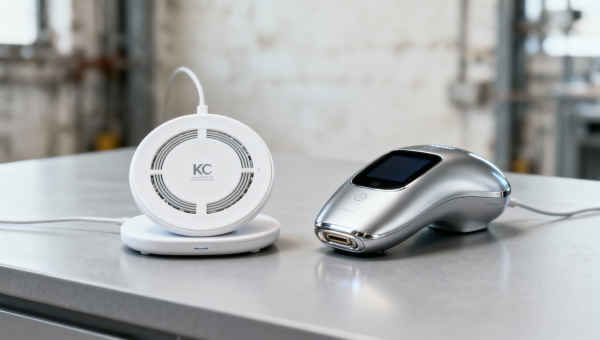
Korea’s Ministry of Food and Drug Safety (MFDS) revised its Guideline for Safety and EMC Review of Beauty Devices on May 2, 2026 — a regulatory update directly affecting manufacturers and exporters of wireless-charging-enabled aesthetic devices, including LED face masks and microcurrent facial devices. The change mandates separate KC certification for wireless charging bases under IEC 62368-1:2026, effective August 1, 2026. This shift signals heightened scrutiny of subsystem-level compliance in the Korean beauty technology market.
Event Overview
On May 2, 2026, the Korean Ministry of Food and Drug Safety (MFDS) published an updated version of its Guideline for Safety and Electromagnetic Compatibility (EMC) Review of Beauty Devices. The revision specifies that, starting August 1, 2026, all beauty devices incorporating wireless charging functionality must treat the wireless charging base as an independent component. Such bases must undergo separate KC certification and comply with the latest edition of IEC 62368-1:2026. Previously issued full-device KC certificates will no longer cover the wireless charging base.
Which Subsectors Are Affected
Direct Exporters and OEM/ODM Manufacturers
Exporters and contract manufacturers supplying wireless-charging beauty devices to the Korean market are directly impacted because their existing KC-certified product configurations — where the base was included as part of the whole device — will no longer satisfy MFDS requirements. This necessitates retesting and recertification of the base unit as a standalone electrical product, potentially delaying shipments and increasing compliance costs.
Component Suppliers and Subsystem Integrators
Suppliers of wireless charging modules or pre-assembled charging bases — particularly those embedded into third-party beauty devices — now face new certification responsibilities. If they previously supplied bases without standalone safety certification, they may need to obtain their own KC 62368-1:2026 certification to support downstream clients’ compliance, altering commercial and technical accountability in the supply chain.
Distribution and Import Agents
Korean importers and distributors of foreign-made beauty devices must verify whether newly imported units include bases covered by valid, base-specific KC certification. Non-compliant imports risk rejection at customs or post-market enforcement actions after August 1, 2026 — especially during MFDS’s routine surveillance inspections targeting high-risk consumer electronics.
What Relevant Companies or Practitioners Should Focus On — And How to Respond Now
Monitor MFDS’s official implementation notices and transitional provisions
The May 2, 2026 guideline is effective August 1, 2026, but MFDS may issue supplementary FAQs, interpretation bulletins, or grace-period clarifications before then. Stakeholders should track announcements via the MFDS website and Korea Radio Research Agency (RRA) portals, particularly regarding grandfathering of legacy certifications or accepted test report validity windows.
Identify affected SKUs and prioritize re-evaluation by June 2026
Companies should audit current product portfolios to isolate models with integrated wireless charging bases. For each, confirm whether the base has been tested independently to IEC 62368-1:2026. Given typical KC certification timelines (8–12 weeks), initiating test planning by mid-June 2026 supports compliance readiness ahead of the August deadline.
Review labeling, user manuals, and packaging documentation
Once certified separately, the wireless charging base must carry its own KC mark, unique model identifier, and safety warnings distinct from the main device. Documentation updates — including bilingual (Korean/English) user instructions and packaging labels — must reflect this functional and regulatory separation to avoid non-conformance during market surveillance.
Engage KC-accredited laboratories with IEC 62368-1:2026 testing capability
Not all KC-notified labs have updated their scope to include IEC 62368-1:2026. Exporters should confirm laboratory accreditation status with the Korea Testing & Research Institute (KTR) or RRA prior to submission — especially for wireless power transfer (WPT) subsystems, which involve additional evaluation criteria beyond standard audio/video or IT equipment.
Editorial Perspective / Industry Observation
Observably, this MFDS update reflects a broader regulatory trend: shifting from end-product conformity assessment toward granular, subsystem-level safety accountability — especially where power delivery interfaces introduce new hazard profiles (e.g., electromagnetic fields, thermal accumulation). Analysis shows the requirement is not merely procedural; it implies that MFDS now classifies wireless charging bases as discrete ‘information and communication technology (ICT) equipment’ rather than ancillary accessories. From an industry perspective, this signals that Korean market access for smart beauty hardware is increasingly aligned with ICT safety frameworks — a departure from historical cosmetic-device hybrid treatment. It is currently more accurate to interpret this as a binding regulatory signal already codified in official guidance, not a pending proposal or soft recommendation.
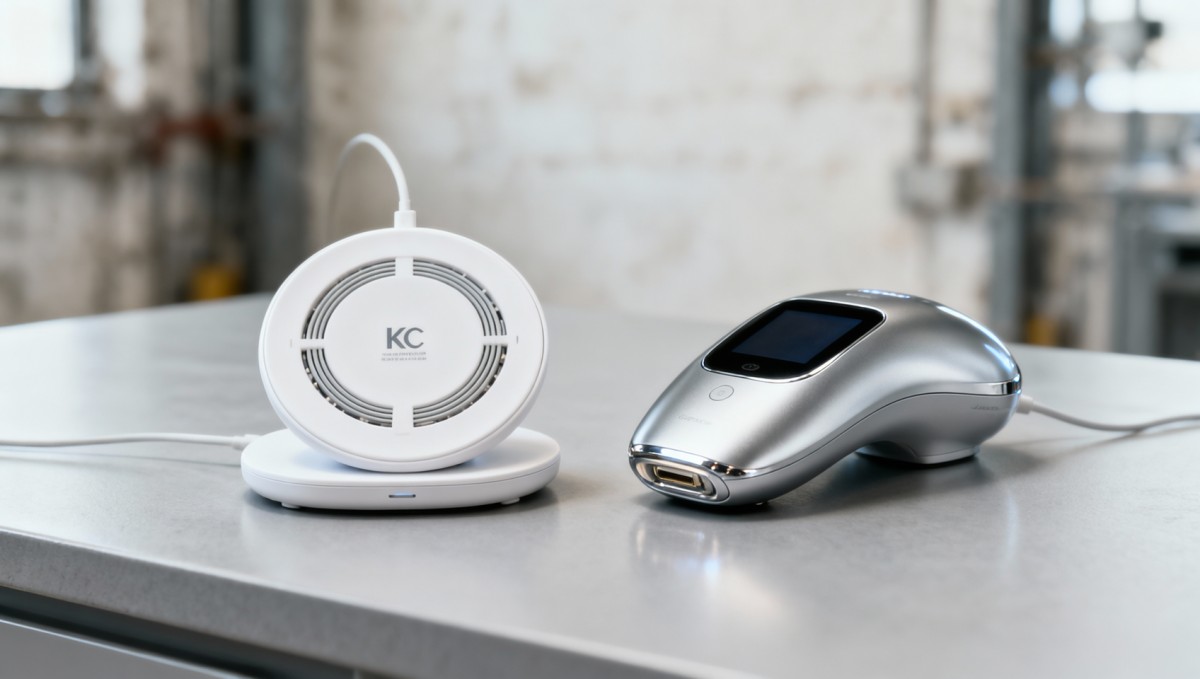
Conclusion
This revision underscores that compliance for beauty technology in Korea is evolving beyond cosmetic claims and EMC thresholds into structured electrical safety governance. For stakeholders, the core implication is operational: wireless charging functionality can no longer be treated as a feature ‘bundled’ within a cosmetic device — it triggers independent certification obligations. The update is best understood not as an isolated administrative change, but as a marker of how convergence between consumer electronics standards and aesthetic device regulation is progressing in key export markets.
Source: Ministry of Food and Drug Safety (MFDS), Republic of Korea — Guideline for Safety and Electromagnetic Compatibility (EMC) Review of Beauty Devices, revised May 2, 2026. Note: Transitional arrangements, if any, remain subject to official MFDS clarification and are under ongoing observation.
Related Intelligence
 Skincare OEMAug 16, 2026Amazon Enforces AI Human Metadata Rule for Beauty and Personal Care SellersAmazon now enforces AI human metadata rules for beauty sellers. Learn how to protect listings, traffic, and compliance in skincare, cosmetics, and beauty devices.
 Beauty DevicesAug 15, 2026China to Roll Out Nationwide Cross-Border Cash Pooling for MultinationalsChina to roll out nationwide cross-border cash pooling for multinationals from Sept. 14. Discover how this policy could improve treasury efficiency, liquidity management, and China-linked supply chains.
 Beauty DevicesAug 14, 2026China Imposes Temporary Export Ban on Helium, Affecting Cooling Supply ChainsChina's temporary helium export ban may disrupt cooling supply chains for beauty RF devices and laser systems. Learn what ODMs, buyers, and procurement teams should check now.
![]() Cosmetics & PkgAug 13, 2026PPWR becomes mandatory: Beauty and personal care packaging materials usher in new EPR and PFAS compliance requirementsPPWR takes effect for cosmetics packaging in the EU, bringing EPR registration and PFAS limits. Learn what brands, importers, and suppliers must do now.
Cosmetics & PkgAug 13, 2026PPWR becomes mandatory: Beauty and personal care packaging materials usher in new EPR and PFAS compliance requirementsPPWR takes effect for cosmetics packaging in the EU, bringing EPR registration and PFAS limits. Learn what brands, importers, and suppliers must do now. Cosmetics & PkgAug 12, 2026EU PPWR Now Enforced for Beauty Packaging ComplianceEU PPWR now enforced for beauty packaging compliance: learn how EPR, ERN, heavy metals and PFAS rules affect EU exports, customs clearance and platform sales.
 Cosmetics & PkgAug 11, 2026EU PPWR Rules Take Effect on Aug. 12 for Beauty PackagingEU PPWR rules for beauty packaging take effect on Aug. 12, 2026. Learn key compliance steps, EPR, labeling, PFAS limits, and how to avoid customs delays and fines.
 Smart Pet DevicesAug 10, 2026EU EPR Rules to Cover Smart Pet Devices on Aug. 15EU EPR Rules will cover smart pet devices from Aug. 15, 2026. Learn how smart collars, feeders, and monitoring devices can avoid delisting, customs delays, and compliance risks in the EU.
 Infant Feeding & CareAug 09, 2026CPSC Recalls Baby Sleep Sacks Over Undeclared TDCPPCPSC Recalls Baby Sleep Sacks Over Undeclared TDCPP: learn how this 2026 recall impacts CPC documents, third-party testing, and U.S. baby product compliance for exporters.
 Infant Feeding & CareAug 08, 2026ECHA Adds 5 SVHCs, Importer Notices Due From Oct 2026ECHA adds 5 SVHCs to the Candidate List, with importer notices due from October 2026. Learn how REACH affects exporters, supply chains, and documentation readiness.
 Baby Gear & StrollersAug 07, 2026CPSC Revises Crib Rail Standard for November 2026CPSC revises crib rail standard for November 2026, adding dynamic impact tests and mandatory third-party lab testing. Learn how the new rule affects U.S. market access, compliance, and shipments.
 Electronic & RC ToysAug 06, 2026EU to Require EN IEC 62115:2025 for Electronic ToysEU to Require EN IEC 62115:2025 for Electronic Toys from Oct 1, 2026. Learn scope, battery and AI safety updates, CE compliance risks, and how exporters can avoid customs delays.
 Baby Gear & StrollersAug 05, 2026US Stroller Stability Rule Takes Effect Aug. 15US Stroller Stability Rule Takes Effect Aug. 15: learn how new U.S. stroller compliance, ASTM F833-26a, and CPSC testing rules may affect imports, certification, and shipment readiness.
 Infant Feeding & CareAug 04, 2026ECHA Adds 5 SVHCs, Triggering Baby Care Export ReviewECHA adds 5 SVHCs, prompting an urgent baby care export review for EU-bound products. Learn the 0.1% threshold risks, compliance steps, and how to avoid customs delays and fines.












