
SASO Mandates Firmware Hash & OTA Logs for Beauty Devices on SABER
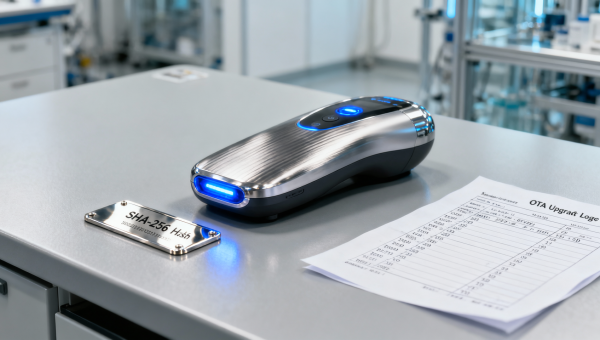
RIYADH, May 12, 2026 — Saudi Standards, Metrology and Quality Organization (SASO) has enforced new technical documentation requirements for beauty devices on its SABER platform, effective 00:00 local time on May 12, 2026. The update targets wireless-enabled, firmware-upgradable aesthetic instruments — a move that directly impacts China-based OEMs, exporters, and compliance service providers serving the Middle East market.
Event Overview
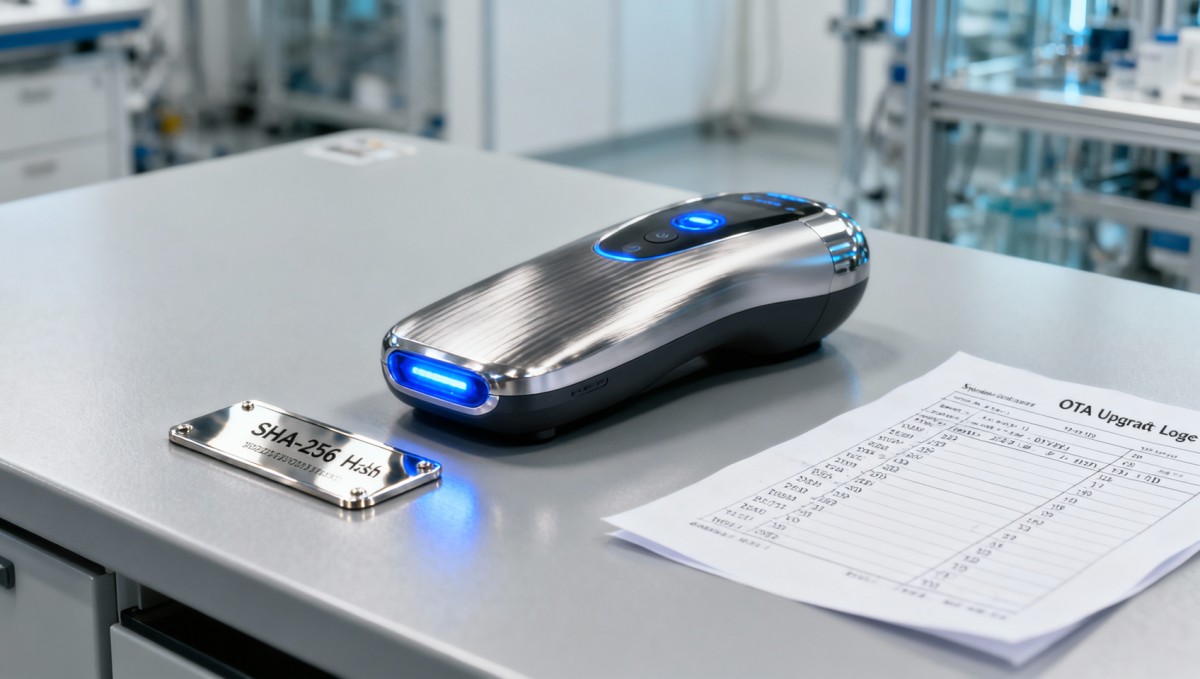
SASO issued an emergency system upgrade notice late on May 11, 2026, announcing that, starting May 12, 2026, all products classified under Beauty Devices with wireless connectivity and over-the-air (OTA) firmware update capability — including radiofrequency (RF) devices and microcurrent instruments — must submit two new artifacts during SABER product registration: (1) SHA-256 hash of the final firmware binary, and (2) a complete, timestamped OTA upgrade log sample covering at least one full successful firmware installation cycle. No transitional grace period is specified in the official notice.
Industries Affected
Direct Trading Enterprises
Exporters and brand owners placing orders with Chinese manufacturers face immediate delays in certificate issuance. Since SABER approval is mandatory for customs clearance, failure to upload compliant firmware artifacts halts registration — resulting in shipment hold-ups and potential demurrage charges. Those relying on third-party conformity assessment bodies (CABs) without embedded firmware verification capacity may experience inconsistent interpretation across certification partners.
Raw Material & Component Suppliers
Suppliers of wireless modules (e.g., Bluetooth SoCs), firmware development kits, or certified OTA cloud platforms are not directly regulated by this requirement — but demand for traceable, version-controlled firmware solutions is rising. Notably, suppliers offering SDKs with built-in hash generation and log export features report increased inbound inquiries from device integrators since May 10.
Contract Manufacturing & OEM Firms
Manufacturers producing white-label or private-label beauty devices are most operationally exposed. Many lack internal firmware versioning discipline: no formal release tagging, no archived binaries, no standardized OTA log schema. As a result, SASO’s mandate adds 5–7 working days to average registration turnaround — and risks non-acceptance if logs lack required metadata (e.g., device ID, firmware version, start/end timestamps, error codes).
Supply Chain Service Providers
Compliance consultancies, testing labs, and SABER agents now require firmware engineering support capabilities. Some labs have begun offering “SABER-ready firmware audit” packages — verifying hash reproducibility, log completeness, and alignment with SASO’s undocumented formatting expectations. However, no SASO-recognized accreditation exists yet for such services.
Key Focus Areas & Recommended Actions
Establish Firmware Release Governance
Maintain a controlled repository for every production firmware binary, tagged with version number, build date, hardware revision, and SHA-256 hash. Automate hash generation during CI/CD pipelines to eliminate manual errors.
Standardize & Archive OTA Upgrade Logs
Configure devices to generate human-readable, UTC-timestamped logs capturing firmware download initiation, signature verification, flash write, reboot sequence, and post-update validation. Store raw logs for at least six months; retain one representative log per firmware version for SABER submission.
Validate SABER Agent Capabilities
Confirm whether your appointed CAB or SABER agent can technically review firmware artifacts — not just accept files. Request documented evidence of prior successful submissions for OTA-capable beauty devices.
Editorial Perspective / Industry Observation
Observably, this is not merely a documentation tightening — it signals SASO’s shift toward active firmware lifecycle oversight, aligning with global trends seen in EU MDR Annex I (software as medical device) and South Korea’s MFDS firmware guidance. Analysis shows SASO is likely building infrastructure to cross-check submitted hashes against future market surveillance samples. From an industry perspective, the requirement better reflects growing regulatory concern over uncontrolled firmware updates compromising device safety — especially in RF-powered consumer devices operating near skin tissue. Current more critical than compliance paperwork is the operational maturity gap between cosmetic device makers and their software development rigor.
Conclusion
This update underscores a broader inflection point: cosmetic electronics are no longer treated as passive hardware, but as networked, updatable systems subject to software-driven safety accountability. For exporters, the takeaway is not procedural inconvenience — it is the irreversible convergence of hardware certification and software governance. A rational interpretation is that firms investing early in firmware traceability will gain both regulatory resilience and long-term differentiation in high-compliance markets.
Source Attribution
Official notice published by Saudi Standards, Metrology and Quality Organization (SASO) via www.saso.gov.sa on May 11, 2026 (Notice Ref: SASO/SABER/BEAUTY/2026-004). SASO has not released a public FAQ or technical implementation guide as of May 12, 2026. Further clarification on log format, hash scope (full binary vs. signed section), and retroactivity for already-certified models remains pending — and is under active monitoring by regional compliance consortia.
Related Intelligence
 Skincare OEMAug 16, 2026Amazon Enforces AI Human Metadata Rule for Beauty and Personal Care SellersAmazon now enforces AI human metadata rules for beauty sellers. Learn how to protect listings, traffic, and compliance in skincare, cosmetics, and beauty devices.
 Beauty DevicesAug 15, 2026China to Roll Out Nationwide Cross-Border Cash Pooling for MultinationalsChina to roll out nationwide cross-border cash pooling for multinationals from Sept. 14. Discover how this policy could improve treasury efficiency, liquidity management, and China-linked supply chains.
 Beauty DevicesAug 14, 2026China Imposes Temporary Export Ban on Helium, Affecting Cooling Supply ChainsChina's temporary helium export ban may disrupt cooling supply chains for beauty RF devices and laser systems. Learn what ODMs, buyers, and procurement teams should check now.
![]() Cosmetics & PkgAug 13, 2026PPWR becomes mandatory: Beauty and personal care packaging materials usher in new EPR and PFAS compliance requirementsPPWR takes effect for cosmetics packaging in the EU, bringing EPR registration and PFAS limits. Learn what brands, importers, and suppliers must do now.
Cosmetics & PkgAug 13, 2026PPWR becomes mandatory: Beauty and personal care packaging materials usher in new EPR and PFAS compliance requirementsPPWR takes effect for cosmetics packaging in the EU, bringing EPR registration and PFAS limits. Learn what brands, importers, and suppliers must do now. Cosmetics & PkgAug 12, 2026EU PPWR Now Enforced for Beauty Packaging ComplianceEU PPWR now enforced for beauty packaging compliance: learn how EPR, ERN, heavy metals and PFAS rules affect EU exports, customs clearance and platform sales.
 Cosmetics & PkgAug 11, 2026EU PPWR Rules Take Effect on Aug. 12 for Beauty PackagingEU PPWR rules for beauty packaging take effect on Aug. 12, 2026. Learn key compliance steps, EPR, labeling, PFAS limits, and how to avoid customs delays and fines.
 Smart Pet DevicesAug 10, 2026EU EPR Rules to Cover Smart Pet Devices on Aug. 15EU EPR Rules will cover smart pet devices from Aug. 15, 2026. Learn how smart collars, feeders, and monitoring devices can avoid delisting, customs delays, and compliance risks in the EU.
 Infant Feeding & CareAug 09, 2026CPSC Recalls Baby Sleep Sacks Over Undeclared TDCPPCPSC Recalls Baby Sleep Sacks Over Undeclared TDCPP: learn how this 2026 recall impacts CPC documents, third-party testing, and U.S. baby product compliance for exporters.
 Infant Feeding & CareAug 08, 2026ECHA Adds 5 SVHCs, Importer Notices Due From Oct 2026ECHA adds 5 SVHCs to the Candidate List, with importer notices due from October 2026. Learn how REACH affects exporters, supply chains, and documentation readiness.
 Baby Gear & StrollersAug 07, 2026CPSC Revises Crib Rail Standard for November 2026CPSC revises crib rail standard for November 2026, adding dynamic impact tests and mandatory third-party lab testing. Learn how the new rule affects U.S. market access, compliance, and shipments.
 Electronic & RC ToysAug 06, 2026EU to Require EN IEC 62115:2025 for Electronic ToysEU to Require EN IEC 62115:2025 for Electronic Toys from Oct 1, 2026. Learn scope, battery and AI safety updates, CE compliance risks, and how exporters can avoid customs delays.
 Baby Gear & StrollersAug 05, 2026US Stroller Stability Rule Takes Effect Aug. 15US Stroller Stability Rule Takes Effect Aug. 15: learn how new U.S. stroller compliance, ASTM F833-26a, and CPSC testing rules may affect imports, certification, and shipment readiness.
 Infant Feeding & CareAug 04, 2026ECHA Adds 5 SVHCs, Triggering Baby Care Export ReviewECHA adds 5 SVHCs, prompting an urgent baby care export review for EU-bound products. Learn the 0.1% threshold risks, compliance steps, and how to avoid customs delays and fines.












