
Malaysia Enforces UPF Re-testing for Kids' Activewear
Malaysia Enforces UPF Re-testing for Kids' Activewear
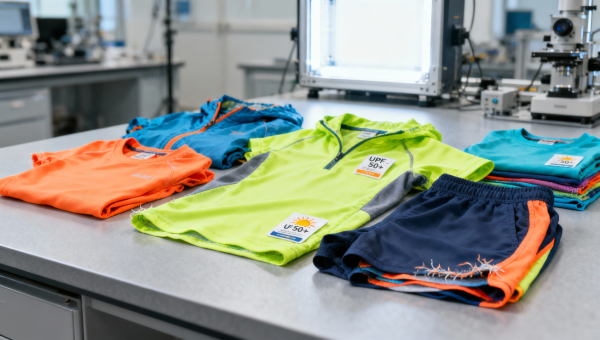
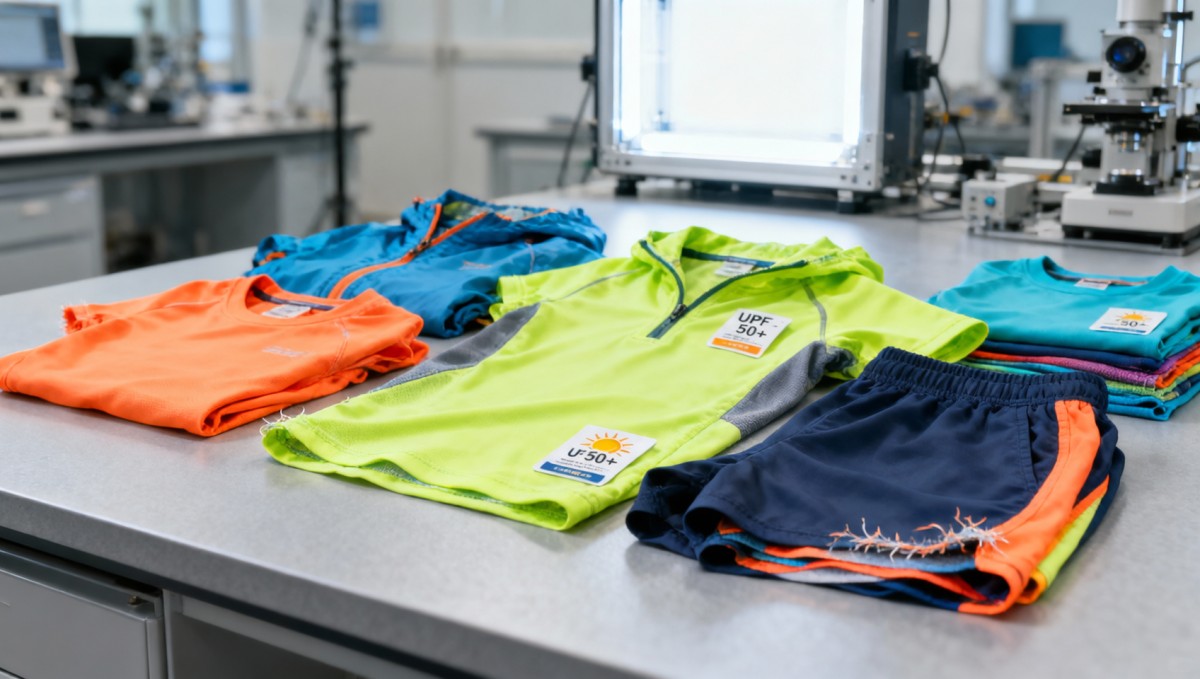
On 11 May 2026, the Standards and Industrial Research Institute of Malaysia (SIRIM) issued a mandatory notice requiring all children’s activewear exported to Malaysia—including sun-protective jackets and quick-dry T-shirts—to undergo re-testing for Ultraviolet Protection Factor (UPF) in accordance with the newly effective ISO 18287:2026 standard. The immediate enforcement has disrupted supply chains for Chinese OEM suppliers, triggering delays across order fulfilment, certification validation, and customs clearance.
Event Overview
SIRIM announced on 11 May 2026 that all existing UPF test reports for children’s activewear destined for the Malaysian market are invalidated. From that date onward, compliance must be demonstrated exclusively via testing conducted under ISO 18287:2026. Over 120 Chinese activewear OEM facilities are now required to resubmit samples; average laboratory turnaround time has extended to 14 days, increasing the risk of delivery defaults on pending export orders.
Industries Affected
Direct Trading Enterprises: Exporters and brand agents handling Malaysia-bound shipments face immediate documentation gaps. Pre-shipment certificates issued under prior standards no longer satisfy SIRIM’s import requirements—causing hold-ups at Malaysian customs and potential rejection of consignments without valid ISO 18287:2026 reports.
Raw Material Procurement Firms: Suppliers of UV-inhibiting yarns (e.g., titanium dioxide– or zinc oxide–infused polyester) must now align technical specifications with the revised test methodology. ISO 18287:2026 introduces stricter fabric conditioning protocols and spectral irradiance weighting, meaning previously approved base materials may require requalification—even if sourced from the same mill.
Contract Manufacturing Enterprises: Chinese OEMs specializing in children’s performance apparel are bearing the brunt of operational strain. Re-testing is not optional—it applies per SKU, per colourway, and per batch where fabric composition varies. With limited accredited labs accepting urgent submissions, production scheduling and inventory planning have become significantly less predictable.
Supply Chain Service Providers: Third-party inspection and certification agencies report surging demand for expedited UPF verification. Lab capacity constraints have led to premium pricing (up to +35% vs. pre-notice rates) and extended lead times for report issuance—directly impacting logistics coordination, letter-of-credit compliance, and shipment release timelines.
Key Considerations and Response Measures
Prioritise SKU-level test mapping
Manufacturers should audit their active Malaysia-bound SKUs against fabric construction, dyeing method, and finish type—not just style number—to identify which items require full re-testing versus those potentially eligible for technical equivalence assessment under SIRIM’s transitional guidance (still pending formal publication).
Engage SIRIM-accredited labs early—and verify scope
Not all labs listed on SIRIM’s portal are yet authorised for ISO 18287:2026. Companies must confirm accreditation status *for this specific standard*, including validity of equipment calibration and staff competency records—especially for multi-layered or laminated garments where edge effects influence UPF outcomes.
Update commercial terms with buyers
Exporters should proactively revise Incoterms and delivery clauses in new contracts to reflect extended testing windows. Where possible, shift to FCA (Free Carrier) terms with defined handover points post-certification, rather than DAP (Delivered At Place), to allocate responsibility for delay risks more equitably.
Editorial Perspective / Industry Observation
Analysis shows this is not merely a technical update but a regulatory signal: Malaysia is consolidating its position as a regional benchmark for functional apparel safety—particularly for vulnerable demographics like children. Observably, the timing coincides with ASEAN’s broader push toward harmonised textile performance standards, suggesting similar UPF mandates may follow in Thailand and Vietnam within 12–18 months. From an industry perspective, the abrupt invalidation of legacy reports reflects growing emphasis on real-world usage simulation (e.g., wet-state and post-wash UPF retention), rather than static lab conditions alone. Current more critical concern lies less in the standard’s stringency and more in the absence of a phased implementation window—making it harder for SMEs to absorb cost and timeline shocks.
Conclusion
This enforcement underscores a wider trend: functional claims in sportswear—especially those tied to health protection—are undergoing intensified scrutiny globally. For manufacturers serving multiple export markets, maintaining modular, upgradable testing frameworks (rather than one-off certifications) will increasingly determine agility and resilience. A rigid ‘certify-and-forget’ approach is no longer viable.
Source Attribution
Official notice published by Standards and Industrial Research Institute of Malaysia (SIRIM) on 11 May 2026, accessible via www.sirim.my (Notice Ref: SIRIM/STD/ACT/2026/004). Transitional provisions, lab accreditation updates, and FAQs remain under review—subject to revision. Monitoring recommended.
Related Intelligence
 Skincare OEMAug 16, 2026Amazon Enforces AI Human Metadata Rule for Beauty and Personal Care SellersAmazon now enforces AI human metadata rules for beauty sellers. Learn how to protect listings, traffic, and compliance in skincare, cosmetics, and beauty devices.
 Beauty DevicesAug 15, 2026China to Roll Out Nationwide Cross-Border Cash Pooling for MultinationalsChina to roll out nationwide cross-border cash pooling for multinationals from Sept. 14. Discover how this policy could improve treasury efficiency, liquidity management, and China-linked supply chains.
 Beauty DevicesAug 14, 2026China Imposes Temporary Export Ban on Helium, Affecting Cooling Supply ChainsChina's temporary helium export ban may disrupt cooling supply chains for beauty RF devices and laser systems. Learn what ODMs, buyers, and procurement teams should check now.
![]() Cosmetics & PkgAug 13, 2026PPWR becomes mandatory: Beauty and personal care packaging materials usher in new EPR and PFAS compliance requirementsPPWR takes effect for cosmetics packaging in the EU, bringing EPR registration and PFAS limits. Learn what brands, importers, and suppliers must do now.
Cosmetics & PkgAug 13, 2026PPWR becomes mandatory: Beauty and personal care packaging materials usher in new EPR and PFAS compliance requirementsPPWR takes effect for cosmetics packaging in the EU, bringing EPR registration and PFAS limits. Learn what brands, importers, and suppliers must do now. Cosmetics & PkgAug 12, 2026EU PPWR Now Enforced for Beauty Packaging ComplianceEU PPWR now enforced for beauty packaging compliance: learn how EPR, ERN, heavy metals and PFAS rules affect EU exports, customs clearance and platform sales.
 Cosmetics & PkgAug 11, 2026EU PPWR Rules Take Effect on Aug. 12 for Beauty PackagingEU PPWR rules for beauty packaging take effect on Aug. 12, 2026. Learn key compliance steps, EPR, labeling, PFAS limits, and how to avoid customs delays and fines.
 Smart Pet DevicesAug 10, 2026EU EPR Rules to Cover Smart Pet Devices on Aug. 15EU EPR Rules will cover smart pet devices from Aug. 15, 2026. Learn how smart collars, feeders, and monitoring devices can avoid delisting, customs delays, and compliance risks in the EU.
 Infant Feeding & CareAug 09, 2026CPSC Recalls Baby Sleep Sacks Over Undeclared TDCPPCPSC Recalls Baby Sleep Sacks Over Undeclared TDCPP: learn how this 2026 recall impacts CPC documents, third-party testing, and U.S. baby product compliance for exporters.
 Infant Feeding & CareAug 08, 2026ECHA Adds 5 SVHCs, Importer Notices Due From Oct 2026ECHA adds 5 SVHCs to the Candidate List, with importer notices due from October 2026. Learn how REACH affects exporters, supply chains, and documentation readiness.
 Baby Gear & StrollersAug 07, 2026CPSC Revises Crib Rail Standard for November 2026CPSC revises crib rail standard for November 2026, adding dynamic impact tests and mandatory third-party lab testing. Learn how the new rule affects U.S. market access, compliance, and shipments.
 Electronic & RC ToysAug 06, 2026EU to Require EN IEC 62115:2025 for Electronic ToysEU to Require EN IEC 62115:2025 for Electronic Toys from Oct 1, 2026. Learn scope, battery and AI safety updates, CE compliance risks, and how exporters can avoid customs delays.
 Baby Gear & StrollersAug 05, 2026US Stroller Stability Rule Takes Effect Aug. 15US Stroller Stability Rule Takes Effect Aug. 15: learn how new U.S. stroller compliance, ASTM F833-26a, and CPSC testing rules may affect imports, certification, and shipment readiness.
 Infant Feeding & CareAug 04, 2026ECHA Adds 5 SVHCs, Triggering Baby Care Export ReviewECHA adds 5 SVHCs, prompting an urgent baby care export review for EU-bound products. Learn the 0.1% threshold risks, compliance steps, and how to avoid customs delays and fines.












