
SASO Updates Smart Beauty Device Certification in Saudi Arabia
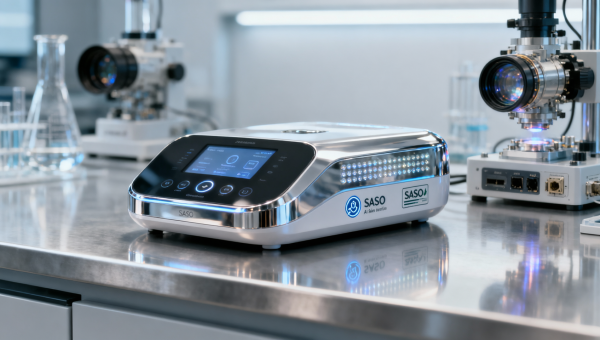
Saudi Arabia’s Standards, Metrology and Quality Organization (SASO) updated its technical regulation for smart beauty devices on May 5, 2026 — introducing mandatory algorithm registration for AI-powered skin recognition functionality. This change directly affects exporters of smart beauty devices from China and other manufacturing countries targeting the Saudi market, particularly those integrating AI-based skin analysis or lesion tracking into RF, LED, or multi-modal aesthetic equipment.
Event Overview
On May 5, 2026, SASO issued Amendment 2 to SASO IEC 62368-1:2026, formally expanding the scope of mandatory conformity assessment to include smart beauty devices featuring AI skin recognition capabilities. The amendment requires manufacturers to submit documentation covering: (i) a summary of training datasets used, (ii) model version number, (iii) localized inference response latency, and (iv) description of privacy protection mechanisms. Without completing this algorithm备案 (registration), Chinese beauty device exporters cannot obtain SASO IECEE CB transfer certification — a prerequisite for market access.
Industries Affected
Direct Exporters (OEM/ODM Manufacturers)
Manufacturers exporting AI-enabled beauty devices (e.g., RF+AI skin analysis, phototherapy+AI pigmentation tracking) to Saudi Arabia are directly impacted. Compliance is now a gatekeeping requirement for CB certificate transfer; failure to register algorithms will halt regulatory clearance and prevent product listing on SASO’s e-platform.
Supply Chain Service Providers (Certification & Lab Testing Firms)
Third-party certification bodies and testing labs supporting Chinese exporters must now incorporate algorithm documentation review into their SASO CB transfer workflows. This introduces new verification steps — including technical validation of latency claims and privacy architecture — beyond standard electrical safety and EMC assessments.
Brand Owners & Distributors (Middle East-Focused)
Brands relying on Saudi distributors or local authorized representatives face delayed launch timelines if upstream OEMs have not completed algorithm registration. Inventory planning, labeling, and post-market surveillance processes may require revision to reflect new documentation obligations tied to AI functionality.
What Relevant Enterprises Should Monitor and Do Now
Track official SASO guidance on algorithm documentation format
As of May 2026, SASO has published the regulatory amendment but not yet released detailed templates or submission portals for algorithm registration. Exporters should monitor SASO’s official portal and accredited certification bodies for standardized forms — especially regarding acceptable data anonymization methods and latency measurement protocols.
Identify and isolate AI-capable SKUs ahead of full compliance rollout
Not all ‘smart’ beauty devices fall under the new rule — only those with AI skin recognition functions explicitly cited (e.g., real-time skin type classification, melanin distribution mapping, or dynamic treatment parameter adjustment based on AI analysis). Companies should audit current product portfolios to distinguish affected models from non-AI variants before initiating registration.
Distinguish policy signal from operational readiness
Analysis shows this amendment marks the first formal integration of AI algorithm governance into SASO’s device certification framework — but enforcement timelines for existing stock remain unspecified. It is not yet confirmed whether grandfathering applies to devices certified under prior versions of SASO IEC 62368-1. Companies should treat newly submitted applications as subject to the amendment, while verifying transitional arrangements for pending cases.
Prepare internal technical documentation aligned with SASO’s four requirements
Manufacturers should begin compiling: (i) dataset summary (geographic origin, sample size, annotation methodology), (ii) version-controlled model ID (e.g., v2.3.1-SAU), (iii) measured inference latency under local network conditions (not cloud-only metrics), and (iv) documented privacy safeguards (e.g., on-device processing, data minimization logic, encryption standards). These documents must be ready for submission upon portal activation.
Editorial Perspective / Industry Observation
Observably, this update reflects SASO’s broader shift toward regulating intelligent features — not just hardware safety — in consumer health-tech products. From an industry perspective, it signals growing alignment with EU AI Act principles (e.g., transparency, traceability, risk-aware deployment), albeit applied narrowly to skin diagnostics in cosmetic devices. It is currently more of a regulatory signal than an immediately enforceable operational mandate: while the amendment is effective as of May 5, 2026, SASO has not yet published implementation guidelines or enforcement deadlines. That said, the linkage between algorithm registration and CB transfer authorization makes early preparation essential — especially given typical lead times for technical documentation review and translation.
Conclusion
This amendment does not introduce new safety testing, but redefines eligibility for market access by adding AI-specific documentation as a prerequisite for certification. It underscores that regulatory pathways for AI-integrated consumer devices in the Middle East are maturing — and that compliance now extends beyond electrical design into algorithmic accountability. Currently, it is more appropriate to understand this as an emerging procedural requirement requiring proactive documentation readiness — rather than a fully deployed enforcement regime.
Source Attribution
Main source: SASO Official Gazette, Amendment 2 to SASO IEC 62368-1:2026, effective May 5, 2026.
Points under ongoing observation: SASO’s forthcoming algorithm submission portal, official templates for dataset summaries, and transitional provisions for devices already in CB evaluation pipeline.
Related Intelligence
 Skincare OEMAug 16, 2026Amazon Enforces AI Human Metadata Rule for Beauty and Personal Care SellersAmazon now enforces AI human metadata rules for beauty sellers. Learn how to protect listings, traffic, and compliance in skincare, cosmetics, and beauty devices.
 Beauty DevicesAug 15, 2026China to Roll Out Nationwide Cross-Border Cash Pooling for MultinationalsChina to roll out nationwide cross-border cash pooling for multinationals from Sept. 14. Discover how this policy could improve treasury efficiency, liquidity management, and China-linked supply chains.
 Beauty DevicesAug 14, 2026China Imposes Temporary Export Ban on Helium, Affecting Cooling Supply ChainsChina's temporary helium export ban may disrupt cooling supply chains for beauty RF devices and laser systems. Learn what ODMs, buyers, and procurement teams should check now.
![]() Cosmetics & PkgAug 13, 2026PPWR becomes mandatory: Beauty and personal care packaging materials usher in new EPR and PFAS compliance requirementsPPWR takes effect for cosmetics packaging in the EU, bringing EPR registration and PFAS limits. Learn what brands, importers, and suppliers must do now.
Cosmetics & PkgAug 13, 2026PPWR becomes mandatory: Beauty and personal care packaging materials usher in new EPR and PFAS compliance requirementsPPWR takes effect for cosmetics packaging in the EU, bringing EPR registration and PFAS limits. Learn what brands, importers, and suppliers must do now. Cosmetics & PkgAug 12, 2026EU PPWR Now Enforced for Beauty Packaging ComplianceEU PPWR now enforced for beauty packaging compliance: learn how EPR, ERN, heavy metals and PFAS rules affect EU exports, customs clearance and platform sales.
 Cosmetics & PkgAug 11, 2026EU PPWR Rules Take Effect on Aug. 12 for Beauty PackagingEU PPWR rules for beauty packaging take effect on Aug. 12, 2026. Learn key compliance steps, EPR, labeling, PFAS limits, and how to avoid customs delays and fines.
 Smart Pet DevicesAug 10, 2026EU EPR Rules to Cover Smart Pet Devices on Aug. 15EU EPR Rules will cover smart pet devices from Aug. 15, 2026. Learn how smart collars, feeders, and monitoring devices can avoid delisting, customs delays, and compliance risks in the EU.
 Infant Feeding & CareAug 09, 2026CPSC Recalls Baby Sleep Sacks Over Undeclared TDCPPCPSC Recalls Baby Sleep Sacks Over Undeclared TDCPP: learn how this 2026 recall impacts CPC documents, third-party testing, and U.S. baby product compliance for exporters.
 Infant Feeding & CareAug 08, 2026ECHA Adds 5 SVHCs, Importer Notices Due From Oct 2026ECHA adds 5 SVHCs to the Candidate List, with importer notices due from October 2026. Learn how REACH affects exporters, supply chains, and documentation readiness.
 Baby Gear & StrollersAug 07, 2026CPSC Revises Crib Rail Standard for November 2026CPSC revises crib rail standard for November 2026, adding dynamic impact tests and mandatory third-party lab testing. Learn how the new rule affects U.S. market access, compliance, and shipments.
 Electronic & RC ToysAug 06, 2026EU to Require EN IEC 62115:2025 for Electronic ToysEU to Require EN IEC 62115:2025 for Electronic Toys from Oct 1, 2026. Learn scope, battery and AI safety updates, CE compliance risks, and how exporters can avoid customs delays.
 Baby Gear & StrollersAug 05, 2026US Stroller Stability Rule Takes Effect Aug. 15US Stroller Stability Rule Takes Effect Aug. 15: learn how new U.S. stroller compliance, ASTM F833-26a, and CPSC testing rules may affect imports, certification, and shipment readiness.
 Infant Feeding & CareAug 04, 2026ECHA Adds 5 SVHCs, Triggering Baby Care Export ReviewECHA adds 5 SVHCs, prompting an urgent baby care export review for EU-bound products. Learn the 0.1% threshold risks, compliance steps, and how to avoid customs delays and fines.












