
Custom Challenge Coins Wholesale: What to Check Before Placing a Large Order
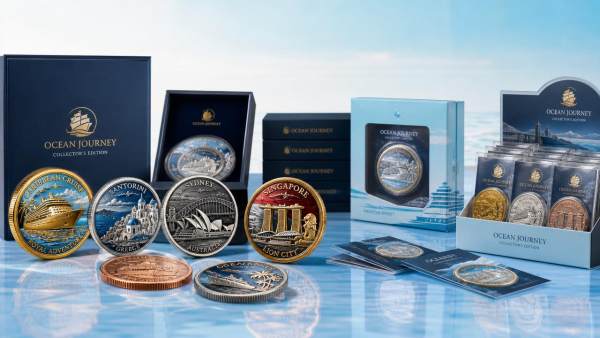
For procurement professionals evaluating custom challenge coins wholesale, a large order involves far more than unit price alone. From material quality and plating consistency to packaging standards, lead times, and supplier compliance, every detail affects cost, delivery, and brand impact. Before committing at scale, it is essential to verify the factors that protect both purchasing efficiency and long-term supply reliability.
What does a smart buyer really need to understand about custom challenge coins wholesale?
At first glance, custom challenge coins wholesale may seem like a straightforward promotional purchase: confirm artwork, approve pricing, and place the order. In reality, bulk sourcing decisions are more complex, especially when the coins will be used by travel service brands, destination operators, museums, event organizers, cruise lines, hotel groups, or tourism marketing agencies. In these sectors, challenge coins often function as commemorative merchandise, VIP gifts, incentive awards, staff recognition items, or limited-edition souvenirs tied to place-based storytelling.
That means procurement teams are not only buying a metal product. They are managing brand presentation, customer experience, fulfillment reliability, and margin protection. A visually strong coin with poor plating durability can damage perceived value. A cheap supplier with weak packaging controls can increase returns. A delayed shipment can miss a seasonal campaign, a destination opening, or a travel trade event. So the real task is to assess whether a supplier can consistently deliver specification accuracy at scale.
For larger wholesale orders, the most important shift in mindset is this: evaluate the total procurement outcome, not just the quoted piece price. Total outcome includes tooling, revisions, defect rate, transit protection, rework risk, customs paperwork, delivery window, and after-sales responsiveness. Buyers who understand this early usually avoid the most expensive mistakes later.
Which product specifications should be checked before approving a large wholesale order?
Before placing a custom challenge coins wholesale order, procurement teams should lock down all technical specifications in writing. Verbal assumptions create quality gaps, especially when several stakeholders are involved across branding, merchandising, and operations. A formal specification sheet reduces misunderstandings and gives the supplier a measurable standard.
Start with base material. Common options include zinc alloy, iron, brass, and copper, each affecting weight, detail sharpness, finish quality, and cost. For premium tourism souvenirs or executive gifting, buyers often prefer metals that support fine relief and consistent plating. For high-volume event distribution, a more economical material may be acceptable if the visual effect still aligns with the brand.
Next, confirm size, thickness, edge style, and finish. A coin intended for a luxury resort anniversary should not feel too light or generic. Rope edges, diamond-cut edges, antique plating, soft enamel, hard enamel, offset printing, and 3D sculpting all influence the final look. Procurement teams should request tolerance guidance as well, because minor size variation may be acceptable while major color drift is not.
Artwork proofing is equally critical. Ask whether the supplier provides vector-based production proofs, color references, Pantone matching, and mold confirmation before mass production. If the design includes destination landmarks, logos, multilingual text, or small tourism icons, tiny details must remain legible after stamping or casting.
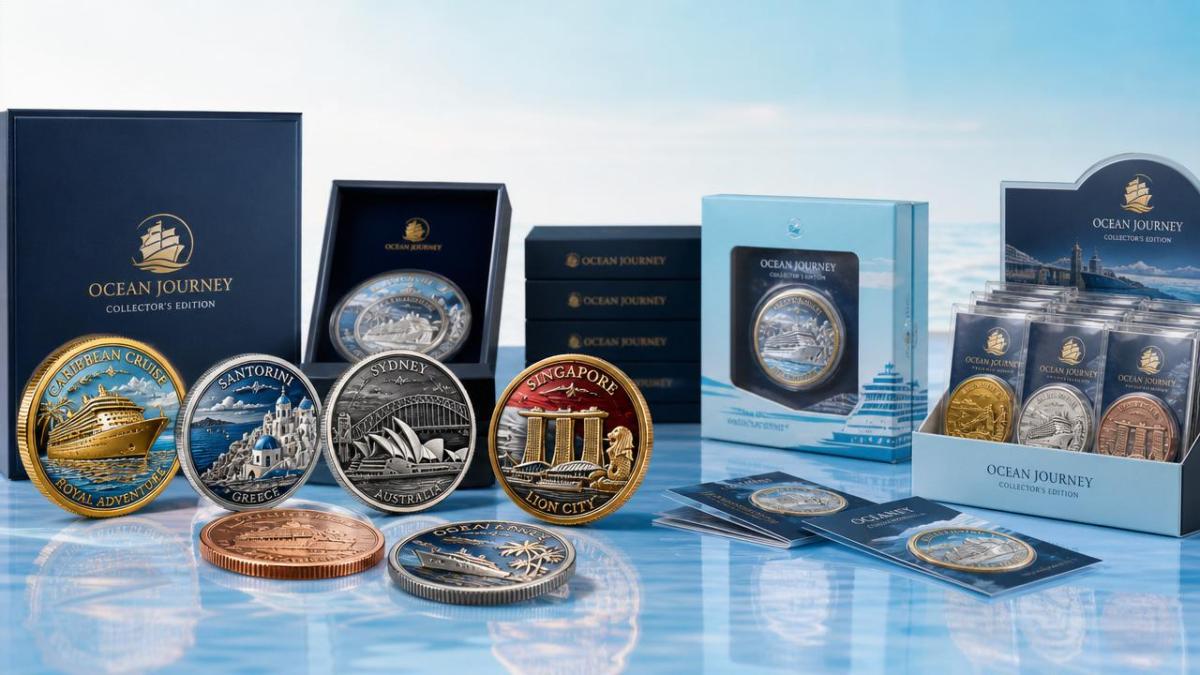
Finally, review accessory and packaging choices. Individually bagged coins, velvet boxes, acrylic capsules, backing cards, or retail-ready display sets can significantly affect landed cost and suitability for travel retail environments. For souvenir shops, airport stores, and guided tour resale channels, presentation matters almost as much as the coin itself.
How can buyers compare suppliers beyond price when sourcing custom challenge coins wholesale?
A low quote can be attractive, but procurement professionals should compare suppliers through a wider lens. The strongest supplier for custom challenge coins wholesale is usually the one that balances manufacturing capability, communication discipline, quality assurance, and delivery predictability.
One useful method is to score suppliers across several categories instead of relying on intuition alone. Ask for production photos, sample references, plating examples, packaging options, and recent bulk-order case studies. In tourism-related applications, it helps to know whether the factory has experience with gift shops, destination brands, attractions, or branded merchandise programs where finish quality and retail packaging are important.
Also assess communication quality. Are responses specific, timely, and technically informed? Do they proactively clarify open points? Bulk orders often fail because buyers and suppliers assume the other side has understood hidden requirements. A supplier that asks precise questions at the beginning is usually safer than one that promises everything immediately.
What quality risks are most common in large challenge coin orders?
The most common risks in custom challenge coins wholesale are inconsistency, not total failure. A sample may look excellent, but scaled production can reveal uneven enamel fill, inconsistent antique effect, weak attachment of accessories, color variation, edge roughness, scratches, or poor packaging discipline. These issues are especially damaging when coins are sold in retail travel environments, where customers compare items side by side.
Another frequent problem is mismatch between proof and production reality. A digital mockup can make tiny lines, gradients, and text appear cleaner than they will on metal. Buyers should ask the supplier to identify any design elements that may need simplification before mold creation. This is not a sign of weakness; it is a sign of manufacturing honesty.
Packaging damage is often underestimated. Coins may arrive with surface marks if individually protected packaging is not specified. For wholesale orders moving through multiple logistics nodes, internal packing method matters: layer separation, anti-scratch bags, carton strength, moisture protection, and drop resistance all affect delivered condition.
To control these risks, buyers should request a defined inspection plan. That can include pre-production sample approval, in-process photo confirmation, final random inspection, and clear acceptance criteria for finish, color, dimensions, and packing. If the supplier cannot explain how they control quality on a large run, the order may depend too heavily on luck.
How should procurement teams evaluate lead times, MOQs, and landed cost?
When sourcing custom challenge coins wholesale, buyers should separate quoted production time from the true project timeline. The full cycle usually includes artwork clarification, proof revision, mold creation, sample approval, mass production, packing, export handling, and transit. If the coins are tied to a tourism launch, holiday season, destination festival, or conference, backward planning is essential.
Minimum order quantity should also be interpreted carefully. A low MOQ may seem flexible, but buyers need to ask whether it applies to one design, one finish, one packaging type, or a mixed assortment. In souvenir and travel retail programs, multiple destination designs may be needed at the same time. Consolidation options can improve procurement efficiency if managed correctly.
Landed cost is the number that truly matters. This should include tooling charges, sample fees, unit price by tier, packaging upgrades, shipping mode, duties, possible compliance testing if required by market entry rules, and reserve budget for defects or urgent replenishment. An apparently cheaper offer can become more expensive once hidden add-ons are counted.
For procurement managers, a practical approach is to compare at least three scenarios: standard sea freight timeline, faster air shipment for campaign deadlines, and split delivery if partial inventory is needed earlier. This helps commercial teams understand the trade-off between speed and margin before committing to a large order.
What compliance, ethical, and brand-safety checks should not be skipped?
Even though challenge coins are not the most heavily regulated product category, procurement teams should still verify supplier compliance readiness. This is especially important for global buyers operating under internal sourcing policies, destination brands with public visibility, or travel service companies that sell to family audiences through gift shops and tourism venues.
Material declarations are a good starting point. Ask whether the supplier can provide information related to metal content, coating substances, and any relevant restrictions in your target market. If coins include accessories, magnets, boxes, or printed inserts, each component may carry additional requirements. Retail packaging should also support barcode placement, origin labeling, and basic product identification where applicable.
Ethical sourcing and labor transparency matter as well. Many procurement departments now require supplier screening on social responsibility, factory practices, and environmental policy. Even if the product itself is small, the reputational risk is not. A souvenir program associated with a destination, airline partner, heritage site, or luxury travel group should align with the broader brand promise.
Intellectual property protection deserves attention too. If your coin design includes protected logos, landmarks, mascots, event marks, or co-branded tourism identities, ensure ownership and authorization are documented. A capable supplier should confirm that artwork will be used only for approved production and should not be shared or resold.
What are the biggest mistakes buyers make with custom challenge coins wholesale?
The first mistake is treating all factories as interchangeable. Challenge coin manufacturing quality varies significantly depending on tooling skill, finishing discipline, and inspection standards. The second mistake is approving a digital proof without asking how the design will translate into actual metal relief and enamel boundaries.
Another common error is comparing quotes that are not based on identical specifications. If one supplier prices antique brass with a velvet box and another prices shiny gold in polybags, the numbers are not truly comparable. Procurement teams should standardize RFQ inputs before evaluating offers.
Buyers also underestimate replenishment planning. A successful travel souvenir or commemorative program may need repeat orders, seasonal refreshes, or design variations by destination. It is wise to confirm whether molds can be retained, how long they are stored, and whether repeat orders can match the original finish closely.
Finally, many teams fail to define escalation paths. If defects exceed tolerance or shipments slip, who has decision authority? What credits, remakes, or corrective actions are available? Clear commercial terms are part of risk management, not just legal formality.
What questions should you ask before moving forward with a supplier?
Before confirming any custom challenge coins wholesale order, procurement professionals should ask focused questions that reveal operational strength, not just sales confidence. Useful questions include: What material and finish do you recommend for this use case? What details in the artwork may not reproduce cleanly? What are your inspection checkpoints for bulk production? Can you provide packaging samples? What lead time is realistic including proof approval? How do you manage repeat-order consistency? What documentation can you support for our market?
For travel service applications, add scenario-specific questions. Will the packaging suit retail display in souvenir stores or hotel boutiques? Is the product durable enough for frequent handling by tourists? Can the supplier support multi-design assortments for different destinations, routes, or events? Can they help optimize weight and packaging for international distribution costs?
A strong procurement decision comes from aligning specification, risk control, delivery timing, and brand intent. If you need to confirm a practical sourcing plan, it is best to first discuss artwork feasibility, material and finish options, packaging requirements, production timeline, inspection standards, repeat-order support, and total landed cost. Those conversations will tell you far more than the headline unit price alone.
Related Intelligence
 Skincare OEMAug 16, 2026Amazon Enforces AI Human Metadata Rule for Beauty and Personal Care SellersAmazon now enforces AI human metadata rules for beauty sellers. Learn how to protect listings, traffic, and compliance in skincare, cosmetics, and beauty devices.
 Beauty DevicesAug 15, 2026China to Roll Out Nationwide Cross-Border Cash Pooling for MultinationalsChina to roll out nationwide cross-border cash pooling for multinationals from Sept. 14. Discover how this policy could improve treasury efficiency, liquidity management, and China-linked supply chains.
 Beauty DevicesAug 14, 2026China Imposes Temporary Export Ban on Helium, Affecting Cooling Supply ChainsChina's temporary helium export ban may disrupt cooling supply chains for beauty RF devices and laser systems. Learn what ODMs, buyers, and procurement teams should check now.
![]() Cosmetics & PkgAug 13, 2026PPWR becomes mandatory: Beauty and personal care packaging materials usher in new EPR and PFAS compliance requirementsPPWR takes effect for cosmetics packaging in the EU, bringing EPR registration and PFAS limits. Learn what brands, importers, and suppliers must do now.
Cosmetics & PkgAug 13, 2026PPWR becomes mandatory: Beauty and personal care packaging materials usher in new EPR and PFAS compliance requirementsPPWR takes effect for cosmetics packaging in the EU, bringing EPR registration and PFAS limits. Learn what brands, importers, and suppliers must do now. Cosmetics & PkgAug 12, 2026EU PPWR Now Enforced for Beauty Packaging ComplianceEU PPWR now enforced for beauty packaging compliance: learn how EPR, ERN, heavy metals and PFAS rules affect EU exports, customs clearance and platform sales.
 Cosmetics & PkgAug 11, 2026EU PPWR Rules Take Effect on Aug. 12 for Beauty PackagingEU PPWR rules for beauty packaging take effect on Aug. 12, 2026. Learn key compliance steps, EPR, labeling, PFAS limits, and how to avoid customs delays and fines.
 Smart Pet DevicesAug 10, 2026EU EPR Rules to Cover Smart Pet Devices on Aug. 15EU EPR Rules will cover smart pet devices from Aug. 15, 2026. Learn how smart collars, feeders, and monitoring devices can avoid delisting, customs delays, and compliance risks in the EU.
 Infant Feeding & CareAug 09, 2026CPSC Recalls Baby Sleep Sacks Over Undeclared TDCPPCPSC Recalls Baby Sleep Sacks Over Undeclared TDCPP: learn how this 2026 recall impacts CPC documents, third-party testing, and U.S. baby product compliance for exporters.
 Infant Feeding & CareAug 08, 2026ECHA Adds 5 SVHCs, Importer Notices Due From Oct 2026ECHA adds 5 SVHCs to the Candidate List, with importer notices due from October 2026. Learn how REACH affects exporters, supply chains, and documentation readiness.
 Baby Gear & StrollersAug 07, 2026CPSC Revises Crib Rail Standard for November 2026CPSC revises crib rail standard for November 2026, adding dynamic impact tests and mandatory third-party lab testing. Learn how the new rule affects U.S. market access, compliance, and shipments.
 Electronic & RC ToysAug 06, 2026EU to Require EN IEC 62115:2025 for Electronic ToysEU to Require EN IEC 62115:2025 for Electronic Toys from Oct 1, 2026. Learn scope, battery and AI safety updates, CE compliance risks, and how exporters can avoid customs delays.
 Baby Gear & StrollersAug 05, 2026US Stroller Stability Rule Takes Effect Aug. 15US Stroller Stability Rule Takes Effect Aug. 15: learn how new U.S. stroller compliance, ASTM F833-26a, and CPSC testing rules may affect imports, certification, and shipment readiness.
 Infant Feeding & CareAug 04, 2026ECHA Adds 5 SVHCs, Triggering Baby Care Export ReviewECHA adds 5 SVHCs, prompting an urgent baby care export review for EU-bound products. Learn the 0.1% threshold risks, compliance steps, and how to avoid customs delays and fines.












