
OEM Gifts vs Private Label Gifts: Key Differences
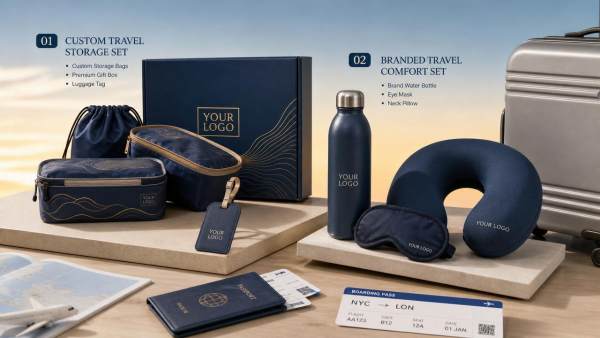
For sourcing evaluators in the travel service sector, choosing between OEM gifts and private label gifts can directly affect cost control, brand positioning, compliance, and speed to market. This guide explains the key differences, helping buyers assess which model better supports promotional merchandise, customer experience goals, and scalable supply chain decisions in a competitive global landscape.
For most travel-related buyers, the fastest answer is this: OEM gifts are usually the better fit when you need custom functionality, unique design control, or a branded gift concept that cannot be sourced off the shelf. Private label gifts are often the smarter option when speed, lower development risk, and easier market testing matter more than exclusivity.
That distinction sounds simple, but in practice the decision affects supplier selection, tooling costs, regulatory review, minimum order quantities, packaging flexibility, and long-term margin potential. For business evaluators comparing sourcing models, the real question is not which model is “better” in general. It is which model aligns better with campaign goals, procurement timelines, compliance exposure, and brand strategy.
In travel services, gifts are rarely just giveaways. They can support loyalty programs, premium cabin experiences, hotel welcome kits, destination merchandise, event activations, corporate partnerships, and ancillary retail revenue. That means buyers must evaluate gifts not only as products, but as part of customer experience delivery and brand perception.
What Is the Real Difference Between OEM Gifts and Private Label Gifts?
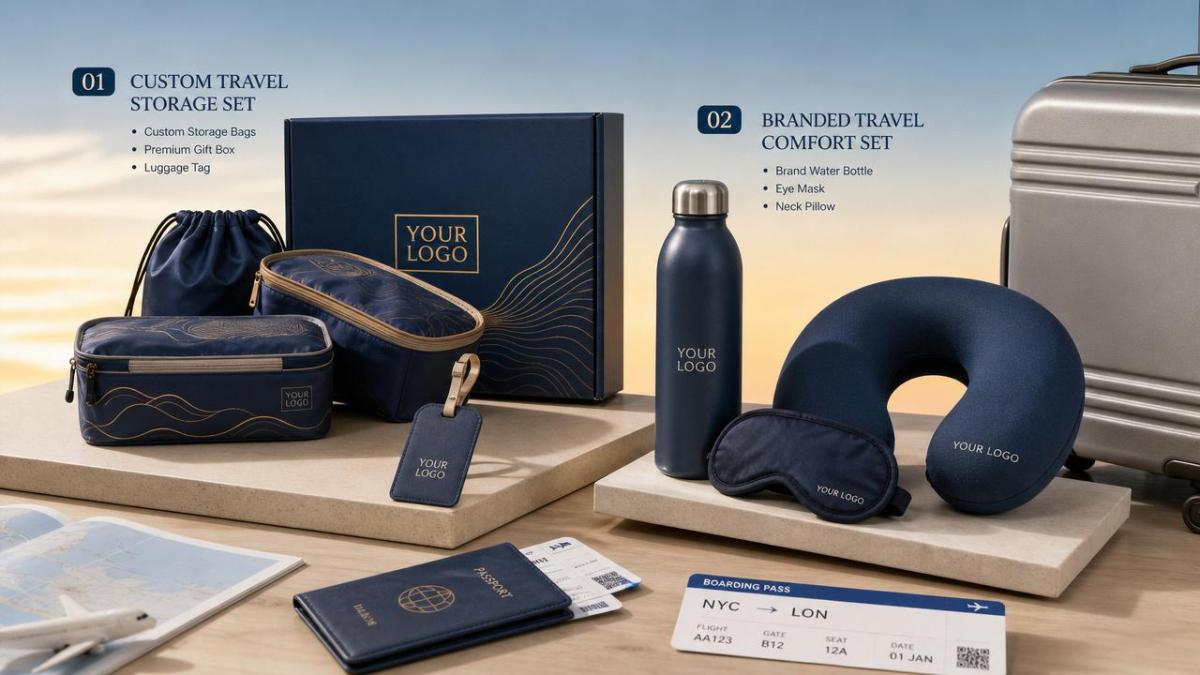
OEM gifts are products manufactured according to a buyer’s custom design, specification, or performance requirements. The buyer typically defines product structure, materials, dimensions, features, packaging needs, and sometimes exclusive components. The factory then produces the item based on that customized brief.
Private label gifts, by contrast, are usually existing or semi-standard products made by a manufacturer and sold under the buyer’s brand name. The buyer may customize logos, packaging, color options, inserts, and selected finishing details, but the underlying product architecture often already exists.
For a travel service buyer, an OEM gift might be a custom-designed travel organizer set built around a specific passenger profile, airline amenity requirement, or destination branding concept. A private label gift might be an existing reusable bottle, neck pillow, luggage tag, or wellness kit rebranded for the company’s own program or campaign.
The key difference is therefore not only “custom versus branded.” It is the degree of control over product development, intellectual property, supply chain complexity, and time-to-launch. That is where commercial evaluation becomes more important than terminology.
When Does OEM Make More Sense for Travel Service Buyers?
OEM gifts make sense when the gift itself is expected to reinforce a differentiated customer experience. This is especially relevant in premium travel segments, loyalty retention programs, executive gifting, and destination-led merchandising where the product needs to feel purpose-built rather than generic.
If your team needs a product with specific material requirements, unusual dimensions, bundled accessories, functional travel features, or safety-related design adjustments, OEM gifts are often the stronger option. They are also useful when existing market products do not reflect your brand standards or user experience goals.
OEM can also create stronger defensibility. A travel brand launching a signature onboard comfort kit, branded family travel pack, or destination-exclusive souvenir range may not want competitors using an almost identical item from the same open catalog source. OEM sourcing reduces that risk by allowing deeper customization and, in some cases, exclusive production arrangements.
Another advantage is margin strategy over time. Although OEM usually demands more upfront investment, it may create better commercial value if the gift becomes part of a recurring product line or revenue-generating retail assortment. A differentiated product can justify stronger perceived value, better partner positioning, and less price comparison pressure.
When Is Private Label the Better Commercial Choice?
Private label gifts are often ideal when a buyer needs reliable speed, manageable risk, and lower development complexity. In travel services, this matters for seasonal promotions, event merchandise, rapid campaign rollouts, and test launches across multiple markets.
If the objective is to get a branded product into customers’ hands quickly without funding a full development cycle, private label is usually the more efficient route. The manufacturer has already solved much of the product engineering, sourcing, and production workflow. That shortens sampling time and often improves forecast confidence.
Private label can also support better purchasing flexibility for evaluators under tight budget controls. Tooling and development fees are typically lower than in OEM projects, and quality outcomes are easier to benchmark because the factory already has a production history for that item or category.
This model works particularly well for common travel gift categories such as pouches, drinkware, sleep masks, portable accessories, wellness kits, umbrellas, or compact leisure items. When the market does not require a radically new product concept, private label often delivers the best balance of branding, speed, and commercial practicality.
Cost Comparison: Where Buyers Often Misjudge the Decision
Many buyers assume OEM gifts are always more expensive and private label gifts are always cheaper. That is directionally true at the beginning, but it is not always true across the full lifecycle of a sourcing program.
OEM costs usually include design engineering, mold or tooling fees, material validation, prototype rounds, and longer pre-production coordination. Minimum order quantities may also be higher, particularly if the product uses unique components or dedicated packaging formats. These costs can make OEM appear unattractive in an early-stage comparison.
However, private label is not automatically the lower-cost choice in strategic terms. If a standard product limits your ability to create premium positioning, cross-sell value, or partner exclusivity, the lower purchase price may lead to lower overall business value. In other words, the cheapest item is not always the most efficient procurement decision.
Evaluators should compare total landed cost, development cost, expected order frequency, merchandising lifespan, and the commercial role of the product. If the gift is a one-off campaign item, private label usually wins. If it supports a repeatable brand program with long-term use, OEM may produce stronger returns despite higher setup cost.
Speed to Market: Why Lead Time Can Be a Deciding Factor
In travel services, timing often shapes the sourcing model more than design preference does. Product launch windows may be tied to peak booking periods, route launches, holiday promotions, trade exhibitions, or loyalty campaigns. Missing the timing can reduce the value of the gift initiative even if the product itself is well designed.
Private label gifts generally move faster because product structures, approved materials, and production processes are already in place. Sampling can focus on branding details rather than core engineering. This is especially valuable when procurement teams must coordinate across marketing, operations, and regional rollout teams.
OEM gifts require more patience. New specifications create more checkpoints, including prototype approval, performance testing, packaging review, and pilot production. For highly customized products, even small design revisions can affect tooling, assembly sequence, or compliance documentation, extending the timeline further.
That said, speed should be evaluated against the strategic need for uniqueness. If your brand campaign depends on a highly customized customer-facing gift, launching a generic product quickly may still be the wrong move. The better question is whether the market window rewards originality or operational responsiveness more strongly.
Brand Positioning: Generic Branding or Distinctive Experience?
For travel brands, gifts often act as physical proof of the service promise. A premium resort, airline, cruise operator, travel platform, or destination experience provider may all use merchandise to reinforce service quality. That makes brand fit more important than simple logo placement.
Private label gifts are effective when your brand mainly needs visibility, consistency, and broad utility. If the goal is to place a recognizable branded item into the hands of travelers, a quality existing product can perform well. Clean packaging, durable materials, and relevant use cases can still generate strong brand impact.
OEM gifts become more valuable when the product itself must communicate originality. That may include a culturally themed welcome gift, a multi-function travel item designed around passenger convenience, or a premium gifting set aligned with sustainability or wellness positioning. In these cases, product design becomes part of the brand message.
Business evaluators should therefore ask whether the gift is meant to display the brand or express the brand. Private label usually handles the first objective well. OEM is often better for the second.
Compliance, Safety, and Quality Assurance Considerations
Compliance is a major decision factor that many gift buyers underestimate until late in the sourcing process. In travel-related gifting, products may cross multiple jurisdictions and may be distributed to consumers through hospitality, aviation, tourism retail, or event channels. This creates exposure around labeling, materials, chemical content, child safety, battery transport, and packaging standards.
Private label products can reduce some risk because the base product may already have testing history or established compliance documentation. That does not remove buyer responsibility, but it can simplify validation if the product category is well understood and the supplier is experienced.
OEM gifts require closer technical review because any custom modification can trigger new testing requirements. Changes in materials, coatings, structural features, age grading, electrical components, or promotional claims may all affect compliance scope. Buyers evaluating OEM programs should confirm documentation pathways before development progresses too far.
Quality assurance also differs between the two models. With private label, quality control tends to focus on consistency, branding execution, packaging accuracy, and shipment reliability. With OEM, buyers must additionally monitor whether the factory can repeatedly reproduce the intended specification at scale, not just create a good sample.
Supplier Capability: What to Ask Before You Commit
The sourcing model is only as strong as the supplier behind it. A factory may claim OEM capability but actually operate more like a catalog-based producer with limited development depth. Likewise, some private label suppliers may offer excellent standard products but weak packaging coordination, limited compliance transparency, or inconsistent batch quality.
For OEM gifts, evaluators should ask about in-house design support, prototyping workflow, tooling management, material sourcing control, certification familiarity, and previous project examples in adjacent categories. It is also important to understand ownership of molds, design files, and exclusivity terms.
For private label gifts, the key questions are different. Ask how many stock or semi-custom programs the supplier manages, what branding options are standard, what the true lead times are during peak seasons, and whether the product has recent test reports relevant to your target market.
In both models, buyers should evaluate communication quality, revision discipline, defect handling, and the supplier’s ability to align with packaging, sustainability, and logistics requirements. A technically capable factory that responds slowly or unclearly can still create serious project risk.
A Practical Decision Framework for Sourcing Evaluators
If you are comparing OEM gifts and private label gifts for a travel service application, start with five questions. First, how unique does the product need to be? Second, how fixed is the launch deadline? Third, what level of upfront investment is acceptable? Fourth, what compliance risk does the category carry? Fifth, will this be a one-time campaign or a repeatable branded program?
If uniqueness, exclusivity, and experience design are the main priorities, OEM is usually the stronger candidate. If fast execution, moderate branding, and low development friction are more important, private label is likely the better option.
Buyers should also create a side-by-side scorecard covering tooling cost, MOQ, sample cycles, compliance burden, packaging flexibility, margin potential, and long-term strategic value. This makes the decision more objective and easier to justify internally to procurement leaders, brand teams, and finance stakeholders.
In many cases, the smartest portfolio approach is not choosing one model exclusively. Travel businesses often use private label gifts for fast-moving campaigns and OEM gifts for flagship programs or premium customer segments. That mixed strategy helps manage both agility and differentiation.
Conclusion: Which Model Supports Better Business Outcomes?
When comparing OEM gifts vs private label gifts, sourcing evaluators should focus less on definitions and more on business fit. OEM gifts are best when your organization needs custom product value, stronger experience differentiation, or a longer-term branded asset. Private label gifts are best when speed, simplicity, and lower development risk matter most.
For the travel service sector, the right choice depends on what the gift is expected to do. If it only needs to carry your brand, private label may be enough. If it needs to shape perception, support premium positioning, or create a memorable traveler experience, OEM gifts may justify the added complexity.
The strongest sourcing decisions come from matching product strategy to operational reality. By evaluating cost, timing, compliance, supplier capability, and customer experience goals together, buyers can choose a model that not only meets procurement requirements but also supports stronger brand and commercial outcomes.
Related Intelligence
 Skincare OEMAug 16, 2026Amazon Enforces AI Human Metadata Rule for Beauty and Personal Care SellersAmazon now enforces AI human metadata rules for beauty sellers. Learn how to protect listings, traffic, and compliance in skincare, cosmetics, and beauty devices.
 Beauty DevicesAug 15, 2026China to Roll Out Nationwide Cross-Border Cash Pooling for MultinationalsChina to roll out nationwide cross-border cash pooling for multinationals from Sept. 14. Discover how this policy could improve treasury efficiency, liquidity management, and China-linked supply chains.
 Beauty DevicesAug 14, 2026China Imposes Temporary Export Ban on Helium, Affecting Cooling Supply ChainsChina's temporary helium export ban may disrupt cooling supply chains for beauty RF devices and laser systems. Learn what ODMs, buyers, and procurement teams should check now.
![]() Cosmetics & PkgAug 13, 2026PPWR becomes mandatory: Beauty and personal care packaging materials usher in new EPR and PFAS compliance requirementsPPWR takes effect for cosmetics packaging in the EU, bringing EPR registration and PFAS limits. Learn what brands, importers, and suppliers must do now.
Cosmetics & PkgAug 13, 2026PPWR becomes mandatory: Beauty and personal care packaging materials usher in new EPR and PFAS compliance requirementsPPWR takes effect for cosmetics packaging in the EU, bringing EPR registration and PFAS limits. Learn what brands, importers, and suppliers must do now. Cosmetics & PkgAug 12, 2026EU PPWR Now Enforced for Beauty Packaging ComplianceEU PPWR now enforced for beauty packaging compliance: learn how EPR, ERN, heavy metals and PFAS rules affect EU exports, customs clearance and platform sales.
 Cosmetics & PkgAug 11, 2026EU PPWR Rules Take Effect on Aug. 12 for Beauty PackagingEU PPWR rules for beauty packaging take effect on Aug. 12, 2026. Learn key compliance steps, EPR, labeling, PFAS limits, and how to avoid customs delays and fines.
 Smart Pet DevicesAug 10, 2026EU EPR Rules to Cover Smart Pet Devices on Aug. 15EU EPR Rules will cover smart pet devices from Aug. 15, 2026. Learn how smart collars, feeders, and monitoring devices can avoid delisting, customs delays, and compliance risks in the EU.
 Infant Feeding & CareAug 09, 2026CPSC Recalls Baby Sleep Sacks Over Undeclared TDCPPCPSC Recalls Baby Sleep Sacks Over Undeclared TDCPP: learn how this 2026 recall impacts CPC documents, third-party testing, and U.S. baby product compliance for exporters.
 Infant Feeding & CareAug 08, 2026ECHA Adds 5 SVHCs, Importer Notices Due From Oct 2026ECHA adds 5 SVHCs to the Candidate List, with importer notices due from October 2026. Learn how REACH affects exporters, supply chains, and documentation readiness.
 Baby Gear & StrollersAug 07, 2026CPSC Revises Crib Rail Standard for November 2026CPSC revises crib rail standard for November 2026, adding dynamic impact tests and mandatory third-party lab testing. Learn how the new rule affects U.S. market access, compliance, and shipments.
 Electronic & RC ToysAug 06, 2026EU to Require EN IEC 62115:2025 for Electronic ToysEU to Require EN IEC 62115:2025 for Electronic Toys from Oct 1, 2026. Learn scope, battery and AI safety updates, CE compliance risks, and how exporters can avoid customs delays.
 Baby Gear & StrollersAug 05, 2026US Stroller Stability Rule Takes Effect Aug. 15US Stroller Stability Rule Takes Effect Aug. 15: learn how new U.S. stroller compliance, ASTM F833-26a, and CPSC testing rules may affect imports, certification, and shipment readiness.
 Infant Feeding & CareAug 04, 2026ECHA Adds 5 SVHCs, Triggering Baby Care Export ReviewECHA adds 5 SVHCs, prompting an urgent baby care export review for EU-bound products. Learn the 0.1% threshold risks, compliance steps, and how to avoid customs delays and fines.












