
ICTI Launches AI Audit Pilot for RC Toy Factories in China
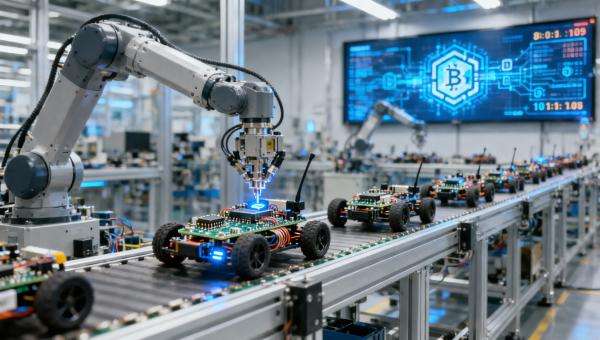
On May 1, 2026, the International Council of Toy Industries (ICTI) launched its global pilot program ‘Ethical Factory AI Audit’, integrating 12 electronic and radio-controlled (RC) toy manufacturing facilities in China — located in Dongguan, Shenzhen, and Zhongshan — into ICTI’s blockchain-based audit platform. This initiative directly impacts stakeholders across toy manufacturing, ethical compliance services, ESG-driven retail procurement, and supply chain technology providers.
Event Overview
On May 1, 2026, ICTI announced the launch of the ‘Ethical Factory AI Audit’ global pilot. Twelve RC and electronic toy contract manufacturers in China — with production bases in Dongguan, Shenzhen, and Zhongshan — have been onboarded onto ICTI’s blockchain audit platform. The system enables real-time on-chain recording of production scheduling, chemical inventory management, and worker hours data, with AI-powered anomaly detection. Participating factories are eligible to receive the ‘AI-Verified Ethical Supplier’ designation and gain preferential access to ESG-aligned procurement lists of major North American and European retailers.
Industries Affected
Contract Manufacturers (RC & Electronic Toys)
These factories face immediate operational implications: integration requires standardized digital logging of labor, chemical handling, and shift planning — all subject to automated AI validation. Non-compliance may trigger algorithmic flags before human review, increasing audit responsiveness but also raising the bar for documentation consistency and system interoperability.
ESG-Focused Retail Buyers & Brand Licensees
Major Western retailers using ESG criteria for supplier selection now have a new, technically verified tier of ethical sourcing. The ‘AI-Verified Ethical Supplier’ label serves as a prioritized signal in procurement workflows — potentially influencing allocation of high-margin seasonal orders or long-term capacity commitments.
Supply Chain Compliance Technology Providers
Vendors offering factory-level ERP, labor tracking, or chemical management software must assess compatibility with ICTI’s blockchain schema and AI validation logic. Interoperability — not just data export — becomes a functional requirement for future engagement with ICTI-participating factories.
Third-Party Audit & Certification Firms
Traditional social compliance audits (e.g., BSCI, SMETA) remain relevant, but their role may shift toward validating AI-flagged anomalies or auditing the integrity of on-chain data inputs — rather than conducting full-cycle manual checks. This signals an evolution in audit scope and methodology.
What Stakeholders Should Monitor and Do Now
Track official ICTI rollout timelines beyond the pilot phase
ICTI has not yet published expansion criteria, mandatory adoption thresholds, or timeline for scaling beyond the initial 12 sites. Companies should monitor ICTI’s official communications for eligibility rules, technical specifications, and potential cost-sharing models ahead of broader implementation.
Assess current data infrastructure readiness for real-time, structured reporting
Factories considering participation must evaluate whether existing systems (e.g., MES, HRIS, chemical SDS databases) can generate machine-readable, time-stamped, tamper-evident logs aligned with ICTI’s defined data fields — particularly for overtime hours, hazardous substance usage, and shift changeovers.
Distinguish between ICTI’s AI verification label and formal certification
The ‘AI-Verified Ethical Supplier’ status is a pilot-specific designation — not equivalent to ICTI CARE Process certification or ISO 26000 alignment. It reflects data transparency and AI-monitored consistency, not comprehensive social or environmental performance assessment.
Engage procurement teams early on retailer ESG list updates
Brands and importers supplying to retailers with public ESG procurement policies (e.g., Walmart’s Project Gigaton, Target’s Responsible Sourcing Program) should confirm whether the ICTI AI-verified status is recognized — and if so, whether it triggers automatic inclusion or requires additional documentation submission.
Editorial Observation / Industry Perspective
Observably, this initiative functions primarily as a signal — not yet a regulatory or contractual requirement. It reflects growing pressure on global toy buyers to demonstrate verifiable, scalable ethical oversight amid tightening ESG disclosure expectations in the EU (CSDDD) and US (SEC climate proposals). Analysis shows ICTI is testing whether AI-augmented, blockchain-tracked operational data can reduce audit latency and increase trust without replacing human judgment. From an industry perspective, this pilot marks a step toward outcome-oriented compliance — where consistent data behavior matters more than point-in-time audit pass/fail outcomes. However, its scalability depends on factory-level digital maturity and cross-platform data governance — factors still uneven across the RC toy manufacturing base.
ICTI’s move does not replace existing ethical sourcing frameworks but introduces a new layer of technical verification focused on data integrity and process continuity. For now, it remains a voluntary, pilot-stage capability — one that signals direction more than mandate.
Conclusion
This pilot represents an early institutional effort to align ethical manufacturing verification with real-time digital infrastructure. It does not constitute a new standard or compliance obligation, but rather a test of how AI and distributed ledger technologies can support — not supplant — established social responsibility goals. Current understanding should treat it as a forward-looking indicator of evolving due diligence expectations, especially for RC and electronic toy suppliers targeting ESG-conscious markets.
Source Attribution
Main source: Official ICTI announcement dated May 1, 2026. No third-party reports or supplementary data were used. Ongoing observation is required for ICTI’s technical specifications, vendor integration guidelines, and post-pilot roadmap — none of which have been publicly released as of the announcement date.
Related Intelligence
 Skincare OEMAug 16, 2026Amazon Enforces AI Human Metadata Rule for Beauty and Personal Care SellersAmazon now enforces AI human metadata rules for beauty sellers. Learn how to protect listings, traffic, and compliance in skincare, cosmetics, and beauty devices.
 Beauty DevicesAug 15, 2026China to Roll Out Nationwide Cross-Border Cash Pooling for MultinationalsChina to roll out nationwide cross-border cash pooling for multinationals from Sept. 14. Discover how this policy could improve treasury efficiency, liquidity management, and China-linked supply chains.
 Beauty DevicesAug 14, 2026China Imposes Temporary Export Ban on Helium, Affecting Cooling Supply ChainsChina's temporary helium export ban may disrupt cooling supply chains for beauty RF devices and laser systems. Learn what ODMs, buyers, and procurement teams should check now.
![]() Cosmetics & PkgAug 13, 2026PPWR becomes mandatory: Beauty and personal care packaging materials usher in new EPR and PFAS compliance requirementsPPWR takes effect for cosmetics packaging in the EU, bringing EPR registration and PFAS limits. Learn what brands, importers, and suppliers must do now.
Cosmetics & PkgAug 13, 2026PPWR becomes mandatory: Beauty and personal care packaging materials usher in new EPR and PFAS compliance requirementsPPWR takes effect for cosmetics packaging in the EU, bringing EPR registration and PFAS limits. Learn what brands, importers, and suppliers must do now. Cosmetics & PkgAug 12, 2026EU PPWR Now Enforced for Beauty Packaging ComplianceEU PPWR now enforced for beauty packaging compliance: learn how EPR, ERN, heavy metals and PFAS rules affect EU exports, customs clearance and platform sales.
 Cosmetics & PkgAug 11, 2026EU PPWR Rules Take Effect on Aug. 12 for Beauty PackagingEU PPWR rules for beauty packaging take effect on Aug. 12, 2026. Learn key compliance steps, EPR, labeling, PFAS limits, and how to avoid customs delays and fines.
 Smart Pet DevicesAug 10, 2026EU EPR Rules to Cover Smart Pet Devices on Aug. 15EU EPR Rules will cover smart pet devices from Aug. 15, 2026. Learn how smart collars, feeders, and monitoring devices can avoid delisting, customs delays, and compliance risks in the EU.
 Infant Feeding & CareAug 09, 2026CPSC Recalls Baby Sleep Sacks Over Undeclared TDCPPCPSC Recalls Baby Sleep Sacks Over Undeclared TDCPP: learn how this 2026 recall impacts CPC documents, third-party testing, and U.S. baby product compliance for exporters.
 Infant Feeding & CareAug 08, 2026ECHA Adds 5 SVHCs, Importer Notices Due From Oct 2026ECHA adds 5 SVHCs to the Candidate List, with importer notices due from October 2026. Learn how REACH affects exporters, supply chains, and documentation readiness.
 Baby Gear & StrollersAug 07, 2026CPSC Revises Crib Rail Standard for November 2026CPSC revises crib rail standard for November 2026, adding dynamic impact tests and mandatory third-party lab testing. Learn how the new rule affects U.S. market access, compliance, and shipments.
 Electronic & RC ToysAug 06, 2026EU to Require EN IEC 62115:2025 for Electronic ToysEU to Require EN IEC 62115:2025 for Electronic Toys from Oct 1, 2026. Learn scope, battery and AI safety updates, CE compliance risks, and how exporters can avoid customs delays.
 Baby Gear & StrollersAug 05, 2026US Stroller Stability Rule Takes Effect Aug. 15US Stroller Stability Rule Takes Effect Aug. 15: learn how new U.S. stroller compliance, ASTM F833-26a, and CPSC testing rules may affect imports, certification, and shipment readiness.
 Infant Feeding & CareAug 04, 2026ECHA Adds 5 SVHCs, Triggering Baby Care Export ReviewECHA adds 5 SVHCs, prompting an urgent baby care export review for EU-bound products. Learn the 0.1% threshold risks, compliance steps, and how to avoid customs delays and fines.












